

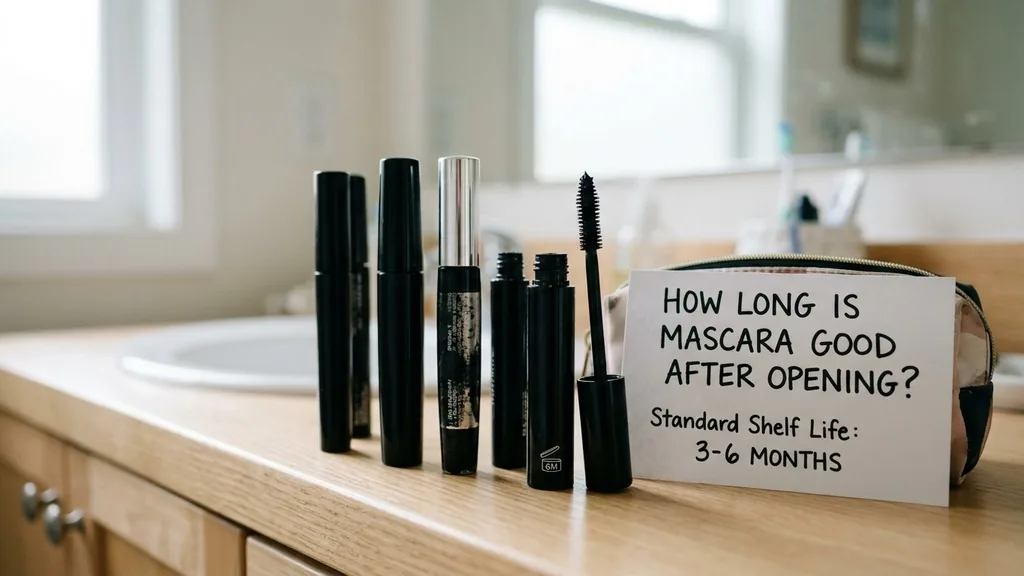
Maintaining your beauty routine requires more than just picking the right shade or brand; it demands a vigilant approach to product hygiene. Many people wonder how long is mascara good for, often clinging to a favorite tube far longer than they should. Because your eyes are incredibly sensitive and prone to infections, treating your eye makeup with respect is a non-negotiable part of daily grooming.
The Standard Shelf Life of Mascara
Mascara is generally safe for use for three months after the initial opening of the tube. While some cosmetic products like powder blushes or eyeshadows can last for years if kept clean, liquid formulas are inherently different.
The environment inside a mascara tube is dark, moist, and warm—the perfect breeding ground for microorganisms. Once you break the seal and introduce the wand to your lashes, you are essentially introducing foreign particles and potential pathogens into that environment.
Most dermatologists and makeup professionals agree that three months is the absolute limit for safety. Even if the product doesn’t seem dried out or smell strange, the chemical preservatives within the formula have a finite ability to fight off contamination.
After this window, the risk of developing ocular issues increases significantly. It is tempting to try and extend the life of a premium product, but no mascara is worth the discomfort of a bacterial eye infection.
Why Bacteria Love Your Mascara Tube
The primary reason for the short lifespan of this product is the accumulation of bacteria. Every time you pull the wand out of the tube and sweep it across your lashes, it picks up skin cells, oils, and microscopic debris.
When you push the wand back inside, you are depositing those elements directly back into the container. Over time, this cycle builds up a concentrated colony of microbes that the product’s preservatives can no longer neutralize.
Staphylococcus epidermidis and other common skin bacteria thrive in the viscous, nutrient-rich formula of modern mascaras. When you apply these contaminated products to your lashes, you are pressing a culture of bacteria against your lash line and the delicate mucous membranes of your eye.
This can lead to conditions like conjunctivitis, styes, or blepharitis. Keeping your makeup tools clean is a critical step in preventing these issues, but even with perfect hygiene, the formula itself will eventually succumb to contamination.
Identifying the Signs of Expired Makeup
You shouldn’t wait for your mascara to physically change before deciding to toss it. However, if you notice any of the following signs, you should discard the product immediately, regardless of how long you have actually had it:
- Unusual Odor: If your mascara develops a sharp, chemical, or “off” smell, the formula has likely broken down or become heavily contaminated.
- Texture Changes: A clumpy, thick, or gummy consistency indicates that the moisture balance has shifted, which often happens as the product nears the end of its life.
- Irritation: If you experience redness, itching, or a burning sensation upon application, stop using the product immediately.
- Separation: If the pigment and the liquid base seem to be separating inside the tube, the stabilization agents are no longer effective.
If you are ever in doubt, the safest rule is to throw it out. The cost of a new tube is negligible compared to the cost of an eye doctor visit or the pain of a persistent infection. Always check the packaging for the “Period After Opening” (PAO) symbol, which is typically a small jar icon with a number like “6M” or “3M” printed on it, indicating how many months the product remains stable after it is unsealed.
The Risks of Sharing Eye Makeup
Sharing your mascara is one of the most common ways to spread infections. Even if you are using your own clean wand, the environment inside the tube is personal to you.
When you share a tube with a friend or a makeup artist, you are introducing a completely new ecosystem of bacteria into your product. This cross-contamination can lead to the rapid growth of harmful pathogens that your own immune system might not be accustomed to handling.
If you ever get an eye infection, you must discard any eye makeup you were using during that time. Continuing to use the same tube after you recover is a recipe for reinfection, as the bacteria will simply be reintroduced to your eyes.
This is a common mistake that keeps people trapped in a cycle of recurring styes or irritation. Always start fresh after any ocular health issue to ensure you aren’t harboring dormant bacteria in your beauty kit.
Proper Storage to Extend Product Quality
While you cannot stop the clock on expiration, you can ensure the product remains in good condition for its full three-month lifespan by storing it correctly. Heat and light are the enemies of cosmetic stability. Many people store their makeup in the bathroom, but the humidity from showers and the fluctuation in temperature can cause the formula to degrade faster than it would in a climate-controlled room.
Store your mascara in a cool, dry, and dark place, such as a drawer or a vanity organizer away from direct sunlight. Avoid “pumping” the wand in and out of the tube to get more product on the brush. This action forces excess air into the container, which accelerates the drying process and introduces more airborne contaminants.
Instead, gently swirl the wand inside the tube to pick up the formula. If you find the mascara is drying out, never add water or saliva to thin it out; this introduces massive amounts of bacteria and ruins the preservation system.
Comparing Different Makeup Lifespans
It is helpful to understand how different types of makeup vary in their longevity. While eye products generally have shorter shelf lives due to the proximity to sensitive tissue, other products can be kept for longer durations if they are stored properly. Below is a general guideline for the longevity of common beauty items.
| Product Type | Typical Shelf Life |
|---|---|
| Mascara | 3 Months |
| Liquid Eyeliner | 3-6 Months |
| Liquid Foundation | 6-12 Months |
| Powder Products | 18-24 Months |
| Lipstick | 12-18 Months |
As seen in the table, liquid-based products, especially those used around the eyes, require the most frequent replacement. Powders, because they lack the high water content that bacteria require to flourish, are much more stable and can last significantly longer. Always prioritize the replacement of eye-specific items to minimize health risks.
How to Track Your Expiration Dates
Tracking the expiration of your makeup can be difficult when you own several different products. To stay organized, try writing the date you opened the mascara on the bottom of the tube using a permanent marker.
This simple habit removes the guesswork entirely. When that date is three months in the past, you know it is time to replace it, regardless of how much product is left inside.
For those who use multiple mascaras—perhaps a lengthening one for the day and a volumizing one for the evening—this system is even more important. You might think you can keep a product longer because you don’t use it every day, but the clock starts ticking the moment you open the seal. Exposure to air begins the degradation process immediately, so even a lightly used tube should be retired after three months.
Addressing Common Misconceptions
There are many myths regarding how long is mascara good for, often perpetuated by internet forums or anecdotal advice. Some claim that if the product doesn’t smell or look bad, it is perfectly fine to use for a year.
This is a dangerous misconception. Bacteria are invisible to the naked eye, and a product can be heavily colonized by pathogens long before you notice any physical changes like a bad smell or clumping.
Another common question involves whether it is safe to use “expired” makeup on the body versus the face. While using an expired blush on your cheek is less risky than using expired mascara on your eye, it is still not recommended. The skin is your largest organ and can absorb substances, and old makeup can cause breakouts or allergic reactions.
However, the eye is uniquely vulnerable to infection, which is why the three-month rule for mascara is much stricter than the guidelines for other cosmetic categories. For more information on maintaining eye health, you can consult the American Academy of Ophthalmology for professional guidance on ocular hygiene.
Frequently Asked Questions
- Can I use a mascara that is six months old? It is not recommended. After three months, the preservatives in the formula lose their effectiveness, significantly increasing the risk of bacterial contamination and eye infections. For your safety, always replace your mascara every three months, even if there is still product left in the tube.
- How can I tell if my mascara has gone bad? Look for changes in texture, such as clumping or drying, and changes in scent. If the product develops a sharp, chemical, or off-putting odor, or if you experience any irritation, redness, or itching when applying it to your lashes, stop using it immediately and discard it.
- Does the shelf life change if the mascara is unopened? An unopened, sealed mascara can generally stay good for up to two or three years if stored in a cool, dark place. However, once you break the seal and expose the formula to air and the wand, the three-month countdown begins immediately.
- What should I do if I get an eye infection? If you develop an eye infection, stop using all eye makeup immediately. You must discard any mascara, eyeliner, or eyeshadow you were using at the time of the infection to prevent re-introducing bacteria to your eyes once you begin to heal. Start with fresh products later.
By adhering to these simple guidelines, you can enjoy your beauty routine without compromising your eye health. Remember that your eyes are delicate, and the small investment in a new tube of mascara every few months is a vital component of a healthy lifestyle. Stay vigilant, track your dates, and never hesitate to replace a product that has served its time.


