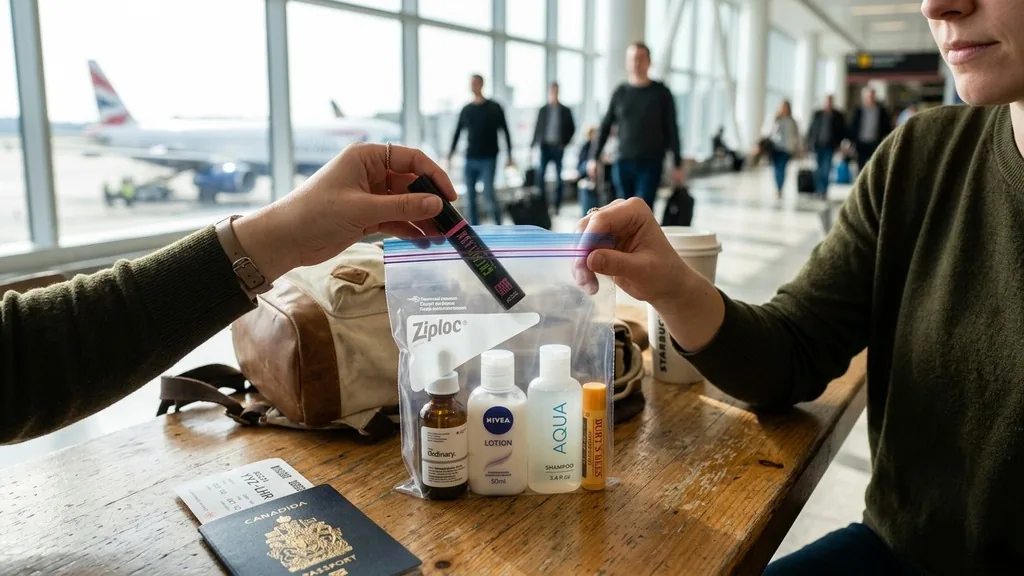
Navigating airport security can feel like a high-stakes game of trivia, especially when you are trying to decide which beauty products make the cut for your carry-on bag. One of the most persistent questions travelers encounter is whether mascara is considered a liquid when flying. Because airport security regulations are designed to be uniform, the answer is technically quite simple: yes, the Transportation Security Administration classifies mascara as a liquid.
Even though it has a thick, creamy texture, it falls under the umbrella of non-solid substances that are subject to specific screening requirements. If you arrive at the checkpoint without knowing these rules, you risk having your favorite beauty items confiscated, which is a headache no traveler wants to deal with.
Understanding the TSA 3-1-1 Rule for Cosmetics
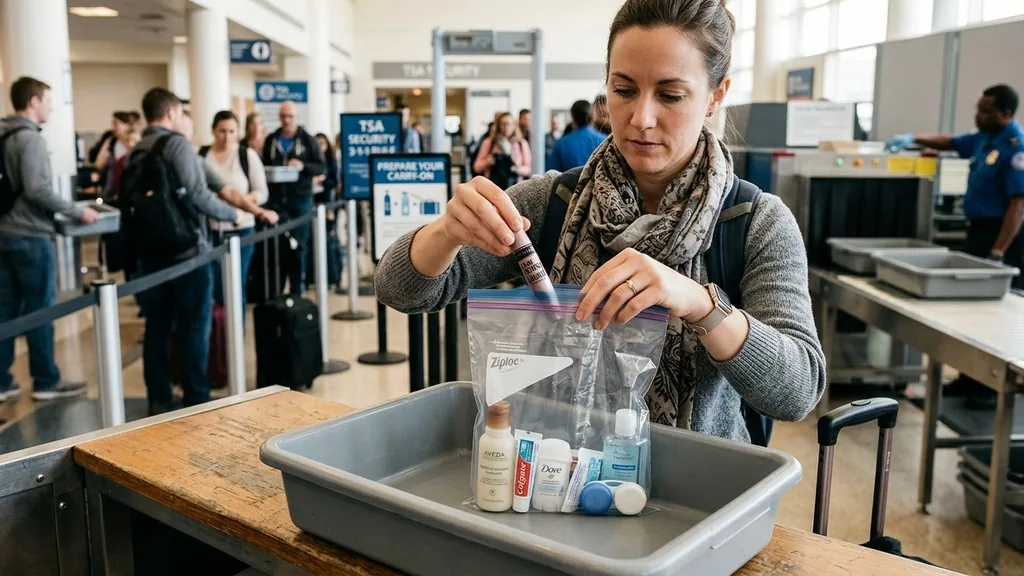
The TSA 3-1-1 rule is the industry standard for transporting liquids, gels, and aerosols in carry-on baggage. Under this regulation, every traveler is allowed to bring liquids in containers that hold no more than 3.4 fluid ounces (100 milliliters) each. Crucially, all these individual containers must fit comfortably inside a single, clear, quart-sized plastic bag.
When you ask if mascara is considered a liquid when flying, the 3-1-1 rule is your definitive guide. Because a standard tube of mascara is almost always well under the 3.4-ounce limit, it is perfectly legal to bring it through security, provided it is packed within that quart-sized bag alongside your other toiletries.
The rationale behind this rule is grounded in the chemical nature of the substances being transported. Security officials focus on the risk posed by substances that could be used to create improvised explosive devices.
While a single tube of mascara is harmless, the volume of non-solid substances permitted in a cabin is strictly capped to manage safety risks. By adhering to the 3-1-1 rule, you ensure that your makeup remains compliant with official TSA guidelines for liquids, gels, and aerosols, allowing you to breeze through the screening process without unnecessary scrutiny from agents.
Why Mascara is Classified as a Liquid
You might wonder why a thick, paste-like substance like mascara is treated the same way as water or shampoo. The classification depends on the physical state of the product at room temperature. In the eyes of airport security, cosmetic consistency is the deciding factor.
If a product can be poured, pumped, squeezed, spread, or smeared, it is categorized as a liquid, gel, or aerosol. Mascara fits this definition perfectly because of its high viscosity. While it isn’t a free-flowing liquid like water, it is definitely a non-solid substance that can be manipulated and altered.
Security scanners are calibrated to detect substances with specific densities. When an agent looks at your carry-on through an X-ray machine, they aren’t necessarily looking for “mascara” specifically; they are looking for organic materials that match the density profiles of restricted items.
Because mascara tubes are dense and often contain metallic components (like the wand or the tube casing), they can sometimes trigger an alarm if they are buried under other items. This is why keeping all your cosmetics in one transparent bag is so effective; it allows security personnel to quickly identify the contents without needing to pull your bag aside for a secondary physical inspection.
Packing Strategies for Your Toiletry Bag
Organizing your toiletry bag is the best way to handle the restrictions placed on personal care products. Since mascara is considered a liquid when flying, you should treat it as part of your core liquid allowance. Instead of tossing loose tubes into your carry-on, designate a specific space for all your liquids.
Many travelers prefer using a clear, TSA-approved quart-sized bag that features a zipper closure. This not only keeps your items organized but also makes the removal process at the security checkpoint much faster.
When packing, think about the pressure changes that occur inside an airplane cabin. While mascara tubes are generally sealed well, extreme temperature changes or pressure fluctuations can sometimes cause minor leaks or clumping. To prevent this, ensure your mascara is tightly capped before you place it in your bag.
If you have several other items, such as liquid foundation, moisturizer, or lip gloss, try to arrange your bag so that the mascara is easily visible. This transparency helps the security officer at the X-ray station verify the contents of your bag at a glance, minimizing the time you spend standing at the conveyor belt.
Comparison of Carry-On vs. Checked Luggage Rules
The rules for your makeup change significantly depending on whether you are carrying it onto the plane or checking it in the cargo hold. When you are questioning is mascara considered a liquid when flying, it is vital to distinguish between these two modes of travel. In checked luggage, the liquid restrictions are much more relaxed.
You are not bound by the 3.4-ounce container limit or the requirement to use a quart-sized bag. However, you should still pack your mascara carefully to prevent it from being crushed by heavier items in your suitcase.
The following table provides a quick reference for how the rules differ based on your baggage choice:
| Category | Carry-On Baggage | Checked Luggage |
|---|---|---|
| Container Size | 3.4 fluid ounces (100ml) or less | No specific size limit |
| Bag Requirement | Must be in a quart-sized bag | No requirement |
| Quantity Limit | Limited by bag size | Generally no limit |
| Accessibility | Must be accessible for screening | Stored in cargo hold |
Addressing Common Misconceptions About Makeup
A frequent source of confusion is the belief that certain makeup products are “dry” enough to bypass the liquid rules. Items like cream eyeshadows, concealers, and even mascara are often misidentified by travelers as solids. The reality is that the TSA is very conservative in its approach.
If a product is not a powder or a solid stick, it is safest to assume it counts toward your liquid allowance. Many people have had their expensive mascara confiscated because they assumed it was a “solid” cosmetic.
It is also important to note that the restriction applies to the container, not just the product inside. Even if you have a massive 5-ounce tube that is only half-full, the TSA will likely flag it because the container itself exceeds the 3.4-ounce limit.
Always check the labels on your makeup containers before heading to the airport. If you have a favorite mascara that comes in a large, professional-sized tube, it is better to leave it at home or pack it in your checked luggage to avoid the heartbreak of having to throw it away at the security checkpoint.
Tips for Efficient Airport Security Screening
Efficiency is the name of the game when it comes to airport security screening. If you want to move through the line quickly, you need to be prepared before you even reach the bins.
Since you know that mascara is considered a liquid when flying, you should proactively take your quart-sized bag out of your carry-on before you reach the front of the line. This simple act tells the security officer that you are compliant and aware of the rules, which often leads to a smoother experience.
You should also be aware of the “opt-out” procedures if you have sensitive products. While mascara is rarely an issue, if you are carrying other specialized liquids that you are worried about, you can always ask for a private screening. However, for standard cosmetic items, this is rarely necessary.
Keep your liquids in an easily accessible pocket of your backpack or carry-on. If you are traveling with a group, ensure that everyone is aware of the liquid restrictions so that one person’s oversight doesn’t hold up the entire party.
Addressing Topical Gaps in Liquid Regulations
One area that often causes confusion is the status of “mascara primer” or “lash growth serums.” Are these considered liquids too? Yes, they are.
Any product with a similar viscosity to mascara, regardless of its specific function or branding, is treated as a liquid. Travelers often ask if they can bring a separate bag for their “medical” liquids, and while that is true for medications, beauty products do not fall under this exemption. You cannot claim your mascara or lash serum as a necessity to bypass the 3.4-ounce limit.
Another gap is the issue of international travel. Are the rules different when you fly abroad? Most countries follow the international standard set by the International Civil Aviation Organization, which is largely similar to the TSA’s 3-1-1 rule.
However, some countries may have slightly different volume caps or even more stringent requirements regarding the transparency of your toiletry bag. Always research the specific security protocols of your destination and any connecting airports. When in doubt, defaulting to the strictest rule—the TSA 3-1-1 standard—is the best way to ensure your products survive the trip.
Maintaining Product Integrity While Traveling
Traveling can be tough on cosmetics. Beyond the question of is mascara considered a liquid when flying, you should also consider the shelf life and quality of your products after a flight. Changes in altitude and pressure can cause air to enter the tube, which may lead to the product drying out faster than usual.
To mitigate this, always ensure the wand is fully inserted and the cap is screwed on tightly. If you are going on a long trip, consider keeping your mascara in a cool, dark place once you arrive at your destination.
Furthermore, avoid leaving your makeup bag in extreme environments, such as a hot car or in direct sunlight, while traveling. Heat can alter the chemical composition of mascara, causing it to separate or become clumpy.
By treating your makeup with the same care you would give to expensive electronics or fragile items, you can ensure that your beauty routine remains consistent throughout your vacation. Remember that the security rules are there to keep everyone safe, but your own packing habits are what keep your products in pristine condition.
Frequently Asked Questions About Liquid Cosmetics
- Does waterproof mascara have different rules? No, all types of mascara, including waterproof, gel, and fiber formulas, are treated as liquids under TSA regulations. They must all fit within your quart-sized bag and adhere to the 3.4-ounce container limit.
- Can I bring multiple tubes of mascara? You can bring as many tubes as you like, provided they all fit into your single quart-sized plastic bag alongside your other liquids. If the bag won’t zip shut, you have too many items and will need to remove some.
- Do I have to take my mascara out of my bag at security? Yes, you are required to remove your quart-sized bag containing all your liquids, including your mascara, from your carry-on and place it in a separate bin during the X-ray screening process.
- What happens if my mascara is confiscated? If your mascara exceeds the 3.4-ounce limit or does not fit in your bag, the TSA agent will ask you to discard it. Unfortunately, there is no way to mail it back to yourself from the security checkpoint.
In summary, when you consider the question of is mascara considered a liquid when flying, the answer is a firm yes. By respecting the 3.4-ounce container limit and keeping all your non-solid substances in a clear, quart-sized bag, you can ensure that your travel day is free of unnecessary stress.
Whether you are a frequent flyer or an occasional vacationer, understanding these regulations is a core part of being a prepared traveler. Keep your makeup organized, stay aware of the rules, and you will be ready for your next adventure with your favorite beauty essentials intact.