

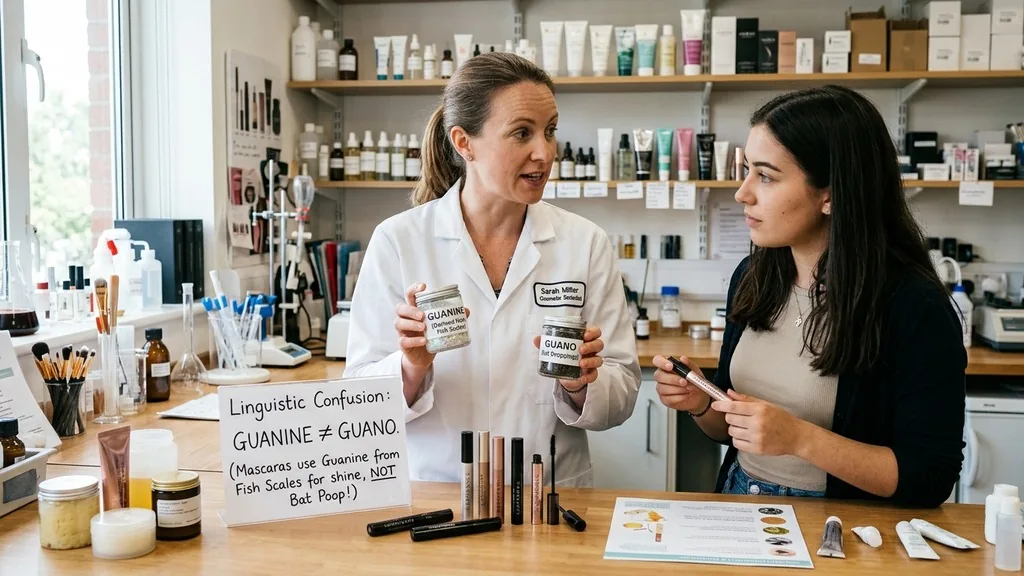
The rumor that your favorite tube of mascara contains bat poop is one of the most persistent urban legends in the beauty industry. It is a story that has been passed around internet forums and social media threads for years, causing many to wonder if their daily makeup routine involves something quite so unappealing.
To put it simply: no, your mascara is not made of bat poop, nor is it made of guano. The confusion likely stems from a linguistic misunderstanding involving a specific chemical compound that sounds remarkably similar to the word for bat waste.
The Linguistic Confusion Between Guanine and Guano
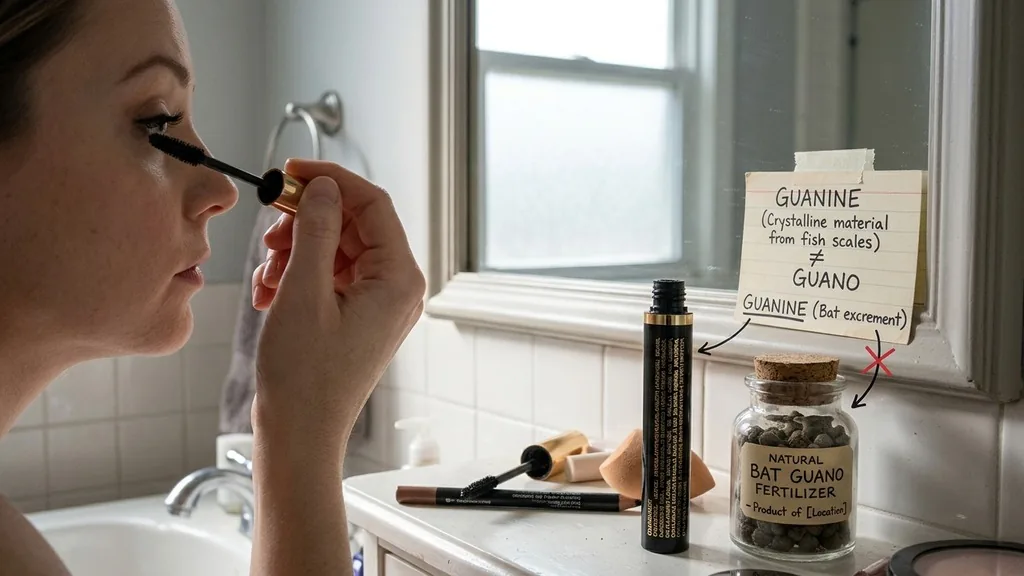
The primary reason this myth persists is the phonetic similarity between the word “guanine” and the word “guano.” Guano is the term used to describe the accumulated excrement of bats and seabirds. In contrast, guanine is a crystalline material that occurs naturally in many organisms.
When people see “guanine” listed on the back of a cosmetic label, they often mistakenly assume it refers to processed bat waste. This is entirely incorrect.
Guanine is a nitrogenous base, one of the fundamental building blocks of DNA and RNA found in all living things. In the context of beauty products, it is a pigment used to create a pearlescent or shimmering effect.
Guanine is often sourced from fish scales, specifically those of herring, rather than anything related to bats. It is processed to create a lustrous, metallic finish that catches the light, which is why you might find it in high-end eyeshadows, nail polishes, and certain types of mascara designed to add a subtle sheen to your lashes. The industry refers to this as “pearl essence.”
It is a sophisticated, highly refined ingredient that has been used in cosmetics for over a century. The idea that a company would harvest bat excrement to achieve this effect is not only scientifically inaccurate but also completely impractical from a manufacturing standpoint.
What Is Actually Inside Your Mascara Tube
If you look past the myths, the reality of mascara formulation is a complex exercise in chemistry. Modern mascara is a carefully balanced mixture of pigments, oils, waxes, and polymers designed to coat, thicken, and darken your lashes without causing irritation to the sensitive skin around your eyes.
These formulations are strictly regulated by health authorities to ensure they are safe for human use. The ingredients are designed to be stable, long-lasting, and easily removable with standard makeup cleansers.
Common ingredients found in almost every brand of mascara include water, which acts as a solvent, and various types of waxes like beeswax, carnauba wax, or paraffin. These waxes provide the structure that allows the product to cling to the lash hair and hold its shape throughout the day. Polymers are also added to help the mascara form a film that resists smudging and flaking.
Without these synthetic and natural polymers, your mascara would likely run the moment you stepped into a humid environment. When you apply your makeup, you are using a product that has undergone rigorous testing to ensure it is sterile and safe.
The Role of Pigments and Carbon Black
While guanine might provide a shimmer, the deep, intense color of most black mascaras comes from a different source entirely. The most common pigment used to achieve that “jet black” look is carbon black.
This is a finely divided form of carbon produced by the incomplete combustion of heavy petroleum products. It is the industry standard for creating intense, long-wearing color in eye makeup because it is highly stable and provides a very high level of opacity.
In addition to carbon black, manufacturers may use iron oxides to create shades of brown, navy, or plum. These iron oxides are essentially refined forms of rust, which have been used as pigments in human history for millennia.
Because they are inorganic, they are generally very safe for use on the body and are highly resistant to degradation. You can see a breakdown of common categories of ingredients found in mascara in the table below:
| Ingredient Category | Primary Function | Example |
|---|---|---|
| Waxes | Texture and hold | Beeswax, Carnauba |
| Pigments | Color and opacity | Carbon black, Iron oxides |
| Film Formers | Smudge resistance | Acrylates copolymer |
| Preservatives | Safety and longevity | Phenoxyethanol |
Why Guano Is Not Used in Cosmetics
It is worth addressing why bat guano—or any animal excrement—would be fundamentally unsuitable for use in beauty products. Beyond the obvious “yuck factor,” the chemical composition of animal waste is highly inconsistent. It contains bacteria, parasites, and organic matter that would decompose rapidly.
A cosmetic product requires a high level of purity and chemical stability. If a manufacturer were to introduce raw biological waste into a formula, the product would become a breeding ground for mold and pathogens within days, leading to severe eye infections and allergic reactions.
Furthermore, the process of purifying an ingredient like guanine from its source—whether from fish scales or synthetic production—is highly controlled. It involves chemical extraction, filtration, and stabilization. You cannot simply scoop up material from a cave and expect it to function as a cosmetic ingredient.
The regulatory standards for cosmetics, such as those set by the Food and Drug Administration, require that all ingredients be safe for their intended use. Using fecal matter in a product applied to the eye area would result in immediate product recalls and significant legal repercussions.
The Evolution of Cosmetic Ingredients
The beauty industry has come a long way from the ancient days when kohl was made from soot and galena. Today, the focus is on innovation and safety. Modern chemistry allows for the creation of synthetic versions of many natural substances.
For instance, while guanine can be harvested from fish, many companies now use synthetic mica or bismuth oxychloride to achieve that same pearlescent look. These synthetic alternatives are often preferred because they are more consistent in quality and easier to manufacture at scale.
This shift toward synthetic ingredients has also helped the industry move toward cruelty-free practices. Many consumers now demand that their beauty products be vegan and free from any animal-derived ingredients.
Because of this, the use of fish-derived guanine has declined significantly. If you are concerned about what is in your beauty routine, looking for “vegan” or “cruelty-free” labels is a great way to ensure that no animal byproducts—of any kind—are involved in the production of your makeup.
Common Myths About Makeup Origins
The myth about bat poop is just one of many strange stories that circulate about the origins of makeup. People have often heard that lipstick is made of fish scales or that eyeshadow contains crushed insects.
While some historical pigments, such as carmine (which is derived from the cochineal insect), are indeed used in the industry, most of these stories are either gross exaggerations or complete fabrications. The reality is that the modern cosmetic industry relies on a very specific set of approved chemicals that are well-documented.
When you hear a sensational claim about a beauty product, it is usually designed to go viral rather than to inform. These myths thrive because they tap into a primal fear of putting “unnatural” or “dirty” things on our bodies. However, the chemistry of makeup is actually quite conservative.
Companies rely on ingredients that have been used for decades because they have a proven track record of safety. They are not looking to experiment with unconventional, biological waste products that would jeopardize their brand reputation and invite government scrutiny.
How to Read Your Own Beauty Labels
One of the best ways to combat misinformation is to learn how to read the ingredient list on your own products. While the names can look like a foreign language, they are simply the standardized International Nomenclature of Cosmetic Ingredients (INCI) names.
If you see a word you don’t recognize, a quick search on a reputable database will tell you exactly what it is and what it does. You will likely find that most of the “scary” sounding chemicals are just standard preservatives, solvents, or stabilizers.
If you are worried about specific ingredients, you can look for brands that emphasize transparency. Many modern beauty companies now publish their full ingredient lists online and provide explanations for why each component is included.
This level of transparency is becoming the industry standard. By taking a proactive approach, you can move away from relying on internet rumors and instead base your consumer choices on facts and science.
Addressing Topical Gaps: Why the Myth Persists
Why does this specific rumor about bat poop continue to circulate? It persists because of the “gross-out” factor. Humans have a natural tendency to spread information that triggers a strong emotional response, and the idea of applying animal waste to one’s eyes is inherently provocative.
Even when the truth is presented, the myth is often more “interesting” than the reality of industrial chemistry. It is a classic example of a viral meme that survives because it is easy to remember and easy to share.
To summarize the key points, here is a list of facts that debunk the misinformation:
- Guanine is a pearlescent pigment found in all living things, not just bats.
- Cosmetic regulations strictly prohibit the use of biological waste or contaminants.
- Most black mascara gets its color from carbon black or iron oxides.
- The chemical similarity between “guanine” and “guano” is purely linguistic.
- Modern mascara is produced in sterile laboratory environments using high-purity ingredients.
By understanding the difference between these terms and recognizing the strict safety protocols of the cosmetic industry, you can feel confident in your beauty choices. There is no secret, dirty ingredient hiding in your makeup bag. The products you use are the result of rigorous science, not the harvesting of cave waste.
Frequently Asked Questions
- Is there any animal waste in mascara? No, there is absolutely no bat poop or other animal excrement in any commercially produced mascara. Such substances would be toxic, unsanitary, and entirely illegal under modern health and safety regulations governing the cosmetics industry worldwide.
- What is the shimmer in makeup if it is not guano? The shimmering effect in makeup is provided by guanine, which is a crystalline compound often sourced from fish scales, or by synthetic minerals like mica. It is completely safe, highly refined, and has no relation to biological waste products.
- Should I be worried about the ingredients in my mascara? You should not be worried about the standard ingredients in regulated mascara. They are tested for safety and effectiveness. If you have sensitive skin, check the label for specific allergens, but rest assured that the ingredients are clean and professionally formulated.


