

The question of whether bat poop is in mascara has circulated on social media platforms and beauty forums for years, often serving as a cautionary tale about the bizarre origins of our daily beauty products. If you have ever wondered if your favorite lash-enhancing tube contains animal waste, the short answer is a definitive no.
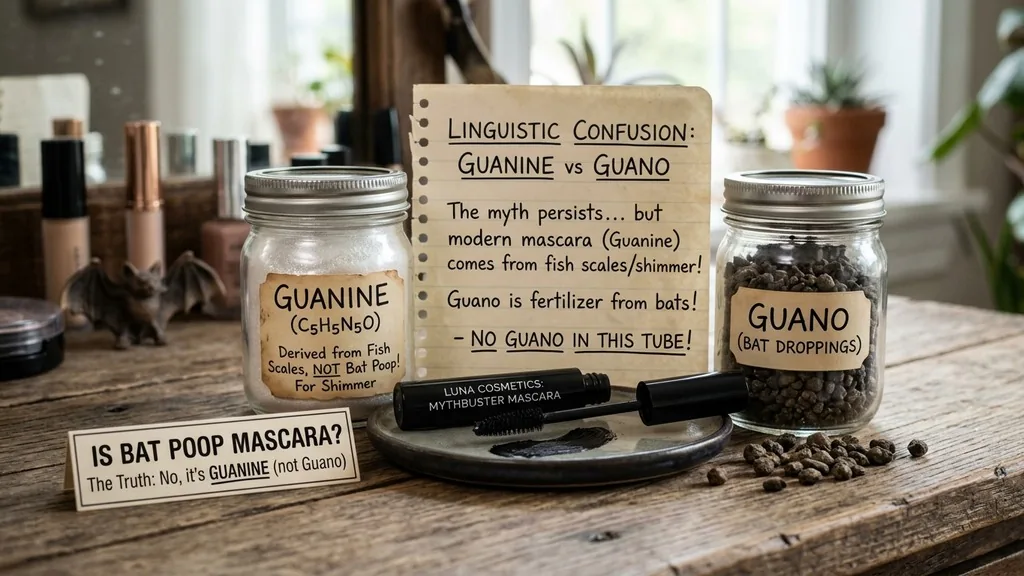
There is no bat guano in any commercially produced mascara on the market today. This persistent urban legend likely stems from a linguistic misunderstanding involving the chemical component known as guanine, which sounds phonetically similar to the word guano.
When consumers research the ingredients list of their cosmetics, they often encounter terms that sound scientific or unusual. Because many people know that bat waste, or guano, is a potent fertilizer rich in nitrogen, the mental leap to cosmetics seems plausible to some.
However, the beauty industry relies on strictly regulated synthetic or ethically sourced alternatives. Understanding the chemistry behind your makeup helps demystify these rumors and allows you to make informed decisions about the products you apply near your eyes.
The Linguistic Confusion: Guanine vs. Guano

The primary reason this myth persists is the confusion between the word guanine and the word guano. Guano is the technical term for the excrement of bats and seabirds, which is highly valued as a fertilizer due to its high phosphorus and nitrogen content. Guanine, on the other hand, is a crystalline substance that is a nucleobase—one of the fundamental components of DNA and RNA.
In the context of cosmetics, guanine is used as a pearlescent pigment. It provides that shimmering, iridescent quality found in high-end makeup, including some nail polishes, eyeshadows, and occasionally, specific formulations of mascara.
While guanine can be derived from fish scales, the version used in modern cosmetic products is almost exclusively synthetic. Scientists have developed ways to create this iridescent effect using minerals like mica or titanium dioxide, which are far more stable and cost-effective than harvesting natural biological sources.
When beauty enthusiasts hear that their mascara contains guanine, they sometimes mishear or misread the term as guano, triggering the viral rumor that bat excrement is a key ingredient in their makeup routine. This phonetic similarity is the sole link between bats and your vanity table.
What Is Actually Inside Your Mascara?
Modern mascara formulas are complex chemical mixtures designed to darken, thicken, lengthen, and curl your lashes while maintaining a safe environment for your eyes. Instead of biological waste, manufacturers use a combination of polymers, waxes, oils, and pigments.
These ingredients are carefully balanced to ensure the product stays on your lashes all day without flaking or causing irritation. The base of most mascaras consists of a solvent (usually water), a binder, and a thickening agent.
Carbon black or iron oxides are the most common pigments used to achieve that deep, dramatic black color. These are inorganic compounds that provide intense saturation and are generally considered safe for use in the delicate eye area. Waxes, such as beeswax, carnauba wax, or paraffin, help the mascara adhere to the lash hair and provide structure.
Oils like castor oil or mineral oil keep the formula fluid and prevent the lashes from becoming brittle. By understanding these components, it becomes clear that there is no functional reason for any manufacturer to include guano in their product.
Common Ingredients Found in Mascara Formulas
- Water: Acts as the solvent to keep the product in a liquid state.
- Carbon Black or Iron Oxides: Provide the deep, dark pigment for the lashes.
- Beeswax or Carnauba Wax: Used to thicken the formula and provide hold.
- Polymers: Create a film over the lashes to prevent smudging or flaking.
- Preservatives: Essential for preventing bacterial growth within the tube.
- Oils: Condition the lashes and ensure smooth application.
The Evolution of Cosmetic Ingredients Over Time
Beauty standards have changed drastically throughout history, and so have the substances we use to achieve them. In ancient Egypt, kohl was made from galena (lead sulfide), malachite, and burnt almonds. While these early concoctions were effective at darkening the eyes, they were often toxic.
As the cosmetics industry modernized, regulations became stricter. Today, the Food and Drug Administration (FDA) oversees the safety of cosmetic products in the United States, ensuring that the ingredients used are not harmful to the consumer.
The history of makeup is filled with strange substances, but bat waste has never been a documented ingredient in the mass production of eye makeup. The transition from using natural, potentially dangerous minerals to highly refined, laboratory-tested compounds has made modern makeup safer than ever before.
If a company were to include a biological waste product in their mascara, they would face massive regulatory hurdles, safety recalls, and immediate public backlash. The industry is focused on stability and hygiene, two qualities that are diametrically opposed to the inclusion of organic excrement.
Addressing the Topical Gap: Why Do These Myths Persist?
Even with scientific evidence to the contrary, myths about cosmetic ingredients often survive because they tap into a primal fear of the “unknown” or “unnatural.” Many consumers are increasingly concerned about the provenance of their products, leading to a rise in “clean beauty” marketing.
This hyper-awareness can lead to misinformation, where consumers assume that if an ingredient name sounds strange or chemical, it must be harmful or sourced from something gross. When someone reads an ingredients list and sees words they don’t recognize, they may look for explanations on the internet, where rumors can quickly outpace verified facts.
Another factor is the “ick factor” of viral content. Social media platforms prioritize high-engagement content, and a video claiming that your mascara is made of bat poop is significantly more likely to go viral than a video explaining the synthesis of mica or iron oxides.
This creates a feedback loop where the myth is repeated so often that people begin to accept it as common knowledge. Dispelling these myths requires a shift in how we interpret ingredient labels and a healthy skepticism toward alarmist social media claims.
Understanding the Role of Guanine in Beauty
Guanine is a fascinating substance, but it is important to distinguish between its biological origins and its industrial applications. In nature, guanine is what gives fish scales their silvery, reflective appearance. Historically, it was harvested from the scales of herrings to be used in cosmetics.
This practice, while once common, has largely been phased out in favor of synthetic alternatives. Synthetic guanine is manufactured in a lab, which is not only more ethical but also ensures a consistent level of quality and purity that natural sources cannot provide.
Because the name is so similar to guano, it is easy to see how the confusion arose. However, in the context of chemistry, guanine is a purine derivative. It has absolutely no connection to the digestive system of bats.
When you see guanine on an ingredient label, you are looking at a light-reflecting agent used to give products a pearlescent sheen. It is a far cry from the byproduct of a bat’s diet. Understanding this distinction is key to debunking the myth once and for all.
Comparing Traditional vs. Modern Mascara Ingredients
The following table highlights the difference between what people fear is in their mascara versus what is actually in the tube.
| Ingredient Category | The Myth (Bat Guano) | The Reality (Modern Mascara) |
|---|---|---|
| Pigment | None (Waste product) | Iron Oxides / Carbon Black |
| Shimmer | None | Synthetic Guanine / Mica |
| Base | None | Water / Polymers |
| Function | N/A | Darkening and Lengthening |
This comparison illustrates that the components used in modern manufacturing are engineered for specific beauty outcomes. There is no crossover between the chemistry of high-quality cosmetics and the agricultural utility of bird or bat waste.
The Importance of Cosmetic Safety Regulations
The cosmetics industry is subject to rigorous safety standards designed to protect the consumer from infections, allergic reactions, and toxic exposure. Mascara is particularly strictly regulated because it is applied directly to the eyelashes, which are millimeters away from the eyeball. Any ingredient that could potentially cause an infection—such as the bacteria found in animal waste—would be considered a massive liability and a violation of health safety protocols.
Manufacturers perform extensive testing on their products before they ever reach the shelf. This includes stability testing, microbial testing, and toxicity assessments. If a brand were to use an unrefined biological waste product, it would fail the microbial testing phase immediately due to the presence of pathogens.
The presence of these strict regulations is the best defense against the idea that your makeup contains anything as unsanitary as bat droppings. Consumers can feel confident that the products they buy from reputable brands have passed these safety hurdles.
How to Identify Real Ingredients in Your Products
If you are concerned about what is in your mascara, the best approach is to check the ingredient label directly rather than relying on hearsay or social media rumors. Every product sold in stores must have a list of ingredients in descending order of concentration. If you see a term you don’t recognize, you can look it up in a reputable database, such as the Environmental Working Group (EWG) Skin Deep database or the official website of the cosmetic manufacturer.
When you scan an ingredient list, you will typically see names like Acrylates Copolymer, Stearic Acid, or Candelilla Wax. These are industry-standard components for creating a long-lasting, smudge-proof finish.
If you are ever unsure about a specific ingredient, reaching out to the customer service department of the beauty brand is a great way to get clarity. Reputable companies are generally transparent about their sourcing and are more than happy to explain why they use certain ingredients to achieve the desired effect for your lashes.
FAQ: Common Questions About Mascara Ingredients
- Is there any animal product in mascara? Some mascaras use beeswax or carmine (a pigment derived from cochineal insects), but bat guano is never used. If you are looking for vegan options, you can easily find formulas that use plant-based waxes and synthetic pigments instead of animal-derived ingredients.
- What is the purpose of guanine in cosmetics? Guanine is used primarily as a pearlescent or shimmering agent. It reflects light to create a soft, iridescent glow. In modern cosmetics, it is almost exclusively synthetic, meaning it is manufactured in a lab rather than being harvested from fish scales or any other animal source.
- Can I trust social media claims about makeup ingredients? Generally, no. Social media often prioritizes shock value over scientific accuracy. If a claim sounds too strange to be true, it likely is. Always verify information by checking the official ingredient list on the product packaging or the company’s website to ensure you are getting the facts.
- Why do people believe the bat poop myth? The myth persists largely due to the phonetic similarity between “guanine” and “guano.” Because they sound alike, people assume they are the same thing. Once a rumor like this gains traction online, it is difficult to stop, even though there is no scientific basis for the claim.


