

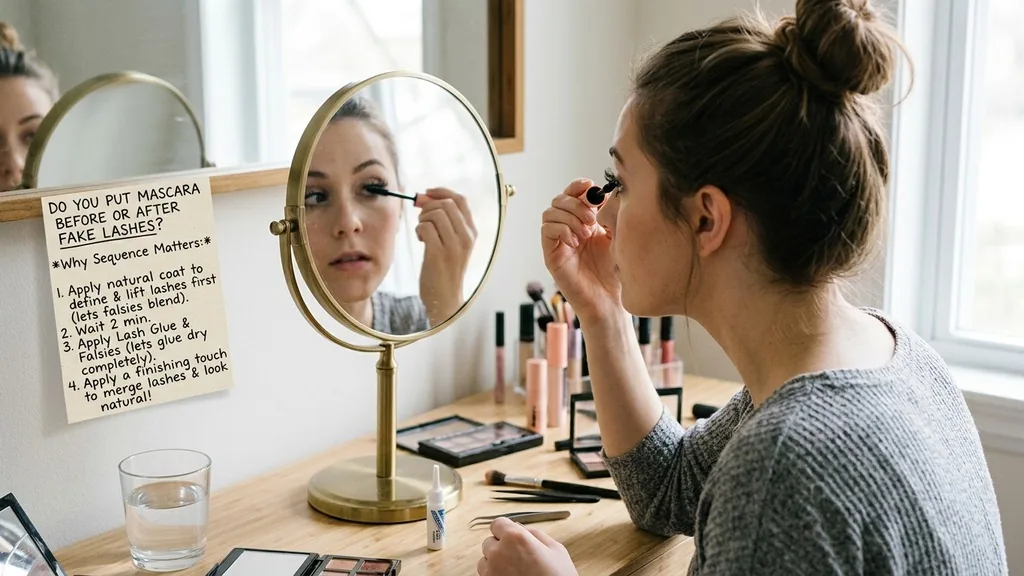
Achieving a flawless, wide-eyed look often comes down to the order of operations in your beauty routine. Many makeup enthusiasts find themselves questioning if they should coat their natural hairs in pigment before or after securing those dramatic additions.
The confusion is understandable, as different techniques yield vastly different results for your overall aesthetic. Generally, applying mascara before fake lashes serves as a foundational step to help blend your natural hair with the falsies, while applying it after can help lock them together for a more seamless finish.
Why the Sequence of Lash Application Matters

The sequence of your eye makeup application dictates how well your falsies integrate with your natural fringe. When you place false lashes onto bare eyes, you might notice a distinct gap between the two, which can make the look feel disconnected or artificial. By understanding the structural relationship between your natural hair and the adhesive strip, you can achieve a sophisticated, professional finish that lasts throughout the day.
If you choose to use mascara as a base, you are essentially creating a sturdy platform. This is particularly useful if your natural lashes are light in color or stick-straight, as they need to be lifted and darkened to match the deep tone of high-quality synthetic fibers.
Conversely, if you prefer to skip mascara on your own lashes before application, you risk the falsies looking like they are floating above your eyelid. The goal is to create a cohesive bond that mimics the density of a natural lash line.
The Case for Applying Mascara Before Fake Lashes
Applying mascara before fake lashes is often considered the best practice for beginners and those looking for a subtle, blended effect. When you darken your natural hair first, you provide a dark backdrop that hides the band of the false lashes. This method is highly effective because it ensures that the weight of the mascara doesn’t cause your falsies to droop or lose their curl after they have already been glued to your lid.
Another benefit to this approach is the ability to curl your natural lashes effectively. If you use a mechanical lash curler after the falsies are glued on, you run the risk of pulling the adhesive loose or damaging the synthetic fibers.
By prepping your eyes with a light coat of mascara first, you establish the shape and lift of your natural lashes, which then act as a structural support for the falsies. This technique is particularly popular for those who wear wispies, as the added volume from your own lashes helps fill in the gaps between the individual wispy clusters.
Using Mascara After Application for Maximum Impact
For those who want a dramatic, high-glam look, applying mascara after the lashes are secured can be a transformative technique. This process involves using a small amount of mascara to bridge the gap between the natural and artificial hairs. By gently brushing your natural lashes upward into the band of the falsies, you force them to merge together, resulting in a significantly more voluminous and uniform appearance.
You must exercise extreme caution when using this method. If you apply too much product, you can cause the synthetic fibers to become clumpy or heavy, which might lead to premature shedding or an unnatural, spidery look. Always use a light hand.
A simple flick of the wand at the base of the lashes is often enough to secure the blend. This technique is best suited for individuals who use strip lashes, as the band provides a stable anchor that can handle a bit of extra weight without sagging.
Understanding the Impact of Lash Adhesive and Mascara
The interaction between your lash adhesive and your mascara is a critical factor in the longevity of your look. Most standard lash glues are designed to bond to skin or the base of your natural lashes.
If you apply a thick, oily layer of mascara to your natural lashes right before applying the glue, you might find that the adhesive struggles to find a secure grip. This is why many makeup artists recommend using a waterproof or oil-free mascara formula if you plan to layer it underneath.
Furthermore, the type of adhesive you choose matters. A clear-drying adhesive is often more forgiving if you are a novice, while a dark-toned glue can help camouflage the band if you decide to skip the mascara step entirely.
Understanding the chemical compatibility of your products prevents the dreaded “lifting” at the corners of your eyes. If you ever feel like your lashes are peeling off, it is frequently due to an excess of product residue on the lash line that prevented the glue from making direct contact with the skin.
Best Practices for Blending Natural and Fake Lashes
Blending is the secret to a professional-looking eye. Without proper integration, the eye can appear disjointed, with two distinct layers of hair fighting for attention.
To achieve a seamless transition, consider using a pair of tweezers to gently pinch your natural lashes and the falsies together once the glue has become tacky. This physical connection is far more effective than any amount of makeup product.
- Clean your natural lashes of any old makeup residue before starting.
- Apply a very thin layer of mascara to avoid weighing down the lash line.
- Use a dark-toned adhesive to minimize the visibility of the lash band.
- Wait for the adhesive to turn tacky before placing the strip on your eyelid.
- Gently press the lashes into the lash line using the flat side of your tweezers.
- Avoid using an eyelash curler once the falsies are in place to preserve their shape.
By following these simple steps, you minimize the risk of damaging your natural lashes while maximizing the impact of your chosen falsies. Remember that consistency in your routine will help you develop the muscle memory needed to achieve these results in record time.
Equipment and Product Considerations
Not all mascaras are created equal, and your choice of product can significantly influence the success of your lash application. Some formulas are designed to be lengthening, while others focus on volume or curling.
When you are planning to wear fake lashes, a lengthening, smudge-proof mascara is usually the best choice. Thick, volumizing mascaras can sometimes be too heavy, causing the false lashes to lose their lift or look overly dramatic in an unappealing way.
| Feature | Mascara Before Application | Mascara After Application |
|---|---|---|
| Primary Goal | Creating a base/foundation | Blending and merging |
| Risk Level | Low (minimal damage risk) | Moderate (potential for clumping) |
| Best For | Beginners/Natural Looks | Glam/Dramatic Looks |
| Adhesive Grip | Stronger bond to skin | Requires careful application |
As you can see, the choice depends entirely on the look you want to achieve. For a daily, office-appropriate look, mascara before is the clear winner. For a night out or a special event where you want the most “lash” possible, the post-application blending technique is superior.
Common Mistakes to Avoid During Application
One of the most frequent mistakes is applying mascara to the tips of the fake lashes. This is entirely unnecessary and often ruins the delicate taper of the synthetic hair. The tips of false lashes are designed to look like natural hair, which naturally tapers at the end.
By coating them in thick, black pigment, you flatten that dimension and create a heavy, artificial look. Keep your mascara work strictly at the base of the lash line.
Another error involves using too much adhesive. If you apply a massive bead of glue, it will inevitably smear onto your natural lashes, making the blending process messy and difficult. A thin, even line of glue along the band is all that is required.
If you find that you have excess glue, use a cotton swab lightly dipped in makeup remover to clean the area before it sets completely. For more detailed instructions on eye safety and product usage, you can refer to the FDA guidelines on eye cosmetic safety to ensure your beauty routine remains healthy.
Addressing Topical Gaps: Troubleshooting Common Issues
A frequently asked question involves what to do if your lashes start to lift during the day. If you have already applied mascara, you might be hesitant to add more glue, but you can carefully use a small amount of clear lash adhesive on a thin liner brush to touch up the corners.
Another issue arises when users have sensitive eyes. If you fall into this category, it is vital to avoid waterproof mascara as it requires harsh oil-based removers that can irritate the sensitive skin around the eye and loosen the lash bond prematurely.
If you are struggling with the “gap” look, try applying a tight-line of black eyeliner to your upper waterline. This creates the illusion of depth and makes the transition from your skin to the lash band almost invisible, regardless of whether you used mascara before or after. This simple trick is a favorite among makeup artists for creating a polished, high-definition eye look that doesn’t rely solely on the volume of the lashes themselves.
FAQ: Frequently Asked Questions
- Does mascara damage fake lashes? Yes, using heavy or oil-based mascaras can cause the synthetic fibers to lose their curl and structural integrity. Stick to water-based formulas and apply them sparingly to the base rather than the tips to extend the lifespan of your favorite pair of falsies.
- Can I reuse lashes if I put mascara on them? It is possible, but difficult. Mascara residue often builds up on the lash band and fibers, making them harder to clean and eventually leading to a loss of shape. To get the most uses out of your lashes, try to avoid putting mascara directly on the synthetic hairs.
- What if my natural lashes are very short? If you have short natural lashes, applying mascara before the fake lashes is highly recommended. It provides the necessary volume and color to help your natural lashes blend better with the falsies, preventing the appearance of two distinct layers and giving you a more cohesive look.
- Is it better to use waterproof mascara? Generally, no. Waterproof mascara is notoriously difficult to remove and often requires oil-based cleansers that can dissolve the lash adhesive. Unless you are attending an event where you expect to cry or be in humidity, a standard, long-wearing formula is much safer for the longevity of your falsies.
Mastering the art of lash application is a journey of trial and error. By experimenting with these techniques, you will eventually find the method that works best for your specific eye shape and preferred style. Whether you prioritize a quick morning routine or a full-glam finish, understanding the relationship between your mascara and your falsies is the key to achieving a professional, eye-catching result every single time you apply your makeup.


