

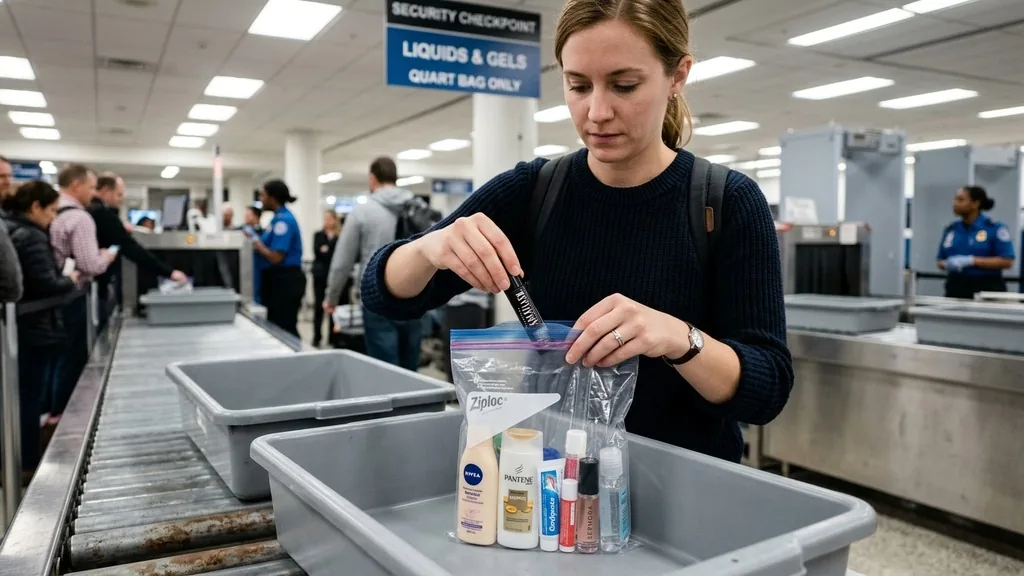
Navigating airport security can be a high-stress experience, especially when you are unsure which of your beauty products qualify as restricted items. If you have ever stood in a TSA security line wondering if your favorite tube of mascara will be confiscated, you are not alone. The question of whether tsa is mascara a liquid is one of the most common inquiries among frequent flyers.
To put it simply, the Transportation Security Administration (TSA) classifies mascara as a liquid, gel, or aerosol, meaning it falls under the same strict regulations as your shampoo, perfume, or toothpaste. Understanding these nuances is vital for ensuring your travel preparations go smoothly and that your expensive makeup products stay in your carry-on bag rather than ending up in a trash bin at the checkpoint.
Understanding the TSA Liquid Rule for Makeup
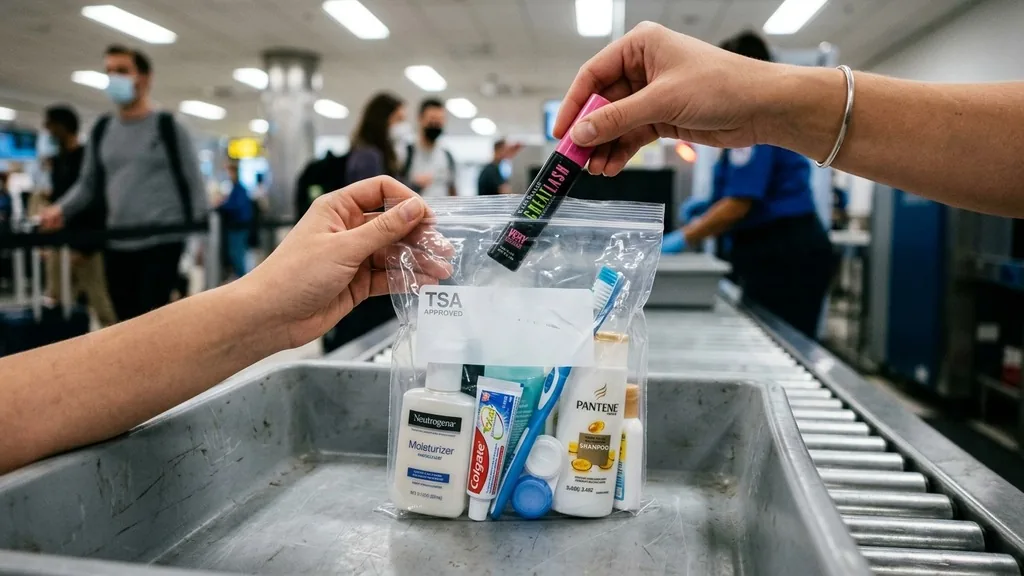
The core of the issue lies in the 3-1-1 rule, which governs how passengers transport liquids through security checkpoints. Under these guidelines, any liquid, gel, or aerosol must be contained in a container that holds 3.4 ounces (100 milliliters) or less. All these containers must then fit comfortably inside one clear, quart-sized, resealable plastic bag.
When you ask if tsa is mascara a liquid, the answer is a definitive yes. Because the consistency of mascara is essentially a viscous liquid or gel, it is subject to these exact limitations.
While a standard tube of mascara is almost always well under the 3.4-ounce limit, the classification remains important because it dictates how you must pack it. Many travelers mistakenly assume that because mascara is a small cosmetic item, it is exempt from the “liquid” designation. However, the TSA defines liquids based on their physical state, not their purpose.
Whether you are carrying a high-end designer mascara or a drugstore staple, the security officers will treat it as a liquid. If you carry multiple tubes of mascara, they must all fit into your single quart-sized bag alongside your other liquids like facial cleansers, moisturizers, or contact lens solution. Failure to consolidate these items can result in a manual inspection of your carry-on luggage, which can add significant time to your transit experience.
Categorizing Common Beauty Products at Security
Beyond mascara, many travelers are confused about the status of other makeup items. The rule of thumb for any beauty product is: if you can spread it, spray it, smear it, or pour it, the TSA likely considers it a liquid or gel. This includes items that might seem like solids but have a high moisture content.
For instance, lip gloss, liquid eyeliner, and concealer are all categorized as liquids. Even cream-based eyeshadows and stick foundations fall into this bucket.
To help you distinguish between what needs to be in your clear bag and what can stay loose in your carry-on, refer to the following classification table. This breakdown helps clarify common points of confusion for travelers trying to pack makeup efficiently.
| Product Type | TSA Classification | Pack in 3-1-1 Bag? |
|---|---|---|
| Mascara | Liquid/Gel | Yes |
| Lipstick (Solid) | Solid | No |
| Liquid Eyeliner | Liquid | Yes |
| Powder Blush | Solid | No |
| Concealer (Cream) | Gel/Liquid | Yes |
| Setting Spray | Aerosol/Liquid | Yes |
By identifying these categories before you arrive at the airport, you can streamline your packing process. Keeping your liquids organized in a dedicated, transparent pouch allows security officers to see your products clearly without needing to rummage through your entire suitcase. This proactive approach is the best way to ensure your travel experience remains stress-free and that you adhere to all security protocols without unnecessary friction.
Why Mascara Consistency Affects Security Screening
The reason the TSA is so particular about the consistency of your beauty products is rooted in the fundamental goal of the official TSA liquids rule. Security technology is designed to detect potentially hazardous materials that could be disguised as common household items. Because mascara, liquid eyeliner, and lip gloss share a similar chemical density and viscosity with other substances that could be used to create prohibited items, the agency maintains a broad definition of “liquids.”
When you place your bag through the X-ray machine, the scanner looks for density variations. A tube of mascara, while small, appears as a dense object. If it is packed inside a quart-sized bag with other liquids, the X-ray tech can quickly verify the contents.
If you leave your mascara hidden deep inside a backpack pocket away from your other liquids, the machine might flag the area for a secondary manual check. This is not because the mascara itself is dangerous, but because the inconsistency in your packing patterns makes it harder for the automated systems to clear your bag effectively. By grouping your mascara with your other liquids, you are essentially helping the security technology do its job, which leads to a faster and more efficient screening process for everyone involved.
Best Practices for Packing Makeup for Air Travel
If you want to avoid issues, the best strategy is to be proactive about your carry-on organization. When preparing for a trip, start by separating your beauty products into “dry” and “wet” categories.
Dry products, such as pressed powders, blushes, bronzers, and pencil eyeliners, do not need to go in your liquids bag. You can keep these in your main makeup kit or a separate toiletry bag.
For the “wet” items, including your mascara, follow these steps:
- Select a clear, quart-sized bag that is durable and has a high-quality zipper. This prevents leaks and ensures the bag stays closed during transit.
- Consolidate all small liquid items. Even if you have several tubes of mascara, ensure they are all in the same clear bag.
- Place the bag in an easily accessible part of your carry-on.
You will likely need to remove this bag and place it in a separate bin during the security scan.
- Check for leaks. Travel can cause pressure changes, which sometimes lead to tubes bursting.
Ensure your mascara caps are screwed on tightly.
- Consider multi-use products. If you can use a single product for multiple purposes, you save space in your liquids bag.
By following these simple steps, you minimize the chance that an agent will need to open your bag for a manual search. Many travelers find that using a high-quality, clear toiletry bag makes a world of difference. Not only does it look cleaner, but it also signals to the TSA agents that you are a prepared traveler who understands the rules, which often leads to a more professional and pleasant interaction at the checkpoint.
Addressing Common Misconceptions and Topical Gaps
A frequent point of confusion is whether “solid” makeup sticks, like foundation sticks or cream blushes, count as liquids. The TSA defines a liquid as anything that can be poured, pumped, squeezed, or spread. If you can smear a product on your hand and it holds its shape, it might be a solid.
However, if it softens significantly with body heat or has a creamy, spreadable texture, the TSA will almost certainly classify it as a gel. When in doubt, it is always safer to put it in your liquids bag. The penalty for having a “solid” in your liquids bag is nonexistent, whereas the penalty for having a “liquid” outside of your bag can be the loss of that product.
Another area of confusion is the “travel-size” threshold. The 3.4-ounce limit is quite generous for most cosmetics. A standard mascara is usually around 0.2 to 0.3 ounces, which is well below the limit.
You do not need to worry about the volume of individual mascara tubes; you only need to worry about the total volume of your quart-sized bag. You are allowed to carry as many tubes of mascara as can physically fit into that quart-sized bag along with your other liquids. If you are a professional makeup artist traveling with a large kit, you may need to check your bags to avoid these restrictions, but for the average traveler, the standard carry-on allowance is more than sufficient.
The Future of Security and Beauty Products
As airport security technology continues to evolve, we are seeing the introduction of advanced 3D scanners in many major airports. These machines provide a much more detailed view of the contents of your carry-on bags.
In some airports, these new scanners have already eliminated the need to remove laptops and, in some cases, liquids from your bag. However, until these systems are universal, you must assume that you will need to follow the traditional 3-1-1 rule.
Regardless of the technology, the classification of mascara as a liquid is unlikely to change. The chemical composition of cosmetic products is inherently stable, but because they share characteristics with restricted substances, they will remain under the purview of liquid restrictions.
As a traveler, the best approach is to embrace the current rules, stay organized, and keep your beauty routine simple when flying. By treating your mascara as a liquid and packing it accordingly, you ensure that your travel day remains focused on your destination rather than on the contents of your makeup bag.
Ultimately, the goal of the TSA is to maintain a secure environment for all passengers. While the rules regarding liquids can feel burdensome, they are designed to protect the integrity of the flight.
By understanding that tsa is mascara a liquid—and acting on that knowledge—you contribute to a safer, more efficient travel system. Whether you are flying for business or leisure, being a “pro” at the security checkpoint is a skill that saves time and reduces stress, allowing you to focus on the more enjoyable aspects of your journey.
Frequently Asked Questions
Is mascara considered a liquid by the TSA?
Yes, the TSA classifies mascara as a liquid. Even though it is a small cosmetic item, its consistency falls under the agency’s definition of liquids, gels, and aerosols. Therefore, it must be placed inside your quart-sized, clear, resealable liquids bag along with your other travel-sized toiletries.
Do I need to take my mascara out of my bag at security?
Yes, you should remove your quart-sized liquids bag from your carry-on and place it in a separate bin for X-ray screening. Since your mascara must be inside this bag, it will be screened alongside your other liquids, such as your facial creams, lip gloss, and contact solution.
Can I bring multiple tubes of mascara in my carry-on?
You can bring as many tubes of mascara as you like, provided they all fit inside your single quart-sized, clear, resealable bag. The TSA limits the total volume of the bag, not the number of individual items, as long as each container is 3.4 ounces or less.
What happens if I forget to put my mascara in the liquids bag?
If you leave your mascara loose in your carry-on, a security officer may flag your bag for a manual inspection. This can cause delays. If the officer determines it is a liquid, they may ask you to remove it or, in rare cases, discard it if it exceeds the 3.4-ounce limit.


