

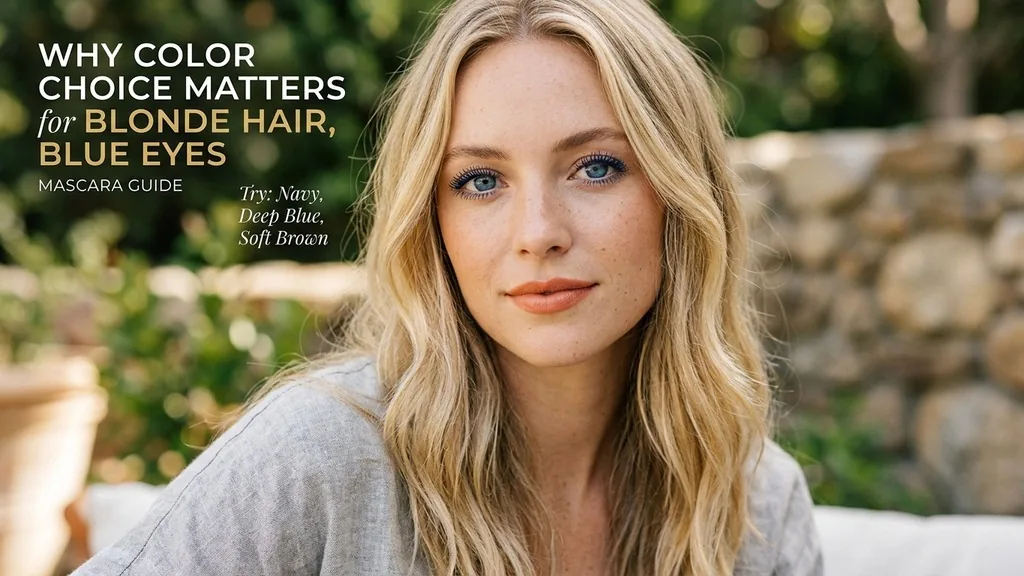
Finding the ideal shade of mascara for blue eyes and blonde hair involves balancing soft contrast with the natural intensity of your features. Because blonde hair often comes with lighter, finer eyelashes, the goal is typically to define the lash line without creating a harsh, artificial block of color that overwhelms your delicate complexion.
While traditional black mascara is the standard for most, it isn’t always the most flattering choice for everyone with fair hair and cool-toned eyes. Understanding how different pigments interact with your irises and skin tone can transform your daily makeup routine from a standard habit into a deliberate, polished look.
Why Color Choice Matters for Blonde Hair and Blue Eyes

The primary reason to be selective about your eye makeup is the inherent contrast level of your features. Blonde hair, particularly if it is light or ash-toned, provides a soft frame for the face. When you apply a jet-black product to blonde lashes, you create a very high-contrast result.
While this can look striking for a dramatic evening event, it might appear too heavy or “spidery” for everyday office wear or casual outings. Choosing the right mascara color for blue eyes and blonde hair is about finding a balance that enhances the depth of your eyes while remaining harmonious with your hair color.
Blue eyes contain cool undertones that can be amplified or muted depending on the colors you place next to them. If you opt for a shade that sits on the opposite end of the color wheel, you will find that your eyes appear brighter and more vivid.
Conversely, choosing a mascara that complements the softness of blonde hair prevents the “raccoon eye” effect that can occur when dark, opaque products are used on sparse or very light lashes. By selecting a lighter or more nuanced pigment, you maintain the softness of your aesthetic while still achieving the necessary definition to draw attention to your eye shape.
The Case for Brown Mascara
If you are looking for the most versatile alternative to black, brown is the gold standard. For those with blonde hair and blue eyes, brown mascara offers a softer, more natural appearance that mimics the look of lush, healthy lashes without the starkness of black.
It works by providing enough pigment to darken the lash line and define the individual hairs, but it does so without creating an overly dramatic border around the eye. This is especially effective for daytime looks or “no-makeup” makeup styles.
When you use brown, you are essentially creating a subtle shadow at the base of your lashes. This gives the illusion of thickness and volume, which is often needed if your natural lashes are light in color. Many people find that dark brown or espresso shades provide enough contrast to make the eyes pop, yet they don’t look as harsh under bright, natural sunlight.
If you have icy blue eyes, a cool-toned brown will likely harmonize better with your skin’s undertones than a warm, reddish-brown. This choice is reliable, professional, and almost impossible to get wrong.
Burgundy and Plum: The Secret for Blue Eyes
One of the most effective ways to make blue eyes appear more vibrant is to use reddish or purple-toned mascaras. Burgundy, plum, and deep wine shades are excellent choices because they sit across from blue on the color wheel.
This creates a subtle, complementary contrast that makes the blue in your iris look more intense and saturated. When you wear these colors, you aren’t just darkening your lashes; you are actively using color theory to enhance your natural eye color.
For individuals with blonde hair, these shades are particularly flattering because they aren’t as aggressive as black. A deep plum mascara looks sophisticated and interesting, adding a touch of personality to your look without being overly loud. It’s an understated way to experiment with color.
If you are worried about looking like you have “bright” colored lashes, fear not; most high-quality burgundy mascaras appear quite dark and neutral from a distance. It is only when the light hits your lashes directly that the rich, wine-toned undertones become visible, creating a stunning, intentional detail that draws people in.
Navigating the World of Black Mascara
Despite the benefits of softer shades, there is still a place for black mascara in your collection. You don’t have to abandon it entirely, but you should be mindful of how you apply it. Black mascara is the best choice when you want a high-impact, glamorous look.
If you are heading to a formal event, a wedding, or a dinner party, the intensity of black can provide the necessary drama to stand out in dim lighting. The key is to avoid clumping, as heavy, thick black lashes on a very blonde person can look disconnected from their natural features.
To make black work for you, consider a volumizing formula that focuses on separation rather than just thickness. You want to define each lash so that the color looks like a natural extension of your hair color rather than a layer of paint. If you find standard black too intense, look for “soft black” or “charcoal” formulas.
These provide the depth of black but with a slightly muted finish that feels less jarring against light skin and hair. This allows you to retain the benefits of a dark lash line while maintaining a more balanced, cohesive look.
Comparing Mascara Shades for Your Features
To help you decide which direction to take, consider the following breakdown of how different pigments interact with your specific coloring. This table summarizes the visual effect of various shades on your appearance.
| Mascara Color | Effect on Blue Eyes | Compatibility with Blonde Hair |
|---|---|---|
| Soft Black | High definition and focus | Striking, best for evening wear |
| Dark Brown | Natural, soft enhancement | Perfect for daily, subtle wear |
| Burgundy/Plum | Makes blue tones appear brighter | Unique, adds warmth and sophistication |
| Navy Blue | Enhances cool tones in the iris | Modern, clean, and very subtle |
The Role of Navy Blue Mascara
Navy blue mascara is an underrated hero for those with blue eyes. It might seem counterintuitive to put blue on blue, but it actually works to make the whites of your eyes look brighter and the blue of your irises look clearer.
Because blue hair is rarely the natural color of human lashes, this shade acts as a sort of “optical brightener.” It provides enough darkness to define the lashes, but the blue tint cuts through any yellow or dullness in the eye, resulting in a refreshed, wide-awake appearance.
For blonde hair, navy is a fantastic choice because it aligns with the cool undertones often found in ash-blonde hair. It doesn’t look as harsh as black, and it feels more intentional than brown. If you are concerned about it looking too “80s,” simply choose a very dark, midnight blue shade.
Most people won’t even realize you are wearing blue mascara; they will simply notice that your eyes look exceptionally clear and vibrant. This is a subtle trick used by professional makeup artists to help models look more alert and radiant on camera.
Addressing Common Topical Gaps
One question that often arises is whether you should change your mascara based on your skin tone, not just your hair and eye color. While hair and eyes are the primary factors, your skin’s undertone plays a massive role in whether a color will look harmonious or “off.”
If you have a cool, pink-toned complexion, you should lean toward cooler pigments like navy, charcoal, or cool-toned brown. If you have a warm, golden, or peach-toned complexion, you might find that warmer browns or even soft, muted burgundy look more natural.
Another gap in common advice is the importance of the mascara wand. For people with blonde hair, lashes are often finer and can be easily overwhelmed by a massive, thick brush. If your lashes are thin, you should look for a product with a smaller, more precise brush that allows you to coat every tiny lash from the root.
This prevents the product from pooling at the tips, which can cause your lashes to look shorter and heavier. A dermatologist-approved mascara formula is also a wise investment if you have sensitive eyes, as the skin around the eye area is thin and prone to irritation.
Tips for Application and Maintenance
Regardless of the color you choose, the way you apply your makeup determines the final result. For blonde hair, the “root-to-tip” technique is essential. You want to ensure the base of your lashes is well-pigmented, as this is what provides the illusion of a thicker lash line.
If you leave the roots bare, your lashes will look shorter than they actually are. After coating the roots, pull the wand upward through the lengths, wiggling slightly to ensure each lash is separated.
* Always curl your lashes before applying mascara to open up the eye.
* Wipe excess product off the wand onto a tissue to prevent clumping.
* Apply a second coat while the first is still slightly damp for better volume.
* Use a lash comb to remove any stray clumps immediately after application.
* Clean your lashes every night to maintain eye health and prevent breakage.
Longevity and Formula Types
Choosing the right formula is just as important as choosing the right color. If you have blonde lashes, you might deal with “fading” throughout the day as your natural hair color peeks through. A long-wearing or tubing mascara can be a great solution here.
Tubing mascaras wrap each lash in a polymer tube that doesn’t smudge or flake, ensuring your color stays consistent from morning until night. This is especially helpful if you choose a unique color like plum or navy, as you want that pigment to remain true throughout the day.
If you find that your lashes are particularly straight or stubborn, a waterproof formula might be necessary to hold the curl. However, keep in mind that waterproof formulas can be more difficult to remove, and the harsh rubbing required to take them off can damage delicate lashes. If you go this route, ensure you are using a high-quality, oil-based makeup remover that dissolves the product quickly, allowing you to wipe it away gently without pulling on your lashes or the sensitive skin around your eyes.
Final Considerations for Your Routine
Ultimately, the best color for you is the one that makes you feel confident and comfortable. You don’t have to stick to just one shade.
Many people find that they love a dark brown for the office but enjoy switching to a deep plum or navy for social events. By experimenting with these different tones, you can learn how your specific shade of blonde hair and your particular depth of blue eyes react to different pigments.
Remember that makeup is meant to be fun and expressive. While there are guidelines based on color theory, your personal preference is the final judge. If you feel like your eyes disappear with brown mascara and you prefer the punch of black, go for it!
Just remember that you can always adjust your application technique to make it work. By understanding the underlying principles of contrast, color, and texture, you can build a collection of products that highlight your natural beauty rather than masking it.
Frequently Asked Questions
- Should I avoid black mascara if I have blonde hair? Not at all. Black mascara is perfect for creating drama and high contrast. However, it can appear harsh for everyday wear. If you find it too intense, try a “soft black” or charcoal shade to get the definition without the starkness.
- Does burgundy mascara really make blue eyes pop? Yes, it does. Because red and purple tones sit opposite blue on the color wheel, they create a natural, complementary contrast. This makes the blue in your irises look more vivid and saturated, providing a subtle but effective way to highlight your eye color.
- What is the best way to apply mascara to sparse blonde lashes? Use a volumizing formula with a small, precision brush. Focus on pushing the pigment into the roots of your lashes first. This creates the illusion of a thicker, denser lash line, which is often the main concern when working with lighter, finer hair.
- Is navy blue mascara appropriate for professional settings? Yes, dark navy mascara is very subtle. From a distance, it often appears as a deep, cool-toned black. It is professional enough for an office environment while offering the added benefit of making the whites of your eyes look brighter and more awake.


