

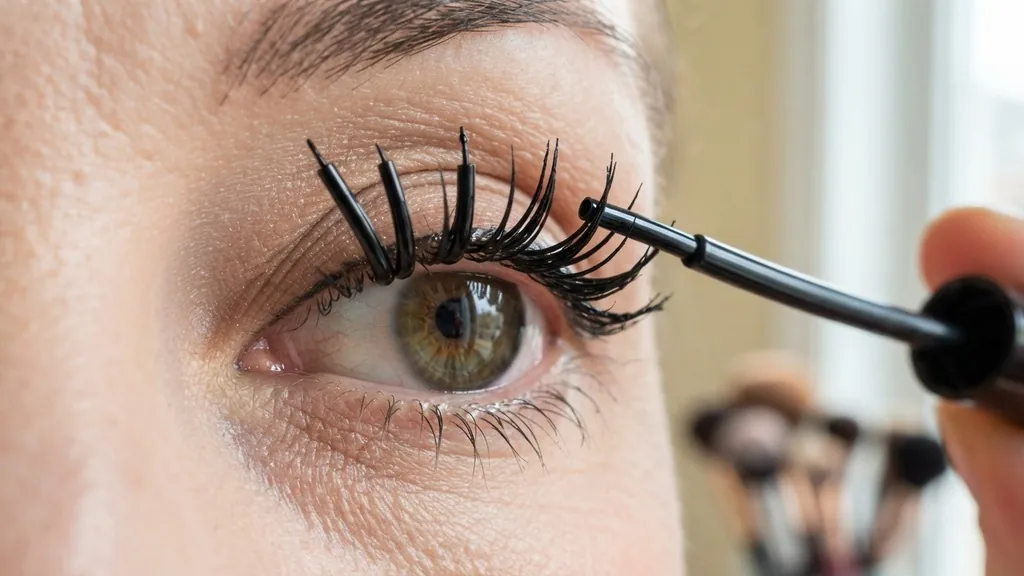
Tubing mascara works by creating tiny, water-resistant polymers that wrap around each individual lash rather than painting them with pigment-heavy wax. While traditional makeup relies on thick oils and waxes to coat the hair, this specific technology utilizes long-chain polymers to form a physical sleeve.
When you apply the formula, these polymers bind to the lash and harden into a flexible tube. Because these tubes are physically locked onto the lash, they don’t smudge, smear, or run, even if you have oily eyelids or get caught in a light rain shower.
The Chemistry of Polymer-Based Mascara
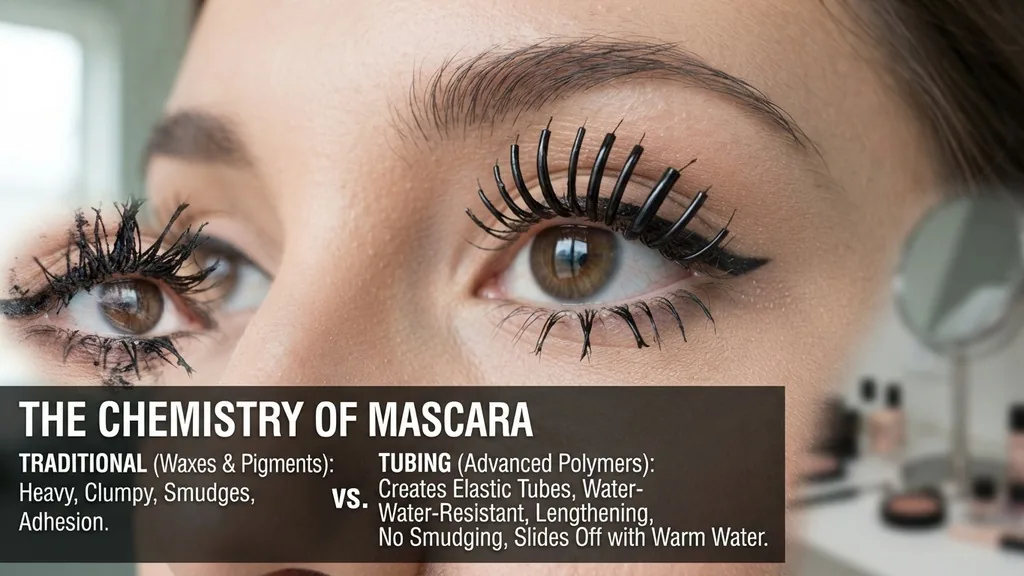
At its core, how does tubing mascara work involves a sophisticated blend of synthetic polymers that differ fundamentally from the waxes found in standard products. Traditional formulas function like a paint, depositing layers of pigment that rely on sticky binders to stay in place. Over the course of the day, these binders can soften due to body heat, oil production, or moisture, leading to the dreaded “raccoon eye” effect.
Tubing formulas, however, utilize acrylate copolymers. These chemicals are designed to dry into a cohesive, elastic film.
When you sweep the wand through your lashes, the liquid polymer solution encapsulates every hair. As the solvent evaporates, the polymers contract and harden, creating a 360-degree seal. This structure is both durable and lightweight.
Because the tubes are essentially independent little jackets, they do not rely on the lash itself to stay adhered. If you touch your face or rub your eyes, the tubes remain intact.
They don’t smear across the skin because they aren’t made of oil-soluble waxes. This chemical stability is why they are often favored by people who struggle with makeup migration throughout the day.
Why Tubing Mascara Differs from Traditional Formulas
The primary distinction between standard mascara and tubing varieties lies in the removal process and the film-forming technology. Regular mascara is usually formulated with a mix of paraffin, carnauba, or beeswax. These waxes provide volume but remain somewhat malleable.
When you wash your face, you need a heavy-duty oil cleanser or a dedicated makeup remover to break down these wax chains. If you don’t remove them perfectly, the residue can cause irritation or lead to lash breakage.
Tubing mascara ignores the oil-solubility rule entirely. Because the tubes are made of water-resistant polymers, they are impervious to the natural oils on your face. However, they are engineered to respond to a specific combination of physical pressure and temperature.
This is the “magic” of the removal process. When you apply enough warm water to the lashes, the polymer structure begins to lose its grip.
You don’t need a cleanser to dissolve the product; you only need to gently slide the tubes off the lashes with your fingers or a damp cloth. This mechanical removal is much gentler on the delicate eye area than scrubbing with cotton pads and harsh solvents.
The Application Process for Optimal Results
Achieving a clean, fluttery look with tubing mascara requires a slightly different technique than you might be used to. Because the formula sets relatively quickly to form those distinct tubes, you should avoid “pumping” the wand inside the tube.
Pumping introduces air, which can cause the product to dry out and clump before it ever reaches your lashes. Instead, swirl the wand inside the container to pick up an even coat of product.
Start at the very base of your lashes, wiggling the wand slightly to ensure the polymers grab the root. Then, pull the wand upward in a single, smooth motion. If you want more volume, apply a second coat immediately while the first is still slightly tacky.
If you wait until the tubes have fully hardened, a second coat may cause the existing tubes to flake or look uneven. Many users find that tubing formulas provide excellent length and separation because the tubes act as extensions of the lash itself.
If you accidentally get a smudge on your eyelid, wait for it to dry completely. Once it’s dry, you can simply flick it off with a clean spoolie or a fingernail without ruining your eyeshadow or foundation.
The Unique Removal Experience
The most striking feature of these formulas is the way they come off. Many first-time users panic when they see what looks like “lash fall-out” in the sink.
It is crucial to understand that what you are seeing are the empty tubes, not your actual eyelashes. Because the polymers have been saturated with warm water, they slide off the hair in a singular, intact sleeve.
Tips for Safe Removal
- Always use warm water that is comfortable to the touch, not scalding.
- Gently saturate your lashes for 30 seconds to allow the water to penetrate the polymer structure.
- Use the pads of your fingers to apply light, downward pressure.
- Avoid tugging or pulling hard; the tubes should glide off with minimal friction.
- If you wear contact lenses, be mindful of the tubes as they slide off so they don’t accidentally get trapped under the lens.
This removal method is widely considered superior for those with sensitive skin. By eliminating the need for abrasive rubbing or chemical makeup removers, you reduce the mechanical stress on the lash follicles. Over time, this can contribute to healthier, more resilient lashes, as you are not constantly tugging at the root during your nightly routine.
Addressing the Myths: Is Tubing Mascara Waterproof?
A common point of confusion is whether this technology qualifies as waterproof. Technically, tubing mascara is water-resistant, not waterproof in the traditional sense.
It will survive a sweat-filled gym session, a humid day, or a bout of crying, because the polymers are not broken down by water alone. They require a combination of warm temperature and physical manipulation to release their grip.
However, if you are planning to go swimming in a pool or the ocean, you might find that the tubes start to soften and slide off. Unlike oil-based waterproof mascaras, which create a wax barrier that stays put even in cold, chlorinated, or salt water, tubing mascara is designed to be removed with water. If you are looking for a product that can withstand heavy water submersion, a traditional waterproof formula might be more reliable.
But for daily wear, the tubing variety offers the perfect balance of longevity and ease of use. It provides the security of a long-wear formula without the grueling, damaging removal process associated with waterproof products.
Comparing Performance Metrics
To help you decide if this technology is right for your makeup routine, consider the following comparison of performance characteristics between standard and tubing formulas.
| Feature | Traditional Mascara | Tubing Mascara |
|---|---|---|
| Removal Method | Oil-based cleanser | Warm water + gentle pressure |
| Smudge Resistance | Moderate (oil-dependent) | High (oil-proof) |
| Lash Volume | High (wax-based) | Moderate (polymer-based) |
| Flaking Potential | Higher as it dries | Low (if applied correctly) |
As the table demonstrates, tubing formulas excel in areas of cleanliness and ease of removal, while traditional waxes are often preferred for creating maximum thickness and dramatic volume. If you prioritize a smudge-free look that lasts from morning until night, tubing is almost always the better choice. If you prefer a “clumpy,” thick, or highly dramatic lash look, you may find that you need to experiment with specific tubing brands that offer more volumizing fibers.
Common Problems and How to Solve Them
Even with the best products, you might encounter issues. The most common complaint is “flaking.” This usually happens if you apply the product over an oily base or if you try to layer it too many times after the initial coat has already set.
To keep your look pristine, ensure your eyelids are clean and free of heavy eye creams before application. If you have extremely oily skin, a light dusting of translucent powder on your lids can prevent the oils from interfering with the polymers.
Another issue is the “spider leg” look. Because the tubes are designed to elongate, they can sometimes clump the tips of the lashes together. You can fix this by using a clean metal lash comb immediately after application.
Comb through the lashes while the formula is still slightly damp to separate the tubes and distribute them evenly. If you find your lashes are not holding a curl, remember that tubing formulas are generally lighter and more flexible than stiff, wax-based mascaras.
You might need to use a high-quality eyelash curler before applying the mascara to lock in the shape before the polymers set. You can find more information on the structure of these polymers via the American Chemical Society, which tracks innovations in cosmetic chemistry and polymer science.
Are There Downsides to Using Tubing Mascara?
While the benefits are significant, there are a few drawbacks to consider. Firstly, the selection of tubing mascaras is generally smaller than that of traditional mascaras. While many major brands have launched their own versions, you won’t find the same variety of brushes, colors, and specialized “effect” formulas (like extreme curling or triple-volume) that you see in the traditional market.
Additionally, because the formula relies on forming a tube, it cannot be “re-applied” throughout the day. If you go to a dinner after work and want to add another layer, you will likely find that the new coat doesn’t adhere well to the existing, hardened tubes. This can result in messy clumps or a flaky appearance.
Most users find that they get the best result by applying the product once in the morning and leaving it alone. If you are someone who likes to touch up your makeup frequently, you might find this limitation frustrating. However, for most people, the fact that the mascara stays perfect for 12+ hours makes the inability to touch up irrelevant.
Expanding Your Beauty Knowledge: Topical Gaps
A common question that often goes unaddressed is whether tubing mascara is actually better for your lashes in the long run. The answer is generally yes, primarily due to the removal process.
The leading cause of lash thinning and breakage is mechanical trauma—the act of pulling, rubbing, and scrubbing the lashes to get off stubborn waterproof wax. By using a product that slides off with water, you are preserving the health of your natural lashes.
Furthermore, many people wonder if the polymers are harmful to the eyes. These formulas are ophthalmologist-tested and designed to be non-irritating. Because they don’t migrate or flake into the eyes, they are often the recommended choice for contact lens wearers or those with sensitive eyes who find that traditional mascara causes redness or itching.
The polymers are inert and stable, meaning they don’t break down into irritants even after hours of wear. By understanding the chemical nature of these products, you can make an informed decision that prioritizes both your aesthetic goals and the long-term health of your lashes.
Frequently Asked Questions
- Is tubing mascara considered waterproof? It is technically water-resistant. While it won’t smudge from sweat, oil, or tears, it is designed to be removed with warm water, so it may release if you go swimming or submerge your face in water for extended periods.
- Can I use an eyelash curler with tubing mascara? Yes, you should use your curler before applying the mascara. Because tubing formulas are lighter and more flexible, they don’t always hold a curl as rigidly as heavy, wax-based formulas, so curling beforehand is essential for a lifted look.
- Why does my tubing mascara look like it is flaking? If you see small black bits, it is usually because you applied too many layers after the first coat dried. Only apply a second coat while the first is still tacky, and ensure your eyelids are free of oils before starting.
- Is it safe for sensitive eyes? Yes, it is often the best choice for sensitive eyes. Since the tubes don’t smear or flake into the eye area, and the removal process requires no harsh scrubbing or chemicals, it is much less likely to cause irritation or allergic reactions.


