

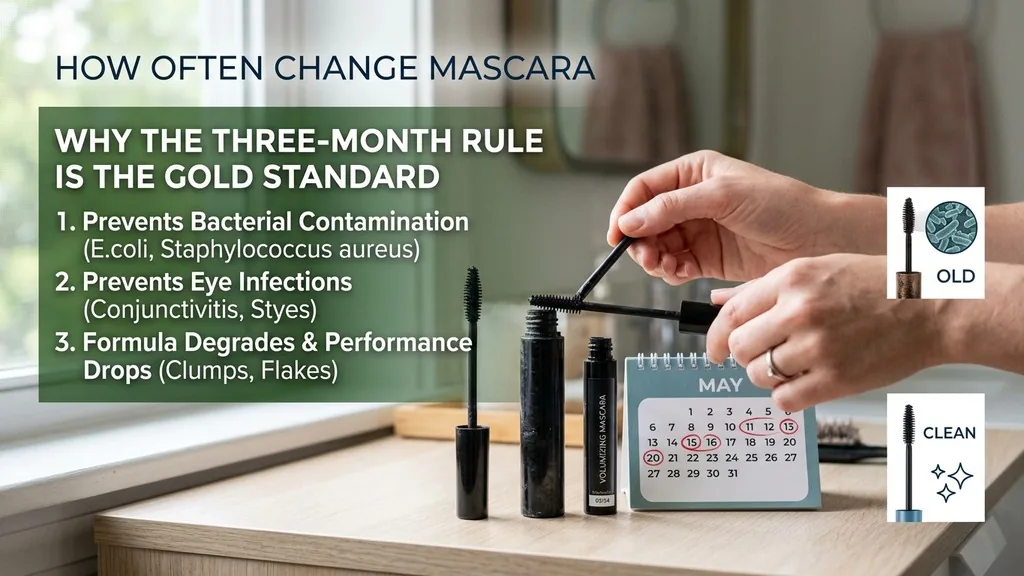
Maintaining your beauty routine involves more than just selecting the right shades and products; it requires strict adherence to hygiene standards to protect your ocular health. Understanding how often to change mascara is a critical component of eye care that many people overlook until they encounter an uncomfortable irritation or infection. Because your eyes are exceptionally sensitive, the tools and products you use near them demand a higher level of vigilance than other items in your makeup bag.
Why the Three-Month Rule is the Gold Standard

The standard recommendation for replacing your mascara is every three months. This timeframe is not an arbitrary suggestion created by beauty brands to drive repeat sales; it is a clinical guideline based on the shelf life of the preservative systems within the product. Once a tube is opened, the clock starts ticking because the seal is broken, exposing the formula to the air, moisture, and potential contaminants every time you apply it.
When you pull the wand out of the tube, you are introducing oxygen into a container that was previously sterile. Over the course of twelve weeks, the stability of the preservatives begins to degrade.
As these protective ingredients break down, they become less effective at stopping the growth of microorganisms. Even if the product looks and smells exactly as it did on the day you bought it, the microscopic landscape inside that tube has likely shifted significantly.
By the time you reach the three-month mark, the concentration of active ingredients meant to keep the product safe has usually reached a point where it can no longer reliably inhibit the growth of common pathogens. Continuing to use the product beyond this point increases your risk of introducing harmful agents directly onto your lash line and into the delicate environment of your eyes.
The Hidden Risks of Bacterial Growth
Bacteria are naturally present on our skin and eyelashes, and every time you use your mascara wand, you are essentially transferring these organisms back into the tube. This creates a cycle of contamination. While your immune system can often handle a small number of these bacteria, the dark, moist, and nutrient-rich environment inside a mascara tube acts as an ideal incubator for them to multiply rapidly.
The most common offenders found in old or improperly stored makeup include Staphylococcus epidermidis and various types of fungi. When these organisms reach a critical mass, they can cause significant ocular health issues. Using a tube of mascara that has been sitting in your vanity for six months or a year is essentially like painting your lashes with a concentrated sample of whatever has been growing inside that dark, warm container.
Common symptoms of an eye infection caused by expired makeup include redness, persistent itching, swelling of the eyelid, and discharge. In more severe cases, you might experience blurred vision or a gritty sensation as if something is stuck in your eye. These are clear indicators that your ocular microbiome has been disrupted by an external contaminant.
How to Identify if Your Mascara Has Expired Prematurely
While the three-month rule is the safest general guideline, there are instances where you must discard your product much sooner. If you have recently recovered from an eye infection like conjunctivitis, you should immediately throw away any eye makeup you were using at the time of the infection. There is no way to sanitize a mascara wand or the formula inside the tube, so keeping it is a guaranteed way to re-infect yourself.
Another indicator that it is time to say goodbye to your product is a change in its physical properties. If the formula has become clumpy, thick, or develops a strange, chemical odor, these are signs that the chemical stabilizers have failed. You should also be wary if the product starts to separate or if it no longer applies to your lashes with the same consistency it had when it was new.
Never try to “revive” dried-out mascara by adding water, saliva, or other liquids. These additives disrupt the preservative system even further and often introduce new bacteria into the mix.
Saliva, in particular, is full of oral bacteria that have no business being introduced to the ocular surface. If your mascara is drying out, it has reached the end of its functional life.
Proper Storage and Usage Habits
Your habits play a massive role in how quickly your product becomes contaminated. A major mistake many people make is “pumping” the wand in and out of the tube to get more product on the brush.
This action forces air into the tube, which accelerates the oxidation of the formula and speeds up the drying process. Instead of pumping, gently swirl the wand inside the tube to coat the bristles.
Where you store your makeup matters just as much as how you use it. Many people keep their cosmetics in the bathroom, where the constant fluctuations in temperature and humidity create a breeding ground for mold and bacteria. If possible, store your eye makeup in a cool, dry place, such as a bedroom vanity or a dedicated storage drawer outside of the bathroom environment.
Keep your makeup tools clean as well. If you use a lash comb or a separate spoolie to separate your lashes after applying mascara, ensure these tools are washed regularly with mild soap and water. If you use a lash curler, wipe the silicone pad clean with a makeup remover wipe after every use to prevent the buildup of oils and old product that can eventually transfer into your mascara tube.
Comparing Replacement Timelines for Beauty Products
Not all makeup products have the same lifespan. While mascara has one of the shortest recommended usage windows due to its proximity to the eye and its wet formula, other products can last longer.
Understanding these differences helps you maintain a safer overall beauty routine. The following table provides a general reference for the longevity of common eye and face makeup products.
| Product Category | Recommended Replacement Time |
|---|---|
| Mascara | 3 months |
| Liquid Eyeliner | 3 months |
| Cream Eyeshadow | 6 months |
| Powder Eyeshadow | 1 to 2 years |
| Concealer | 6 to 12 months |
| Lipstick | 1 to 2 years |
As shown in the table, the products that contain the most moisture and are applied directly to the eye area require the most frequent replacement. Products like powder eyeshadows are much less hospitable to bacteria because they lack the moisture required for rapid growth, allowing them to last significantly longer, provided they are kept clean and dry.
Common Myths Regarding Mascara Preservation
There is a persistent myth that “natural” or “organic” mascaras are inherently safer and therefore can be kept longer. In reality, the opposite is often true.
Because these products frequently omit traditional synthetic preservatives in favor of natural alternatives, they are often less effective at fighting off microbial growth. Always check the packaging for the “Period After Opening” (PAO) symbol, which looks like a small jar with a lid and a number indicating how many months the product is good for after it’s unsealed.
Another common misconception is that if you don’t wear mascara every day, you can keep it for longer than three months. This is incorrect. The chemical breakdown of the preservatives and the oxidation process occur regardless of how frequently you use the product.
Once the tube is open, the clock is ticking. If you find yourself throwing away half-full tubes every three months, consider purchasing “mini” or “travel-sized” mascaras. These are often more cost-effective and help reduce waste while ensuring you are always using a fresh, safe product.
For further information on maintaining eye safety and understanding the potential risks of cosmetic use, you can visit the U.S. Food and Drug Administration’s guide to eye cosmetic safety. This resource provides official guidance on how to avoid infections and what to look for on product labels to ensure you are using your beauty products safely.
The Importance of Label Reading and Expiration Dates
Most consumers rarely look for the expiration date on their makeup, but it is a vital piece of information. While the PAO symbol is common, some products include a specific “best by” date.
If you see a date stamped on the box or the bottom of the tube, respect it. Manufacturers set these dates based on stability testing that determines when the product is no longer safe or effective.
It is also helpful to get into the habit of writing the date you opened a new tube of mascara on the bottom of the packaging with a permanent marker. It is remarkably easy to lose track of time when you have a busy schedule. A simple “opened [date]” note takes only a second to write but saves you from doing the mental math weeks later.
When buying new makeup, check the condition of the packaging before you purchase it. If the seal is broken or the box looks like it has been tampered with, do not buy it.
Retail environments can be breeding grounds for contamination if testers or open products are handled by multiple people. Always select a product from the back of the shelf to ensure it hasn’t been exposed to light or heat for an extended period.
Addressing Topical Gaps in Cosmetic Hygiene
A common question that often goes unaddressed is how to handle mascara when you are traveling. Travel can expose your makeup to extreme heat or cold, both of which can compromise the stability of the formula. If you are going on a trip, keep your makeup in your carry-on bag rather than your checked luggage, where temperatures in the cargo hold can fluctuate wildly.
Another gap in common knowledge is the danger of sharing mascara. Sharing makeup is one of the fastest ways to transmit eye infections.
Even if you are just “trying” a friend’s mascara for a quick touch-up, you are introducing their unique bacterial flora into your tube and vice versa. Each person has a different microbiome, and introducing a new strain of bacteria to your eye can trigger an immune response that leads to inflammation, even if the bacteria themselves aren’t overtly pathogenic.
If you are getting your makeup done professionally, ensure the makeup artist uses disposable wands for every application. A professional should never use the same wand on multiple clients.
If they are using the same wand directly from the tube, it is a significant red flag. Always prioritize your health over the convenience of a free application.
Final Thoughts on Maintaining Your Routine
Establishing a consistent replacement schedule is a simple yet effective way to prioritize your health. By committing to replacing your mascara every three months, you drastically reduce the risk of dealing with the pain and frustration of an eye infection. Remember that your eyes are irreplaceable, and the cost of a new tube of mascara is negligible compared to the cost of medical treatment for a serious ocular condition.
* Always replace mascara every three months.
* Never share your eye makeup with others.
* Avoid pumping the wand to prevent premature drying.
* Discard any product immediately if you develop an eye infection.
* Store your makeup in a cool, dry environment.
* Use travel-sized products if you don’t use makeup daily.
* Check for the PAO symbol on the packaging.
Being mindful of these practices ensures that your beauty routine remains a positive and safe experience. When you treat your products with care and respect their limitations, you can enjoy the aesthetic benefits of your makeup without compromising your well-being. Stay vigilant, track your usage, and don’t be afraid to toss a product that has served its time.
Frequently Asked Questions
- Can I use an old mascara if it still smells fine? No. Even if the scent is normal, the preservatives have likely degraded, and the product may contain harmful bacteria that you cannot see or smell. It is always safer to replace it after three months of use.
- Is it okay to use my sister’s mascara if she only used it once? It is never recommended to share mascara. Even a single use can transfer bacteria from one person’s eye area to another, which can lead to infections like pink eye, even if the person who used it appears perfectly healthy.
- What should I do if my eyes feel irritated after using mascara? Stop using the product immediately. If the irritation persists, rinse your eyes with sterile saline and consult an eye care professional. Do not try to continue using the mascara to see if the irritation goes away on its own.
- Does waterproof mascara last longer than standard formulas? No. The lifespan of mascara is determined by the preservative system and the exposure to air, not whether it is waterproof. All types of mascara should be replaced within the three-month window to ensure the formula remains safe for your eyes.


