

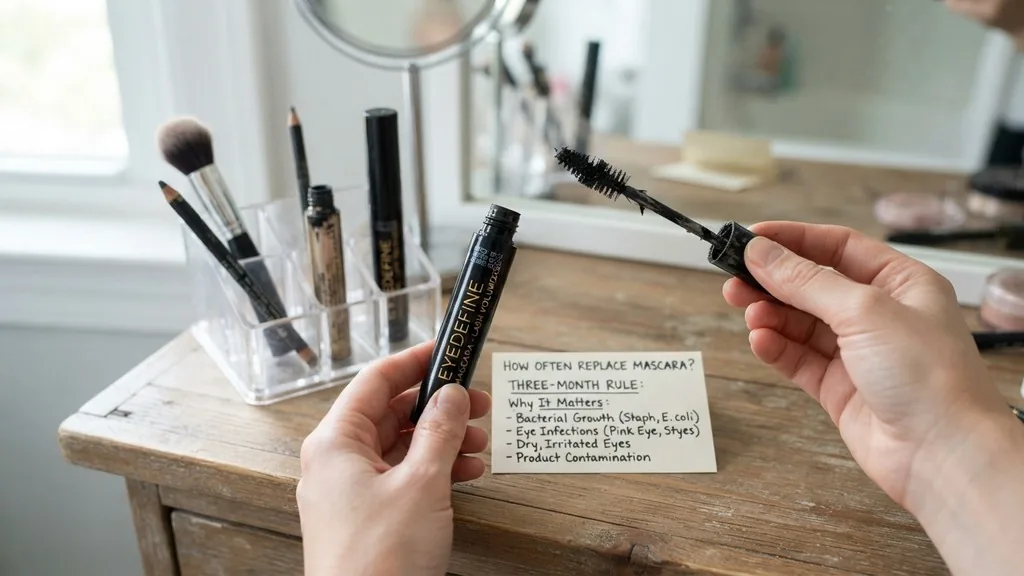
Knowing how often to replace mascara is a fundamental aspect of maintaining eye health and ensuring the efficacy of your beauty routine. While it is tempting to hold onto a favorite tube until the very last drop is gone, the reality is that cosmetic products have a finite shelf life.
Most experts recommend replacing your mascara every three months. This timeframe is not an arbitrary suggestion; it is based on the chemical stability of the formula and, more importantly, the risk of bacterial contamination that occurs every time you pull the wand out of the tube and return it.
The Three-Month Rule and Why It Matters
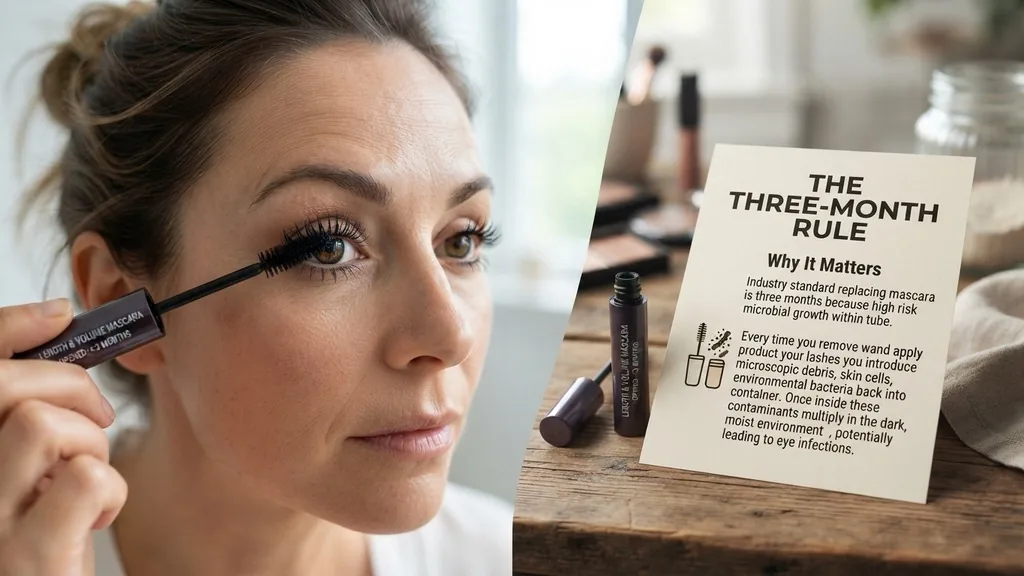
The industry standard for replacing mascara is three months because of the high risk of microbial growth within the tube. Every time you remove the wand and apply the product to your lashes, you introduce microscopic debris, skin cells, and environmental bacteria back into the container.
Once inside, these contaminants thrive in the dark, moist environment of the mascara tube. Over time, the preservatives that keep the formula stable begin to break down, leaving you vulnerable to potential eye infections.
When you use a product past its prime, you aren’t just dealing with a dried-out formula that flakes or clumps. You are essentially inviting a colony of microorganisms to take up residence near your sensitive eye area.
Conjunctivitis, commonly known as pink eye, is a frequent consequence of using expired eye makeup. While it might seem wasteful to discard a tube that still contains product, the cost of a new tube is far less than the cost of treating an infection or dealing with the discomfort of irritated, inflamed eyes.
Identifying the Signs of Expired Mascara
Even if you haven’t reached the three-month mark, you should stop using your mascara immediately if you notice any physical changes in the product. The formula is a complex mix of pigments, waxes, oils, and preservatives designed to coat your lashes safely. When these components start to degrade, the product will no longer behave as intended.
Watch for these specific changes:
- Change in Odor: If your mascara develops an unusual, sharp, or “off” smell, it is a sign that the preservatives have failed and the product has likely become contaminated.
- Altered Texture: A formula that has become excessively thick, clumpy, or stringy is past its peak and can cause irritation or lash breakage.
- Separation: If the liquid and the pigments appear to be separating despite vigorous shaking, the chemical balance of the emulsion has been compromised.
- Irritation: If applying the product causes redness, itching, or a burning sensation around the eye, discard it immediately, regardless of when you bought it.
The Risks of Bacterial Contamination
The eye is one of the most sensitive parts of the human body, lacking the thick, protective skin barrier found elsewhere. When bacteria enter the eye, they can cause significant distress.
The dark, damp environment inside a mascara tube is a breeding ground for microorganisms like Staphylococcus aureus and Pseudomonas aeruginosa. When these bacteria are transferred from the applicator to your lashes and then into your eye, they can trigger severe infections.
It is helpful to understand that your mascara doesn’t exist in a vacuum. You are constantly interacting with it, and your environment is interacting with you. If you have recently recovered from an eye infection, you must throw away every eye makeup product you were using at the time of the infection.
Reusing that mascara is a guaranteed way to reintroduce the same bacteria and restart the cycle of infection. Always prioritize your physical health over the financial value of the makeup.
Proper Storage to Extend Product Integrity
While the three-month rule is the gold standard, how you store your makeup can influence how well it holds up during that window. Many people make the mistake of storing their cosmetics in the bathroom, where humidity levels fluctuate wildly. Steam from daily showers creates the perfect environment for bacteria to multiply on your brushes and inside your containers.
Keep your makeup in a cool, dry place, such as a bedroom vanity or a dedicated beauty drawer. Avoid leaving your mascara in a hot car or in direct sunlight, as heat can accelerate the breakdown of the chemical preservatives. Furthermore, always ensure the cap is screwed on tightly after every use.
Allowing air to enter the tube prematurely dries out the formula and introduces airborne contaminants that shorten its lifespan. Treat your makeup as a perishable good, similar to food, and you will find that it performs better for longer.
Does Pumping the Wand Actually Help?
A common habit among makeup users is “pumping” the wand in and out of the tube to get more product on the brush. This is one of the most detrimental things you can do for your mascara.
Pumping pushes air into the tube, which speeds up the drying process and forces bacteria deeper into the container. Instead of pumping, try swirling the wand gently inside the tube to coat the bristles.
This simple change in technique helps preserve the moisture content of the formula and prevents you from introducing unnecessary air. By being more mindful of how you handle your makeup tools, you can avoid the frustration of a dry, clumpy product long before the three-month expiration date.
If you find your mascara is drying out too quickly, it is almost certainly because of air exposure. Changing your habits is a more effective solution than buying expensive “reviving” drops, which can actually alter the chemistry of the formula and make it less safe to use.
The Impact of Eye Health and Personal Sensitivity
Everyone’s eyes react differently to cosmetics. If you have a history of allergies, contact lens use, or chronic dry eye, you need to be even more vigilant about how often to replace mascara. Contact lens wearers are at a higher risk for eye complications because particles of makeup can get trapped between the lens and the eye, causing abrasions or trapping bacteria against the cornea.
If you notice that your eyes feel tired, gritty, or red after a long day of wearing makeup, take a moment to evaluate your routine. It might not be the brand you are using, but rather the age of the product.
For those with highly sensitive eyes, replacing mascara every two months rather than three might be a safer personal protocol. You can find more information on ocular health and cosmetic safety by visiting the official FDA guide on eye cosmetic safety, which provides comprehensive advice on how to minimize risks while using beauty products.
Comparing Lifespans of Common Eye Makeup
It is easy to focus exclusively on mascara, but your entire eye makeup kit has a limited lifecycle. Using old products in conjunction with a fresh tube of mascara can still lead to issues if your eyeliner or eyeshadow is teeming with bacteria. Keeping a log of when you open your products can help you stay on top of your replacement schedule.
| Makeup Product | Recommended Replacement Time |
|---|---|
| Mascara | 3 Months |
| Liquid Eyeliner | 3 Months |
| Cream Eyeshadow | 6 Months |
| Powder Eyeshadow | 12 to 24 Months |
| Pencil Eyeliner | 12 Months |
As indicated in the table, liquid-based products like mascara and liquid eyeliner have the shortest lifespans due to their water content. Water encourages bacterial growth, which is why these items require the most frequent replacement. Powder products, conversely, are much less hospitable to bacteria and can last significantly longer.
Addressing Topical Gaps: Can You Share Mascara?
One of the most frequently asked questions regarding makeup hygiene involves sharing products. The short answer is an emphatic “no.” You should never share your mascara, even with close friends or family members.
Each individual has a unique microbiome, consisting of different bacteria and fungi that live on their skin and eyes. When you share a wand, you are essentially swapping your personal bacterial load with someone else.
If you are a professional makeup artist, you likely already know that using disposable wands is the only safe way to serve multiple clients. For the average consumer, sharing is an unnecessary risk. If you are doing someone else’s makeup, use a clean, disposable spoolie for every single application.
Never double-dip a used wand back into the tube. Maintaining this boundary is the single most effective way to prevent the spread of infections like sties or conjunctivitis. Your eyes are irreplaceable, and keeping your beauty tools personal is a vital part of protecting them.
Practical Tips for Maintaining a Clean Beauty Routine
To ensure you aren’t accidentally shortening the life of your products, consider these additional hygiene practices. First, always remove your eye makeup completely before going to sleep.
Leaving mascara on overnight can lead to lash breakage and can cause residue to irritate the eyes the following day. Use a gentle, oil-based cleanser or a dedicated eye makeup remover to ensure every trace of pigment is gone.
Second, clean your eyelash curler regularly. If you use a curler after applying mascara, the rubber pads will become coated in product and bacteria. Wipe the curler down with rubbing alcohol or a mild soap and water solution at least once a week.
Third, if you find that your mascara is clumping, avoid the temptation to add water or saliva to the tube to thin it out. This introduces new bacteria and further destabilizes the formula.
If the product is clumpy, it is time to say goodbye. By following these simple habits, you will not only maintain the quality of your makeup but also ensure that your daily routine remains a safe and pleasant experience for your eyes.
Frequently Asked Questions
- Is it safe to use mascara for more than three months if I haven’t finished the tube? No, it is not recommended. Even if the tube still contains product, the preservatives degrade after three months, and the risk of bacterial contamination increases significantly. It is always safer to prioritize eye health over finishing the product.
- Does applying mascara to lower lashes increase the risk of infection? Applying mascara to lower lashes does not inherently cause infection, but it does place the product closer to the tear duct and the sensitive skin under the eye. Ensure your application is precise and that you are using a fresh, non-expired product to minimize irritation.
- How can I tell if my mascara is causing an eye infection? If you experience persistent redness, itching, swelling, or unusual discharge after using your mascara, stop using it immediately. These are common signs of an eye infection. If symptoms persist after discontinuing use, consult a healthcare professional to determine if treatment is necessary.
- Should I clean the wand of my mascara? Cleaning the wand itself is generally ineffective because the bacteria are located inside the tube and in the formula. If the wand appears dirty or has dried clumps, it is a sign that the mascara has reached the end of its usable life and should be replaced.


