

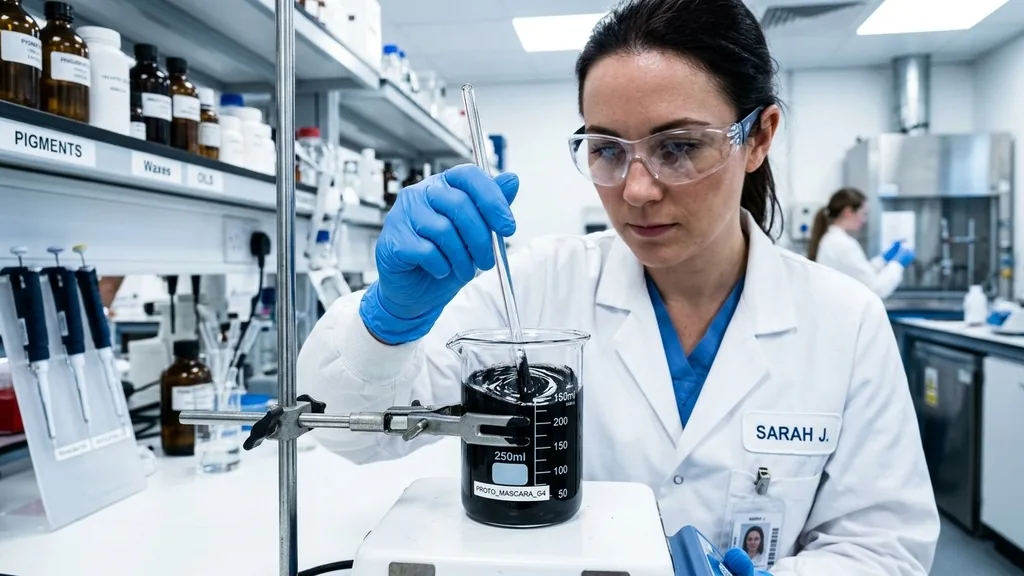
When you apply your favorite tube of lash-enhancing cosmetic, you are interacting with a complex chemical emulsion designed to coat, thicken, and darken your natural hair follicles. Understanding what is in mascara requires moving past the marketing claims and looking directly at the chemical architecture that makes these products effective.
At its core, mascara is a specialized blend of pigments, oils, waxes, and film-formers that must balance durability with safety. Because the area around the eyes is exceptionally sensitive, the chemical composition of these products is subject to rigorous safety standards, yet consumers often remain curious about the origins of these substances and the potential for irritation.
The Chemical Architecture of Modern Mascara

At the most fundamental level, mascara is an emulsion. It combines water and oil, which typically do not mix, by using emulsifying agents to create a stable, smooth, and spreadable substance. The primary goal of any mascara formulation is to coat each lash evenly without clumping, while simultaneously providing enough structure to hold a curl or add volume.
To achieve this, manufacturers rely on a delicate balance of waxes and pigments. Waxes provide the body and structure that allow the product to thicken the lashes, while pigments—most commonly iron oxides—provide the deep black or brown color that defines the eye.
The viscosity of the formula is controlled by the ratio of water to waxes. In a typical tube, you will find a blend of beeswax, carnauba wax, or paraffin wax. These ingredients are essential because they provide the “grip” necessary to adhere to the lashes.
Without these structural components, the pigment would simply flake off or run down the face upon contact with moisture. Furthermore, the inclusion of polymers—often synthetic film-formers—ensures that the product remains flexible once it dries. If a mascara were made purely of wax, it would be brittle and prone to cracking; polymers bridge this gap by creating a lightweight, elastic coating that moves with your lashes throughout the day.
Demystifying the Role of Pigments and Carbon Black
The deep, intense color of most high-performance mascaras is not achieved by accident. For decades, the industry standard for achieving a “jet black” look has been the use of carbon black. This pigment is a fine powder produced by the incomplete combustion of heavy petroleum products.
It provides a level of opacity and light absorption that other pigments struggle to match. However, because carbon black is a potent pigment, it is often regulated strictly to ensure that no impurities, such as polycyclic aromatic hydrocarbons, remain in the final formulation.
Other common pigments include iron oxides, which offer a more natural, earth-toned spectrum ranging from soft browns to deep blacks. Iron oxides are generally considered very stable and are less likely to cause allergic reactions than some synthetic dyes. When you look at the ingredient list on the back of your tube, you will likely see these listed as CI 77499 (black iron oxide) or CI 77491 (red iron oxide).
The combination of these minerals ensures that the color remains vibrant and does not fade under light exposure. Manufacturers must meticulously grind these pigments to a microscopic level; if the particles are too large, the mascara will feel gritty and heavy, potentially causing discomfort when applied close to the lash line.
Separating Fact from Fiction: The Bat Poop Myth
One of the most persistent urban legends in the beauty industry is the rumor that mascara contains guano, or bat poop. This claim often surfaces in internet forums and is frequently repeated as a “fun fact” about cosmetics. To set the record straight: no commercial mascara on the market contains bat excrement.
This misconception likely stems from a confusion regarding the ingredient guanine. Guanine is a crystalline substance that produces a shimmering, pearlescent effect. While it can be found in nature—historically extracted from fish scales—the guanine used in modern cosmetics is almost exclusively synthetic or derived from non-animal sources.
The chemical name “guanine” sounds phonetically similar to “guano,” leading to the long-standing confusion. In the context of beauty, guanine is used primarily in eyeshadows, nail polishes, and occasionally in mascaras that promise a high-shine finish. It is a completely different substance from the organic waste product of bats.
You can rest assured that the formulation of your beauty products is governed by strict sanitary regulations that would never permit the inclusion of animal waste. The industry focuses on high-purity, laboratory-tested compounds to ensure that what is applied to your lashes is hygienic, sterile, and safe for daily use.
Waterproof vs. Washable Formulations
The distinction between waterproof and washable mascaras lies primarily in the solvent and film-forming agents used. Washable formulas are water-based, meaning they are designed to be easily removed with soap and water.
These are generally gentler on the lashes because they do not require aggressive rubbing or harsh makeup removers to take off at the end of the day. They rely on water-soluble polymers that hold the pigment in place but dissolve when exposed to warm water and surfactants.
Waterproof mascara, by contrast, is oil-based or uses volatile silicones that do not dissolve in water. These formulas are designed for longevity, resisting moisture from rain, tears, or humidity. The key ingredient in many waterproof products is isododecane, a lightweight solvent that evaporates quickly after application, leaving behind a water-resistant film of wax and resin.
While this ensures that your look remains intact, it also makes the product much more difficult to remove. Frequent use of waterproof formulas can lead to lash breakage if the user is too vigorous during the removal process, as the lashes are essentially “glued” by the water-resistant resins.
If you are interested in the specific safety profiles of these chemicals, you can read more at the U.S. Food and Drug Administration guidance on cosmetic regulations.
Common Ingredients in Mascara
To better understand what goes into these products, it is helpful to categorize the components based on their function. The following table highlights the essential roles different ingredients play in the final product.
| Ingredient Category | Primary Function | Common Examples |
|---|---|---|
| Waxes | Structure and thickening | Beeswax, Carnauba, Paraffin |
| Pigments | Color and opacity | Iron Oxides, Carbon Black |
| Film-Formers | Flexibility and water resistance | Acrylates Copolymer, PVP |
| Preservatives | Preventing bacterial growth | Phenoxyethanol, Parabens |
| Conditioning Agents | Lash health and softness | Panthenol, Vitamin E, Oils |
Addressing Safety Concerns and Topical Gaps
A common concern regarding mascara is the risk of eye infection. Because the applicator brush enters the tube and then touches the eye, it can introduce bacteria into the product. Over time, these bacteria can multiply, turning a fresh tube into a breeding ground for microbes.
This is why preservatives are a non-negotiable ingredient in any mascara formulation. Phenoxyethanol and various parabens are commonly used to inhibit the growth of mold and bacteria. However, some users may have sensitivities to these preservatives, which can cause redness, itching, or swelling of the eyelids—a condition often mistaken for an allergy to the pigment itself.
Another gap in consumer knowledge is the expiration of these products. Unlike many other cosmetics that can last for years, mascara has a very short shelf life. Once a tube is opened, it should ideally be replaced every three months.
This is not a marketing tactic to sell more products; it is a genuine safety precaution. As the product is exposed to air and the brush is contaminated by the natural flora of the eyelid, the effectiveness of the preservatives wanes. If you notice a change in the smell of your mascara, or if it begins to clump excessively, it is a sign that the emulsion has broken down and it is time to discard it.
- Always avoid sharing your mascara with others to prevent the spread of eye infections.
- Never apply mascara while driving or moving to prevent accidental injury to the eyeball.
- Remove your mascara every night; leaving it on can lead to clogged hair follicles and potential styes.
- If you experience persistent irritation, stop using the product immediately and consult a healthcare professional.
- Store your mascara in a cool, dry place to prevent the formula from separating or drying out prematurely.
The Evolution of Lash-Enhancing Technology
The history of mascara has evolved from simple soot and oil mixtures used in ancient civilizations to the high-tech emulsions we see today. In the early 20th century, mascara was often sold as a solid cake that had to be mixed with water. The transition to the “wand in a tube” format in the 1950s revolutionized the industry, making application far more accessible.
Today, we are seeing a shift toward “tubing” mascaras, which use unique polymers that wrap around each individual lash in a tube-like structure. These tubes do not smudge or flake; instead, they slide off the lashes in one piece when soaked in warm water.
This shift represents a broader trend in the cosmetic industry toward functionality and ease of use. As consumers become more educated about what is in their products, they are demanding higher performance without sacrificing safety.
Brands are now looking for ways to incorporate lash-conditioning ingredients like peptides, panthenol, and natural oils directly into the formula. These additives serve a dual purpose: they provide the aesthetic effect of mascara while simultaneously nourishing the lashes to prevent the brittleness that can sometimes occur with heavy, long-wearing formulas.
Frequently Asked Questions
Is it safe to use mascara every single day?
Yes, it is generally safe to use mascara daily, provided you remove it thoroughly every night. Using high-quality products and replacing them every three months minimizes the risk of bacterial contamination and eye irritation. Always check the ingredient list if you have known sensitivities to specific preservatives.
Why does my mascara clump after a few weeks?
Clumping usually occurs because the mascara is drying out or the brush is accumulating too much product. As the solvent evaporates, the wax-to-pigment ratio changes, making the formula thicker and more prone to clumping. Avoid pumping the wand in and out of the tube, as this pushes air inside and accelerates drying.
Are there truly natural mascaras that work well?
Natural mascaras exist and often use plant-based waxes like candelilla or carnauba instead of synthetic ones. While they have improved significantly in performance, they may not offer the same level of water resistance or intense longevity as synthetic formulas. They are a great choice for those with sensitive eyes or skin.
What should I do if I get mascara in my eye?
If you get mascara in your eye, immediately flush the area with clean, lukewarm water or a sterile saline solution. Avoid rubbing your eye, as the pigment particles could cause micro-scratches on the cornea. If pain, redness, or blurred vision persists, seek medical attention from an eye care professional.


