

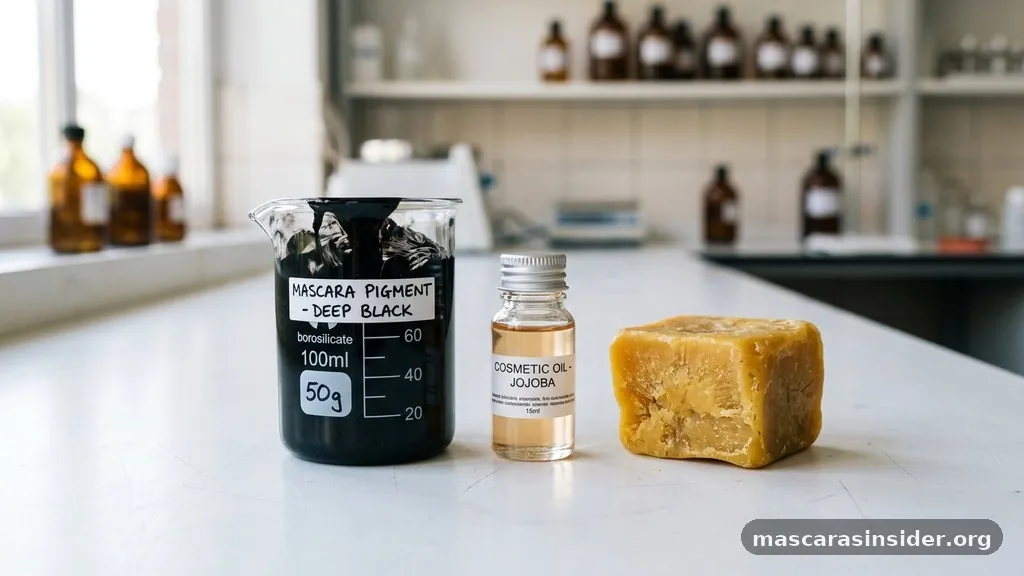
What is mascara made of? Most mascaras combine a liquid base, color pigments, waxes, oils or conditioning agents, and ingredients that help the formula preserve its texture and stay on the lashes. Although the finished product looks simple, mascara is a carefully balanced cosmetic designed to darken, lengthen, thicken, curl, or separate individual hairs around the eye. The exact recipe varies by product, but the basic purpose remains the same: deliver color and shape without making the formula too wet, crumbly, sticky, or irritating.
Mascara can seem mysterious, especially when people hear old rumors about bat waste, spider legs, or fish scales. Those claims do not describe the normal ingredients used in modern mascaras.
Instead, manufacturers generally use cosmetic-grade waxes, oils, water, film-forming agents, preservatives, and pigments such as carbon black. So, let’s break down what is actually inside the tube, and why each part matters.
The Main Ingredients in Mascara
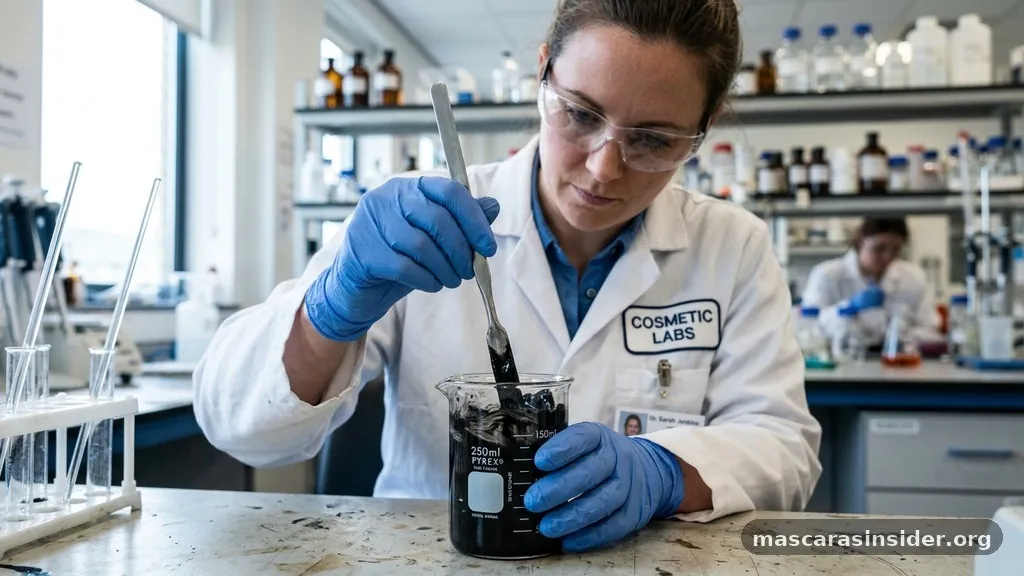
Mascara is usually made from a combination of water or oils, waxes, pigments, film-formers, and preservatives. Each ingredient group performs a separate job, though one ingredient can sometimes support several properties at once.
The product must spread smoothly, cling to lashes, dry within a reasonable time, and remain stable inside its container. That is a tricky little chemistry problem.
Water-based mascaras, which are common for everyday use, often begin with purified water. Water gives the formula a fluid texture and helps the mascara move from the brush onto the lashes.
Oil-based or anhydrous formulas use oils and waxes instead, or use much less water. Waterproof mascara typically relies more heavily on oils, waxes, and water-resistant film-forming ingredients because ordinary water should not easily dissolve or break down the coating.
Waxes give mascara body and structure. Beeswax, carnauba wax, candelilla wax, and synthetic waxes may be used, depending on the brand and the product’s claims. Waxes help the formula grip the lash, build volume, maintain a curl, and prevent the liquid from running immediately after application.
Harder waxes can add firmness, while softer waxes can make the product easier to spread. The balance matters; too much can create clumps, while too little may leave lashes looking thin or limp.
Oils and emollients help the mascara glide. They can reduce a dry, rough feel and help pigments distribute evenly throughout the formula. Some formulas use mineral oil, plant-derived oils, silicone-based ingredients, or other cosmetic emollients.
These ingredients do not all appear in every product, and “oil” does not automatically mean the mascara is greasy. In a well-designed formula, the oil supports smooth application without making lashes look wet for too long.
Preservatives protect water-containing cosmetics from contamination by bacteria, yeast, and mold. Mascara comes into close contact with the eye area, and users repeatedly insert the wand into the tube, so preservation is especially important.
A product that lacks adequate protection can become unsafe even when it still looks normal. Manufacturers may also include emulsifiers, which help water and oil components stay mixed, along with thickeners that control the product’s consistency.
- Water: Creates a fluid base in many traditional mascaras.
- Waxes: Add structure, volume, grip, and staying power.
- Pigments: Provide black, brown, blue, or other visible colors.
- Film-forming agents: Help the coating adhere to lashes and resist smudging.
- Oils and emollients: Improve glide and reduce a dry or brittle finish.
- Preservatives: Help control microbial growth in the product.
- Conditioning ingredients: May improve the feel and flexibility of coated lashes.
Why Mascara Is Black and How Pigments Work
Mascara is black when it contains a black pigment, often carbon black or another approved black color additive. Carbon black produces a deep, dramatic shade because it absorbs much of the visible light that reaches it.
This makes the lashes appear darker and more defined, which is the classic beauty effect people expect from mascara. Not every black mascara uses exactly the same pigment system, however, and some formulas use blends to create softer or more intense results.
Pigments are solid particles that must be dispersed evenly throughout the base. If they settle too quickly, the mascara may become watery at the top and dense at the bottom. If they are not finely and evenly distributed, the color can apply unevenly, leaving some lashes dark and others barely coated.
Formula developers therefore use ingredients that help suspend and distribute the pigments. The brush also contributes to this process by picking up a controlled amount of product.
Brown mascaras use brown pigments, while colored mascaras may contain blue, purple, green, burgundy, or other cosmetic colorants. A shade can look different depending on the base, the particle size, and how strongly the pigment reflects or absorbs light.
Black is popular because it creates contrast around the eye, but brown can appear softer, especially on fair lashes or for daytime makeup. The color choice is cosmetic, not a sign that one formula is automatically safer than another.
It is also useful to separate pigment from glitter or shimmer. A standard pigment provides color, while reflective particles can add brightness or sparkle. Products intended for the eye area must use color additives and decorative particles permitted for that purpose.
A substance that is acceptable on the skin is not necessarily appropriate for use near the eyes. That distinction gets overlooked online quite a bit.
| Formula component | Main function | Where it affects performance |
|---|---|---|
| Black pigment | Creates visible lash color | Definition and intensity |
| Waxes | Add structure and hold | Volume, curl, and texture |
| Film-formers | Leave an adherent coating | Wear time and smudge resistance |
| Water or oils | Carry and spread other ingredients | Application and removal |
| Preservatives | Limit microbial growth | Product stability and hygiene |
For readers who want ingredient and safety information from a regulatory source, the U.S. Food and Drug Administration provides information about cosmetic ingredients and product safety. Ingredient names can look technical, but they reveal much more than internet rumors do.
Waterproof, Tubing and Traditional Mascara: What Changes?
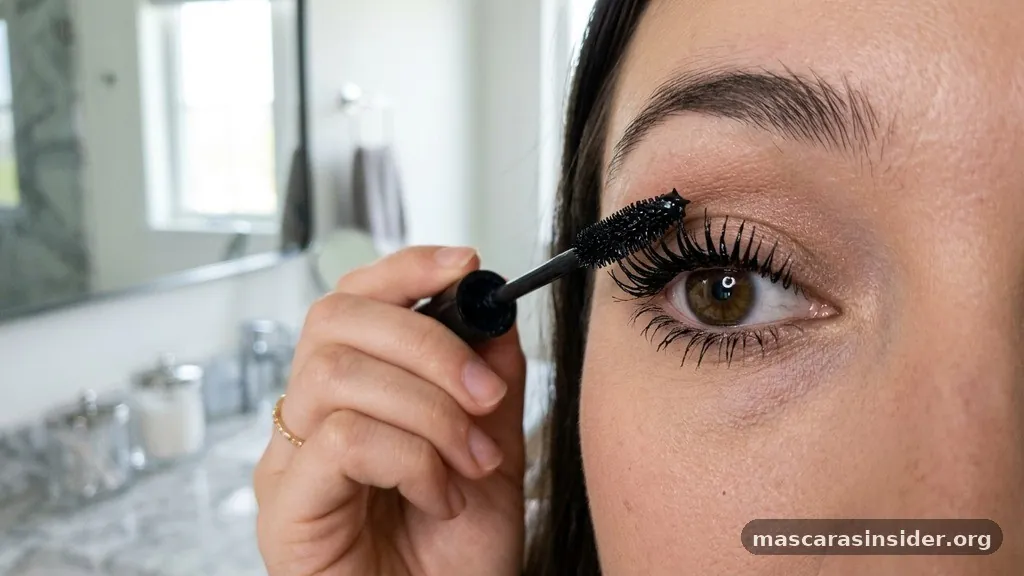
Waterproof mascara is made to resist water, tears, humidity, and sometimes sweat by using ingredients that do not dissolve easily in water. Its formula may contain more waxes, oils, silicones, and film-forming materials than a conventional water-based mascara.
These components create a flexible layer around the lashes. Because the coating resists water, it usually requires an oil-based or two-phase eye-makeup remover rather than plain water alone.
Waterproof formulas can be helpful for weddings, humid weather, swimming, or people whose eyes water easily. The trade-off is removal. Rubbing hard can pull on lashes or irritate the delicate skin around the eye, so the remover should be pressed gently against the lashes for a short time before wiping.
This softens the film and makes removal less aggressive. A formula that stays put all day is useful, but it should not become a wrestling match at night.
Tubing mascara uses film-forming polymers that wrap around individual lashes in tube-like coatings. It is not made from actual tubes, fibers, spider legs, or unusual animal materials.
When exposed to warm water and gentle pressure, those polymer films can loosen and slide away in small pieces or soft strands. This behavior distinguishes tubing mascara from many traditional formulas, which dissolve or break down more gradually with makeup remover.
Traditional mascara usually forms a pigmented layer across the lash surface. Tubing mascara forms a more defined polymer coating around each hair. That difference can make tubing products useful for people who dislike smudging beneath the eyes.
However, performance varies by formula, and “tubing” is not always used in exactly the same way in marketing. Checking the ingredient list can help identify film-forming polymers, but the package description remains useful too.
What makes mascara thicken, lengthen or curl?
Volumizing mascara commonly uses a thicker base, more wax, or particles that make lashes appear fuller after several strokes. Lengthening products may use a fluid film-forming base or tiny fibers, although fiber formulas differ from ordinary tubing products.
Curling mascaras often combine flexible waxes and fast-setting film-formers that help maintain the shape created by an eyelash curler. The brush design matters as well: a dense brush deposits more product, while a narrow or comb-like brush can separate lashes.
These claims describe appearance, not permanent biological growth. Mascara coats the lashes that are already present.
It does not normally make the lash follicle produce longer hairs. Conditioning ingredients may improve how the coated lashes feel, but they should not be confused with a clinically established lash-growth treatment.
Animal Ingredients, PFAS and Common Mascara Concerns
Modern mascara does not normally contain bat poop or spider legs. Those are persistent myths, not standard descriptions of cosmetic formulation.
The rumor about bat waste may come from confusion over guanine, a pearlescent ingredient historically associated with fish scales in some cosmetics. Even then, guanine is not a typical explanation for the main black pigment in mascara, and it does not mean ordinary mascara is made from bat material.
Some mascaras may contain animal-derived ingredients, while others are made without them. Beeswax is a familiar example of an animal-derived ingredient. Certain products may also use ingredients such as lanolin, depending on the formula.
Vegan mascara avoids animal-derived components, but “vegan” and “cruelty-free” do not mean precisely the same thing. Vegan generally refers to ingredient origin; cruelty-free refers to animal testing or related production practices. A label and the manufacturer’s policy are the best places to verify those claims.
The idea that mascara is made from fish scales is also too broad to be accurate. Some cosmetics have historically used fish-derived pearlescent materials, but a particular mascara may not contain them.
Most black mascaras depend on pigments, waxes, oils, water, and film-formers rather than scales. Ingredient lists are more reliable than a generalized claim about an entire category of products.
What about harmful ingredients and PFAS?
“Harmful ingredients” is not one simple category because risk depends on the substance, concentration, exposure, individual sensitivity, and intended use. Fragrance, preservatives, certain colorants, and some solvents can bother people with sensitive eyes, although an ingredient being difficult to tolerate does not automatically make it unsafe for everyone. Burning, swelling, persistent redness, pain, or vision changes are reasons to stop using the product and seek appropriate medical advice.
PFAS, or per- and polyfluoroalkyl substances, are a broad group of chemicals sometimes discussed in connection with long-wear and waterproof cosmetics. They are not required ingredients in every waterproof mascara, and the presence of a “waterproof” claim alone does not prove that a product contains PFAS.
People who want to avoid them can review brand disclosures, ingredient information, and current guidance from relevant authorities. This topic changes as testing methods and regulations develop, so a blanket statement about every mascara would be misleading.
Eye hygiene matters as much as the ingredient list. Do not share mascara, add water or saliva to revive a drying tube, or keep using a product that has changed smell, texture, or performance. The wand repeatedly moves between the tube and the eye area, which creates opportunities for contamination.
Replacing old eye products according to the manufacturer’s directions is a simple, sensible habit. Also, avoid applying mascara while moving in a car or rushing around with an unsteady hand; eye injuries are not worth saving a minute.
How to Read a Mascara Ingredient List
To understand what a specific mascara is made of, read the ingredient panel rather than relying only on the front label. Ingredients are generally listed from higher to lower amounts, although color additives and some specialty components follow separate conventions. The first items often reveal whether the product is mainly water-based, oil-based, wax-rich, or polymer-focused.
Look for words connected with the product’s intended behavior. “Aqua” or water suggests a water-containing base. “Cera,” “wax,” or named plant and mineral waxes indicate structure and hold. “Iron oxides” or other listed color additives may provide shade, while “carbon black” identifies a familiar black pigment. Film-forming polymers can indicate wear resistance or tubing behavior. Preservatives and stabilizers may appear farther down the list, but their lower position does not make them unimportant.
When comparing mascaras, ask what result you actually need. A person with watery eyes may prioritize a durable film, while someone with sensitive eyes may prefer a simpler, fragrance-free formula.
Someone with fine lashes may want a lightweight product that separates rather than a very waxy volumizer. There is no single best ingredient combination because lashes, eye sensitivity, climate, and removal habits differ.
Ingredient labels can also help answer ethical or dietary-style questions. If avoiding beeswax, look for a clearly identified vegan claim and verify the company’s definition.
If avoiding animal testing, check the brand’s cruelty-free policy instead of assuming that “natural” means cruelty-free. If avoiding specific preservatives or fragrance, scan the full list carefully. “Natural,” “clean,” and “hypoallergenic” are marketing terms that may not provide a complete picture by themselves.
In short, mascara is a cosmetic coating engineered for the lashes. Pigments create the color, waxes create shape and substance, water or oils carry the formula, polymers improve adhesion, and preservatives help keep the product stable. The unusual rumors are far less useful than the actual label, which tells you what that particular product contains.
Frequently Asked Questions
Is mascara made from bat poop?
No. Modern mascara is not normally made from bat poop.
The rumor may confuse mascara with guanine, a pearlescent cosmetic material historically associated with fish-derived sources. Standard mascara generally uses pigments, waxes, oils, water, film-formers, and preservatives to color and coat the lashes.
Is mascara made from spider legs or fish scales?
No, spider legs are not a normal mascara ingredient. Some cosmetics may historically have used fish-derived pearlescent materials, but that does not describe every mascara. Black mascara usually gets its color from approved pigments, while waxes and polymers create the coating and staying power.
What is tubing mascara made of?
Tubing mascara is made with film-forming polymers that wrap around individual lashes. The polymers create tube-like coatings, which can loosen with warm water and gentle pressure. It is not made from physical tubes or fibers in the ordinary sense, although some products may include additional ingredients.
Can mascara contain animal-derived ingredients?
Yes, some mascaras can contain animal-derived ingredients such as beeswax or other materials, depending on the formula. Vegan mascaras are made without animal-derived ingredients, while cruelty-free claims concern animal testing. Check the ingredient list and the brand’s stated policies for reliable confirmation.
Does waterproof mascara contain PFAS?
Not necessarily. Waterproof mascara uses water-resistant waxes, oils, silicones, or film-formers, but the waterproof label alone does not prove PFAS are present. Anyone wishing to avoid PFAS should review current brand disclosures and ingredient information, since formulations and regulatory guidance can change.


