

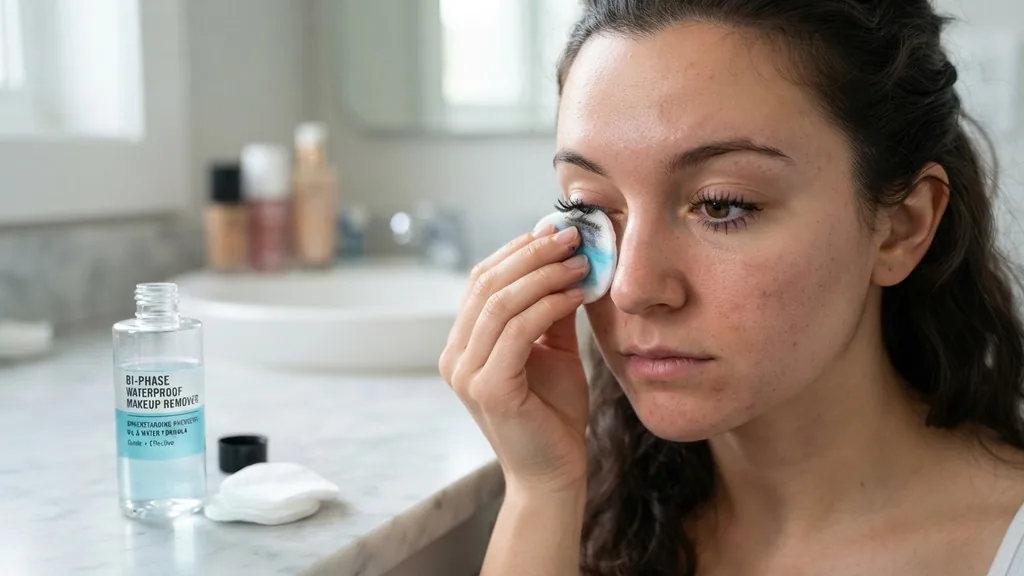
Removing stubborn eye products requires a delicate balance between efficacy and kindness to your skin. Because waterproof mascara is engineered to resist moisture, sweat, and tears, it contains polymers and waxes that adhere firmly to your lashes. Standard facial cleansers often fail to dissolve these ingredients, leaving you scrubbing at your sensitive eye area.
Using the wrong technique or harsh materials can lead to premature lash shedding, irritation, or even micro-tears in the delicate eyelid skin. Finding out what removes waterproof mascara safely is essential for maintaining both your lash health and the integrity of the thin skin surrounding your eyes.
Understanding the Chemistry of Waterproof Mascara

Waterproof mascara is designed to stay put, which means it resists water-based substances. When you ask what removes waterproof mascara, the answer lies in the concept of “like dissolves like.”
Since these formulas are oil-based or wax-based, you need a lipid-rich substance to break down the bond between the product and your hair follicles. Standard water-based face washes simply slide off the surface of the mascara, which is why your eyes often look like a raccoon’s after a quick splash of water.
The primary ingredients in these long-wear formulas include synthetic waxes like beeswax or carnauba wax, along with volatile silicones. These components create a hydrophobic barrier. To effectively remove them, you must employ a solvent—specifically, an oil or a specialized bi-phase solution—that can penetrate this barrier.
When you apply an oil-based product, it softens the wax, allowing the pigment to slide off the lash without requiring aggressive mechanical friction. Understanding this chemical interaction is the first step in avoiding the damage caused by pulling or tugging on your lashes during your nightly routine.
Oil-Based Cleansers for Efficient Removal
Oil-based cleansers are the most effective tools for dissolving the stubborn resins found in waterproof eye makeup. These products work by lifting the pigment away from the lash fiber, allowing you to wipe it away with minimal pressure.
Unlike harsh soaps, high-quality cleansing oils or balms are typically formulated to be gentle on the eye area while providing a deep, thorough clean. Many people find that a cleansing balm, which melts into an oil upon contact with body heat, offers the most control during the application process.
To use an oil-based cleanser correctly, apply a small amount to your dry fingertips and gently massage it onto your closed eyelids and lashes. Take your time with this step; massaging for thirty to sixty seconds allows the oil to fully penetrate the layers of mascara. Once the product has softened, use a damp, lukewarm cloth or a cotton pad to gently wipe the dissolved makeup away.
This method is highly recommended by dermatologists because it prevents the physical trauma often associated with cotton swabs or dry wipes. By effectively breaking down the product before you even touch it with a cloth, you preserve the natural health of your lashes.
The Role of Micellar Water in Your Routine
Micellar water has become a staple in many beauty routines, but it is important to choose the right version when dealing with heavy-duty makeup. Micellar water consists of tiny oil molecules called micelles suspended in soft water.
These micelles act like magnets, drawing out dirt, oil, and impurities from the skin. While standard micellar water is excellent for daily cleansing, it may struggle with highly pigmented, waterproof formulations unless you choose a specialized “bi-phase” or “oil-infused” version.
The bi-phase micellar water is specifically designed for waterproof makeup. You will notice these bottles have two distinct layers: an oil layer and a water layer. When you shake the bottle, the two phases combine to create a potent solution that removes waterproof mascara while remaining gentle on the skin.
To use this effectively, soak a reusable cotton pad with the solution and press it against your closed eye for ten to fifteen seconds. This “press and hold” technique is crucial because it gives the micelles and oils time to dissolve the product before you attempt to wipe it away. Always follow up with a gentle water-based cleanser to remove any residual oil, ensuring your pores remain clear and your skin feels balanced.
Natural Oils as a DIY Alternative
If you are looking for an accessible, natural way to clean your eyes, many common household oils can do the job quite well. Coconut oil, almond oil, and jojoba oil are popular choices for those who prefer to avoid synthetic fragrances or complex chemical formulations.
These oils are incredibly effective at breaking down the waxes in waterproof mascara, and they often double as a nourishing treatment for your lashes. However, it is vital to source high-quality, cold-pressed oils and ensure they are safe for use near the eye area.
When using natural oils to remove makeup, use a very small amount. A drop or two is usually enough to coat the lashes of one eye. Massage the oil gently into the lashes, then use a damp, warm washcloth to wipe away the residue.
Be careful not to get too much oil directly into your eye, as this can cause temporary blurriness, which, while harmless, can be quite frustrating. If you wear contact lenses, always remove them before using oil-based removers to prevent the oil from coating the lenses and causing discomfort. For more information on maintaining eye health, you can visit the American Academy of Ophthalmology for guidelines on proper eye hygiene and product safety.
Avoiding Common Mistakes During Removal
The most common error people make when removing waterproof mascara is using too much force. Vigorous scrubbing is the leading cause of lash breakage and irritation of the thin skin around the eyes.
If you find yourself pulling or tugging to get the product off, your remover is likely not strong enough, or you are not allowing it enough time to act. Remember that the skin around your eyes is the thinnest on your body; it is prone to wrinkles and sensitivity, so it requires a soft touch.
Another frequent mistake is failing to remove makeup entirely before sleep. Sleeping in mascara, especially waterproof varieties, can lead to clogged follicles, which may cause styes or even infections. Furthermore, leftover residue can cause your lashes to become brittle and snap off throughout the night as you toss and turn against your pillow.
Make it a non-negotiable part of your evening routine to clear your eyes completely. If you find your eyes are sensitive, look for fragrance-free and ophthalmologist-tested products to minimize the risk of contact dermatitis.
Comparing Removal Methods
Different products suit different skin types and lifestyles. The following table provides a quick look at the most common methods for removing waterproof mascara and their typical characteristics.
| Method | Best For | Pros | Cons |
|---|---|---|---|
| Bi-Phase Micellar Water | Sensitive Skin | Non-greasy, effective | Requires shaking, slightly more expensive |
| Cleansing Balm | Dry/Mature Skin | Deep cleaning, soothing | Can be messy, requires a cloth |
| Natural Oils | Minimalist Routine | Affordable, natural | Can blur vision, potentially comedogenic |
| Makeup Remover Wipes | Travel/Convenience | Fast, easy | High friction, often contains alcohol |
Selecting the Right Tools for the Job
Beyond the solution you use, the tools you employ to wipe away the makeup are equally important. Many people reach for standard cotton balls, but these can leave behind lint that gets stuck in your lashes or enters the eye, causing irritation.
Instead, consider using high-quality cotton pads or, even better, reusable bamboo or microfiber rounds. These materials are much softer on the skin and provide a better surface for lifting the dissolved pigment away.
If you are using a cleansing balm, a soft muslin cloth is an excellent companion. The texture of the cloth provides a very gentle exfoliation that ensures every last bit of mascara is removed without the need for harsh rubbing. When you are done, make sure to wash your cloth or discard your single-use pad.
Leaving residue on your tools can encourage the growth of bacteria, which you certainly do not want to introduce to your eye area the next time you cleanse. Always keep your tools clean to protect your eye health.
Addressing Topical Gaps: Why Mascara Stays Put
A common question that arises is why some waterproof mascaras seem to never come off, even with supposedly effective removers. The answer often lies in the specific “long-wear” technology used by modern cosmetic brands. Many newer formulas use film-forming polymers that create a literal plastic-like coating over the lash.
While this makes the mascara smudge-proof, it also makes it incredibly resistant to standard oils. If you use a product that claims to be waterproof but also “tubing,” you might find that oils don’t work as well as they do on wax-based waterproof formulas.
Tubing mascaras require warm water rather than oil to soften the “tubes” so they can slide off the lashes. If you are struggling to remove your mascara with oil, check the packaging to see if it is a tubing formula. If it is, stop using oil and switch to warm water.
Saturate your lashes with warm water, let them soften for a minute, and then gently pull the tubes away with your fingers or a washcloth. Identifying the type of mascara you are wearing is the key to choosing the right removal method and avoiding unnecessary frustration.
- Always start with a clean face and wash your hands before touching your eyes.
- Use the “press and hold” method to allow the cleanser to dissolve the product.
- Avoid pulling on your lashes; let the remover do the heavy lifting.
- Follow up with a gentle facial cleanser to remove oil residue.
- Ensure your mascara is not a “tubing” formula before using oil-based removers.
- Replace your eye makeup every three months to prevent bacterial buildup.
- Be cautious with essential oils, which can cause severe irritation to the eyes.
Long-Term Lash Health and Care
Removing waterproof mascara is not just about cleanliness; it is about preservation. Your lashes are delicate hairs that, like the hair on your head, can become brittle and damaged if treated poorly. By consistently using the correct removal techniques, you ensure that your lashes remain strong and healthy.
If you notice your lashes are thinning, consider incorporating a lash serum into your routine. These products often contain peptides and vitamins that nourish the follicle and support growth.
Furthermore, give your eyes a break. You do not need to wear waterproof mascara every single day. If you have a day at home or a low-activity schedule, opt for a water-based mascara or go without product entirely.
This gives your lashes a chance to recover from the daily application and removal cycle. When you do wear waterproof formulas, treat the removal process as a moment of self-care rather than a chore.
Taking the extra minute to properly dissolve the product will pay off in the long run with healthier, fuller-looking lashes that require less makeup to look their best. Consistency is the secret to maintaining the beauty of your eyes while enjoying the convenience of long-wear cosmetic products.
Frequently Asked Questions
- Does Vaseline remove waterproof mascara? Yes, petroleum jelly is an effective, inexpensive way to break down waterproof formulas. Apply a tiny amount to your lashes, let it sit for a minute, and gently wipe away. Ensure you use pure petroleum jelly to avoid potential eye irritation from added fragrances.
- Can I use baby oil for mascara removal? Baby oil is generally safe for removing waterproof makeup, but it is often heavily fragranced. If your eyes are sensitive, opt for a fragrance-free mineral oil or a dedicated eye makeup remover to avoid redness, stinging, or allergic reactions in the delicate eye area.
- What is the best product to remove waterproof mascara? The best product is typically an oil-based cleanser or a bi-phase micellar water. These formulas are specifically engineered to dissolve wax-based resins without requiring harsh friction, making them the safest and most efficient choice for preserving the health of your lashes and eyelid skin.


