


Achieving perfectly groomed arches can transform your entire face, and learning how to use brow mascara is arguably the most efficient way to add volume, definition, and hold in a single step. Whether you are dealing with sparse patches, unruly stray hairs, or simply want to enhance your natural color, brow mascara acts as a versatile tool that bridges the gap between a natural, “no-makeup” aesthetic and a polished, professional look.
Unlike traditional pencils that require precise artistic strokes, this product utilizes a specialized wand to coat each individual hair, providing a textured, three-dimensional finish that stays put throughout the day. By mastering the application technique, you can elevate your beauty routine and ensure your eyebrows remain the focal point of your facial structure.
Understanding the Role of Brow Mascara in Your Routine
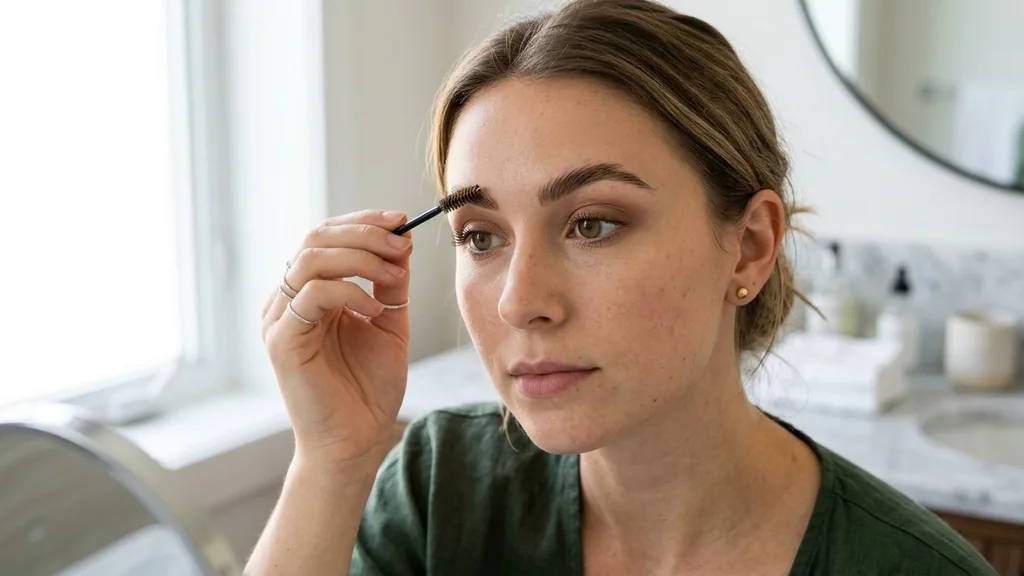
Brow mascara is essentially a tinted, thickening gel formulated specifically for the delicate hairs of your eyebrows. While many beginners often confuse this product with standard eyelash mascara, the two are fundamentally different in both composition and application. Eyelash mascara is designed to be heavy, lengthening, and often water-resistant to prevent smudging on the eyelids.
Conversely, brow mascara features a lighter, more pliable formula that provides a flexible hold without making the hair feel stiff or crunchy. Its primary purpose is to groom the brows into place while simultaneously depositing pigment to cover gaps or gray hairs.
When you incorporate this product into your daily regimen, you are essentially performing two tasks at once: setting and filling. The brush attached to the wand is specifically engineered to be smaller and more precise than an eyelash wand, allowing you to manipulate the hair with surgical accuracy. This is particularly beneficial for those with thin or fine brows who struggle to create the illusion of density using only a powder or pencil.
By coating the hair, the product makes each strand appear thicker, which naturally creates a fuller, more youthful appearance. Furthermore, because it sits on the hair rather than the skin, it provides a much more natural-looking result than products that attempt to draw on the skin itself.
Step-by-Step Application for Beginners
Learning how to use brow mascara effectively requires a bit of patience and a steady hand, especially if you are new to eyebrow grooming. The process begins with clean, dry skin. If you have applied heavy foundation or moisturizer, make sure to gently wipe your brows with a cotton swab to remove any excess product, as this can prevent the mascara from adhering properly to the hair.
Once your brows are clean, take the wand out of the tube and wipe the excess product off on the rim. This is a critical step; too much product on the tip of the brush will lead to clumping, which is the most common mistake made by beginners.
Start by brushing the product through your brows in the opposite direction of hair growth. This ensures that you coat the underside of the hair, which is often missed during standard application. After you have fully saturated the hair against the grain, comb the hairs back into their natural, desired shape.
This technique, often referred to as “back-combing,” is the secret to achieving maximum volume. If you find that you have accidentally deposited too much color on your skin, you can use a clean spoolie brush to buff out the edges or a damp cotton swab to clean up the perimeter. The goal is to keep the pigment on the hair itself, as this creates the most authentic and realistic look.
Comparing Brow Mascara, Gels, and Pencils
Choosing the right tool for your specific needs can be confusing given the sheer volume of options available on the market. While they all aim to improve the appearance of your eyebrows, they function in different ways. To help you decide which product aligns with your goals, consider the following comparison of common eyebrow enhancement tools:
| Product Type | Primary Function | Best For |
|---|---|---|
| Brow Mascara | Tinting, Volumizing, Holding | Sparse brows, adding texture |
| Clear Brow Gel | Holding, Shaping | Full brows needing maintenance |
| Brow Pencil | Defining, Filling, Shaping | Creating precise arches |
| Brow Powder | Soft Filling, Shading | Soft, natural, diffused look |
As indicated in the table, brow mascara occupies a unique space in the beauty industry. It is more pigmented than a standard clear gel but offers a more natural, “fluffy” finish than a pencil. If you are someone who is always on the go and needs a quick, one-and-done solution, mascara is likely your best choice.
However, if you have significant gaps or lack a defined tail on your brow, you might find that you need to combine a pencil for the outline and a mascara for the final volume and hold. This layered approach is often used by professional makeup artists to create a long-lasting, high-impact result that survives even the most humid conditions.
Troubleshooting Common Application Issues
Even with the best products, you may occasionally run into issues like clumping, flaking, or an uneven distribution of color. The key to troubleshooting these problems lies in understanding your specific hair texture and the consistency of the product you are using. If you notice that your brow mascara is clumping, it is almost always due to the wand picking up too much product.
To resolve this, always wipe the applicator against the neck of the tube before touching your brows. If the product has started to dry out or become thick inside the tube, you can sometimes revive it by placing the closed tube in a cup of warm water for a few minutes, which helps thin the consistency.
Another common issue is the “stiff brow” syndrome, where the product dries too hard and makes the hair feel brittle. This usually happens when you use a formula with a very high hold factor or simply apply too much. If you have naturally wiry or coarse hair, look for formulas that contain conditioning ingredients like panthenol or castor oil.
These components ensure that the brow mascara provides hold without compromising the health of the hair. If you find that the color is too intense for your complexion, you can soften the look by using a clean spoolie brush to distribute the product more evenly through the hair after the initial application, effectively “diluting” the pigment density by spreading it across more surface area.
Professional Tips for Achieving a Polished Look
To take your eyebrow game to the next level, consider the techniques favored by professionals. One of the most effective methods for achieving a high-end finish is the “laminated” look, which is currently trending in the beauty industry. To achieve this with brow mascara, you need to brush your eyebrow hairs in an upward motion, following the natural growth pattern but slightly exaggerating the vertical angle.
This opens up the eye area and makes the face appear more lifted and alert. Once the product has set, you can use the flat side of the wand to gently press the hairs down against the skin, locking them into that sleek, uniform position.
For those who want to ensure their look lasts from morning until night, consider the order in which you apply your products. If you are using a brow pencil, always apply it before your brow mascara. The pencil provides the structure and fills in the skin, while the mascara acts as the “top coat” that sets the pencil in place and adds the necessary texture to make the result look like real hair.
If you apply the mascara first, the pencil will struggle to grip the skin, leading to a smudged or uneven appearance. Furthermore, always ensure that any skin-care products, such as oils or heavy creams, have fully absorbed into your skin before you start your brow routine, as residual oil can break down the mascara’s hold and lead to smearing throughout the day. You can find more detailed information on facial anatomy and maintenance at the American Academy of Dermatology for advice on maintaining healthy skin and hair follicles.
Addressing Frequently Asked Questions
It is common for users to have questions regarding the compatibility and safety of these products. One of the most frequent inquiries involves whether you can use brow mascara on your eyelashes. While the ingredients are often similar, the brushes are designed for very different hair types and eye safety standards.
It is generally recommended to stick to products designed for their specific purpose to avoid eye irritation. Another common concern is the difference between brow mascara and brow gel. While the terms are often used interchangeably, “gel” can refer to both clear and tinted products, whereas “mascara” almost always implies a tinted, thickening product designed to mimic the look of natural hair strands.
Can I mix different brow products?
Yes, mixing products is a common practice. Many people use a pencil to define the tail of the brow and a brow mascara to fluff up the front, creating a gradient effect that looks incredibly natural and professional.
Is brow mascara safe for sensitive skin?
Most brow mascaras are dermatologically tested, but if you have sensitive skin, look for fragrance-free and hypoallergenic formulas. Always perform a patch test on your inner arm if you are prone to allergic reactions before applying it to your face.
How often should I replace my brow mascara?
Like all eye-area cosmetics, brow mascara should be replaced every three to four months. Because the wand goes back into the tube after touching your skin, it can harbor bacteria, which could lead to breakouts or infections if the product is kept too long.
Does brow mascara work on gray hair?
Absolutely. Tinted brow mascara is an excellent tool for covering gray hairs because it coats the coarse, wiry texture of gray brow hair, softening it while simultaneously depositing color to blend it seamlessly with your natural hair shade.


