

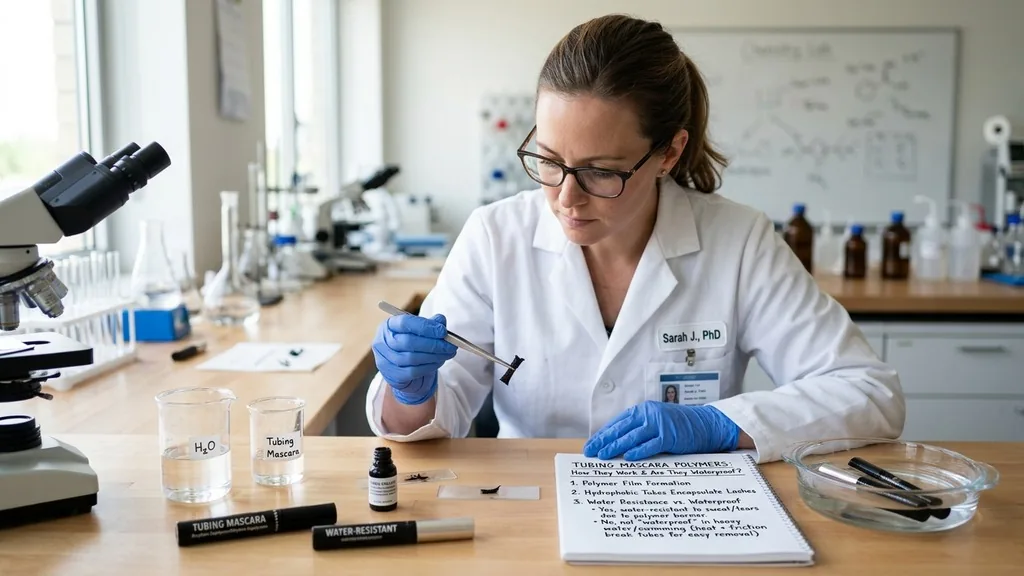
When you reach for a new product to define your lashes, the question “is tubing mascara waterproof” often surfaces as the primary concern. Many consumers mistakenly equate long-lasting wear with traditional waterproof formulas, but tubing mascara operates on an entirely different scientific principle.
While these products are exceptionally resilient against smudging and oil, they are not strictly waterproof in the way a traditional oil-based formula is. Instead, they are designed to be water-soluble, meaning they react specifically to temperature rather than just moisture.
Understanding this distinction is vital for anyone who has struggled with raccoon eyes by midday. Traditional waterproof mascaras rely on waxes and volatile solvents that create a hydrophobic barrier, making them notoriously difficult to remove. In contrast, tubing mascara creates tiny, polymer-based sleeves around each individual lash.
These polymers are stable in cold or ambient temperatures but soften and slide off when exposed to a specific threshold of heat and water. This unique chemistry makes them a favorite for those with oily eyelids or those who prefer a gentle, friction-free removal process.
The Chemistry Behind Tubing Mascara Polymers
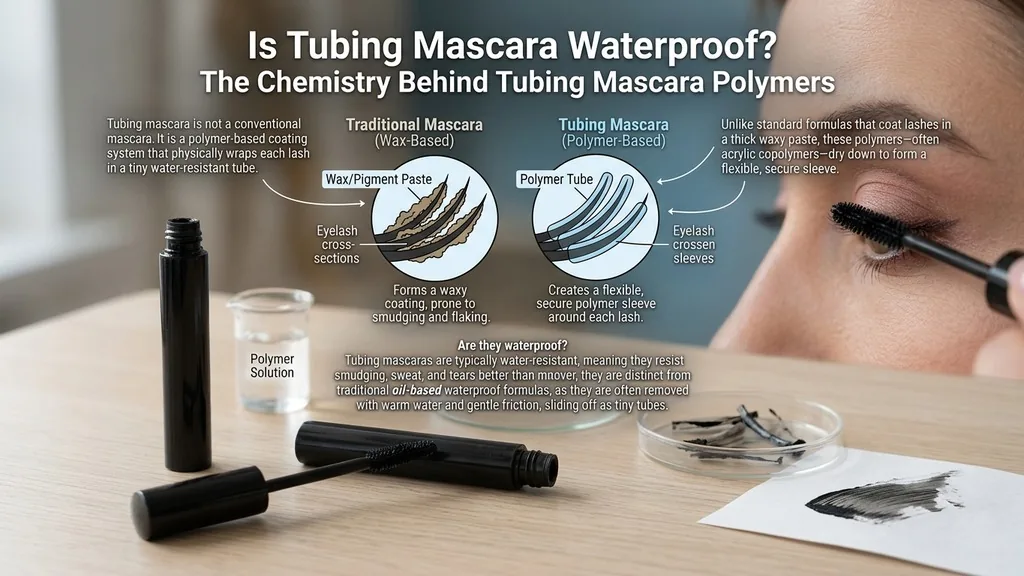
Tubing mascara is not a conventional mascara; it is a polymer-based coating system that physically wraps each lash in a tiny, water-resistant tube. Unlike standard formulas that coat lashes in a thick, waxy paste, these polymers—often acrylic copolymers—dry down to form a flexible, secure sleeve.
This structural difference is the reason why tubing formulas offer such impressive longevity. Because the “tube” is a solid, coherent structure, it does not dissolve into a greasy mess when you sweat or produce natural skin oils.
When you apply this type of product, you are essentially creating a physical barrier that stays put until you actively decide to remove it. Because the tubes are anchored to the lashes, they resist the common issue of flaking. While standard mascaras often dry out and crumble as the day progresses, the polymer tubes remain flexible.
This flexibility allows them to move with your lashes, preventing the brittle texture that leads to fallout. This is why many people who struggle with sensitive eyes find this formula to be a much more comfortable alternative for all-day wear.
Addressing the Waterproof Question: How It Handles Moisture
To answer the question of whether tubing mascara is waterproof: it is technically smudge-proof and humidity-resistant, but not waterproof. If you are caught in a light drizzle or experience a moment of tearing up, your mascara will likely stay perfectly intact.
The polymers are designed to withstand contact with cool water and standard levels of humidity. Because the tubes are not oil-soluble, they won’t melt away when your skin’s natural oils come into contact with your lashes.
However, if you take a swim or submerge your face in a pool, the structural integrity of the tubes can be compromised if the water is warm or if there is significant physical friction. If you rub your eyes while they are wet, you might find the tubes sliding off prematurely. This is a critical distinction for those who specifically need a product for heavy sports or high-intensity water activities.
If your goal is to have a product that stays on through a deep dive, a traditional oil-based waterproof formula might still be your primary choice. If your goal is to avoid the dreaded “panda eye” during a long workday or a humid afternoon, a tubing formula is almost always superior.
Why Tubing Mascara is the Ultimate Smudge-Proof Solution
The primary enemy of traditional mascara is the natural oil produced by your eyelids. Most standard formulas contain waxes that dissolve when they encounter the sebum on your skin, resulting in the dark smudges that appear under the eyes by late afternoon.
Tubing mascara, however, is completely impervious to these oils. Because the polymers do not react to oil, they stay locked in place regardless of how much your skin produces throughout the day.
This makes tubing technology a game-changer for people with hooded eyes or oily skin types. Where traditional products fail, these formulas excel by maintaining a crisp, defined look from morning until night. You don’t have to worry about checking a mirror every hour to wipe away debris.
The security of the tubes ensures that the product remains exactly where you applied it. This reliability is what drives the popularity of these mascaras, as they offer a level of peace of mind that wax-based products simply cannot replicate.
The Gentle Removal Process with Warm Water
The most distinct feature of tubing mascara is the removal process. You do not need harsh makeup removers, oil-based cleansers, or aggressive scrubbing to get it off. In fact, using an oil-based cleanser is often ineffective because the polymers are specifically designed to ignore oil.
Instead, you simply use warm water. By saturating your lashes with water that is at a comfortable, warm temperature, the polymer tubes soften and lose their grip on the lash hair.
This process is incredibly gentle on the delicate skin around the eyes. You can gently pull the tubes away with your fingertips or a soft, damp cloth, and they will slide off in one piece. You will often see the individual “tubes” on your cotton pad, which can be surprising the first time you see it.
This eliminates the need for heavy rubbing, which is a major cause of premature wrinkles and lash breakage. By choosing a formula that rinses clean with water, you are preserving the health of your lashes and the surrounding skin. According to the American Academy of Ophthalmology, maintaining good hygiene and avoiding harsh mechanical stress during makeup removal is essential for long-term eye health.
Comparing Tubing Mascara to Traditional Waterproof Formulas
When evaluating your options, it helps to look at the functional differences between tubing and traditional waterproof formulas. The following table highlights the key performance metrics that define these two categories:
| Feature | Tubing Mascara | Traditional Waterproof Mascara |
|---|---|---|
| Primary Resistance | Smudge-proof (Oil-resistant) | Water-resistant (Oil-based) |
| Removal Method | Warm water and gentle pressure | Oil-based cleanser or makeup remover |
| Texture/Finish | Flexible, clean, defined | Stiff, waxy, heavy |
| Lash Health | Less breakage during removal | Potential for breakage due to rubbing |
As the table demonstrates, the choice between these two depends on your lifestyle and your specific pain points. If your main issue is smudging, tubing is the clear winner.
If your main issue is maintaining a look during a marathon swim session, traditional waterproof is the safer bet. Understanding these trade-offs allows you to make an informed decision based on your daily needs rather than just marketing buzzwords.
Common Myths and Topical Gaps
There is a significant amount of misinformation regarding the safety and performance of these formulas. One common myth is that tubing mascara causes lashes to fall out. In reality, the opposite is usually true.
Because the removal process is so gentle, you are less likely to pull out lashes during your nightly routine. Another common question is whether you can layer other mascaras over tubing formulas. While you can technically layer them, it often defeats the purpose, as the top layer may smudge or flake, making the clean removal process more difficult.
Many users also wonder if tubing mascara provides the same volume as traditional formulas. Historically, tubing mascaras were known for length and definition rather than heavy volume. However, modern cosmetic chemistry has advanced significantly.
Many newer formulations now incorporate volumizing fibers within the polymer base, allowing for a much more dramatic look than the thin, wispy results of the past. If you find your current product lacking in volume, look for versions specifically labeled as “volumizing” or those that include lash-thickening fibers.
Who Should Use Tubing Mascara?
Tubing mascara is an excellent choice for a wide variety of users, but it is particularly beneficial for those with specific beauty challenges. If you have “hooded eyes,” where your upper lid touches your lashes throughout the day, you have likely dealt with constant smudging. Tubing formulas are the only ones that effectively resist the transfer caused by this eye shape.
Similarly, if you wear contact lenses, you might find that traditional mascara flakes off and gets into your eyes, causing irritation. Because tubing mascara forms a solid sleeve, it does not flake, making it much safer and more comfortable for lens wearers.
It is also a fantastic option for those who lead busy, active lifestyles but don’t want to spend time on a complex beauty routine. If you need your makeup to look professional from an early morning meeting through an evening workout, this product provides the necessary endurance.
It holds up against sweat and heat, ensuring that your look remains consistent without the need for constant touch-ups. It is truly a low-maintenance solution for a high-demand schedule.
Best Practices for Application and Longevity
To get the most out of your tubing mascara, you must adjust your application technique. Because these formulas are liquid-based and designed to form a film, they can sometimes clump if you apply too many layers too quickly. Start by applying a thin coat from the base of the lash to the tip.
Use a wiggling motion to ensure the polymers fully coat the root. If you want more drama, wait for the first coat to dry completely before applying a second. This allows the first set of tubes to “set” properly.
If you find that the product is not giving you the desired look, consider using a lash primer. A primer can help build initial volume, providing a better surface for the tubing polymers to latch onto. However, be mindful that using a non-tubing primer can complicate the removal process, as the primer will need to be broken down with an oil-based cleanser.
For the purest experience, sticking to a tubing-only routine is recommended. When you are ready to remove it, ensure your water is actually warm—not just lukewarm—as the heat is the catalyst that softens the polymers.
The Future of Lash Technology
As we look at the evolution of eye makeup, it is clear that tubing technology is moving toward becoming the industry standard for daily wear. The shift away from heavy, oil-based waxes reflects a broader consumer preference for products that are both high-performing and gentle on the skin. We are seeing more brands invest in hybrid formulas that combine the long-wearing benefits of polymers with nourishing ingredients like panthenol or biotin to improve lash health simultaneously.
This intersection of technology and skincare is the next frontier. Imagine a product that not only stays on through a humid day but also conditions your lashes while it sits on them. This is already happening in the premium market.
As these technologies become more accessible, the need for harsh, oil-based removers will likely continue to decline. By understanding that tubing mascara is not waterproof but rather smudge-proof, you can better manage your expectations and enjoy the benefits of a cleaner, more reliable lash look.
Frequently Asked Questions
- Does tubing mascara run if you cry? It depends on the intensity. Because it is water-soluble, heavy, warm tears can cause the tubes to soften and slide off. However, it will not turn into a black, runny mess like traditional mascara; it will simply detach in small, clean pieces.
- Is tubing mascara bad for your lashes? No, it is actually one of the safest options. The gentle, water-based removal process prevents the mechanical stress and lash breakage often associated with scrubbing off stubborn, waterproof, oil-based formulas, making it a much healthier choice for daily use.
- Can you wear tubing mascara in the rain? Yes, it handles light rain or humidity very well. The polymer tubes are stable in cool, ambient moisture. You only need to worry if you are exposed to significant heat or if you rub your eyes while they are wet, which could dislodge the tubes.
- How do I know if my mascara is a tubing formula? Check the packaging for terms like “tubing,” “polymer-based,” or “removes with warm water.” If the instructions specifically state that you should remove it with warm water and no cleanser, it is almost certainly a tubing mascara.


