

Learning how to wash off waterproof mascara properly is a essential skill for anyone who enjoys long-lasting, smudge-proof eye makeup. Because this type of cosmetic is formulated to resist water, sweat, and tears, it naturally resists standard soap and water.
If you try to scrub it away with a basic face wash, you risk pulling out your eyelashes or causing irritation to the delicate skin around your eyes. A strategic approach is required to break down the wax and polymer bonds that keep the product firmly attached to your hair follicles.
The Science Behind Removing Waterproof Mascara
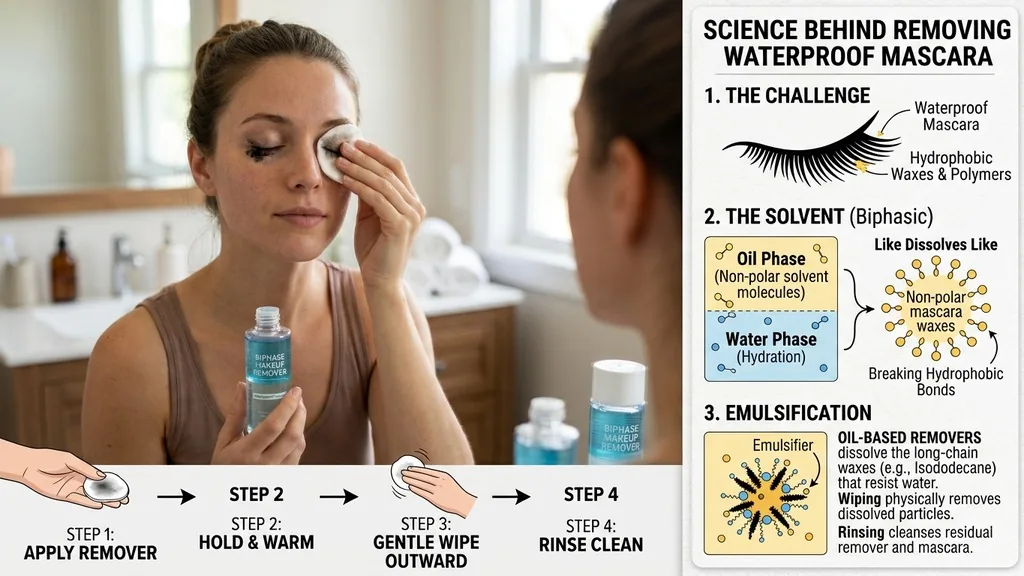
To successfully remove waterproof mascara, you must understand that the product is designed to be hydrophobic. This means it actively repels water, which is why a splash at the sink or a rainy day won’t cause it to run.
The formula typically contains ingredients like isododecane, beeswax, or synthetic polymers that create a flexible, water-resistant film over each lash. Because water cannot dissolve these substances, you need a solvent that can penetrate the film and lift it away from the surface of the hair.
The most effective solvents for this task are oils or specialized surfactants. Oil-based cleansers work by dissolving the lipid-based waxes in the mascara, effectively melting the product so it can be wiped away gently.
Micellar water, on the other hand, contains tiny spheres of oil suspended in soft water that act like magnets to pull dirt and stubborn makeup from the skin. By choosing the right solvent, you eliminate the need for harsh rubbing, which is the primary cause of premature lash loss and skin sagging around the orbital area.
Why Traditional Face Wash Often Fails
A common mistake many people make is assuming that their regular foaming facial cleanser is enough to clean their entire face, including their eyes. While these cleansers are excellent for removing surface oil, sweat, and environmental pollutants, they lack the heavy-duty emulsifying agents needed to break down waterproof polymers. When you apply a standard gel or foam cleanser to waterproof mascara, the product often just smears, creating “raccoon eyes” rather than actually dissolving the pigment.
Repeatedly trying to force a regular cleanser to work by scrubbing harder is counterproductive. The skin around the eye is the thinnest on the human body, making it highly susceptible to micro-tears and irritation.
When you tug at your lashes, you put mechanical stress on the hair follicles, which can lead to breakage or thinning over time. Instead of relying on a single product that may not be designed for heavy eye makeup, it is much safer to use a two-step cleansing routine that prioritizes the health of your lashes and the elasticity of your skin.
Effective Methods for Removing Waterproof Mascara
There are several reliable ways to remove stubborn eye makeup without causing damage. The most recommended method involves using a dedicated oil-based remover or a cleansing balm. These products are specifically formulated to melt away even the most resilient formulas.
Another popular option is micellar cleansing water, which is particularly useful for those with sensitive skin who prefer a non-greasy finish. To help you decide, consider the following comparison of common removal techniques.
| Method | Best For | Texture |
|---|---|---|
| Cleansing Balm | Heavy, long-wear makeup | Solid to oil |
| Micellar Water | Sensitive or oily skin | Liquid |
| Biphasic Remover | High-pigment waterproof formulas | Oil and water mix |
| Natural Oils | Minimalist, eco-friendly routines | Pure oil |
Using Micellar Water the Right Way
Micellar water has become a staple in many beauty routines because it is gentle yet effective. However, the secret to success lies in the application. Simply swiping a cotton pad across your eyes once is rarely enough to remove waterproof mascara.
You need to allow the micelles to do their work. Start by soaking a cotton pad or a reusable bamboo round thoroughly with the solution. Press the wet pad gently against your closed eyelid and hold it there for at least 30 seconds.
This “dwell time” is crucial. By holding the pad against your lashes, you allow the cleansing water to saturate the mascara, softening the polymers. Once the time is up, gently glide the pad downward toward the tips of your lashes.
Avoid rubbing back and forth, as this can cause tangles and breakage. If there is still residue left, use a clean cotton swab dipped in micellar water to carefully trace the lash line and remove any remaining pigment trapped between the roots.
The Benefits of Oil-Based Cleansing
If you prefer a more nourishing approach, oil-based cleansers are the gold standard. Whether you use a dedicated makeup remover oil or a natural alternative like jojoba or almond oil, the mechanism is the same: like dissolves like.
Because waterproof mascara is oil-soluble, applying a thin layer of oil directly to your lashes will instantly begin to break down the waterproof barrier. This method is exceptionally gentle, as it provides “slip” that prevents your fingers from pulling or tugging at the lashes.
To use this method, dispense a small amount of oil onto your fingertips and gently massage it into your closed eyelids and lashes. You will feel the mascara start to loosen and slide off the hair. Once the product is fully emulsified, rinse your face with lukewarm water.
Follow this up with a gentle water-based cleanser to remove any oily residue. This double-cleansing method is widely regarded by dermatologists as the most thorough way to ensure your skin is clean without stripping away natural moisture. You can find more information on proper skin hygiene through resources like the American Academy of Dermatology.
Addressing Common Topical Gaps
One frequently asked question is whether you can remove waterproof mascara without any specialized products. While it is technically possible to use household items, you must be careful. Many people turn to coconut oil or petroleum jelly.
These can be effective, but they are heavy and can potentially clog pores or create a cloudy film over your vision if they get into your eyes. If you choose to use these, ensure they are high-quality and free of fragrances that might sting the eye area.
Another common concern is how to clean the lower lash line. Often, people focus so much on the upper lashes that they neglect the bottom ones, leading to smudges under the eyes the next morning. To clean the lower lashes, fold a cotton pad in half or use a small, pointed cotton bud.
Dip it into your chosen remover and look upward, carefully wiping the lower lashes against the pad. This prevents the mascara from smearing onto the delicate skin of your under-eye area, which is prone to developing fine lines if treated too harshly.
Best Practices for Lash Health
Maintaining the health of your lashes while using waterproof formulas requires a proactive approach. Beyond just knowing how to wash off waterproof mascara, you should consider the tools you use. Avoid using abrasive washcloths, which can snag individual hairs.
Instead, use soft, microfiber cloths or cotton rounds. If you notice your lashes becoming brittle or sparse, consider incorporating a lash serum into your nightly routine to provide hydration and support growth.
- Always wash your hands before touching your eye area to prevent infection.
- Never sleep in mascara, as it can cause lashes to become brittle and break overnight.
- Avoid pulling or tugging at your eyelids, as this damages the skin’s elasticity.
- Use a fresh cotton pad for each eye to prevent cross-contamination.
- Store your makeup remover in a cool, dry place to maintain its effectiveness.
- Replace your mascara every three months to minimize bacterial buildup.
Troubleshooting Stubborn Residue
Sometimes, even after thorough cleaning, you might find tiny black flakes remaining at the base of your lashes. This is usually a sign that the mascara has dried into the spaces between the hair follicles.
If you find yourself in this situation, do not resort to picking at the flakes with your fingernails. This is a common habit that almost always results in pulling out healthy lashes along with the dried product.
Instead, try a targeted approach. Take a clean spoolie brush—a disposable mascara wand—and dip it into your oil cleanser or micellar water. Gently brush through your lashes from the root to the tip.
The bristles of the brush act as a fine-tooth comb, lifting away the stubborn flakes that a cotton pad might miss. If you are still struggling, it may be time to switch to a different mascara formula or a more potent makeup remover. Sometimes, a specific brand’s waterproof formula is simply too aggressive for your daily routine, and finding a “tubing” mascara might be a better alternative if you want long-wear without the difficult removal process.
Frequently Asked Questions
Is it safe to use Vaseline to remove waterproof mascara?
Yes, petroleum jelly is an effective solvent for waterproof mascara because its oil-based composition breaks down wax formulas. However, use it sparingly, as it can be heavy and may leave a temporary cloudy film over your eyes if too much gets inside.
Can I use plain water to wash off waterproof mascara?
No, plain water will not remove waterproof mascara. The formula is specifically designed to be hydrophobic, meaning it repels water. Using only water will lead to smearing and potential damage to your lashes from excessive scrubbing, as you try to force the product off.
What is the best way to remove mascara without causing eye irritation?
The best method is to use a dedicated oil-based cleansing balm or a gentle micellar water. Apply the product, let it sit for 30 seconds to dissolve the mascara, and then gently wipe downward. This minimizes friction and prevents the need for harsh rubbing near the eyes.
How do I avoid getting “raccoon eyes” while washing my face?
To avoid smudging, remove your eye makeup completely before you start washing the rest of your face. By breaking down and wiping away the mascara first, you ensure that as you rinse your face, you aren’t just moving dissolved pigment around your cheeks and under-eye area.


