

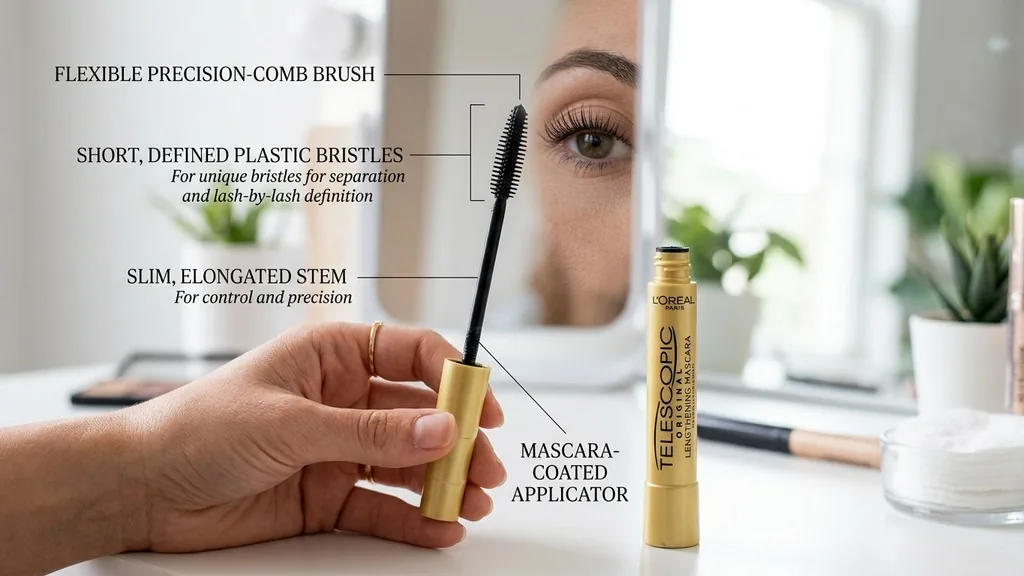
Telescopic mascara is a specialized type of eye makeup engineered to provide extreme length and precise definition to individual lashes. Unlike volumizing formulas that focus on building thickness or fluffiness, this category of mascara uses a unique combination of a slim, flexible applicator and a fiber-rich, buildable formula to extend the appearance of each lash from root to tip. It is the go-to choice for individuals looking to create a clean, fanned-out effect rather than a clumpy, dramatic volume look.
The Anatomy of a Telescopic Mascara Brush
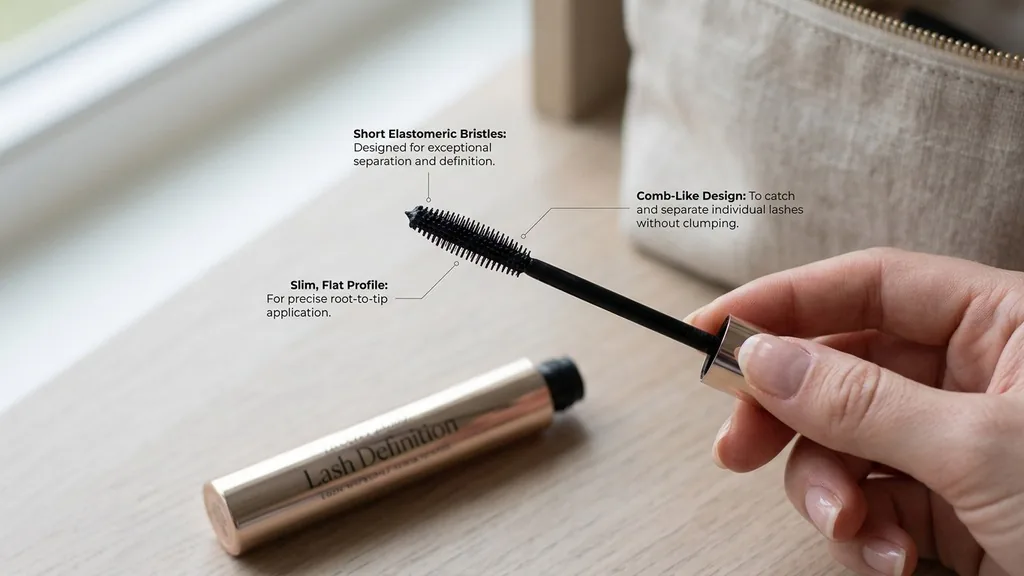
A telescopic mascara brush is a precision tool characterized by its exceptionally slim, flat, and often comb-like applicator design. While traditional mascaras often feature large, fluffy spoolies designed to deposit as much product as possible to create volume, the telescopic brush is designed for control and separation. The bristles are usually shorter and arranged in a way that allows the brush to get as close to the lash line as possible, ensuring that even the smallest, shortest lashes at the inner and outer corners are coated with product.
The primary function of this design is to act as a delivery system for the pigment. By using a flat, comb-like structure, the brush physically separates the lashes as it applies the formula. This prevents the “spider-leg” effect that often occurs when too much product is deposited at once.
Because the brush is so thin, it allows for a high degree of precision, enabling the user to reach the root of the lash and pull the formula through to the very tip. This pulling motion is essential for creating the appearance of added length, as it stretches the formula along the lash shaft.
Understanding the Lengthening Formula
The formula used in telescopic mascara differs significantly from standard thickening or curling mascaras. To achieve that signature extreme length, manufacturers typically incorporate specific polymers and fibers that cling to the natural lash.
When you apply the product, these ingredients adhere to the tip of your existing lash, effectively creating an extension of the lash fiber itself. This is why these products are often referred to as “lengthening” mascaras rather than volumizing ones.
These formulas are generally thinner in consistency than their volumizing counterparts. If a formula were too thick, it would weigh down the lashes, causing them to lose their curl and potentially clump together. A thinner, more fluid consistency allows the product to dry quickly once applied, locking the lashes into a stretched position.
Many modern versions also include conditioning agents like panthenol or ceramide to ensure that the lashes remain flexible even after the product has dried. This prevents the lashes from becoming brittle or snapping, which is a common concern when using long-wearing, fiber-heavy makeup.
How to Apply for Maximum Impact
To get the most out of your telescopic mascara, you must master the specific application technique required by the precision brush. Start by placing the brush at the base of your lashes. Instead of just sweeping it upward, wiggle the brush slightly from side to side.
This movement ensures that you are depositing the maximum amount of pigment at the root, which provides the foundation for the length. Once you have anchored the product at the root, pull the brush straight up toward the tip of your lash in a slow, steady motion.
For the best results, avoid multiple fast, jerky coats. Because the formula is designed to build on itself, you should apply a thin layer, wait a few seconds for it to become tacky, and then apply a second layer if necessary. The second layer is where the “telescoping” effect really happens, as the new fibers cling to the ones already deposited on the tips of your lashes.
If you find that your lashes are sticking together, use the very tip of the precision brush to comb through them while the product is still slightly wet. This will help maintain that desired fanned-out, defined look that makes this type of mascara so popular for everyday wear.
Comparing Telescopic to Volumizing Mascara
It is helpful to view mascara types through the lens of their specific intent. You can think of volumizing mascara as the “thickening” agent, while telescopic is the “lengthening” agent. Choosing between them often comes down to the natural state of your lashes and the look you want to achieve.
If you have naturally thick but short lashes, a telescopic formula will provide the extension you need. If you have long but sparse lashes, a volumizing formula might be more appropriate to fill in the gaps.
| Feature | Telescopic Mascara | Volumizing Mascara |
|---|---|---|
| Brush Shape | Slim, comb-like, flexible | Large, dense, fluffy |
| Primary Goal | Extreme length and separation | Density and thickness |
| Formula Consistency | Thin, polymer-rich | Thick, wax-based |
| Best For | Short, straight lashes | Sparse, thin lashes |
Many makeup enthusiasts choose to layer these products to get the best of both worlds. By starting with a coat of telescopic mascara to define and extend the lashes, and following up with a volumizing mascara on the base only, you can achieve a look that is both long and full. However, be mindful of the weight; applying too many layers can result in heavy lashes that eventually droop throughout the day.
Addressing Common Topical Gaps
One of the most frequently asked questions regarding this product category is whether it is suitable for sensitive eyes. Because telescopic mascara relies on fiber technology, there is a risk of fibers falling into the eye if the product is not formulated correctly or if it is worn for too long.
If you have sensitive eyes, look for ophthalmologist-tested formulas that are free of harsh fragrances or parabens. It is also essential to ensure you are using a washable formula if you want to avoid the intense scrubbing required by waterproof versions, as the friction of removing stubborn waterproof makeup can irritate the delicate skin around the eyes.
Another gap in common knowledge is the shelf life of these products. Because the brush is so thin and the formula is often fluid, telescopic mascaras can sometimes dry out faster than traditional mascaras. To maximize the lifespan of your tube, never pump the wand in and out of the bottle, as this forces air into the tube and accelerates the drying process.
Instead, use a gentle swirling motion to coat the brush. If the mascara starts to feel clumpy or applies unevenly, it is likely time to replace it, regardless of how much product is left in the tube. For more insights on eye health, you can check the official eye safety guidelines from the American Academy of Ophthalmology regarding the use of eye makeup.
Waterproof vs. Washable Formulas
The debate between waterproof and washable telescopic mascara often centers on the trade-off between longevity and ease of removal. A waterproof telescopic formula is designed to withstand humidity, sweat, and tears, making it an excellent choice for long workdays or special events. These formulas contain volatile solvents that evaporate quickly, leaving behind a film that is resistant to water.
However, this also makes them notoriously difficult to remove. If you use a waterproof version, you must use an oil-based makeup remover to break down the polymers without pulling on your lashes.
Washable telescopic mascara, on the other hand, is designed to be removed with simple soap and water or a gentle cleanser. This is often the preferred choice for daily use because it minimizes the stress placed on your lashes during the removal process.
While it may not hold up to a heavy downpour or a high-intensity workout, modern washable formulas are remarkably resilient. They provide the same lengthening benefits as their waterproof counterparts without the long-term risk of lash breakage caused by aggressive rubbing at the end of the day.
Is Telescopic Mascara Right for Your Lash Type?
Determining if this specific type of mascara fits your routine depends heavily on your unique lash structure. If you struggle with lashes that point downward, a telescopic mascara can be a game-changer because the lightweight formula doesn’t weigh them down, allowing them to hold a curl better than a heavy, wax-filled volumizing formula. The precision brush also allows you to push the lashes into a more upright position during application, which can give the illusion of a more open, awake eye.
However, if your lashes are extremely brittle or damaged, you should be cautious. The fiber-extension process requires the product to grip the lash securely. If your lashes are already compromised, the act of applying and removing this type of mascara could potentially cause further damage.
In such cases, it is advisable to use a lash serum for a few weeks to strengthen the hair follicles before returning to high-definition lengthening mascaras. Always observe how your lashes feel after removal; if they feel dry or stiff, consider using a nourishing lash conditioner overnight to restore moisture.
The Future of Lash Extension Technology
As cosmetic science advances, the technology behind telescopic mascara continues to evolve. We are seeing a shift toward “tubing” formulas that wrap each lash in a polymer tube.
While traditional lengthening mascaras use fibers to create length, tubing formulas form a physical tube around the lash that slides off easily with warm water. This technology is becoming increasingly popular in the telescopic category because it offers the same extreme length and separation while eliminating the risk of flaking or smudging throughout the day.
Furthermore, brands are increasingly integrating skincare ingredients into their makeup. You might find versions of telescopic mascara enriched with biotin, keratin, or castor oil.
These ingredients serve a dual purpose: they provide the immediate cosmetic benefit of longer-looking lashes while simultaneously working to support the health of the lash follicle over time. This trend toward “hybrid” makeup—products that blur the line between cosmetics and skincare—is likely to define the next generation of eye products, ensuring that your makeup routine contributes to, rather than detracts from, your natural lash vitality.
Frequently Asked Questions
- What is the main difference between telescopic and regular mascara? Telescopic mascara features a slim, comb-like brush specifically designed for extreme length and separation, whereas regular mascara typically uses a thicker, denser brush meant to add volume, thickness, and color to the lashes without focusing primarily on individual fiber extension.
- Can I use telescopic mascara if I have sensitive eyes? Yes, but choose ophthalmologist-tested, fragrance-free, and hypoallergenic formulas. Always ensure the product is fresh, as old mascara can harbor bacteria. If you experience any redness or irritation, discontinue use immediately and consult a professional to ensure the product ingredients are safe for your specific sensitivity.
- How do I remove telescopic mascara without damaging my lashes? For washable formulas, use a gentle oil-free cleanser and warm water. For waterproof versions, apply an oil-based makeup remover to a cotton pad and hold it against your closed eyelid for thirty seconds. This allows the oil to dissolve the polymers, letting the mascara slide off effortlessly.
- Does telescopic mascara make lashes look clumpy? Generally, no. The design of the precision brush is intended to comb through the lashes as it applies the formula, which actively prevents clumping. If you find your lashes clumping, you are likely applying too much product at once or using a tube that has become too old.


