

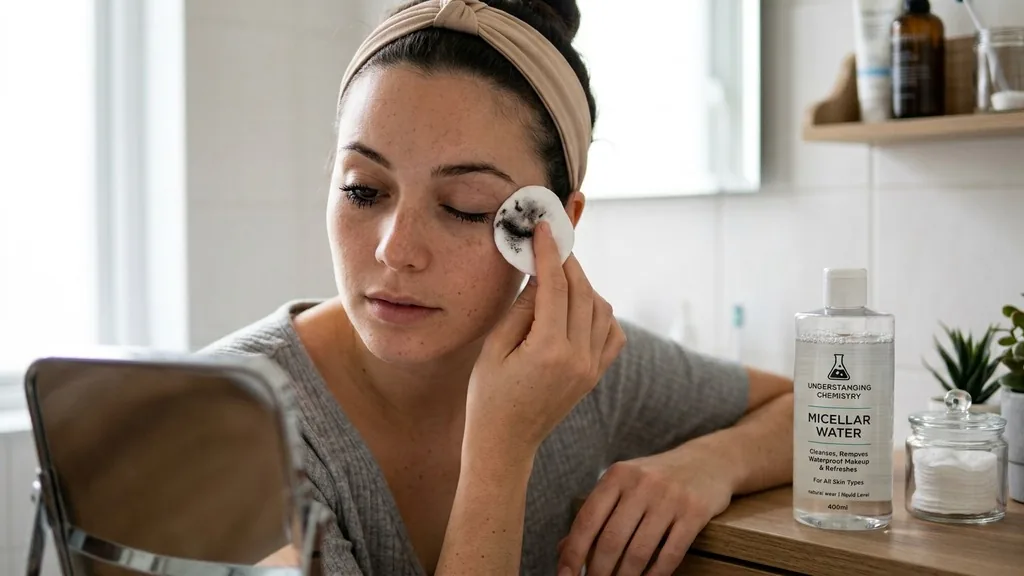
The quest for a clean face at the end of a long day often hits a snag when you reach for your favorite heavy-duty eye products. You might be wondering, does micellar water remove waterproof mascara, or are you destined to wake up with raccoon eyes despite your best efforts?
The short answer is that while standard micellar water formulas are excellent for everyday impurities, they often struggle against the chemical bonds of high-performance, water-resistant cosmetics. Understanding the chemistry behind your cleanser can save your delicate eye area from unnecessary irritation.
Understanding the Chemistry of Micellar Water
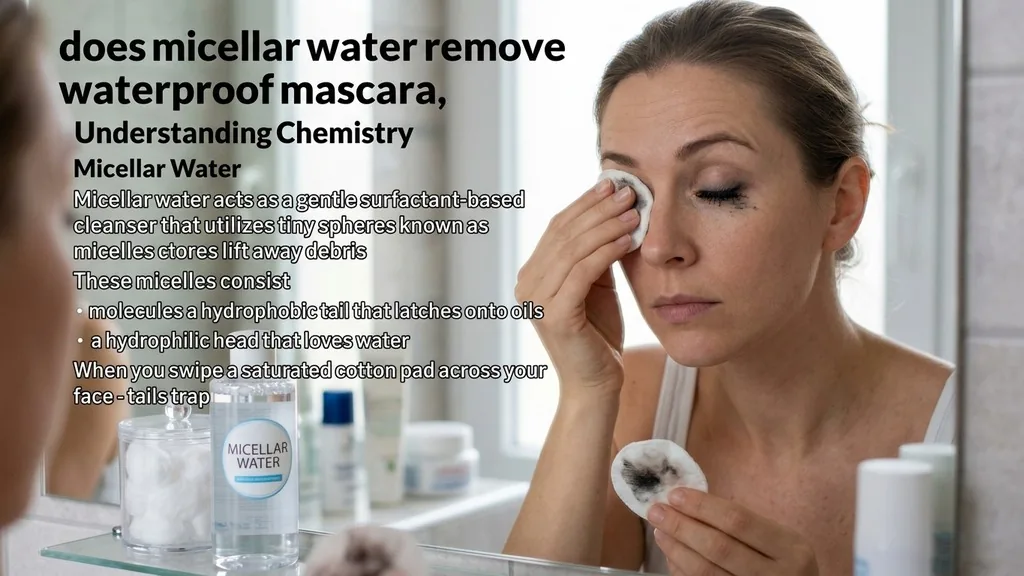
Micellar water acts as a gentle, surfactant-based cleanser that utilizes tiny spheres known as micelles to lift away debris. These micelles consist of molecules with a hydrophobic tail that latches onto oils and a hydrophilic head that loves water. When you swipe a saturated cotton pad across your face, the tails trap dirt, sebum, and non-waterproof makeup, while the water base rinses them away.
Because the solution is primarily water-based, it excels at maintaining the natural moisture barrier of your skin. It is a preferred choice for individuals with sensitive skin who find traditional foaming cleansers too stripping or drying.
However, the very nature of this aqueous solution creates a limitation when it comes to specific types of cosmetic formulations. Waterproof makeup, particularly mascara, is engineered specifically to resist water and oil-based sweat. It contains polymers and waxes designed to create a seal around your lashes that won’t budge when exposed to moisture.
Since standard micellar water is mostly water, it lacks the concentrated solvent power required to dissolve these stubborn, wax-heavy ingredients. If you rely solely on a standard version, you will likely find yourself tugging at your lashes, which is exactly what you want to avoid to prevent breakage and skin sensitivity.
Why Waterproof Mascara Requires Specialized Solvents
Waterproof mascara is designed to be hydrophobic, meaning it actively repels water. Most formulas utilize volatile silicones and heavy waxes like beeswax or carnauba wax to ensure the product stays put through humidity, rain, or tears. To effectively remove these ingredients, you need a substance that can break down those waxes and dissolve the polymers.
This is where an oil-based approach or a dual-phase formula becomes essential. An oil-based solvent works by thinning out the waxes, effectively loosening the bond between the mascara and your natural lash hair.
If you force your standard micellar cleanser to do the job of a heavy-duty remover, you are essentially trying to wash oil off a surface using only water. You will see the makeup smear across your lid rather than lifting off cleanly. This leads to the temptation to scrub harder, which is the primary cause of mechanical irritation around the eyes.
The skin around your eyes is the thinnest on your body; excessive friction can lead to premature fine lines, redness, and even the loss of eyelashes over time. Knowing the difference between a standard water-based cleanser and a specialized remover is the first step in preserving your lash health.
Identifying the Best Cleansing Methods for Waterproof Formulas
To effectively remove waterproof makeup without damaging your skin, you should look for specific product types designed to handle heavy-duty cosmetics. Many brands now offer bi-phase cleansers that combine a water phase with an oil phase.
You shake the bottle to mix them, creating a temporary emulsion that provides the best of both worlds: the refreshing feel of water and the dissolving power of oil. These formulas are generally more efficient at lifting stubborn pigments from your lashes in a single swipe.
Another highly effective method involves using a dedicated cleansing balm or oil before your micellar step. By applying a solid balm or liquid oil to dry lashes, you can gently massage the product into the mascara, breaking down the wax bonds. Once the mascara is loosened, you can wipe it away with a damp cloth or a cotton pad saturated with micellar water.
This double-cleansing technique ensures that no residue remains, which is crucial for preventing clogged pores or eye infections. Consistency is key here; if you rush the process, you leave behind debris that can irritate your eyes overnight.
Comparing Common Makeup Removal Techniques
When selecting your evening routine, consider how different products interact with your skin type and your specific cosmetic needs. The following table highlights the effectiveness of various removal categories against high-performance, water-resistant eye makeup.
| Cleanser Type | Effectiveness on Waterproof Mascara | Skin Compatibility |
|---|---|---|
| Standard Micellar Water | Low | Excellent for sensitive skin |
| Bi-Phase Cleanser | High | Good for most skin types |
| Cleansing Oil/Balm | Very High | Excellent for dry or mature skin |
| Foaming Face Wash | Low to Moderate | Can be drying for some |
The Role of Micellar Water in a Double Cleansing Routine
Even if micellar water isn’t your primary weapon against waterproof mascara, it remains a vital component of a comprehensive skincare regimen. Think of it as the perfect second step in a double-cleansing process.
After you have used an oil-based balm or a bi-phase remover to break down your eye makeup, there is often a thin film of oil or residue left behind. A quick swipe of micellar water acts as a final sweep, ensuring that every trace of pigment, dissolved wax, and leftover oil is completely cleared from your pores.
This approach allows you to benefit from the gentle nature of micellar cleansing without sacrificing the efficacy needed for heavy makeup. By using a specialized remover first, you prevent the need for harsh rubbing. You simply let the oil-based remover sit on your lashes for 20 to 30 seconds, allowing it to do the heavy lifting.
Then, the micellar water acts as a finishing touch that leaves your skin feeling hydrated and refreshed. This method is widely recommended by dermatologists to maintain the integrity of the skin barrier, as you avoid using a single, potentially aggressive cleanser for the entire face.
Avoiding Harsh Rubbing and Eye Irritation
The most common mistake people make when using micellar water for waterproof mascara is the application technique. If you find your mascara isn’t budging, the instinct is to press harder and rub back and forth. This is detrimental.
Instead, practice the “press and hold” method. Soak a cotton pad thoroughly in your micellar or bi-phase solution and press it gently against your closed eyelid.
Let it rest there for a full thirty seconds. This time allows the surfactants to penetrate the mascara layers.
After the hold, gently drag the pad downward, following the natural direction of your lashes. If you notice a significant amount of mascara remaining, do not force it off. Simply re-saturate the pad or switch to a more effective oil-based cleanser.
Tugging at the skin causes micro-tears and breaks down the elasticity of the eyelid skin. Furthermore, rubbing can push particles of makeup into your eyes, which may lead to stinging or blurred vision. For further information on maintaining eye health while using beauty products, you can consult the American Academy of Ophthalmology guidelines on cosmetic safety.
Topical Gaps: Is There a Waterproof-Specific Micellar Water?
A frequent point of confusion for consumers is whether brands actually formulate specific micellar waters for waterproof makeup. Many people ask, “Is there a micellar water that can remove waterproof mascara?” The answer is yes, but it is technically a modified version of the classic formula.
Several manufacturers, including brands like Garnier, have introduced “oil-infused” micellar cleansing water. These products are essentially simplified versions of a bi-phase remover.
These hybrid products contain the same micelles found in standard water, but they are boosted with a layer of gentle oils. When shaken, these oils disperse, allowing the solution to tackle waterproof pigments far more effectively than the standard water-only version.
If you prefer the ease of a one-step product but need the strength to remove waterproof mascara, these oil-infused versions are the ideal middle ground. They offer the convenience of a no-rinse formula while providing the necessary chemical power to dissolve stubborn waxes and polymers without requiring a separate oil cleanser.
Choosing the Right Product for Your Lash Health
Your choice of makeup remover impacts the long-term health of your lashes. If you constantly use harsh products or engage in aggressive mechanical removal, you risk thinning your lashes over time. Eyelashes are delicate, and they require a gentle touch to maintain their density.
When choosing a product, look for ingredients that are non-comedogenic and free from harsh fragrances, which can cause stinging in the eye area. If you wear waterproof mascara daily, you should prioritize products that include conditioning agents like glycerin or panthenol, which help keep the lashes supple even after cleaning.
Consider the following list of best practices to ensure your nightly routine protects your lashes while effectively removing your makeup:
- Always use a soft, high-quality cotton pad to minimize surface friction against your eyelids.
- If you use an oil-infused micellar water, ensure you shake the bottle vigorously before every use to combine the phases.
- Avoid pulling on your lashes; if the mascara doesn’t come off with a gentle swipe, use a dedicated oil cleanser first.
- Never leave traces of makeup on your eyes overnight, as this can lead to blocked oil glands and potential styes.
- If you have sensitive eyes, opt for fragrance-free, ophthalmologist-tested formulas to reduce the risk of allergic reactions.
The Impact of Product Quality and Formulation
Not all cleansers are created equal, and the quality of the ingredients matters significantly when you are dealing with the eye area. Some low-cost micellar waters rely on harsher surfactants that might clean effectively but leave your skin feeling tight or dry.
Conversely, higher-end formulations often incorporate soothing botanical extracts or hyaluronic acid to replenish moisture while cleansing. When you are looking for a product to handle waterproof mascara, don’t just look for the term “micellar”; look for the “oil-infused” or “bi-phase” label, as this is the indicator that the formula is designed to handle water-resistant polymers.
Furthermore, the packaging and application method can influence your experience. A pump-top bottle is often more convenient for saturating a cotton pad without spilling product. Some people prefer using reusable microfiber pads, which can be more effective at grabbing mascara particles than disposable cotton.
Regardless of the tool, the goal remains the same: to remove the product with as little effort as possible. By investing in a high-quality, oil-infused micellar water or a dedicated bi-phase remover, you are prioritizing the longevity of your skin and the health of your lashes, ensuring that your beauty routine remains a source of enjoyment rather than a daily struggle.
Frequently Asked Questions
Can I use standard micellar water for waterproof mascara?
While it can remove some, standard micellar water lacks the oil content needed to break down waterproof waxes. It often requires excessive rubbing, which can damage your lashes and irritate the delicate skin around your eyes. It is better to use an oil-infused or bi-phase cleanser instead.
Why does my mascara smear instead of coming off?
Smearing happens when you use a water-based cleanser on a wax-based product. The cleanser fails to dissolve the mascara, simply pushing the pigment around your eyelid. To fix this, use an oil-based remover to break the wax bonds before using your micellar water to wipe away the residue.
Is it necessary to rinse after using micellar water?
Most manufacturers label micellar water as a no-rinse formula. However, for those with acne-prone or sensitive skin, a quick splash of water or a follow-up with a gentle cleanser is recommended to ensure that no surfactant residue remains on the skin, which could potentially cause irritation over time.
What is the safest way to remove stubborn eye makeup?
The safest method is the “press and hold” technique. Saturate a cotton pad with an oil-based cleanser, press it against your closed eye for 30 seconds to allow the product to dissolve the mascara, and then gently wipe downward. This avoids the need for harsh pulling or scrubbing.


