


Mascara smudging is a common frustration that can turn a polished makeup look into a messy ordeal within just a few hours. If you find yourself constantly checking the mirror to wipe away dark streaks, you are likely dealing with a combination of product formulation, skin chemistry, and environmental factors. Understanding why your mascara travels from your lashes to your under-eye area is the first step toward achieving a long-lasting, clean aesthetic.
The Role of Natural Skin Oils
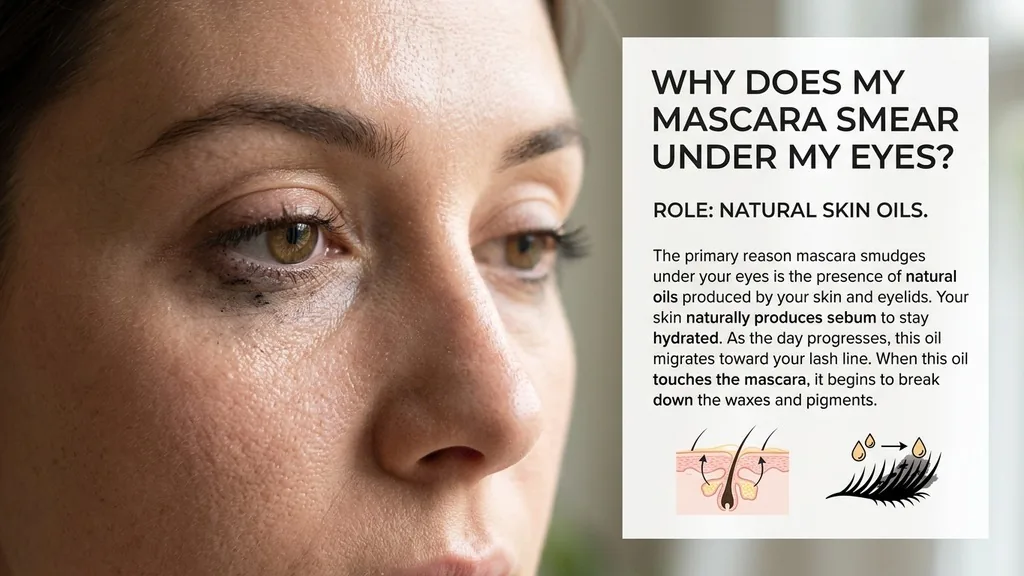
The primary reason mascara smudges under your eyes is the presence of natural oils on your skin and eyelids. Your skin naturally produces sebum to stay hydrated, and as the day progresses, this oil migrates toward your lash line.
When this oil touches the mascara, it begins to break down the waxes and pigments in the formula. This process, known as oil-based degradation, causes the mascara to lose its grip on your lashes and transfer onto your lower lid.
Those with oily skin types or hooded eyelids are particularly prone to this issue. If your eyelids touch the skin above your lash line, the constant friction and heat can accelerate the breakdown of the product.
Even if you have dry skin, the area around your eyes is often treated with rich eye creams that contain oils or emollients. If these products haven’t fully absorbed before you apply your eye makeup, they create a slippery base that encourages the mascara to slide off rather than stay put.
The Impact of Product Formulation
Not all mascaras are created equal, and the chemistry inside the tube plays a massive role in how it behaves on your face. Most standard mascaras are water-based or wax-based, designed to be easily removed with soap and water.
While these formulas are gentle, they are also highly susceptible to moisture and oil. If your mascara is not designed to be smudge-proof, the natural heat of your body can soften the wax, leading to a phenomenon known as “transfer.”
Waterproof mascara is often marketed as the solution to this problem, but it comes with its own set of complications. Waterproof formulas typically contain polymers that create a film around the lash, which is resistant to water but can still be broken down by oils. If you are using a heavy-duty waterproof mascara and still noticing smudges, the issue might be that the formula is too heavy for your specific lash type, causing it to flake or smear as the polymers begin to lose their structural integrity throughout the day.
Environmental Factors and Humidity
Environmental conditions exert a direct influence on how your makeup holds up throughout the day. High humidity and heat are the enemies of long-wearing makeup.
When the air is thick with moisture, your skin may produce more sweat, and the atmosphere itself can weaken the bond between the mascara and your lashes. If you spend your day in a humid climate or an environment with poor air circulation, you might notice that your mascara begins to smudge much earlier than it would in a dry, cool setting.
Temperature fluctuations also play a part. Walking from a cold, air-conditioned office into the sweltering outdoor heat causes your skin to react, often leading to a spike in oil production.
This rapid change in temperature can compromise the stability of your makeup. Even if you aren’t sweating profusely, the simple act of blinking repeatedly in a warm, humid environment can cause your lower lashes to brush against your under-eye skin, depositing tiny amounts of pigment with every movement.
The Importance of Proper Lash Prep
Preparing your lashes correctly before applying mascara is a step many people overlook, yet it is essential for preventing transfer. If your lashes have any residual oil from your morning cleanser or facial serum, the mascara won’t have a clean surface to adhere to. Before reaching for your mascara wand, ensure that your lashes are completely dry and free of any oily residue.
Using an eyelash curler can also help. By lifting the lashes, you create more distance between the tips of your lashes and the skin under your eyes. This physical separation reduces the likelihood of contact.
Additionally, some people find that dusting a tiny amount of translucent powder on their lashes before applying mascara helps to absorb excess oil and provides a “grip” for the product. However, be cautious with this method, as too much powder can make lashes appear clumpy or brittle.
Setting Your Under-Eye Concealer
Your concealer is often an unintended accomplice in the battle against smudged mascara. Many people use emollient-rich concealers to cover dark circles, but these creamy products are designed to stay slick so they don’t crease. When your mascara comes into contact with the oils in your concealer, it creates a recipe for a smeared mess.
To mitigate this, you must set your concealer with a lightweight, translucent setting powder. This creates a dry, matte barrier that prevents the oils in your concealer from migrating upward to meet your lashes.
Using a small, fluffy brush to gently press the powder into the skin ensures that the area stays locked in place. If you skip this step, even the most expensive, high-end mascara will struggle to stay on your lashes throughout the day, as the base it sits against is inherently unstable.
Choosing the Right Mascara Type
Selecting the right product involves understanding your own biology and the specific claims made by manufacturers. Below is a breakdown of how different types of mascara interact with your skin and environment:
| Mascara Type | Best Used For | Smudge Resistance |
|---|---|---|
| Water-Based | Sensitive eyes, easy removal | Low |
| Waterproof | Humidity, tears, swimming | High (against water) |
| Tubing Mascara | Oily skin, preventing transfer | Very High |
Tubing mascaras, in particular, are a game-changer for those who suffer from persistent smudging. Unlike traditional formulas that paint your lashes with pigment, tubing mascaras wrap each individual lash in water-resistant, polymer-based “tubes.”
These tubes do not smudge, smear, or run, even if your skin is oily. They only release when exposed to warm water and gentle pressure, making them an ideal choice for long days or humid weather.
Addressing Topical Gaps: Common Mistakes
One of the most common reasons for mascara smudging is the habit of applying mascara all the way to the very tips of the bottom lashes. While this can create a dramatic, doll-like effect, it also places the darkest, wettest part of the mascara right against your skin. If you have a tendency to smudge, consider skipping bottom lash mascara entirely or using a dedicated smudge-proof formula specifically for the lower lashes.
Another frequent error is applying too many coats. While multiple layers provide volume, they also increase the weight of the product on your lashes. As the mascara dries, the added weight can cause the lashes to droop, bringing them into direct contact with the under-eye area.
Sticking to one or two light, even coats will keep the lashes lifted and minimize the risk of transfer. For more information on maintaining healthy lash hygiene, you can visit the American Academy of Ophthalmology guidelines on eye makeup safety.
Establishing a Reliable Removal Routine
How you remove your mascara is just as important as how you apply it. If your nighttime routine is ineffective, you may be leaving behind microscopic traces of product. These remnants can mix with your morning skincare, creating a “base” of old product that makes it significantly easier for your fresh coat of mascara to slide off the next day.
Ensure you are using a cleanser that is specifically formulated to break down your chosen mascara. If you use a heavy-duty waterproof formula, a simple micellar water might not be enough; you may need an oil-based cleanser or a dedicated bi-phase makeup remover to dissolve the polymers completely. Taking the time to gently cleanse your lash line ensures that you start with a blank canvas every morning, which is a critical, yet often ignored, factor in the longevity of your eye makeup.
FAQ: Frequently Asked Questions
- Does using an eye primer help prevent mascara smudging? Yes, applying an eye primer to your lids and the area just below your lower lashes can create a smooth, oil-absorbing base that prevents product transfer throughout the day. It acts as a barrier between your skin’s natural oils and the mascara formula.
- Are tubing mascaras better than waterproof mascaras? For many people, yes. While waterproof mascara resists water, it can still break down when exposed to natural skin oils. Tubing mascaras are uniquely resistant to oil and smudging because they form physical, elastic sleeves around each lash that won’t smear regardless of skin moisture.
- Why does my mascara smudge even when I don’t wear eye cream? Even without eye cream, your skin naturally produces sebum. If you have oily eyelids or hooded eyes, the constant friction of your lashes against the skin can transfer pigment. Using a setting powder or switching to a tubing mascara can help solve this issue effectively.
- Should I avoid applying mascara to my bottom lashes? If you struggle with constant smudging, skipping the bottom lashes is a highly effective strategy. If you prefer the look, use a clear mascara or a very light, smudge-proof formula, and focus only on the roots rather than the tips to keep the product away from your skin.


