

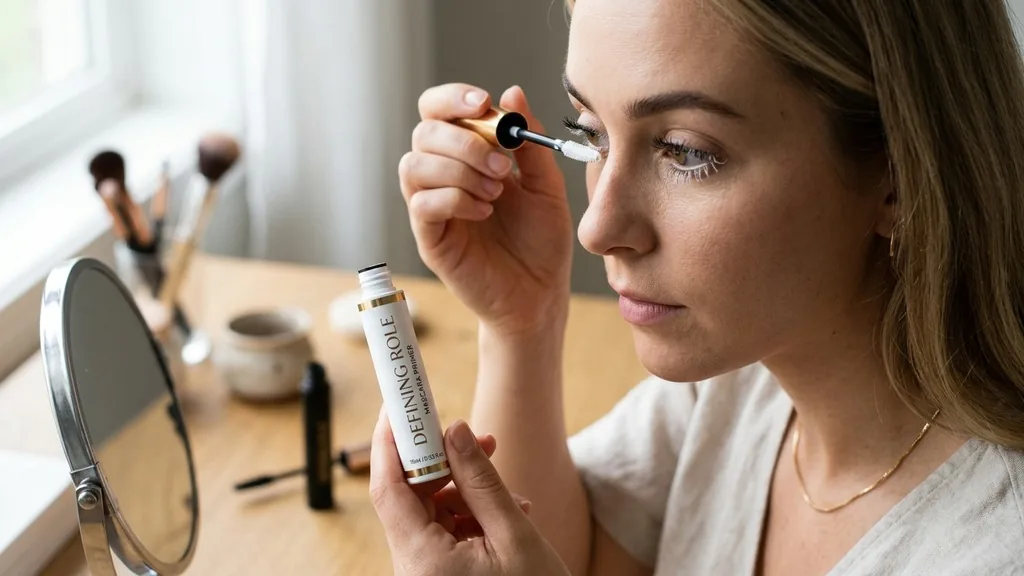
Mascara primer is a cosmetic base coat applied to eyelashes before standard mascara to improve the final look, longevity, and health of the lashes. Often white, clear, or tinted, these formulas act as a foundation for your eye makeup, much like a face primer smooths the skin before foundation. By coating each hair with a specialized blend of waxes, polymers, and conditioning agents, a primer ensures that your subsequent layers of color adhere more effectively, preventing the common pitfalls of flaking, smudging, or clumping throughout the day.
Defining the Role of Mascara Primer
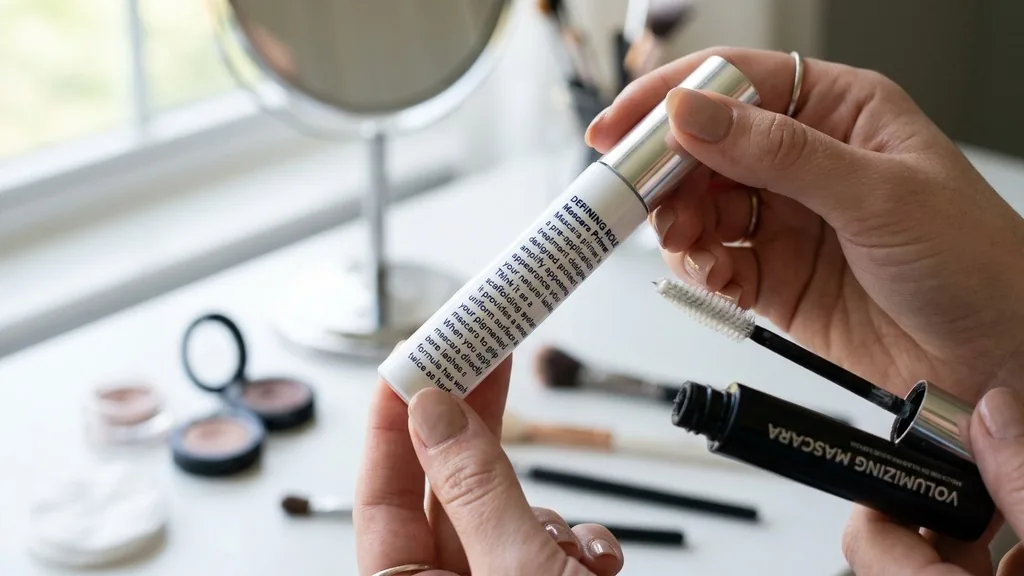
Mascara primer is a pre-application treatment designed to prep, protect, and amplify the appearance of your natural lashes. Think of it as a scaffolding system; it provides a smooth, uniform surface for your pigmented mascara to grip.
When you apply mascara directly to bare lashes, the formula has to work twice as hard to build volume and length. A primer fills in the microscopic gaps along the hair shaft, creating a thicker base that allows for a more dramatic result with fewer coats.
Beyond mere aesthetics, these products are often formulated with nourishing ingredients. You will frequently find them enriched with panthenol, ceramides, or essential oils that hydrate the lashes. This is crucial because standard mascaras—especially waterproof varieties—can be drying.
By placing a conditioning layer between your lashes and the drying pigments of your mascara, you provide a buffer that keeps the hair flexible and less prone to breakage. This dual-purpose function of cosmetic enhancement and lash health makes it an essential tool for those who wear eye makeup daily.
The Mechanics of Lash Volume and Length
The primary reason enthusiasts seek out this product is to achieve a dramatic, high-impact look. Mascara primer works by increasing the physical diameter of each individual lash. By depositing a layer of polymers, the primer effectively thickens the lash before the black pigment even touches it.
This allows for a more significant increase in volume than using mascara alone. If you are aiming for a false-lash effect, the primer provides the necessary structure to support the weight of multiple coats of mascara without drooping.
Lengthening is another key benefit. Many primers contain synthetic fibers—often nylon or rayon—that adhere to the tips of your natural lashes. When you layer your mascara over these fibers, you are effectively extending the reach of your lashes.
This is especially helpful for people with short or sparse lashes who struggle to see results from standard formulas. The primer acts as a bridge, extending the hair and providing a surface that is easier for the mascara brush to grip, which helps in achieving that sought-after “sky high” look without the messy clumps associated with over-applying heavy pigmented products.
Comparing Different Types of Primers
Not all lash primers are created equal, and understanding the variations helps you make a better choice for your specific needs. The most common variety is the classic white primer.
This is designed to be completely opaque, allowing you to see exactly where you have applied the product to ensure full coverage. Once it dries, it turns into a transparent or semi-transparent base that doesn’t interfere with the color of your black mascara.
Alternatively, some brands offer tinted primers. These are often brown or grey, which can be useful if you find that white primers are difficult to cover completely with a single coat of mascara. If you have very dark skin or prefer a more subtle transition, a tinted version might be your best bet.
There are also conditioning-only primers that act more like a serum. These are perfect for those who want to focus on lash health and growth rather than just the cosmetic result. When you decide to buy one, check the ingredients list to see if it emphasizes conditioning agents like peptides or if it focuses on synthetic fibers for structural length.
| Primer Type | Primary Benefit | Best For |
|---|---|---|
| White Base | High visibility for even application | Beginners and full-volume seekers |
| Tinted (Grey/Brown) | Easier to cover with dark mascara | Darker lashes or subtle makeup looks |
| Conditioning Serum | Lash health and hydration | Brittle or damaged lashes |
| Fiber-Infused | Maximum extension and length | Short or thin lashes |
How to Apply Primer for Maximum Impact
The application technique is just as important as the product itself. To get the best results, start by curling your lashes with a quality eyelash curler. This step opens up the eye area and creates the perfect canvas.
Next, pull the primer wand from the base of your lashes to the tips using a slight wiggling motion. This motion ensures that the product coats the roots thoroughly, which is where the bulk of the volume needs to be.
Don’t wait for the primer to dry completely before applying your mascara. While the instructions may vary by brand, most experts suggest applying the mascara while the primer is still slightly tacky. If you wait too long, the primer may harden, making it difficult for the mascara to adhere and potentially leading to a stiff, brittle feel.
If you apply the mascara while the primer is still flexible, the two formulas will bond together, creating a seamless, long-wearing finish. If you find your lashes clumping, use a clean spoolie brush to comb through them immediately after application.
Addressing the Question: Is It Necessary?
Whether or not this step is necessary depends largely on your personal makeup goals. If you are satisfied with a natural, “no-makeup” look, a primer is likely an unnecessary extra step.
However, if you are someone who struggles with mascara smudging by midday, a primer can be a total savior. Because primers are often formulated to be long-wearing and smudge-resistant, they act as an anchor for your mascara, preventing it from migrating to your under-eye area.
Furthermore, if you have naturally thin or straight lashes, the structural support provided by a primer can make a world of difference. It provides the “grip” that many lightweight mascaras lack.
Many people find that they can save money by using a drugstore mascara paired with a high-quality primer, rather than investing in a very expensive luxury mascara. This combination often outperforms pricier options because the primer does the heavy lifting in terms of volume and length, while the mascara provides the final pigment and polish.
Ingredients to Look For and Avoid
When selecting a product, the ingredient deck tells you everything you need to know about how it will perform on your eyes. Look for nourishing agents like vitamin E, castor oil, and panthenol.
These ingredients keep your lashes supple, which prevents the “crunchy” feeling that often accompanies long-wear makeup. For those interested in the science of eye care, you can read more about cosmetic safety standards to ensure you are choosing products that meet rigorous testing requirements.
Avoid primers that contain heavy fragrances, as the delicate skin around the eyes is prone to irritation. If you have sensitive eyes or wear contact lenses, look for ophthalmologist-tested formulas that are free from parabens and sulfates.
Some people find that certain types of synthetic fibers cause irritation if they fall into the eye; if you have sensitive eyes, a fiber-free, conditioning-based primer is usually a safer, more comfortable choice. Always perform a patch test if you are prone to skin reactions.
Common Myths and Misconceptions
There are several myths surrounding the use of lash primers. One of the most common is that they are simply “white mascara” that serves no purpose other than to look strange. This couldn’t be further from the truth.
While they may look like white mascara, the chemical composition is entirely different. Standard mascara is formulated to be pigmented and buildable, whereas a primer is designed specifically for adhesion and structural integrity.
Another myth is that using a primer will cause your lashes to fall out. In reality, the opposite is often true. Because a primer acts as a protective shield, it prevents the mascara from bonding too aggressively to the lash hair, which can make removal much easier.
When you use a good makeup remover, the mascara and primer slide off together, reducing the amount of rubbing and tugging required. Tugging at the eye area is one of the leading causes of lash loss, so anything that makes the removal process smoother is actually beneficial for long-term lash retention.
Troubleshooting Common Application Issues
If you find that your lashes are clumping or looking “spidery,” you are likely using too much product. A little goes a long way. When you pull the wand out of the tube, wipe off any excess product on the rim.
You want a thin, even layer that coats the hair without pooling at the tips. If you still experience issues, check the condition of your mascara. If your mascara is old or dried out, it will never play well with a primer, regardless of how good the base coat is.
Another issue is the “white residue” problem. If you see white bits at the roots of your lashes after applying your black mascara, you aren’t covering the base thoroughly enough. Take your time to really get into the roots with the dark pigment.
Tilting your head back and looking down into a mirror can help you see the base of your lashes more clearly. If you have trouble reaching the inner corners, use a smaller, precision brush to ensure that every single lash is fully coated with dark pigment, hiding the primer underneath.
The Future of Lash Priming
The beauty industry is constantly evolving, and we are seeing a shift toward multifunctional products. We are moving away from simple white primers toward hybrid formulas that offer benefits like lash growth serums and anti-aging properties. Some of the newer products on the market even include tinted fibers that match your natural lash color, eliminating the need to worry about covering up a white base entirely.
Expect to see more focus on “clean beauty” formulations that prioritize botanical extracts and sustainable packaging. As consumers become more educated about what they put on their bodies, the demand for transparent ingredient lists and ethical sourcing will continue to drive innovation in this category. Whether you are looking for a dramatic, red-carpet look or a subtle daily enhancement, the technology behind these products continues to improve, making it easier than ever to achieve the look you want while keeping your lashes healthy and strong.
Frequently Asked Questions
- Do I need to wait for my mascara primer to dry? It is generally best to apply your mascara while the primer is still slightly damp. This creates a better bond between the two formulas and prevents the lashes from becoming too brittle or stiff during the day.
- Can I wear mascara primer on its own? You certainly can, though it may look unconventional if the primer is white. Many people use a clear or tinted conditioning primer on its own for a natural, groomed look that defines the lashes without the intensity of black pigment.
- Does mascara primer really make a difference? Yes, for most people, it provides a noticeable boost in both volume and length. It also helps with the longevity of your makeup, acting as a primer that prevents smudging and ensures your mascara stays in place from morning until night.
- Is it difficult to remove mascara primer? Not if you use a high-quality eye makeup remover. Because the primer helps coat the lashes effectively, it often makes the entire makeup application easier to remove because the mascara isn’t sticking directly to your natural hair shafts.


