

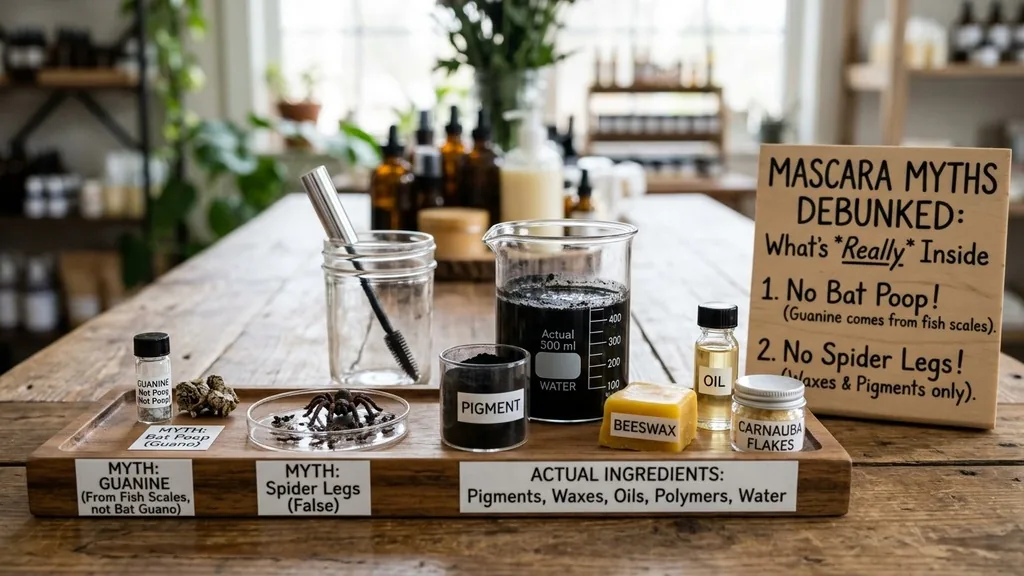
Many people wonder what animal is mascara made of, often fueled by urban legends suggesting that common cosmetics contain bizarre, exotic, or even gross ingredients like bat guano or spider parts. In reality, the cosmetic industry relies on a sophisticated blend of chemistry, synthetic materials, and specific animal-derived byproducts that have been used for centuries. While the dark, dramatic look of long lashes is a staple of modern beauty routines, the substances inside those small tubes are far more mundane—and significantly more regulated—than internet rumors might lead you to believe.
Understanding the actual composition of these products requires looking past the sensational headlines. Modern mascara is a complex emulsion, a mixture of water and oils, stabilized by various chemicals to ensure it adheres to your lashes without smudging or flaking. When you look at the ingredient list on the back of a tube, you are looking at a masterclass in industrial chemistry designed to create a specific texture, color, and longevity.
Debunking the Bat Poop and Spider Leg Myths
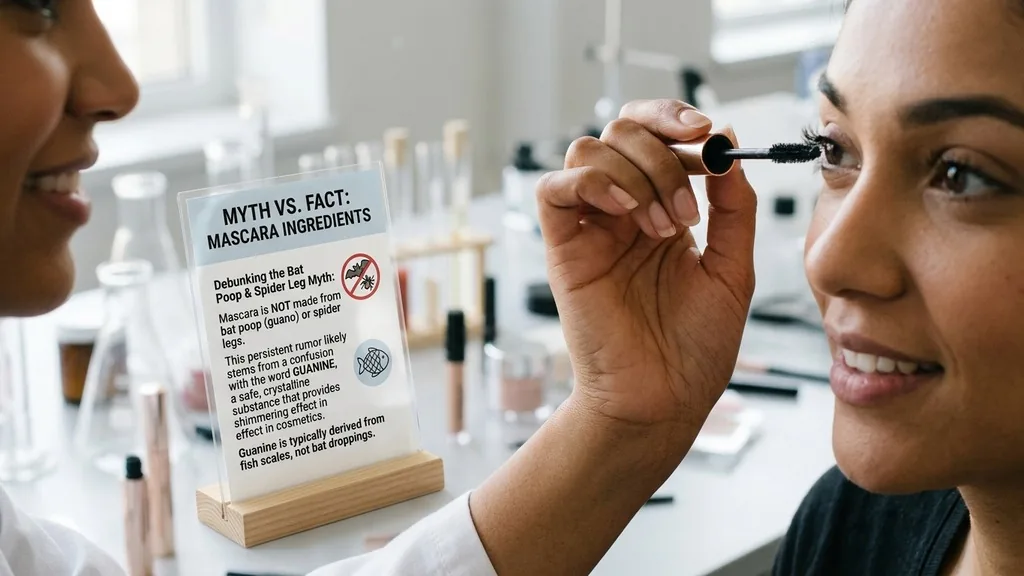
The persistent myth that mascara is made of bat poop, or guano, is entirely false. This rumor likely originated from a misunderstanding of the word guanine, a crystalline substance that creates a shimmering, pearlescent effect in many beauty products. Because the word sounds phonetically similar to guano, the internet eventually conflated the two, leading to the bizarre belief that bats are a primary ingredient in eye makeup.
Similarly, the idea that mascara contains spider legs—often cited as a way to “lengthen” lashes—is purely fictional. No major cosmetic brand uses biological insect parts to build lash volume.
Guanine, the actual substance in question, is a nitrogenous base found in all living organisms. In the context of cosmetics, it is typically derived from fish scales, particularly those of herring. It acts as a colorant and a light-reflector, giving products a pearlescent, metallic, or satin finish.
While this is an animal-derived ingredient, it is a far cry from the waste products or insect limbs suggested by urban legends. If you see guanine on an ingredient label, you are looking at processed fish scales, not anything related to bats or arachnids.
The Role of Waxes and Oils in Lash Products
At its core, mascara is a mixture of oils, waxes, and pigments. The wax component is crucial because it provides the structure, allowing the product to coat each lash and hold it in a curled position. These waxes can be derived from plants, petroleum, or animals.
Beeswax, or Cera Alba, is a very common ingredient in non-vegan formulas. It is prized for its ability to provide a smooth application and a water-resistant barrier. Because it is harvested from beehives, it is considered an animal byproduct, which is why many individuals seeking cruelty-free options look for labels that explicitly state the product is vegan.
Other waxes used in the industry include carnauba wax, which comes from the leaves of the Brazilian palm tree, and candelilla wax, sourced from desert shrubs. These plant-based alternatives are frequently used in modern formulations to replace animal-derived waxes.
The specific balance of these ingredients determines the consistency of the mascara. A formula with a higher wax content will typically be thicker, providing more volume and “body” to the lashes, whereas a formula with more oils will be thinner, focusing on separation and length.
Pigments and the Science of Carbon Black
The deep, intense black color that defines most mascara is achieved through the use of specific pigments. Carbon black is the industry standard for achieving a true, deep-black finish. This substance is a finely divided form of amorphous carbon, produced by the incomplete combustion of heavy petroleum products.
It is essentially soot, refined and processed to meet strict safety standards for use near the eyes. Because it provides such a high level of opacity and a rich, dark hue, it is the primary choice for manufacturers aiming for the most dramatic lash look.
Safety is a primary concern for the cosmetic industry, especially regarding ingredients used in the delicate eye area. You can find detailed information about the safety standards for various additives through the U.S. Food and Drug Administration cosmetics guidelines, which dictate which substances are permitted for use in eye-area products.
Carbon black is heavily regulated to ensure it is free from impurities that could cause irritation or long-term health issues. Manufacturers must ensure their supply chain is transparent and that the carbon black used is of a cosmetic grade, distinct from the industrial-grade carbon black used in tires or inks.
Understanding Animal-Derived Ingredients
While the “bat poop” myth is false, it is true that some animal-derived ingredients are used in the production of makeup. Beyond the aforementioned beeswax and guanine, other substances such as lanolin, which is derived from sheep’s wool, or hydrolyzed keratin, which can come from various animal sources, may appear in formulas.
Lanolin acts as an emollient, keeping the lashes soft and preventing them from becoming brittle or breaking. Keratin is a protein that is already a natural component of hair, so adding it to mascara can theoretically help condition the lashes.
For consumers who prefer to avoid all animal products, the rise of vegan beauty has made it easier than ever to identify which items fit their lifestyle. Vegan mascara replaces beeswax with synthetic waxes or plant-based alternatives like rice bran wax or sunflower seed wax.
It also replaces animal-derived proteins with plant-based amino acids. These products perform just as well as their traditional counterparts, proving that animal ingredients are not biologically necessary to create an effective cosmetic product.
Table: Common Ingredients in Mascara and Their Sources
| Ingredient | Source | Function |
|---|---|---|
| Beeswax | Honeybees | Thickener and water resistance |
| Guanine | Fish scales | Pearlescent, shimmering effect |
| Carbon Black | Petroleum combustion | Deep black pigment |
| Carnauba Wax | Palm tree leaves | Provides lash structure |
| Lanolin | Sheep wool | Emollient and conditioner |
| Iron Oxides | Mineral pigments | Provides brown or black color |
The Chemistry of Tubing Mascara
One specific category of mascara that has gained popularity is “tubing” mascara. Unlike traditional formulas that coat the lashes in layers of wax and pigment, tubing mascara uses polymers that wrap around each individual lash.
As the product dries, it forms small, water-resistant tubes that stay in place until they are removed with warm water and gentle pressure. This technology is a departure from the heavy, wax-based formulas of the past and is a great example of how material science has evolved in the beauty industry.
The polymers used in these tubes are synthetic, meaning they are created in a laboratory rather than being derived from animals. This makes tubing mascara a common choice for those who are sensitive to traditional ingredients or who struggle with “raccoon eyes” caused by smudging. Because these polymers are essentially plastic-based, they are highly stable and do not interact with the oils on your skin, which is usually what causes traditional mascara to break down and smudge throughout the day.
Safety, Allergies, and Formulation Standards
When you consider what mascara is made of, it is important to remember that these formulas are subjected to rigorous testing. Because the eyes are an incredibly sensitive area, manufacturers must ensure their products are free from pathogens and irritating chemicals.
Preservatives are a necessary component in any liquid-based makeup, as they prevent the growth of bacteria and fungi in the tube. Without these, a mascara tube would become a breeding ground for microorganisms within a few days of opening.
Common preservatives include parabens, phenoxyethanol, and various forms of alcohol. While some consumers avoid certain preservatives due to personal health preferences, they remain essential for product safety.
If a mascara formula does not contain preservatives, it will usually have a very short shelf life—often only a few weeks—and must be kept in a refrigerator to prevent spoilage. Always check the “period after opening” symbol on the packaging, which indicates how many months the product remains safe to use.
The Evolution of Lash Makeup
The history of lash enhancement stretches back to ancient Egypt, where substances like kohl—a mixture of lead, copper, and burnt almonds—were used to darken the eyes. While we have moved far beyond these rudimentary and often toxic mixtures, the goal remains the same: to frame the eyes and enhance the appearance of the lashes. The modern mascara industry is a direct descendant of these early practices, albeit one that is now governed by intense chemical research and consumer safety laws.
As we move toward the future, the industry is increasingly focused on sustainability and transparency. Consumers now demand to know exactly what is in their products, forcing brands to be more open about their supply chains and the origins of their ingredients.
This shift is beneficial for everyone, as it leads to higher-quality products and fewer hidden irritants. Whether you are using a luxury brand or a drugstore staple, the science behind your makeup is focused on balancing performance with safety, ensuring that you can achieve the look you want without compromising your health.
Addressing Frequently Asked Questions
Is mascara made out of bat poop?
No, mascara is not made from bat poop or guano. This is a persistent urban legend likely stemming from a misunderstanding of the ingredient “guanine,” which is a shimmering substance derived from fish scales used to add luster to cosmetics.
What are the main ingredients in standard mascara?
Most mascara consists of a mixture of water, pigments like carbon black or iron oxides, waxes such as beeswax or carnauba wax, and film-forming polymers. These ingredients are combined to provide color, texture, and the ability to hold lashes in a curled shape.
How can I tell if my mascara is vegan?
To determine if a mascara is vegan, check the ingredient list for animal-derived substances like beeswax, lanolin, or keratin. Many brands now explicitly label their products as “vegan” or “cruelty-free” on the packaging, which simplifies the process of identifying products that avoid animal ingredients.
Does mascara contain spider legs?
There is no truth to the claim that mascara contains spider legs. Such rumors are fabricated and have no basis in the manufacturing processes of any reputable cosmetic company. Mascara is formulated using safe, tested chemicals and plant or animal-derived waxes and pigments.


