


Removing stubborn eye makeup can often feel like a battle of attrition, especially when you are dealing with products designed to resist sweat, humidity, and tears. Learning how to takeoff waterproof mascara effectively is a critical skill for maintaining the health of your eyelashes and the delicate skin surrounding your eyes. Because waterproof formulas are engineered to bond tightly to the hair shaft, traditional soap and water rarely suffice.
Attempting to scrub these products away aggressively can lead to lash breakage, irritation, and the development of fine lines around the eye area. Instead, you need a strategy that prioritizes dissolution over friction.
The secret to success lies in understanding the chemistry of your products. Waterproof mascara contains waxes and volatile silicones that are hydrophobic, meaning they repel water.
To break these bonds, you need to introduce a solvent—typically an oil or a specialized surfactant—that can lift the pigment away from the hair without requiring you to tug or pull. By adopting a gentle, systematic approach, you can ensure that your nightly routine is both efficient and protective of your natural beauty.
The Importance of Oil-Based Solvents for Waterproof Formulas
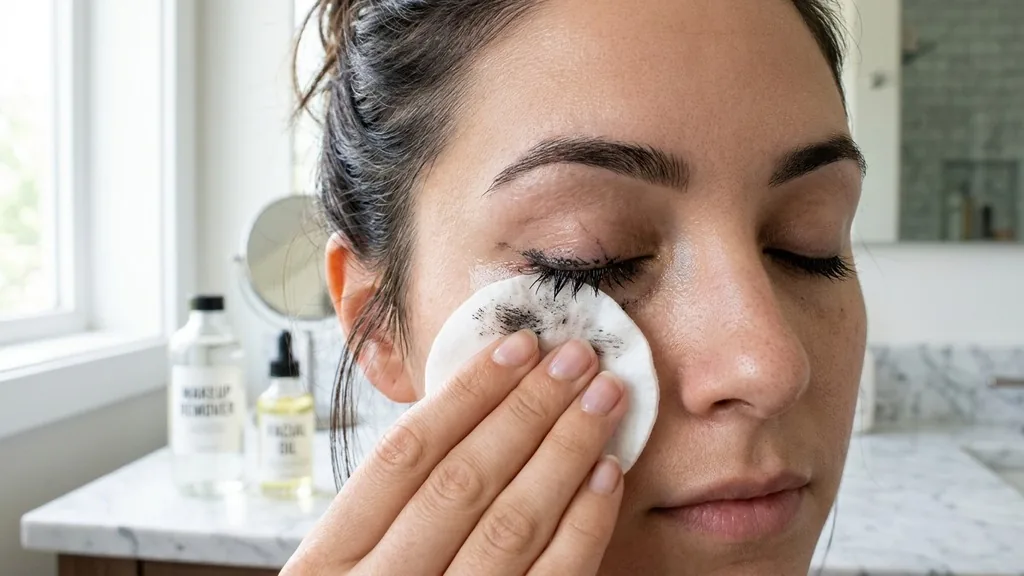
If you have ever wondered why your standard facial cleanser fails to remove your mascara, the answer is simple: polarity. Most waterproof mascaras are oil-based or contain synthetic resins that are completely immune to water-soluble cleansers.
When you try to wash them off with a gel cleanser, you are essentially trying to rinse away a substance that was specifically designed to withstand that exact process. To effectively remove waterproof makeup, you must employ the principle of “like dissolves like.”
Oil-based cleansers or dedicated makeup remover solutions are the gold standard for this task. These products work by surrounding the mascara molecules and breaking down the hydrophobic barrier. When you apply an oil-based product to your lashes, it softens the hardened wax, turning the mascara into a liquid or oily state that can be easily wiped away.
This process is far superior to using friction, as it eliminates the need to rub the skin. Chronic rubbing is one of the leading causes of premature sagging in the eyelid skin and can even cause permanent damage to the hair follicles, leading to thinning lashes over time.
Furthermore, using oils—such as jojoba, sweet almond, or specialized cleansing oils—provides a conditioning benefit. While you are stripping away the makeup, you are simultaneously hydrating the lash line.
This is particularly important for those who wear waterproof formulas daily, as these products can sometimes dehydrate the lashes, making them brittle. By incorporating an oil-based step into your routine, you maintain the elasticity and strength of the hair, ensuring your eyes look bright and healthy even when you aren’t wearing any product at all.
Choosing the Right Tools for Gentle Removal
The tool you use to apply your remover is just as important as the remover itself. Many people rely on rough cotton balls, which can leave behind fibers that irritate the eyes, or they use standard facial wipes that require too much pressure.
For the most effective and gentle experience, you should look for high-quality, lint-free pads or even specialized reusable microfiber cloths. These materials are designed to grip the mascara residue without shedding debris into your eye.
When selecting a product, consider the sensitivity of your skin. If you are prone to milia or breakouts, you might prefer a lightweight micellar water that is specifically formulated for waterproof makeup. These formulations contain micelles—tiny spheres of cleansing oil suspended in water—that attract impurities like a magnet.
For those with very dry skin or those who prefer a more luxurious ritual, a cleansing balm is an excellent choice. Balms have a solid texture that melts into a silky oil upon contact with body heat, allowing for a controlled, mess-free application.
Comparison of Common Makeup Removal Methods
To help you decide which method fits your lifestyle, the following table compares the most popular ways to handle stubborn mascara.
| Method | Best For | Efficiency | Skin Feel |
|---|---|---|---|
| Cleansing Balm | Dry & Sensitive Skin | High | Hydrated |
| Bi-Phase Remover | Heavy Waterproof Formulas | Very High | Slightly Oily |
| Micellar Water | Lightweight Waterproof | Medium | Clean & Fresh |
| Natural Oils | Sensitive Skin/Minimalist | High | Very Oily |
Step-by-Step Technique for Stress-Free Removal
Achieving a clean eye area without losing a single lash requires patience. Most damage occurs because people rush the process, trying to wipe the product off in seconds. Instead, you should embrace the “soak and slide” technique.
Start by saturating a cotton pad with your chosen remover. If you are using a bi-phase remover, ensure you shake the bottle thoroughly to combine the oil and water layers.
Once the pad is damp, press it firmly but gently against your closed eyelid. Hold it there for at least 20 to 30 seconds.
This pause is the most crucial part of the process. During this time, the solvent is doing the work for you, breaking down the polymers in the mascara. Once the time is up, gently slide the pad downward in the direction of your lash growth.
Do not scrub back and forth; this only tangles the lashes and increases the risk of them falling out. After the initial swipe, fold the pad and use the clean edge to sweep away any remaining residue from the lash line. If you notice small clumps of mascara left at the roots, use a clean, damp cotton swab dipped in a tiny amount of remover to target those specific areas.
Following this method ensures that you are not putting unnecessary tension on the delicate skin around the eye. By being gently persistent rather than physically forceful, you protect the structural integrity of your lashes. Once the mascara is removed, always follow up with a gentle facial cleanser to remove any residual oil, as leaving a film of makeup remover on the skin can sometimes lead to puffiness or clogged pores by morning.
Addressing Topical Gaps: Why Mascara Remains After Cleansing
A common frustration is finding “panda eyes” the morning after a thorough cleansing. This usually happens for one of three reasons: the remover isn’t strong enough, the application time was too short, or the mascara was applied in too many layers.
Many modern waterproof mascaras are designed with “tubing” technology or high-density waxes that are incredibly resilient. If you find that your current removing routine leaves traces behind, you may need to adjust your approach to account for these specific formulations.
Another factor often overlooked is the temperature of the water used during the final rinse. If you use cold water to rinse off a cleansing balm or oil, the product may congeal and trap the pigment against your skin. Always use lukewarm water, which helps keep the oils in a liquid state, allowing them to rinse away cleanly without leaving a waxy residue.
Furthermore, ensure you are not using an expired product. As mascara ages, the formula thickens and becomes more difficult to break down, which can lead to a more stubborn residue that feels impossible to remove.
For those who use heavy-duty waterproof mascara daily, consider double-cleansing. This involves using an oil-based cleanser as the first step to break down the makeup, followed by a water-based cleanser to remove the oil and any remaining impurities.
This two-step process is widely considered by dermatologists to be the most effective way to ensure the skin is truly clean. According to guidance from the American Academy of Dermatology, consistent and gentle cleansing is the cornerstone of preventing irritation and maintaining skin barrier health.
Natural Alternatives and DIY Considerations
Many individuals seek natural alternatives to commercial removers, often turning to household staples like coconut oil or olive oil. While these can be effective at dissolving wax-based mascaras, there are nuances to consider.
Coconut oil, for instance, is highly comedogenic, meaning it can clog pores and lead to milia or acne around the eye area if not rinsed off completely. If you choose to use natural oils, opt for non-comedogenic varieties like jojoba oil or squalane, which closely mimic the skin’s natural sebum and are less likely to cause congestion.
When using oils, it is vital to keep them out of the actual eye. While oil is generally safe, it can create a temporary blurry film over your vision, which can be disorienting. If you are DIY-inclined, you can create a gentle bi-phase remover at home by mixing a high-quality oil with witch hazel or rose water.
However, be cautious with essential oils; the skin around the eye is thin and highly reactive. Avoid adding fragrance or essential oils to your homemade remover, as these are frequent triggers for contact dermatitis.
* Always patch test new products on your inner forearm before applying to the eye area.
* Avoid using harsh substances like rubbing alcohol or soap, which can strip the skin of essential lipids.
* If you wear contact lenses, always remove them before starting your nightly cleansing routine.
* Ensure that any DIY mixture is stored in a clean, airtight container to prevent bacterial growth.
Maintaining Lash Health During Your Routine
Your lashes are not just aesthetic features; they serve a protective function for your eyes. Constant, aggressive removal of waterproof mascara can lead to mechanical lash loss, a condition where the lashes are physically pulled out before their natural growth cycle is complete.
To maintain long-term lash health, focus on the “post-removal” phase of your routine. After you have successfully removed all traces of mascara, consider applying a lash serum or a drop of castor oil to the lash line.
These treatments help to nourish the hair follicles and provide the hydration necessary to recover from the dehydrating effects of waterproof makeup. Additionally, be mindful of your mascara application habits. Applying multiple coats of waterproof mascara can make the removal process significantly harder.
If you can, reserve waterproof formulas for special occasions or days when you know you will be in humid or wet environments. For everyday wear, consider using a water-resistant (but not waterproof) formula, which offers better staying power than standard mascara but is much easier to remove without excessive rubbing.
Finally, remember that the health of your lashes is tied to your overall wellness. A balanced diet rich in biotin, vitamins, and healthy fats supports hair growth.
If you notice that your lashes are consistently breaking or shedding despite your careful removal technique, it may be a sign to take a “mascara holiday” for a few days to allow your lashes to recover. By treating your eye makeup removal as a restorative ritual rather than a chore, you turn a necessary daily task into an opportunity to care for your skin and lashes.
Frequently Asked Questions
What is the fastest way to remove waterproof mascara without causing irritation?
The fastest and safest way is to use an oil-based cleanser or a bi-phase makeup remover. Apply the product to a cotton pad, press it against your closed eyelid for 30 seconds to dissolve the wax, and then gently wipe downward. This avoids the need for harsh scrubbing.
Can I use baby oil to remove waterproof mascara safely?
While baby oil is effective at dissolving mascara, it is mineral oil-based and can be quite heavy or pore-clogging for some skin types. If you use it, ensure you follow up with a thorough facial cleanse to remove the residue and prevent potential breakouts around the eyes.
Why does my waterproof mascara leave a dark shadow under my eyes?
This usually occurs because the mascara wasn’t fully dissolved before you rinsed your face. The water causes the mascara to smudge rather than lift away. Ensure you use an oil-based solvent and wait long enough for the product to break down before wiping it off.
How often should I give my lashes a break from waterproof mascara?
If you wear waterproof mascara daily, consider taking a break at least one or two days a week. Using a regular, water-soluble mascara on low-activity days allows your lashes to breathe and reduces the stress caused by the frequent use of oil-based removers and the friction required to remove them.


