

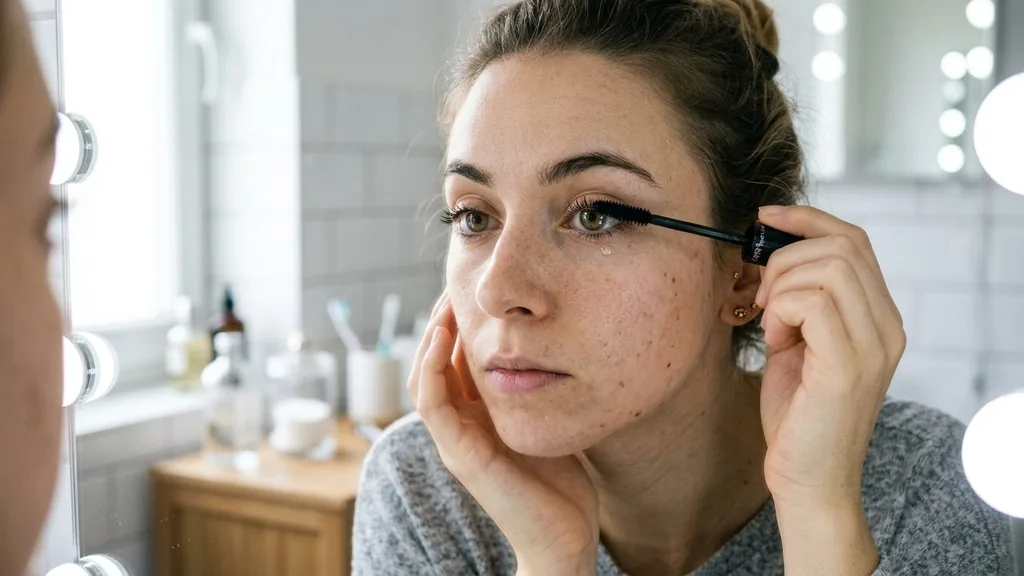
If you find yourself constantly checking the mirror only to discover dark, raccoon-like shadows beneath your lower lash line, you are certainly not alone. The frustration of dealing with mascara smudging is a common beauty hurdle that affects people regardless of their skill level or the price point of their products. When you ask yourself, “why does my mascara always smudge under my eyes,” the answer rarely points to a single culprit.
Instead, it is usually a complex interaction between your unique skin chemistry, the specific formulation of your makeup, and the environmental factors you encounter throughout the day. By identifying the root cause of this persistent issue, you can finally reclaim your look and ensure your lashes remain crisp and defined from morning until night.
Understanding the Role of Natural Skin Oils
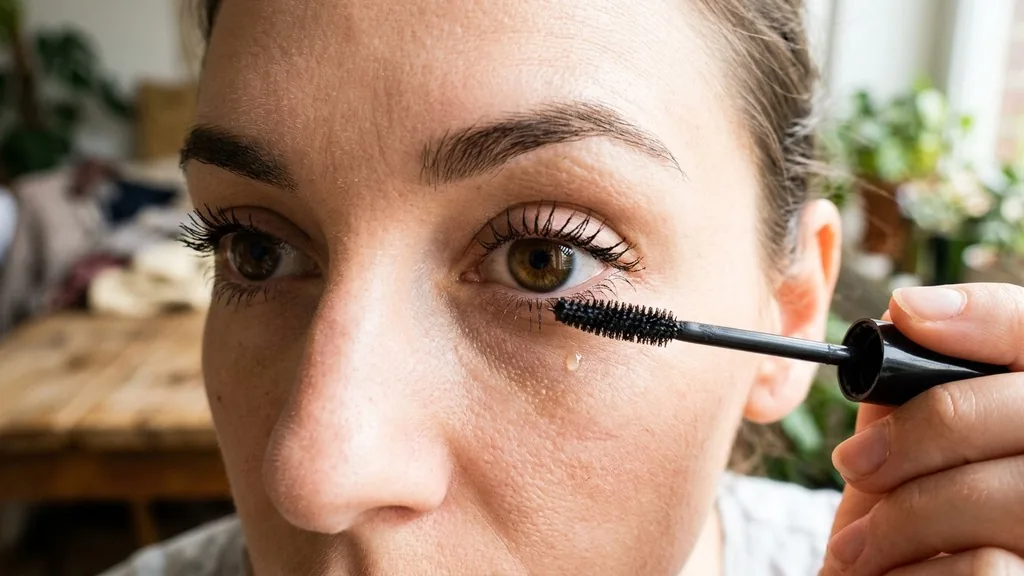
The primary reason many people struggle with product migration is the natural oil production of the periorbital area. Your eyelids and the skin surrounding your eyes are among the most active areas for sebaceous glands. These glands secrete sebum, a natural oil designed to keep your skin hydrated and supple.
Unfortunately, this oil acts as a solvent for many standard cosmetic formulas. When you blink, your lashes naturally make contact with the skin under your eyes. If that skin is coated in natural oils, the oils work to break down the waxes and polymers in your mascara, causing the pigment to transfer and smudge.
To determine if oil is your primary enemy, observe your face halfway through the day. If your skin feels slick or looks shiny, it is highly likely that your natural sebum is the reason for the smudging. People with oily skin types often find that even “long-wear” formulas struggle to hold up against the persistent moisture barrier their body creates.
Furthermore, if you use a rich eye cream or a heavy moisturizer in the morning, these products can intensify the issue by creating a slippery surface that mascara simply cannot adhere to. If you notice the smudging happens more frequently on days when you apply a heavier cream, you have likely found your culprit.
The Impact of Humidity and Environmental Factors
Beyond your skin’s biology, the environment plays a massive role in how your makeup performs. High humidity, heat, and even the natural moisture in the air can cause certain mascaras to lose their structural integrity. Standard mascaras are often water-soluble, meaning they are designed to be removed easily with water and soap.
However, this same chemistry makes them susceptible to atmospheric moisture. If you live in a humid climate or spend your day in an environment with fluctuating temperatures, the moisture in the air can soften the film-forming agents in your mascara.
Additionally, if you are prone to watery eyes due to allergies or sensitivity to contact lenses, the moisture originating from your own eyes will inevitably lead to smudging. When the eye waters, the liquid travels down the lash line, dissolving the mascara and carrying the pigment onto the sensitive skin below. This is why many people who suffer from seasonal allergies find it nearly impossible to keep their lower lashes clean.
In these scenarios, the issue isn’t necessarily a “bad” product, but rather a mismatch between the product’s formulation and the environmental conditions it is being asked to withstand. You can learn more about how to manage eye health and sensitivity through the American Academy of Ophthalmology to ensure your beauty routine is not irritating your ocular health.
Selecting the Right Formulation for Your Lash Type
Not all mascaras are created equal, and the chemistry behind your tube of choice is a critical factor in preventing the dreaded “panda eye.” Many people gravitate toward volumizing formulas because they offer a dramatic, thick appearance. However, these formulas often contain higher concentrations of waxes and oils to create that bold, fluffy look.
While these ingredients provide volume, they are also the most prone to melting when exposed to warmth or friction. Conversely, lengthening mascaras often rely on fibers and polymers that “dry down” into a hard film, which can be more resistant to smudging but may flake if the formula is too brittle.
If you are struggling with consistent smudging, you might need to reconsider your choice of product. Below is a comparison of different mascara types to help you identify which might be best for your lifestyle:
| Mascara Type | Smudge Resistance | Best For |
|---|---|---|
| Water-Soluble | Low | Easy removal, sensitive eyes |
| Waterproof | High | Humidity, watery eyes, swimming |
| Tubing | Very High | Oily skin, long-wear needs |
Tubing mascaras are a game-changer for many. Unlike traditional formulas that coat your lashes in pigment, these contain polymers that wrap around each individual eyelash in a tube-like structure.
These tubes are resistant to oils and water; they will not smudge or transfer regardless of how much sebum your skin produces. They only slide off when exposed to warm water and gentle pressure, making them an excellent solution for those who have exhausted all other options.
The Importance of Prep and Setting Techniques
Even the most expensive, high-quality mascara will eventually succumb to smudging if the skin surrounding the eye is not properly prepared. Think of your eyelid and under-eye area as a canvas; if the canvas is oily or uneven, the paint will not stick.
The most critical step in your routine should be prepping the skin to ensure it is matte and dry. Many people skip the under-eye area when applying their skincare, but this is a mistake.
To prevent smudging, consider the following techniques:
- Use an oil-free moisturizer in the morning to avoid adding excess slip to the area.
- Apply a dedicated eye primer before your concealer to create a long-lasting base.
- Set your concealer with a translucent setting powder to lock in the product and absorb excess oils.
- Ensure that no heavy creams or serums are sitting on the skin right where your lower lashes touch.
- Use a “baking” technique if you have particularly oily skin, which involves applying a generous amount of powder and letting it sit for a few minutes before dusting it off.
By creating a dry, matte barrier, you ensure that even if a tiny bit of mascara does migrate, it has nothing to “grip” onto. The powder acts as a buffer, soaking up sebum before it has the chance to break down the mascara’s polymers.
If you find your concealer is the issue, it might be too emollient. Switching to a matte-finish concealer can make a world of difference in your daily look.
Addressing the Lower Lash Line Dilemma
One of the most common reasons for raccoon eyes is the application of mascara on the lower lashes. While this can make eyes look wide and defined, it also places the product in the direct line of fire for smudging.
Because the lower lashes are constantly brushing against the skin and are situated right where oil accumulates, they are the most likely source of the problem. If you love the look of defined lower lashes, you must be strategic about how you apply product there.
Consider using a waterproof formula specifically for your lower lashes while using your preferred volumizing formula for the top. Alternatively, you can skip mascara on the lower lashes entirely and use a tiny amount of dark eyeshadow or a waterproof eyeliner to define the lash line. This provides the appearance of thicker, darker lashes without the risk of the product melting down your face.
If you insist on mascara for the bottom lashes, opt for a formula with a very small brush. A smaller wand allows for precise application, preventing you from accidentally coating the skin around the root of the lashes.
Furthermore, always ensure you let your mascara dry completely before moving your eyes around or applying other products. A common mistake is looking up or blinking while the mascara is still wet, which causes the wet pigment to transfer instantly to the skin under the brow or the cheek.
Advanced Tips for Long-Lasting Wear
If you have tried everything and are still dealing with smudging, you may need to look at your entire cosmetic routine as a holistic system. Sometimes, it is not the mascara itself, but the interaction with your eyeliner or eyeshadow. If you use a creamy eyeliner pencil, the oils in that pencil can migrate into your mascara, causing it to break down.
Always set your eyeliner with a matching powder eyeshadow to lock it in place. This prevents the eyeliner from becoming a greasy mess that eventually mixes with your mascara.
Another advanced tactic is the use of a “mascara topcoat.” These are clear, smudge-proof sealant products designed to be applied over your regular mascara. They essentially act as a shield, locking in the pigment and creating a barrier against moisture and oil.
This is an excellent solution if you love the specific look of a particular mascara but hate its tendency to smudge. Additionally, keep your mascara fresh. Mascara has a shelf life of about three months.
As the product ages, the formula changes—it can become clumpy, dry, or inconsistent. Using an expired product is a recipe for flaking and smudging.
If you notice your mascara has developed an odd smell or the texture has changed, it is time to replace it. Investing in a fresh tube is often the simplest and most effective fix for performance issues.
Addressing Frequently Asked Questions
Why does my mascara smudge even if it is labeled waterproof?
Waterproof mascara is designed to resist water, but it is not necessarily oil-proof. If you have naturally oily skin, the sebum your face produces can still break down the waxes in waterproof formulas. Try using a tubing mascara, which is specifically engineered to resist oils and only release with warm water.
Does the way I apply mascara affect how much it smudges?
Yes, technique matters significantly. Applying too many coats can lead to heaviness and clumping, which makes the product more likely to flake or transfer. Additionally, blinking or looking up while the mascara is still wet will almost guarantee that the wet pigment transfers to your skin, creating instant smudges.
Can my eye cream be the reason my mascara moves?
Absolutely. Many eye creams are formulated with heavy emollients, oils, and butters that are designed to hydrate the skin. If these products are not fully absorbed before you apply your makeup, they create a slippery surface that acts as a solvent for your mascara, causing it to migrate throughout the day.
Is there a way to fix smudges without redoing my entire makeup?
You can easily fix smudges by using a clean, dry spoolie brush to gently flick away dried flakes. For more stubborn smudges, use a tiny cotton swab dipped in a bit of micellar water or concealer to clean the area, then touch up with a small amount of setting powder to keep the skin matte.


