

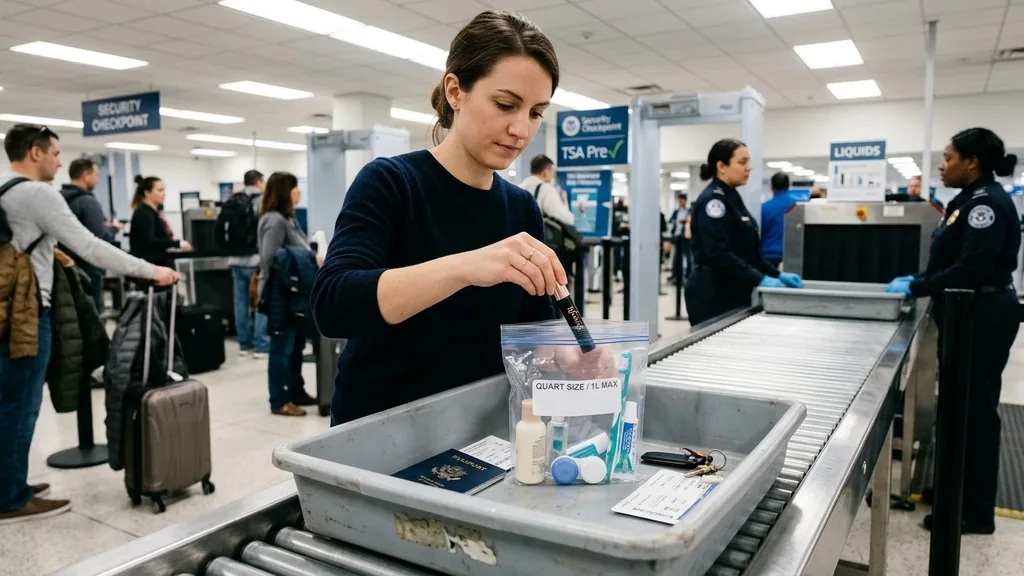
Navigating airport security can be a source of significant anxiety for beauty enthusiasts who want to ensure their favorite products make it to their destination without incident. A common point of confusion for many travelers is whether mascara liquid counts as a liquid for TSA screening purposes. The short answer is yes: the Transportation Security Administration classifies standard mascara as a liquid, gel, or aerosol, meaning it is subject to the 3-4-1 rule when kept in your carry-on luggage.
Understanding the nuance behind these regulations is vital for a seamless travel experience. Because mascara is chemically formulated as a viscous fluid, security officers treat it identically to items like shampoo, foundation, or expensive serums. If you are planning to breeze through the security checkpoint without having to toss your favorite tube into a trash bin, you need to understand how to pack your makeup bag to comply with federal standards.
Decoding the TSA Liquid Rules for Cosmetics
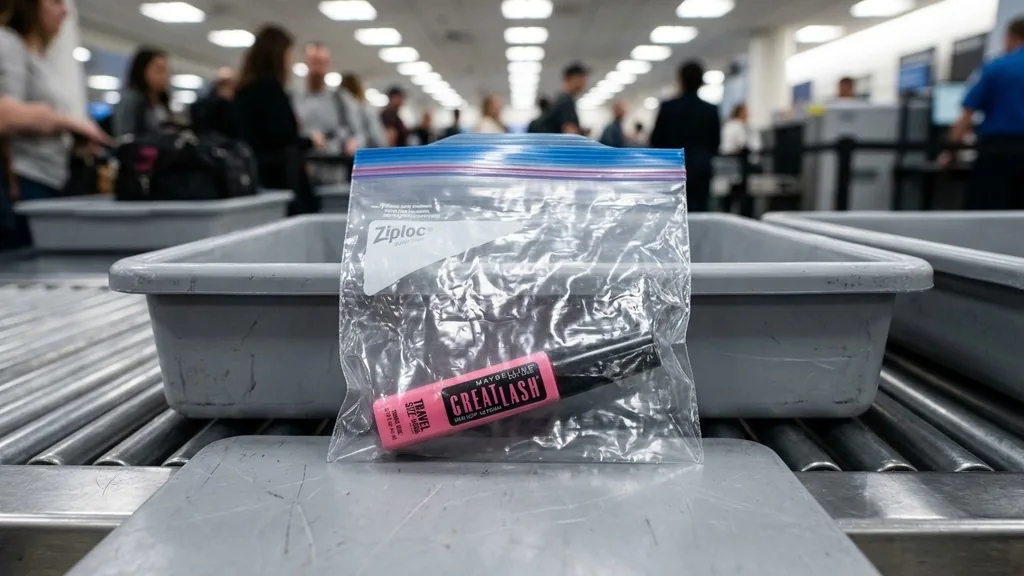
The TSA enforces strict regulations on what passengers can bring through a security checkpoint to maintain a secure environment. The core regulation, known as the 3-4-1 rule, dictates that any liquid, gel, or aerosol must be stored in containers of 3.4 ounces (100 milliliters) or less, and all these containers must fit comfortably into a single, quart-sized, clear plastic bag. Since mascara is a liquid-based cosmetic product, it falls squarely under this jurisdiction.
Many travelers mistakenly believe that because a mascara tube is small, it does not need to be separated from their main luggage. While it is true that almost all mascara tubes are well under the 3.4-ounce limit, the classification remains the same.
If an officer decides to perform a secondary screening on your bag, they look for items that could potentially mask prohibited substances. By keeping your mascara inside your designated quart-sized bag, you demonstrate compliance and speed up the screening process.
It is important to note that the consistency of the product is the primary factor. Even if a product feels thick or waxy, if it can be poured, pumped, or squeezed, the TSA considers it a liquid.
This means that items like cream eyeshadows, liquid eyeliners, and even certain types of concealers are grouped together with your mascara. By consolidating all these items into one transparent bag, you remove any ambiguity for the agent viewing your bag on the X-ray monitor.
Why Mascara is Classified as a Liquid
To understand why the TSA flags mascara, one must look at the chemistry of the product itself. Mascara is essentially a suspension of pigments, oils, waxes, and polymers.
This chemical composition allows it to coat the lashes effectively without drying out too quickly inside the tube. Because these ingredients create a fluid or semi-fluid state, they are categorized as liquids in the eyes of aviation security protocols.
The definition provided by the official TSA guidelines covers anything that can be spread, smeared, or poured. Mascara fits every one of these criteria. The reason for this strict classification is not to inconvenience beauty lovers but to prevent the concealment of dangerous materials.
History has shown that prohibited items can sometimes be disguised within common household or cosmetic containers. By treating all viscous substances as liquids, security personnel can maintain a consistent standard across all airports, regardless of the specific brand or type of makeup you are carrying.
Furthermore, the pressure changes that occur inside an airplane cabin can affect the viscosity of liquids. While this is rarely an issue for a sealed tube of mascara, it is a reality of air travel.
Understanding that your mascara is technically a liquid helps you better prepare for potential leaks. When packing, always ensure your tubes are tightly sealed and placed within a leak-proof bag to protect the rest of your belongings from accidental spills caused by cabin pressure fluctuations.
How to Pack Makeup for Optimal Airport Security
Preparing your travel kit is an art form that balances functionality with compliance. If you are a frequent flyer, investing in a high-quality, TSA-compliant quart-sized bag is one of the best decisions you can make.
Forget the flimsy, thin plastic bags provided at grocery stores; they tear easily and can make organizing your travel-sized essentials a nightmare. Instead, opt for a clear, durable, zippered pouch that allows you to see exactly what you have packed at a glance.
When you pack makeup for a flight, group your items by category to make the inspection process smoother. Place your mascara, liquid eyeliners, lip glosses, and concealers together in your clear bag.
This serves two purposes: it ensures you remain under the volume limit for the bag, and it shows the TSA agent that you have organized your liquids professionally. If you are ever asked to present your liquids for a separate scan, having them all in one place prevents you from fumbling through your carry-on in a stressful environment.
Consider the following tips for a stress-free security experience:
- Consolidate all liquids: Ensure that every single item that could be considered a liquid, gel, or paste is inside your quart-sized bag.
- Avoid oversized containers: Even if a container is mostly empty, if it is labeled as holding more than 3.4 ounces, it may be confiscated.
- Separate electronics: Keep your makeup bag in an easily accessible pocket of your carry-on so you can remove it quickly if requested.
- Check for aerosols: If you carry hairspray or setting spray, ensure the canisters are also within the 3.4-ounce limit and stored in the same bag.
- Utilize multi-use products: Save space by choosing items that perform two roles, like a lip and cheek tint, which helps keep your liquid bag light.
Addressing Common Misconceptions About Liquid Makeup
There is a significant amount of misinformation circulating online regarding which items are considered liquids. Many travelers assume that because a product is solid, like a lipstick or a stick concealer, it is exempt from the 3.4-ounce rule. While solid sticks are generally not required to be in the clear bag, the lines can sometimes blur with products like cream-to-powder foundations or heavy balms.
If a product melts at room temperature or can be easily smeared, it is safer to treat it as a liquid. Security agents have the final say at the checkpoint, and they are trained to err on the side of caution.
If you are unsure about a specific product, the best practice is always to include it in your liquid bag. This proactive approach prevents the need for a secondary bag search and keeps your travel moving efficiently.
Below is a breakdown of how common beauty products are typically categorized by airport security:
| Cosmetic Item | TSA Classification | Packing Requirement |
|---|---|---|
| Mascara | Liquid/Gel | Quart-sized bag |
| Lipstick (Solid) | Solid | No bag required |
| Lip Gloss | Liquid | Quart-sized bag |
| Eyeliner (Liquid) | Liquid | Quart-sized bag |
| Pressed Powder | Solid | No bag required |
| Foundation (Liquid) | Liquid | Quart-sized bag |
| Concealer Stick | Solid | No bag required |
Topical Gaps: Managing Specialty Makeup Items
One area where travelers frequently struggle is with the “gray area” products. For example, what happens when you bring a high-end, luxury mascara that comes in a uniquely shaped or oversized tube? Or perhaps you carry a specialized lash primer that has a different consistency than standard mascara?
These items often cause hesitation at the security checkpoint. The key to navigating these gaps is to focus on the container size rather than the product price or brand reputation.
Another gap in common knowledge involves the use of “multi-use” products. Many modern beauty brands are releasing items that can be used on the eyes, lips, and cheeks. Because these products often have a creamy, emollient texture, they are technically liquids.
If you carry a multi-use stick that is more of a balm than a solid wax, you should place it in your liquid bag. Many travelers overlook this, leading to unnecessary delays at the security table.
Furthermore, consider the impact of temperature on your makeup. If you are traveling to a warmer climate, certain products that are solid at home may soften during transit. While this doesn’t change the TSA’s official classification, it does change the behavior of the product.
Being aware of how your specific makeup products react to environmental changes allows you to pack them in a way that minimizes the risk of a mess inside your luggage. Always prioritize leak-proof containers for anything that could potentially melt or liquefy under pressure or heat.
Streamlining Your Travel Routine for Efficiency
Efficiency at the airport is built on preparation. If you want to breeze through security, you must treat your makeup bag as a dynamic part of your carry-on system. Instead of leaving your makeup loose in your purse or backpack, dedicate a specific, structured toiletry bag to your items.
When you arrive at the security checkpoint, you should be able to retrieve your clear liquids bag in under five seconds. This level of organization signals to the security staff that you are an experienced traveler, which often results in a more relaxed interaction.
Beyond just the liquid rule, remember that the TSA also screens for items that may obscure the X-ray image. If you have a large, dense makeup palette or a heavy metal compact, it can sometimes trigger a flag.
If you are carrying a large quantity of makeup, it is often better to distribute it throughout your carry-on rather than keeping it all in one heavy, dense block. This improves the clarity of the image for the security agent and reduces the likelihood of them needing to physically inspect your bag.
Finally, remember that the goal of these security measures is to keep everyone safe. When you approach the security checkpoint with your liquids properly packed and your mascara stored in a clear bag, you are doing your part to keep the lines moving.
By staying informed about the definitions and regulations, you can focus on the excitement of your upcoming trip rather than worrying about your makeup collection. Keep your essential items organized, follow the 3.4-ounce rule, and enjoy your travels with the peace of mind that your beauty routine is fully compliant.
Frequently Asked Questions
Is mascara considered a liquid by the TSA?
Yes, the TSA classifies mascara as a liquid. Because it is a viscous substance, it must be placed inside your quart-sized, clear plastic bag along with your other liquids, gels, and aerosols to comply with the 3.4-ounce (100ml) carry-on rule.
What happens if I forget to put my mascara in the clear bag?
If you forget to place your mascara in your clear, quart-sized bag, you may be asked to remove it for a secondary inspection. While it is rarely confiscated, it can cause delays, and in some cases, an officer may require you to place it in the bag or check the item.
Does lipstick or solid concealer count as a liquid?
Solid lipstick and solid concealer sticks are generally classified as solids, not liquids. Therefore, they do not need to be stored in your quart-sized liquid bag. However, liquid lip gloss or creamy, squeeze-tube concealers must be placed in the liquid bag according to standard security protocols.
Are there any exceptions for expensive or medical-grade mascara?
The TSA does not make exceptions for mascara based on price, brand, or status. Even if a product is high-end or medically necessary for sensitive eyes, it must still adhere to the 3.4-ounce volume limit and be placed in your clear, quart-sized bag for inspection at the security checkpoint.


