

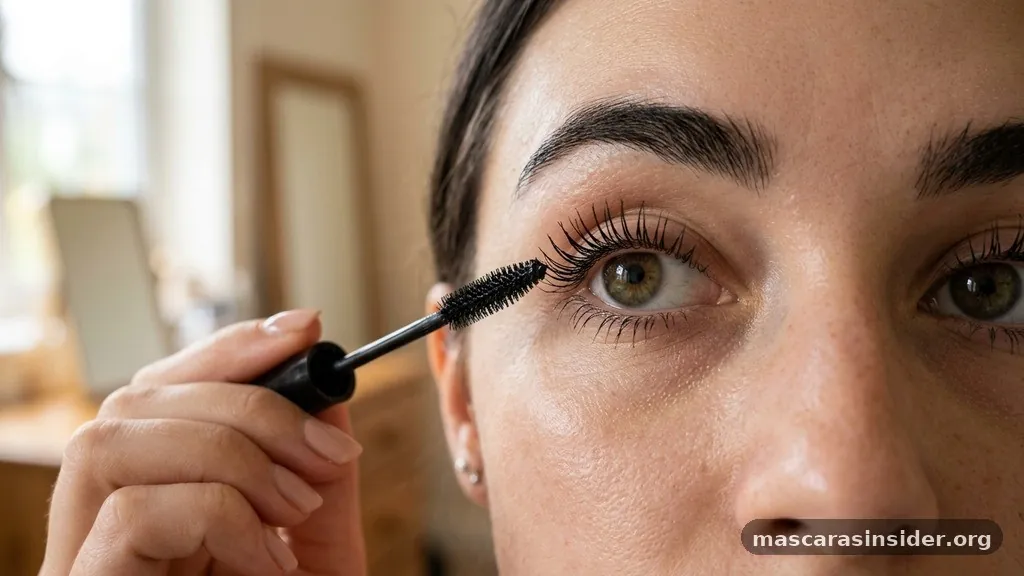
What is a tubing mascara? It is a specialized eye-makeup formula that wraps each lash in tiny, flexible tubes instead of simply coating the hairs with pigment. This unique design can create the look of greater length and definition while helping reduce smudging, especially during a long day.
Unlike regular mascara, tubing mascara is usually removed with warm water and gentle pressure rather than an oil cleanser or vigorous rubbing. That difference is the main reason beauty fans either love it immediately or need a little time to adjust.
What Is a Tubing Mascara and How Does It Work?
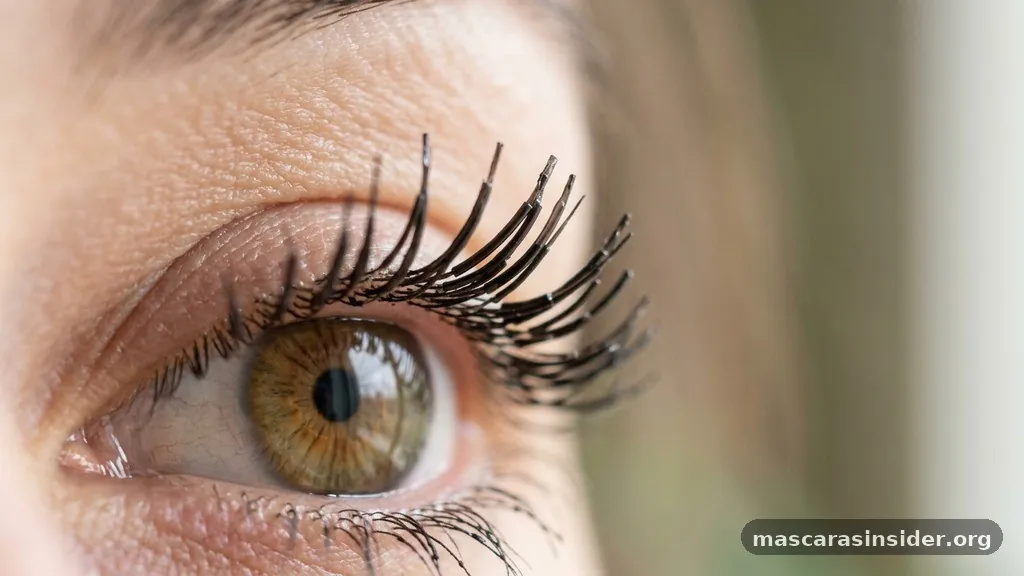
A tubing mascara forms small polymer-based sleeves, often called tubes, around individual lashes. The formula starts as a liquid product, but as it dries, it surrounds the lash instead of behaving like a traditional pigment coating.
In simple terms, tubing mascara wraps each lash in a lightweight tube. This creates separation and can make the lashes appear longer, cleaner, and more defined.
Regular mascara generally deposits waxes, oils, pigments, and film-forming ingredients directly onto the surface of the lash. Tubing formulas use film-forming materials to create a flexible structure around the hair. The result is not literally a permanent extension, and it does not make the lash grow longer.
Rather, the product can extend beyond the natural tip and make each lash easier to see. It is a visual lengthening effect, but a useful one.
The “tube” terminology describes the way the mascara behaves, not the shape of the container. Tubing mascaras are normally sold in packaging that looks much like ordinary mascara, with a wand, a narrow opening, and a dark formula.
The difference becomes noticeable during wear and removal. When the product is ready to come off, the tubes can slide away from the lashes in small pieces or soft strands.
This construction gives tubing mascara several practical characteristics:
- Length and separation: The formula can define individual lashes rather than blending them into one heavy coating.
- Reduced smudging: Once set, the tubes are less likely to transfer under the eyes than some traditional mascaras.
- Simple removal: Warm water can soften the film so it releases with gentle pressure.
- Lightweight wear: Many users prefer the less waxy feeling compared with heavily volumizing products.
- Buildable definition: Some formulas allow another layer, although too many coats may create a stiff or clumpy appearance.
Not every product marketed as long-wear or smudge-proof is a tubing mascara. Terms such as “film-forming,” “water-resistant,” or “tubular” may offer clues, but packaging language can vary.
The clearest sign is the removal method: if the product loosens under comfortably warm water and comes away as small films or tubes, it likely uses tubing technology. Still, checking the brand’s official product description is the sensible move because formulas differ.
Tubing Mascara vs Regular Mascara: The Main Differences
The primary difference is structural: regular mascara coats the lash, while tubing mascara forms a film around it. That distinction affects application, wear, appearance, and removal.
Neither category is automatically better for every person. The right choice depends on the look someone wants, how their eyes behave during the day, and whether easy removal matters more than maximum volume.
| Feature | Tubing mascara | Regular mascara |
|---|---|---|
| How it sits on lashes | Forms flexible tubes around individual lashes | Coats lashes with pigment, waxes, oils, and film-formers |
| Typical removal | Warm water and gentle pressure | Usually makeup remover, cleanser, or oil-based products |
| Smudging | Often resists under-eye transfer once dry | Can smudge depending on formula, skin, humidity, and eye shape |
| Appearance | Separated, defined, length-focused lashes | May provide anything from natural definition to dramatic volume |
| Water response | Warm water can soften and release the tubes | Water resistance varies widely by product |
Regular mascara often wins when someone wants dense volume, a dramatic false-lash effect, or a wide choice of finishes. Traditional mascaras come in waterproof, washable, curling, volumizing, lengthening, and conditioning versions. Tubing products can also offer some of these benefits, but their strongest reputation is usually clean definition and reliable wear without much under-eye mess.
Tubing mascara may be especially useful for people who experience flaking or smudging from conventional products. Because the film stays attached around the lash, it may be less likely to break apart into loose dark particles.
However, “smudge-proof” does not mean indestructible. Rubbing the eyes, heavy moisture, oily skin, tears, or an imperfect application can still affect the result.
Waterproof mascara and tubing mascara are also not the same thing. A waterproof product is designed to resist water, while a tubing formula may release when exposed to enough comfortably warm water.
Some tubing mascaras are water-resistant during wear, but the product’s instructions matter. Calling every long-wearing formula waterproof creates confusion, so it is better to treat those labels as separate features.
For people who wear contact lenses or have sensitive eyes, the formula and removal experience deserve extra attention. A tubing product may reduce the need for aggressive rubbing, which is appealing, but individual ingredients can still cause irritation.
Anyone with persistent redness, pain, swelling, or changes in vision should stop using the product and seek appropriate medical advice. Eye makeup is small, but the eye itself is not something to gamble with.
How to Apply, Wear and Remove Tubing Mascara
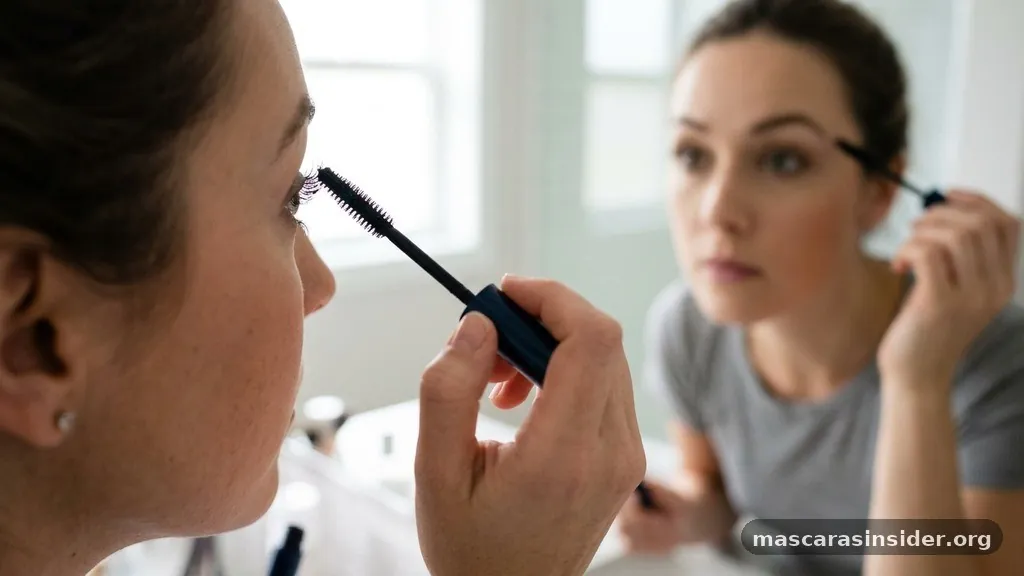
The best results come from applying tubing mascara to clean, dry lashes and allowing each coat to set. Unlike some regular mascaras, a tubing formula can look uneven if the wand carries too much product.
Wipe excess formula lightly against the tube opening, then move the brush from the lash roots toward the tips. A slow, controlled sweep usually gives better separation than repeatedly pumping the wand.
Application steps that improve definition
Start with the upper lashes, placing the wand close to the roots without pressing it into the skin. Wiggle the brush gently at the base, then pull upward. This deposits more product near the roots while keeping the tips relatively clean.
For lower lashes, use the narrow end or hold the wand vertically if the brush allows it. Small movements help avoid dark marks beneath the eyes, which is always a nice bonus.
- Begin with clean, dry lashes free from oily skincare or leftover eye makeup.
- Remove excess formula from the wand so the first coat stays even.
- Brush from root to tip, using a gentle wiggle at the base.
- Allow the first layer to settle before deciding whether another coat is needed.
- Separate any clumps with a clean lash comb while the formula is still workable.
One or two light coats often create a more natural finish than one thick coat. Some formulas are made for length, while others provide stronger definition or modest volume, so expectations should match the product.
A tubing mascara may not deliver the dense, plush effect associated with certain traditional mascaras. Its appeal is often the combination of visible length, clean separation, and comfortable wear.
Removal is where the product behaves most differently. Wet the lashes with comfortably warm water, not hot water. Hold a damp cloth or wet fingertips over the eyes briefly to soften the film.
Then use very gentle downward pressure to slide the tubes away from the lashes. They may look like tiny dark fibers, which can be surprising the first time but is generally the expected behavior.
Do not scrub the eyelids or pull forcefully at the lash line. If the mascara does not release, add more warm water and wait a little longer.
A harsh rubbing motion can irritate the skin and may stress the lashes, defeating one of the reasons people choose this type of formula. After removal, rinse the eye area and pat it dry rather than dragging a towel across it.
For broader information about safe cosmetic habits, readers can consult the U.S. Food and Drug Administration’s eye cosmetics guidance. It explains why clean application, careful storage, and stopping use when irritation occurs are important parts of eye-makeup use.
Benefits, Limitations and Common Concerns
Tubing mascara has a strong practical advantage: it can stay neat without requiring a difficult removal routine. The film-forming structure often helps the product resist the oily moisture found around the eyes.
For someone whose mascara transfers onto the upper lid or collects beneath the lower lashes, that can make a noticeable difference. It is also convenient for people who dislike scrubbing off makeup at night.
The formula can create a more polished lash appearance without feeling as heavy as some high-volume products. Because it surrounds individual hairs, it may make sparse lashes look more visible and separated.
The effect is often described as lengthening, although the mascara only extends the visible coated portion of the lash. It does not change the natural growth cycle or permanently increase lash length.
There are limitations, too. Some users find that tubing products do not provide enough volume for evening makeup. Others dislike the way the tubes feel as they dry, especially if the formula becomes stiff after several coats.
A few formulas can flake when applied too heavily, allowed to dry unevenly, or rubbed during wear. Performance depends on the brand, brush, ingredients, eye shape, humidity, and personal application habits.
The question “is tubing mascara better for eyelashes?” has no universal answer. A formula that removes with warm water may reduce the need for repeated rubbing, which can be helpful.
But the mascara is still a cosmetic product that sits close to the eye. Lash health also depends on removing makeup regularly, avoiding expired products, cleaning applicators as directed, and not sharing eye makeup.
Is tubing mascara bad for the environment?
Environmental impact depends on the full product design, not only on the fact that it forms tubes around lashes. Packaging, ingredients, manufacturing, shipping, and disposal all matter.
A mascara that removes easily may reduce the need for disposable makeup-removal wipes, but that alone does not prove it has a lower environmental impact. The most responsible approach is to check the brand’s packaging claims and follow local recycling rules.
Who may prefer this type of formula?
Tubing mascara may suit people who want low-smudge definition, visible length, and straightforward removal. It can be a good option for workdays, warm conditions, or routines where a full cleansing process feels like too much fuss.
On the other hand, someone seeking intense volume, a waterproof finish, or a very soft and flexible coating may prefer regular mascara. Testing one product is often more useful than judging the entire category.
How to Tell Whether a Mascara Is Truly Tubing
The easiest way to identify a tubing mascara is to look for its removal instructions and wear description together. A product is more likely to be a tubing formula if it says it forms tubes around individual lashes and can be removed with warm water. If the instructions require a dedicated waterproof remover, melting balm, or oil cleanser, it may instead be a conventional long-wear or waterproof product.
Packaging may use phrases such as “tube technology,” “tubular film,” “wraps every lash,” or “removes in small fibers.” These phrases are useful clues, but marketing terms are not always standardized. When in doubt, read the ingredient and usage information supplied by the manufacturer. The product’s official directions should explain whether warm water is sufficient and whether the mascara is intended to resist ordinary moisture.
A simple home observation can also help, though it should not involve tugging at the eyes. After wetting the lashes with warm water, gently press them between clean fingertips or a soft damp cloth.
Tubing mascara usually softens and slides away in short, intact pieces. Traditional mascara more often dissolves into dark streaks or requires a remover to break down the pigment and oils.
Readers commonly ask what a tubing mascara is used for. The short answer is everyday lash definition with a focus on separation, length, and reduced transfer.
It can support a clean eye-makeup look, but it is not automatically the best choice for every event or lash type. Consider the finish, removal method, sensitivity needs, and desired volume before buying.
In the end, tubing mascara is best understood as a different delivery system rather than a miracle product. It wraps lashes in removable films, often wears neatly, and can simplify the evening routine.
The trade-off may be less dramatic volume or a slightly unusual removal texture. For many users, that balance feels worth it; for others, regular mascara remains the better fit.
Frequently Asked Questions
What is the downside of tubing mascara?
The main downside is that some tubing formulas provide less dramatic volume than traditional mascaras. They can also feel stiff, flake when overapplied, or release in unusual string-like pieces during removal. Performance varies, so people wanting intense fullness or a waterproof finish may prefer another formula.
How do I know if my mascara is tubing?
Check whether the product says it forms tubes around individual lashes and removes with comfortably warm water. When softened, tubing mascara usually slides away in small films or fibers rather than dissolving into dark streaks. Manufacturer instructions are the most reliable confirmation if the packaging is unclear.
Is tubing mascara waterproof?
Tubing mascara is not automatically waterproof. Many formulas resist ordinary moisture and smudging during wear, but warm water can soften the tubes for removal. Always check the product description, because water resistance, waterproof performance, and easy-release tubing technology are separate characteristics.
Is tubing mascara bad for your lashes?
Tubing mascara is not inherently bad for lashes when used and removed as directed. Its easy-release design may reduce vigorous rubbing, but pulling, scrubbing, expired product, or sleeping in eye makeup can still cause problems. Stop using any formula that causes irritation, swelling, pain, or unusual lash loss.
Can tubing mascara create longer-looking lashes?
Yes. The film can extend beyond the natural lash tips and make individual hairs appear longer and more defined.
It does not permanently lengthen lashes or change their growth. The visible result depends on the brush, formula, number of coats, and the natural length and density of the lashes.


