


Falling into bed after a long day often makes the simple act of washing your face feel like an insurmountable chore. However, if you find yourself wondering what happens if you sleep with mascara on, the reality is that your eyelashes and the delicate skin surrounding your eyes are paying a silent, cumulative price.
While a single night of forgetting to remove your makeup might not result in a catastrophic health event, making it a habit creates a breeding ground for irritation, follicle damage, and structural breakdown of your lashes. Your eyes are among the most sensitive areas of your face, and they deserve a clean slate before you head to sleep.
The Physical Toll on Your Eyelashes
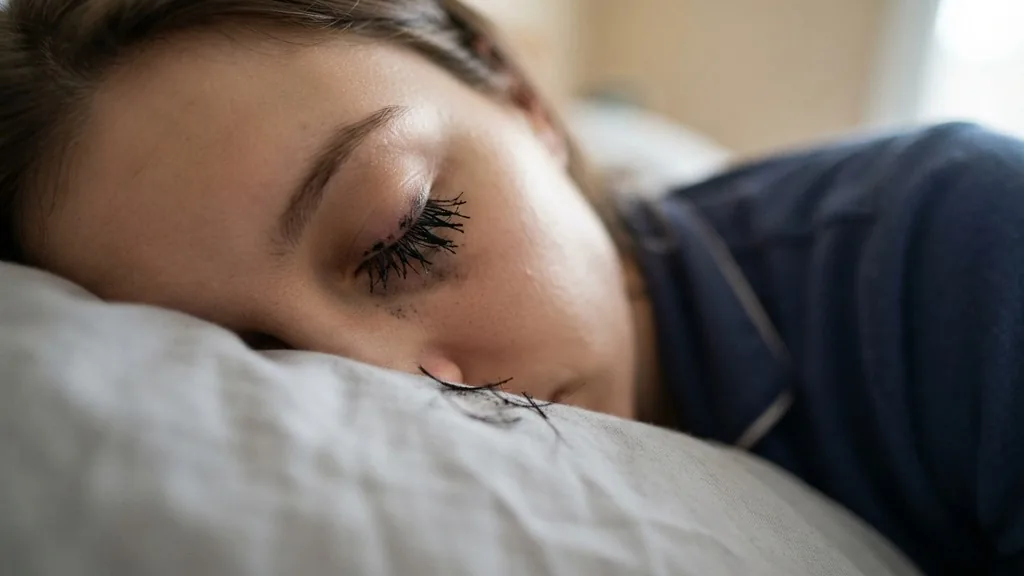
When you sleep with mascara on, the product hardens on your lashes, turning them from flexible, soft hairs into brittle, rigid structures. This physical change is the primary reason for mechanical damage. As you move around on your pillow throughout the night, the stiffened lashes rub against the fabric.
Because they have lost their natural suppleness, they are far more likely to snap or break off entirely. Imagine trying to bend a twig that has been left in the sun versus a fresh, green one; the dried-out, mascara-coated lash is that brittle twig.
Over time, this repeated breakage leads to visibly thinner and shorter lashes. You might notice gaps along your lash line or find that your mascara application looks clumpy and uneven because there is less natural hair to hold the pigment. Furthermore, the weight and stiffness of the dried product can pull on the lash follicle.
Constant tension on the follicle can eventually lead to traction alopecia, where the hair stops growing back as effectively as it once did. It is a slow, deceptive process that often goes unnoticed until you look in the mirror and realize your lashes don’t look as healthy as they used to.
Bacterial Proliferation and Eye Infections
The area around your eyes is a magnet for bacteria, and mascara acts as a perfect, sticky trap. When you leave eye makeup on, you are essentially sealing in the day’s accumulation of environmental pollutants, dust, and microscopic debris.
This combination of trapped particles and the chemical ingredients in your mascara creates a moist, nutrient-rich environment for bacteria to thrive. When you close your eyes for the night, you are providing a warm, dark incubator that is ideal for microbial growth.
This can lead to significant issues, such as conjunctivitis, commonly known as pink eye. Symptoms often include redness, discharge, itching, and a gritty sensation that feels like sand in your eyes. Even if you don’t develop a full-blown infection, you might experience blepharitis, which is the inflammation of the eyelid margins.
This condition causes the base of your eyelashes to become red, swollen, and itchy, often accompanied by crusty debris. Dealing with these conditions is not only uncomfortable but often requires professional medical intervention, including antibiotic eye drops or specialized cleansers. You can find more information on proper ocular hygiene through the American Academy of Ophthalmology to ensure you are protecting your vision.
Impact on the Delicate Skin Around the Eyes
The skin surrounding your eyes is the thinnest on your entire body. Because it lacks the oil glands found elsewhere, it is incredibly susceptible to damage from external irritants. When you leave mascara on, particles often migrate from the lashes onto this thin, sensitive skin.
If you rub your eyes while sleeping—a common unconscious habit—you are effectively grinding these pigments and chemical preservatives into your pores. This can lead to contact dermatitis, a form of skin inflammation characterized by red, flaky, and intensely itchy patches.
Beyond the immediate irritation, failing to remove your makeup regularly interferes with the skin’s natural repair cycle. During the night, your skin works to shed dead cells and regenerate. Makeup acts as a physical barrier that clogs pores and prevents this process from happening efficiently.
Over time, this contributes to premature aging. The constant tugging required to clean off “crusty” mascara the next morning also stretches the skin, which can accelerate the appearance of fine lines and wrinkles. Keeping the eye area clean is one of the most effective, low-cost anti-aging strategies you can implement.
Chemical Exposure and Allergic Reactions
Modern mascara formulas are complex mixtures of waxes, oils, pigments, and preservatives designed to lengthen, thicken, and waterproof your lashes. While these ingredients are generally safe for daytime wear, they are not intended to remain in contact with your ocular surface for eight or more hours at a time.
The preservatives, such as parabens or formaldehyde releasers, can cause delayed allergic reactions. When these substances sit against your skin for an extended duration during the night, the risk of developing a sensitivity increases significantly.
If you wake up with puffy, swollen eyelids, it may be a direct result of your skin reacting to the prolonged exposure to these chemicals. This type of reaction can be localized to the lash line or spread to the entire eyelid. In some cases, the chemicals can migrate into the eye itself, causing stinging or blurry vision upon waking.
If you have sensitive skin, you are at a much higher risk for these reactions. Switching to hypoallergenic products can mitigate some of these risks, but it does not eliminate the necessity of removing the product before bed.
Comparison of Overnight Makeup Risks
Not all makeup products carry the same level of risk when left on overnight. While foundation might clog your pores and lead to breakouts, mascara poses a more specific threat to your ocular health and the structural integrity of your lashes.
| Makeup Type | Primary Overnight Risk | Severity of Impact |
|---|---|---|
| Mascara | Lash breakage, bacterial infection, blepharitis | High |
| Foundation | Clogged pores, acne, dull complexion | Moderate |
| Lipstick | Dry, chapped lips, potential ingestion | Low |
| Eyeliner | Blocked meibomian glands, irritation | High |
As indicated in the table, eye-area products generally carry higher risks because they involve the delicate mucous membranes of the eye. Clogged meibomian glands, which provide the oil for your tears, can lead to chronic dry eye syndrome if the blockage becomes persistent. This is a common consequence of poor makeup hygiene that many people overlook until their eyes start feeling constantly parched and irritated.
The Importance of Proper Removal Techniques
If you are currently in the habit of sleeping with mascara on, you need to establish a consistent, gentle removal routine. Many people make the mistake of scrubbing their eyes aggressively, which is just as damaging as leaving the makeup on. Harsh friction breaks lashes and stretches the delicate skin.
Instead, you should use a dedicated eye makeup remover or a gentle micellar water. The key is patience; you need to let the product dissolve the mascara before attempting to wipe it away.
- Saturate a soft cotton pad with a high-quality, oil-based or micellar cleanser.
- Gently press the pad against your closed eyelid for 20 to 30 seconds to allow the formula to break down the wax.
- Wipe downward in a single, smooth motion, following the natural direction of your lashes.
- Avoid back-and-forth scrubbing motions that pull on the lash line.
- Use a clean cotton swab dipped in remover to clean any remaining residue from the roots of the lashes.
- Follow up with a gentle facial cleanser to remove any oily film left by the makeup remover.
By following these steps, you ensure that you aren’t leaving behind any microscopic traces of product that could cause issues throughout the night. It is also essential to ensure your makeup tools, such as eyelash curlers or brushes, are kept clean to prevent transferring old bacteria back onto your clean lashes.
Addressing Topical Gaps: Why Waterproof Mascara is Worse
A common misconception is that all mascara is created equal when it comes to the dangers of sleeping in it. Waterproof mascara is particularly problematic. These formulas are designed to be resistant to water, sweat, and tears, which means they are inherently difficult to remove.
Because they are so stubborn, they require more intense rubbing and stronger cleansers to remove. If you sleep in waterproof mascara, it stays on your lashes like a rigid shell, making the mechanical damage from your pillow much more severe.
Furthermore, the ingredients used to make mascara waterproof—often silicones and polymers—can be more occlusive than standard formulas. This means they are more likely to trap bacteria and prevent the skin from breathing. If you find yourself frequently leaving your makeup on, you might consider switching to a tubing mascara for daytime wear.
Tubing mascaras create small “tubes” around each lash that slide off easily with warm water and gentle pressure, significantly reducing the amount of time and friction required to clean your eyes at night. This small change can be a lifesaver for your lash health.
Recovering from the Habit
If you have realized that your lashes are damaged from years of sleeping in makeup, don’t despair; they can recover. The first step is to break the cycle immediately. Commit to a “no-makeup night” policy, even if you are exhausted.
If you find that you are too tired to wash your face, keep a pack of gentle, alcohol-free makeup remover wipes on your nightstand. While they aren’t as effective as a proper double-cleanse, they are significantly better than leaving the product on until morning.
To help your lashes grow back stronger, consider using a nourishing lash serum. Look for products containing peptides or biotin, which can help strengthen the hair shaft. Avoid heavy, oil-based serums if you have oily skin, as they can contribute to milia or clogged pores.
Additionally, be extra gentle with your eye area for the next few weeks. Avoid waterproof formulas entirely while your lashes are in the recovery phase, as the removal process for those products is simply too harsh. Over time, with consistent care and a clean sleep environment, you will notice your lashes becoming more resilient and your eye area looking brighter and more refreshed.
Frequently Asked Questions
- Is it bad to leave mascara on for just one night? While one night is unlikely to cause a permanent infection, it still causes unnecessary stress to your lashes. The product dries out, making lashes brittle and prone to breaking when you toss and turn. It is always best to remove it to allow your skin to breathe.
- What should I do if I accidentally slept with mascara on? Don’t panic, but clean your eyes thoroughly as soon as you wake up. Use a gentle makeup remover, then follow up with a mild cleanser to ensure no residue remains. If your eyes feel gritty or red, use lubricating eye drops to soothe the irritation and flush out any debris.
- Are eyelashes healthier without mascara? Generally, yes. Mascara is a cosmetic enhancement, not a health product. Regular use, especially if not removed properly, can weaken the lash structure and lead to thinning. Taking breaks from wearing mascara allows your natural lashes to recover, retain moisture, and grow without the weight of cosmetic coatings.
- Can sleeping in mascara cause permanent eye damage? While rare, chronic neglect of eye hygiene can lead to persistent conditions like blepharitis or severe dry eye, which can cause long-term discomfort. Severe infections, if left untreated, could potentially impact vision, though this is an extreme outcome. Prioritizing nightly cleansing is the best way to prevent any lasting issues.


