

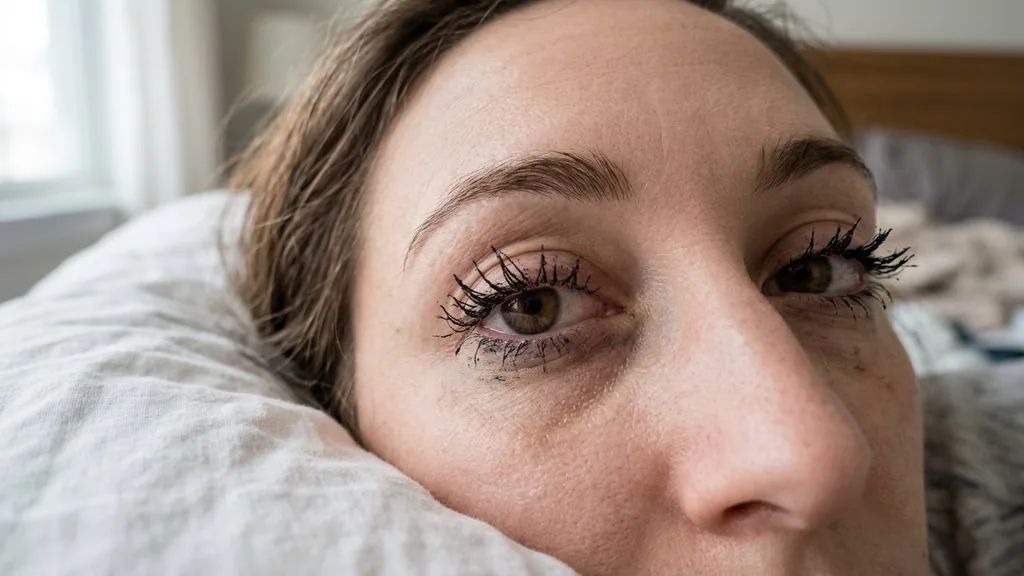
We have all been there. You get home after a long night out, your bed looks incredibly inviting, and the mere thought of standing at the bathroom sink to scrub away your eye makeup feels like an impossible task.
You might tell yourself that leaving your mascara on for just one night won’t hurt, but the reality of sleeping in mascara is more complex than a simple “yes” or “no.” While skipping your skincare routine occasionally might seem harmless, your eyelashes and the delicate skin around your eyes pay a silent price when you leave products on overnight.
The Direct Impact of Mascara on Eyelash Health
Is it bad to sleep in mascara for your eyelash health? Yes, it is significantly detrimental to the structural integrity of your lashes. Mascara is formulated to coat, thicken, and often stiffen individual hairs to create a dramatic look.
When this product remains on your lashes while you sleep, it creates a rigid shell. As you toss and turn, your eyelashes rub against your pillowcase.
Because the mascara has hardened the hair, the lashes lose their natural flexibility. This friction causes them to become brittle, leading to breakage and premature shedding.
The Cycle of Lash Breakage
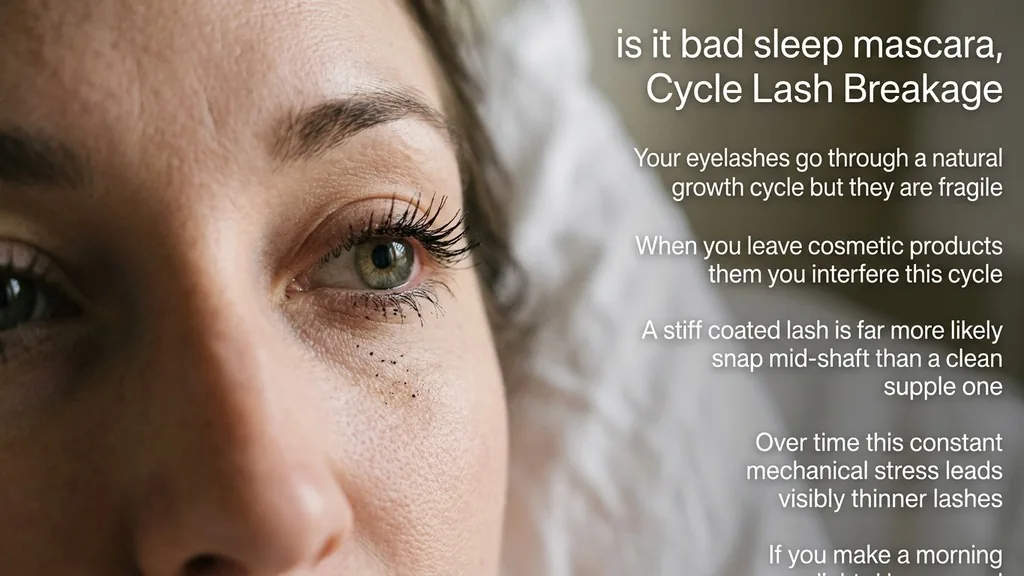
Your eyelashes go through a natural growth cycle, but they are fragile. When you leave cosmetic products on them, you interfere with this cycle. A stiff, coated lash is far more likely to snap mid-shaft than a clean, supple one.
Over time, this constant mechanical stress leads to visibly thinner lashes. If you make a habit of sleeping with eye makeup on, you may notice that your natural fringe looks sparse or uneven. This isn’t just a temporary aesthetic issue; it is a physical trauma to the hair follicles that can take weeks or months to recover from once you stop the behavior.
Understanding the Risk of Eye Irritation and Infection
The eyes are among the most sensitive organs in the body, and they do not react kindly to foreign substances lingering in the ocular area for extended periods. When you sleep in mascara, the product can flake off during the night. These microscopic particles can migrate into the tear film of your eye.
This is a common overnight cause of mechanical irritation. The physical presence of makeup particles inside the eyelid can cause redness, itching, and a persistent sensation that something is stuck in your eye.
The Danger of Bacterial Proliferation
Beyond simple mechanical irritation, mascara acts as a trap for bacteria. Once opened, a tube of mascara has a limited shelf life because the applicator wand constantly introduces bacteria from your skin and environment back into the tube. When you leave that product on your lashes, you are essentially holding a bacteria-laden substance directly against your lash line for eight hours.
This environment is perfect for pathogens to flourish, potentially leading to conditions like blepharitis—an inflammation of the eyelids—or even more severe bacterial conjunctivitis. According to the American Academy of Ophthalmology, maintaining proper hygiene with eye cosmetics is essential for preventing ocular infections.
How Sleeping in Makeup Affects the Skin Around Your Eyes
The skin around the eyes is the thinnest and most delicate on the entire face. It lacks the oil glands found elsewhere, making it incredibly prone to dehydration and premature aging. When you leave makeup on, you are not just affecting the lashes; you are suffocating the skin.
Mascara often contains waxes, pigments, and preservatives that can clog the tiny pores around the lash line. While we often think of pores primarily on our nose or forehead, the entire orbital area can suffer from congestion when heavy products are left on for too long.
Oxidative Stress and Premature Aging
Leaving makeup on overnight prevents the skin from undergoing its natural nocturnal repair process. During sleep, your skin cells increase production of collagen and repair the damage caused by UV rays and pollution during the day. If the skin is covered in a layer of dried makeup, it is subjected to increased oxidative stress.
This can lead to the breakdown of collagen and elastin, which are the proteins responsible for keeping your skin firm and youthful. Consistently skipping your nighttime cleanse can contribute to the development of fine lines and a dull, tired appearance around the eyes.
The Hidden Problem of Chronic Makeup Residue
Many people believe that if they wash their face in the morning, the residue from the previous night is rendered harmless. This is a misconception. When mascara sits on the lashes for 12 to 16 hours, the pigments can settle deep into the lash follicles.
Even if you “cleanse” your face in the morning, standard face washes are rarely formulated to dissolve the stubborn, water-resistant polymers found in most modern mascaras. This leads to a cumulative buildup of product.
| Factor | Clean Lashes (Nightly Removal) | Sleeping in Mascara |
|---|---|---|
| Lash Flexibility | High (supple and soft) | Low (stiff and brittle) |
| Infection Risk | Low | High (bacterial trap) |
| Skin Health | Allows cell turnover | Clogs pores/prevents repair |
| Breakage Rate | Minimal | High (mechanical friction) |
This buildup creates a vicious cycle. You apply more mascara over the residue of yesterday’s application, making the lashes thicker but also significantly heavier.
The extra weight pulls on the hair follicle, which can further weaken the lash over time. If you find that your mascara application looks clumpy or uneven, it is often a sign that you haven’t successfully managed to remove the previous day’s layers.
Addressing the Topical Gaps: Can You Ever Get Away With It?
A common question arises: is it really that bad to sleep in makeup for just one night? While a single instance is unlikely to cause a permanent infection or immediate lash loss, it establishes a dangerous precedent. The primary risk of a “one-off” incident is the acute irritation of the conjunctiva.
If you have sensitive skin or wear contact lenses, even one night of sleeping in mascara can lead to a painful morning. Contact lens wearers are at a particularly high risk because the makeup particles can become trapped between the lens and the cornea, causing deep, painful scratches or significant inflammation.
Why “Every Night” Habits Are Dangerous
The danger is compounded by frequency. If you make a habit of every night sleeping in your makeup, you are essentially guaranteeing that your eyelashes will become brittle and your eyelid skin will become inflamed.
The cumulative effect of these small nightly choices is a significant decline in the health and appearance of your eyes. It is far easier to maintain healthy lashes than it is to repair them once they have become damaged from long-term neglect.
Best Practices for Effective Makeup Removal
If you find that you are consistently too tired to remove your makeup, you need to change your strategy. The goal is to make the process as frictionless as possible. Using a high-quality eye makeup remover is non-negotiable.
Oil-based cleansers or micellar waters are generally the most effective at breaking down the waterproof polymers in mascara without requiring excessive scrubbing. Scrubbing is actually one of the worst things you can do, as the physical tugging of the lashes is just as damaging as the mascara itself.
- Use a dedicated oil-based eye makeup remover to dissolve stubborn waterproof formulas.
- Soak a cotton pad and hold it against your closed eyelid for 30 seconds before wiping—this allows the product to break down the mascara.
- Avoid rubbing or pulling the lashes; use a gentle downward sweeping motion.
- Follow up with a gentle, pH-balanced facial cleanser to remove any remaining oily residue.
- Consider using a lash serum after cleansing to help nourish and strengthen the hair follicles.
By streamlining your routine, you remove the barrier to entry. If you keep your cleansing products right by your bed, you can perform a quick cleanse even when you are exhausted. You don’t need a ten-step process to be effective; you just need to ensure the eye area is clean before you head to sleep.
The Long-Term Consequences of Lash Neglect
When you ignore the health of your eyelashes, you risk more than just aesthetic disappointment. Chronic inflammation of the eyelid, known as blepharitis, can lead to the loss of eyelashes over time. If the follicles become chronically inflamed or infected, they may stop producing hair altogether.
This is a distressing condition that is often entirely preventable through proper hygiene. Furthermore, the skin around the eyes can develop permanent hyperpigmentation or milia—small, white, hard bumps—due to the clogging of pores with heavy cosmetic products.
The Investment in Prevention
Think of your daily makeup removal as an investment in your future appearance. Just as you brush your teeth to prevent decay, you remove your makeup to prevent ocular and dermatological issues. It is a simple act of self-care that pays off in the long run.
When you treat your eyelashes and eye area with respect, they will remain thick, healthy, and vibrant for much longer. If you have noticed that your lashes are currently brittle, consider taking a break from mascara entirely for a few weeks to allow them to recover.
Common Misconceptions About Lash Care
There are many myths circulating regarding lash care. Some people believe that using natural oils like coconut or castor oil can “fix” the damage caused by mascara. While these oils can help condition the lash hair, they cannot reverse the structural damage that occurs from breakage.
Prevention is always superior to treatment. Another myth is that “water-based” mascaras are inherently safer to sleep in.
While they may be easier to remove, they still contain pigments and ingredients that are not designed to be left on the skin for eight hours. No mascara is formulated for overnight wear.
Professional Advice for Sensitive Eyes
If you have naturally sensitive eyes, you should be even more vigilant. Sensitivity often indicates a compromised skin barrier or a predisposition to allergic reactions. Using hypoallergenic products can help, but even these must be removed at the end of the day.
If you experience persistent redness, flaking, or pain, it is essential to consult an eye care professional. They can provide specific guidance on whether your current products are contributing to your discomfort and recommend appropriate treatments to soothe the ocular surface.
Frequently Asked Questions
- Is it bad to sleep in mascara for one night? While one night is unlikely to cause permanent damage, it can trigger immediate eye irritation, redness, and potential bacterial growth. It is always better to remove it, even if you just use a simple cleansing wipe to clear the bulk of the product.
- Can sleeping in mascara cause long-term lash loss? Yes, if you make a habit of it. The mascara makes the lashes stiff and brittle, which causes them to break under the friction of your pillow. Chronic inflammation of the eyelid, known as blepharitis, can also occur, which may lead to permanent follicle damage and lash loss.
- What is the best way to remove mascara without damaging lashes? The best method is to use an oil-based makeup remover or micellar water. Soak a cotton pad and hold it against your closed eyes for at least 30 seconds. This dissolves the mascara, allowing you to wipe it away gently without pulling or tugging on your delicate lashes.
- Does mascara expire, and does that affect sleeping in it? Yes, mascara expires quickly—usually within three months. Using expired mascara increases the risk of eye infections because the preservative system fails and bacteria multiply. Sleeping in old, expired mascara significantly increases your chances of developing a painful eye infection.


