

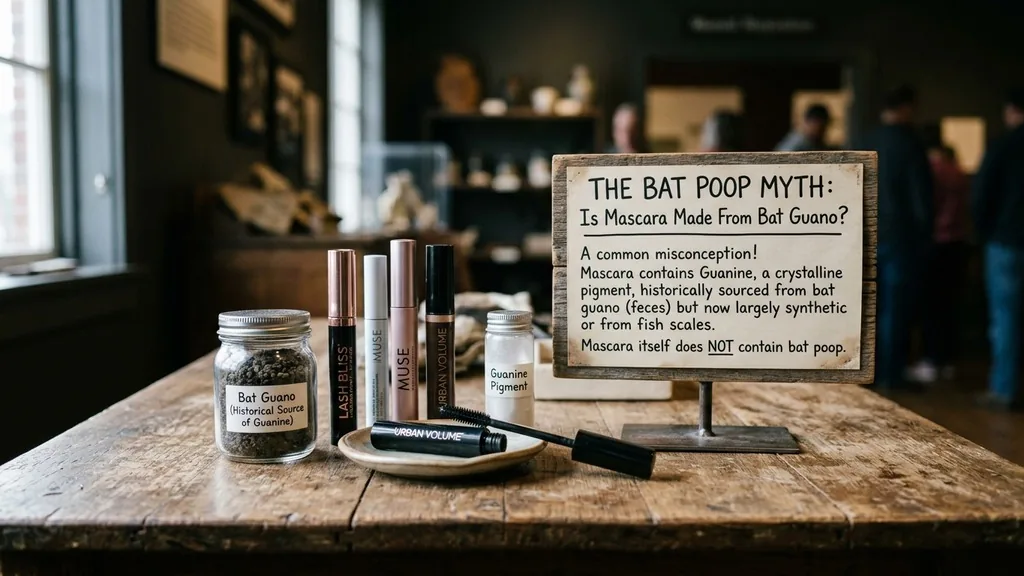
The persistent urban legend that mascara is made from bat poop has circulated through beauty forums, schoolyards, and social media for decades. It is one of those strange, sticky myths that refuses to go away, primarily because it sounds just plausible enough to be terrifying.
When you look at the dark, viscous nature of your favorite lash-enhancing products, it is easy to see why someone might invent a grotesque origin story. However, the reality of cosmetic chemistry is far less exotic and significantly more regulated than these rumors suggest.
The Origin of the Bat Poop Myth
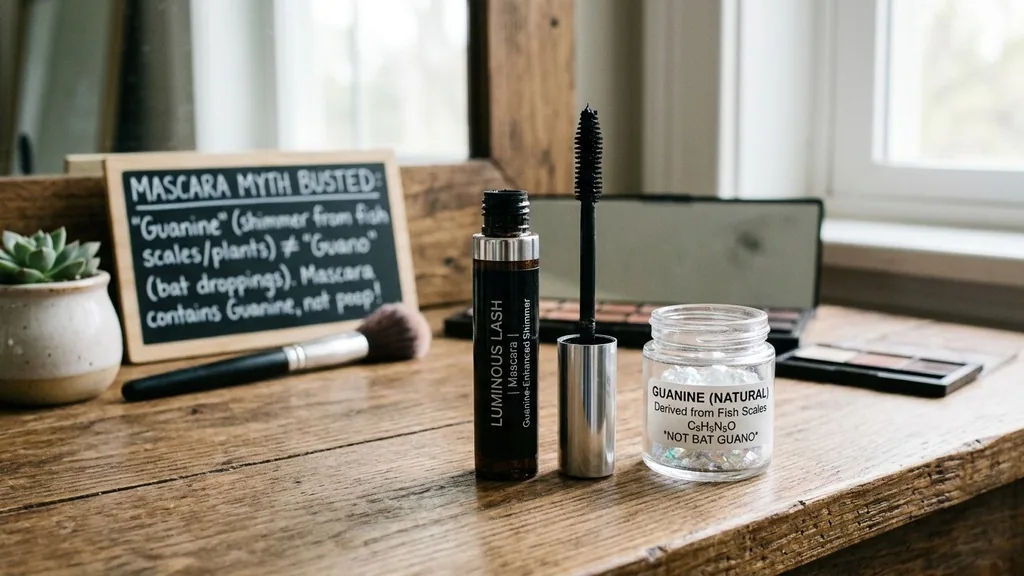
The rumor that mascara is made from bat poop likely stems from a misunderstanding of a specific chemical compound found in nature: guanine. When people hear the word “guanine,” they sometimes confuse it with “guano,” which is the scientific term for bat droppings.
This phonetic similarity is the primary catalyst for the enduring confusion. Because guano is a nitrogen-rich substance often associated with waste, the leap to assuming it is a base ingredient in makeup creates a sensationalist narrative that is hard to shake once it takes hold in the public consciousness.
In reality, the two substances have almost nothing to do with each other beyond the superficial similarity in their names. Guano is a mixture of animal excrement, while guanine is a crystalline material found in various biological organisms. The confusion is further compounded by the fact that many people do not know what actually goes into their makeup tubes.
When a product is designed to be jet-black, thick, and long-lasting, the mystery surrounding its production makes it an easy target for “gross-out” trivia. By understanding that this myth is a linguistic error rather than a factual industry standard, we can begin to unpack what is actually inside your makeup bag.
What Is Guanine and Why Does It Matter?
Guanine is a naturally occurring nucleobase that plays a vital role in the structure of DNA and RNA. Beyond its genetic importance, it is also responsible for the pearlescent or shimmery effect found in various biological systems, such as the scales of fish. In the cosmetic industry, guanine is sometimes used as a pigment or a shimmering agent.
It is prized for its ability to reflect light, giving products a subtle, iridescent sheen. However, the guanine used in modern cosmetics is not harvested from bat caves or animal waste.
Instead, the guanine used in the beauty industry is typically derived from fish scales. Specifically, it is a byproduct of the commercial fishing industry. Manufacturers process these scales to extract the crystalline guanine, which is then purified and added to products like nail polish, eyeshadow, and occasionally high-end mascara to provide a specific finish.
This process is highly controlled to ensure safety and hygiene. It has absolutely no connection to bats, their habitats, or their digestive outputs. The distinction is critical: one is a sophisticated chemical extraction from an aquatic byproduct, while the other is a complete fabrication born from a misunderstanding of terminology.
The Actual Ingredients in Modern Mascara
If you look at the back of a mascara tube, you will see a list of chemical names that can look like a foreign language to the average consumer. Modern mascara is a complex emulsion designed to coat lashes, hold a curl, and resist smudging.
The primary components are generally categorized into pigments, waxes, and oils. These ingredients are chosen for their stability, ability to adhere to hair fibers, and safety profile when applied near the delicate ocular region.
The dark color of most mascaras is achieved using carbon black or iron oxides. These are synthetic or mineral-derived pigments that are rigorously tested for safety. Waxes, such as beeswax, carnauba wax, or paraffin, are used to provide the structure and thickness of the product, allowing it to coat each lash individually.
Finally, oils and film-formers are added to ensure that the mascara remains flexible and does not flake off throughout the day. None of these ingredients are derived from animal waste, as the use of such substances would be a logistical nightmare, a health hazard, and a violation of strict cosmetic manufacturing standards.
| Ingredient Type | Common Examples | Primary Function |
|---|---|---|
| Pigments | Iron Oxides, Carbon Black | Provides deep, dark color |
| Waxes | Beeswax, Carnauba | Builds volume and holds curl |
| Film-formers | Acrylates Copolymer | Prevents smudging and flaking |
| Preservatives | Phenoxyethanol | Prevents microbial growth |
Why Bat Guano Isn’t Used in Cosmetics
Beyond the fact that it sounds repulsive, there are massive, practical reasons why bat guano is never used in the production of mascara. From a manufacturing standpoint, using animal excrement would be incredibly inefficient and dangerous.
Bat guano is rich in pathogens, including bacteria and fungi that thrive in confined, moist environments like caves. Introducing such material into a product that is applied directly to the eyes would be a recipe for severe infections and legal disaster.
Cosmetic companies are held to extremely high standards by organizations like the FDA and equivalent international bodies. Every ingredient must be tracked, tested for purity, and proven safe for human use. The sourcing of raw materials is a highly professionalized chain of custody.
There is no supply chain for “cosmetic-grade bat poop” because there is no demand for it. The cost of sanitizing and refining such a biological mess would be astronomical compared to the low cost of synthetic iron oxides or plant-based waxes. When you consider the sheer scale of the beauty industry, it becomes clear that using a volatile, biological waste product would be an impossible business model.
The Historical Context of Cosmetic Ingredients
It is true that the beauty industry has a long and sometimes strange history. Ancient civilizations used all sorts of materials to create pigments, including crushed insects, lead, and various minerals.
In the Victorian era or even further back, the lack of modern chemistry meant that people used whatever they could find to achieve a certain look. However, the evolution of the cosmetic industry into a global, science-led sector has effectively purged these archaic practices.
In the old days, if a product needed a specific shimmering effect, someone might have used whatever was available to mimic that look. It is possible that ancient beauty practices involved substances that we would find shocking today. However, the modern obsession with the “bat poop” myth ignores the rapid advancement of synthetic chemistry over the last hundred years.
By the mid-20th century, the industry had moved almost entirely toward standardized, laboratory-produced ingredients that are consistent, safe, and entirely free from the unpredictable nature of raw biological matter. When we look at the history of cosmetics, we see a move toward greater purity and regulation, not a reliance on exotic waste products.
Addressing Topical Gaps: Safety and Regulation
A common concern among consumers is whether the ingredients in their mascara are truly safe. Because the eye area is so sensitive, the fear that something “dirty” or “harmful” could be lurking in the tube is a valid concern. However, the gap between what people fear and what actually occurs in a lab is vast.
Cosmetic products are subject to strict safety assessments before they ever hit the shelves. This includes testing for microbial contamination, which is why your mascara tube has a limited lifespan—usually three months—after opening.
The preservatives in mascara are specifically designed to kill any bacteria that might be introduced by the wand coming into contact with your lashes. If there were any truth to the idea that mascara contained animal waste, it would be impossible to preserve the product for more than a few days, let alone months. Furthermore, the industry is moving toward “clean beauty,” which emphasizes transparency in ingredient labeling.
If you are ever concerned about what is in your mascara, you can look up the INCI (International Nomenclature of Cosmetic Ingredients) list on the manufacturer’s website. You will find standardized chemicals, not biological byproducts.
How to Identify High-Quality Mascara
If you want to avoid questionable ingredients, the best approach is to be an informed consumer. Instead of worrying about urban legends, focus on the actual quality of the product.
Look for brands that are transparent about their sourcing. Many modern companies now offer “vegan” or “cruelty-free” labels, which provide an extra layer of assurance that no animal-derived ingredients—let alone waste—are being used.
When shopping, pay attention to the following:
- Check the ingredient list for common irritants if you have sensitive eyes.
- Look for brands that undergo third-party testing for heavy metals.
- Prioritize products from reputable retailers rather than unverified third-party sellers online.
- Replace your mascara every three months to ensure the preservatives remain effective.
- Notice if the brand provides a full breakdown of their ingredient sourcing on their website.
By focusing on these practical steps, you can ensure your makeup routine is safe and effective. The fear of “hidden” ingredients like bat guano is a distraction from the real work of finding products that suit your specific lash needs, whether you are looking for volume, length, or water-resistance.
The Role of Misinformation in Modern Beauty
The persistence of the bat poop myth is a fascinating case study in how misinformation spreads in the digital age. It persists because it is “sticky”—it evokes a strong physical reaction, it is easy to remember, and it preys on a general distrust of large corporations. When a myth hits all these psychological triggers, it doesn’t matter how many times scientists debunk it; it will continue to circulate.
Social media has accelerated the spread of these rumors, as bite-sized videos and posts rarely have the space to explain complex chemical processes. It is much easier to tell a shocking story about bat droppings than it is to explain the purification process of iron oxides or the role of synthetic waxes.
As consumers, we have a responsibility to look past the sensationalism. By choosing to educate ourselves on the basics of cosmetic chemistry, we can stop the spread of these myths and focus on what really matters: the performance and safety of the products we use every day.
Frequently Asked Questions
- Is there any actual animal waste in mascara? No. Mascara is formulated using pigments, waxes, and synthetic polymers. There is no industry standard or logical reason to include animal waste in cosmetics, as it would be dangerous, unsanitary, and technically counterproductive to the product’s performance.
- Where does the name “guanine” come from? Guanine is named after guano, but they are not the same thing. Guanine was first isolated from bird guano in the 1800s, which is where the naming connection exists. However, the guanine used in modern cosmetics is sourced from fish scales, not bat droppings.
- Should I be worried about mascara safety? You should only be worried about the expiration date. Mascara is a safe product when used correctly, but it can harbor bacteria if kept for too long. Always replace your mascara every three months and never share your wand with others to prevent eye infections.
- Why do people still believe this myth? People believe the myth because of the similar-sounding names “guanine” and “guano.” The idea of something “gross” in our beauty products is a common trope that plays on our natural disgust response, making it a memorable story that continues to get shared online.


