

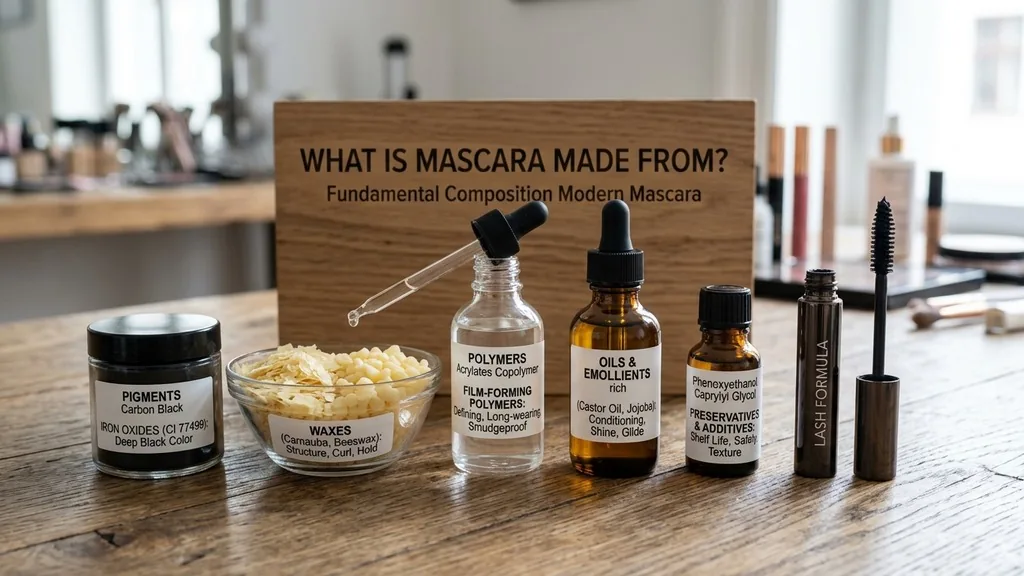
When you swipe a wand across your lashes, you are applying a sophisticated chemical emulsion designed to adhere to hair, provide structural support, and resist smudging throughout the day. Understanding what is mascara made from requires looking past the brand marketing and examining the precise balance of polymers, pigments, and emollients that define modern cosmetic formulas. Most mascaras are complex mixtures of water, oils, waxes, and pigments, meticulously engineered to ensure the product remains stable in the tube while performing flawlessly upon application.
The Fundamental Composition of Modern Mascara
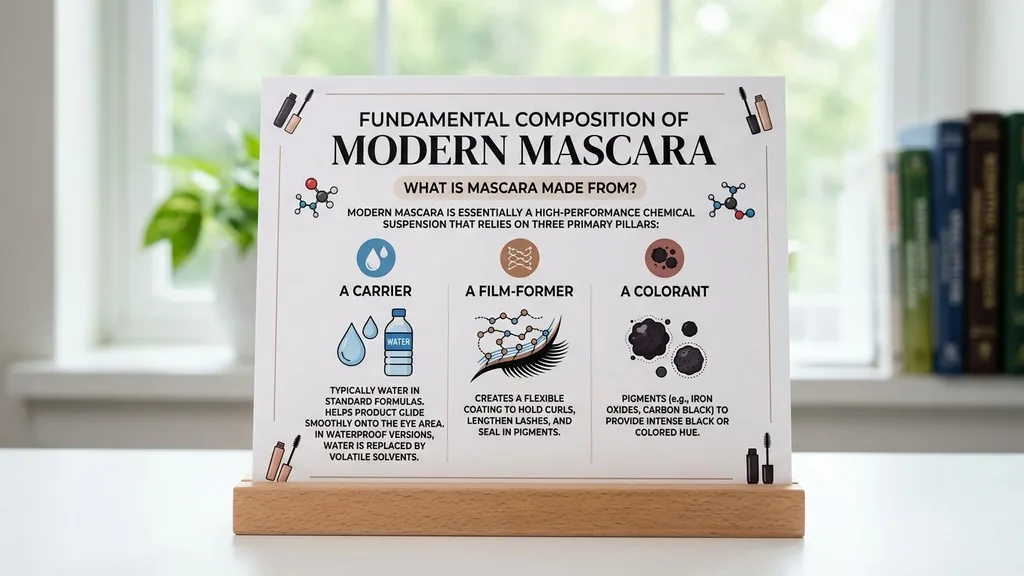
Modern mascara is essentially a high-performance chemical suspension that relies on three primary pillars: a carrier, a film-former, and a colorant. The carrier, which is typically water in standard formulas, helps the product glide smoothly onto the eye area. In waterproof versions, the water is replaced by volatile silicones or hydrocarbon solvents that evaporate quickly, leaving behind a hydrophobic layer that prevents the formula from running when exposed to moisture.
Beyond the carrier, the formula relies heavily on wax and oil to provide the desired texture. These components ensure that the mascara is thick enough to coat individual hairs without clumping excessively.
The specific ratio of carnauba wax to beeswax or synthetic alternatives determines whether a mascara is designed for lengthening, volumizing, or curling. These waxes are responsible for the structural integrity of the application, effectively “locking” the shape of the lash into place as the product dries.
The Role of Pigments and Carbon Black
Colorants are the soul of mascara, providing the deep, intense darkness that defines the product. The most common ingredient used to achieve this is carbon black, an amorphous carbon pigment prized for its exceptional intensity and light-absorbing properties. While synthetic iron oxides are also used—often to create softer black or brown shades—carbon black remains the industry standard for achieving the “inky” look that many consumers desire.
Manufacturers must treat these pigments with extreme care, as they are being applied in close proximity to the eye. The carbon black particles must be finely milled to ensure a smooth, uniform application that does not feel gritty or irritating. Because these pigments are essentially insoluble powders, the formula must include stabilizing agents and surfactants to keep them suspended evenly throughout the liquid base, preventing the pigment from settling at the bottom of the tube over time.
Debunking Myths Regarding Mascara Ingredients
One of the most persistent urban legends in the beauty industry is the claim that mascara contains bat poop. This rumor likely stems from the historical use of guanine, a crystalline substance that provides an iridescent or pearlescent finish.
While guanine can be derived from fish scales or synthetic processes, it has no relation to bat guano. You can rest assured that no reputable cosmetic company includes animal waste in their products.
The confusion often arises from the phonetic similarity between “guanine” and “guano.” Modern formulation standards are strictly regulated by organizations like the U.S. Food and Drug Administration, which mandates that all ingredients used in cosmetics must be proven safe for their intended use.
The manufacturing process for beauty items is highly controlled, ensuring that substances like excrement are never part of the supply chain. If you are curious about specific safety standards, the FDA provides comprehensive guidelines on prohibited and restricted cosmetic ingredients.
The Chemistry of Waterproof Formulas
Creating a formula that stays put through sweat, rain, or tears requires a departure from water-based chemistry. Waterproof mascara made to withstand moisture relies on hydrophobic polymers, such as isododecane or various acrylate copolymers.
These chemicals create a flexible, plastic-like film around the hair shaft. Once this film sets, it is impervious to water, which is why you need an oil-based makeup remover to break the chemical bonds and successfully remove the product at the end of the day.
These formulas are inherently more drying than their water-soluble counterparts. Because they lack the hydrating base of water-based products, they often incorporate nourishing oils to maintain the health of the hair.
While they offer superior longevity, the trade-off is a more rigorous removal process, which can lead to mechanical stress on the delicate eye area if the user is not careful. Choosing between a standard or waterproof formula often comes down to balancing the need for long-wear performance against the ease of removal.
Comparing Mascara Types
The following table outlines the functional differences between the most common types of mascara formulations found on the market today.
| Mascara Type | Primary Carrier | Key Performance Feature | Removal Method |
|---|---|---|---|
| Standard (Washable) | Water | Easy to apply/remove | Soap and water |
| Waterproof | Volatile Silicones | Smudge-proof/Humidity resistant | Oil-based cleanser |
| Tubing | Polymer solution | Does not smudge or flake | Warm water and gentle pressure |
Additives That Enhance Performance
Beyond the base, waxes, and pigments, mascara contains a variety of functional additives that improve the user experience. Preservatives are non-negotiable in any product containing water.
Because mascara is used in a warm, dark, and humid environment—the eye area—it is a prime target for microbial growth. Common preservatives include parabens, phenoxyethanol, or organic acids, which work to keep the formula sterile for the duration of its shelf life.
Conditioning agents are also frequently included to prevent the lashes from becoming brittle. Ingredients like panthenol (vitamin B5), keratin, and various botanical oils help hydrate the hair shaft.
These additives are particularly important for heavy-duty formulas, as they counteract the drying effect of the polymers and pigments. By incorporating these beneficial substances, manufacturers can market their products as providing “lash care” benefits alongside aesthetic improvement.
Addressing Topical Gaps: What Was Mascara Originally Made Of?
To understand the evolution of this product, we must look at its history. Early versions of mascara were far simpler than the high-tech emulsions used today.
Ancient Egyptians utilized kohl, a mixture of galena (lead sulfide), malachite, and charcoal, to darken their eyes. This was not just for aesthetic appeal; it was believed to protect the eyes from the harsh desert sun and ward off evil spirits.
In the 19th century, mascara evolved into a solid block of soap and lampblack. Users would wet a brush, rub it against the block, and then apply the mixture to their eyes. This method was messy and prone to running, but it was the standard for decades.
The transition to the modern tube-and-wand system did not occur until the mid-20th century, which allowed for the liquid, stable formulas that we recognize today. This shift was a massive leap forward in both hygiene and convenience for the everyday user.
The Importance of Shelf Life and Hygiene
Because of the ingredients used to create these emulsions, mascara has a notoriously short shelf life. Once the tube is opened, the clock starts ticking.
The repeated act of pumping the wand in and out of the tube introduces air and bacteria into the product, which can eventually overwhelm the preservative system. For this reason, dermatologists recommend replacing your mascara every three months, regardless of how much product remains in the tube.
- Avoid sharing mascara with others to prevent cross-contamination.
- Never add water or oil to a dried-out tube, as this disrupts the preservative balance.
- Always store your makeup in a cool, dry place away from direct sunlight.
- Discard the product immediately if you develop an eye infection or irritation.
- Check the PAO (Period After Opening) symbol on the packaging, usually depicted as an open jar.
Proper hygiene is essential because the eye is a highly sensitive organ. If the formula has expired, the chemical stabilizers may break down, causing the product to flake or irritate the conjunctiva. By adhering to these simple guidelines, you can ensure that the chemical composition of your mascara remains stable and safe for your eyes throughout its entire useful life.
Frequently Asked Questions
Is mascara made from animal-derived ingredients?
Some traditional mascaras contain beeswax or shellac, which are animal-derived. However, the vast majority of modern brands now offer vegan alternatives using synthetic waxes and plant-based polymers, ensuring that no animals are involved in the production of your makeup.
What is the healthiest mascara to use?
The healthiest choice is a formula free from harsh synthetic fragrances, parabens, and excessive chemical preservatives. Look for ophthalmologist-tested products that prioritize nourishing ingredients like vitamin E or plant oils, and always ensure you are not allergic to any specific botanical extracts listed on the label.
Which ingredients should I avoid in mascara?
It is generally wise to avoid formulas containing formaldehyde-releasing preservatives, coal tar dyes, or heavy fragrances. These can cause contact dermatitis or irritation, particularly for those with sensitive eyes. Always patch-test new products if you have a history of ocular sensitivities or allergies to cosmetic chemicals.
Is mascara made out of spider legs?
No, this is a complete myth. Mascara is a blend of waxes, oils, pigments, and polymers. While some lengthening formulas use tiny synthetic fibers—often made of nylon or rayon—to add volume and length to your natural hair, these are not derived from spiders or any other insects.


