

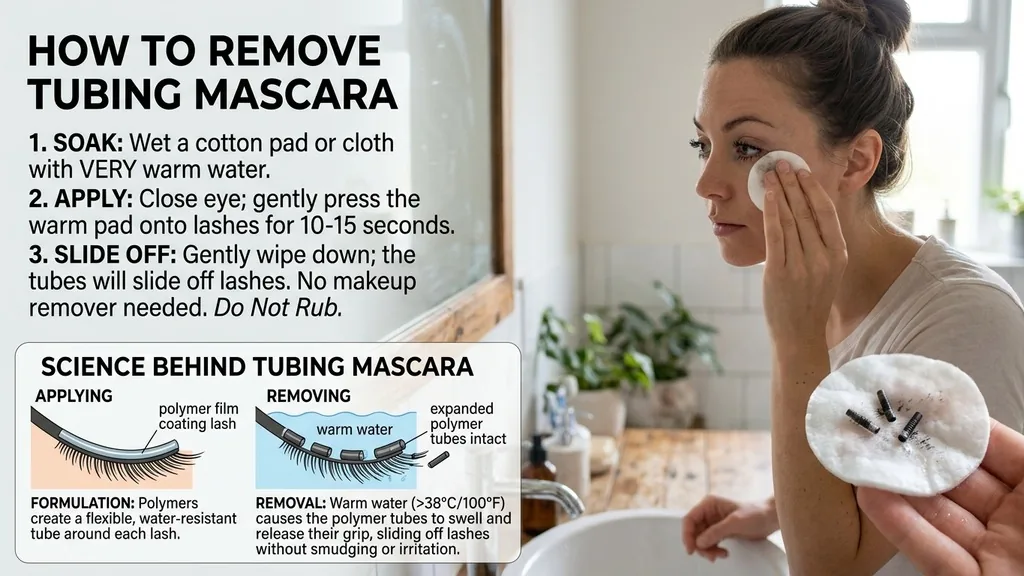
Mastering the art of how to remove tubing mascara is a game-changer for your nightly routine. Unlike traditional waxes and oils that coat your hairs in pigment, this unique cosmetic product creates tiny, water-soluble polymers that wrap around each individual lash. Because these polymers form a physical sleeve, they don’t smear or smudge throughout the day, even if you have oily eyelids or get caught in a light drizzle.
However, this structure means you cannot treat them like standard makeup. If you try to scrub them off with a traditional oil-based cleanser, you will likely find yourself frustrated, as the polymers simply slide around rather than dissolving. The secret lies in understanding the chemistry of the formula and how it reacts to specific temperatures and friction.
The Science Behind Tubing Mascara
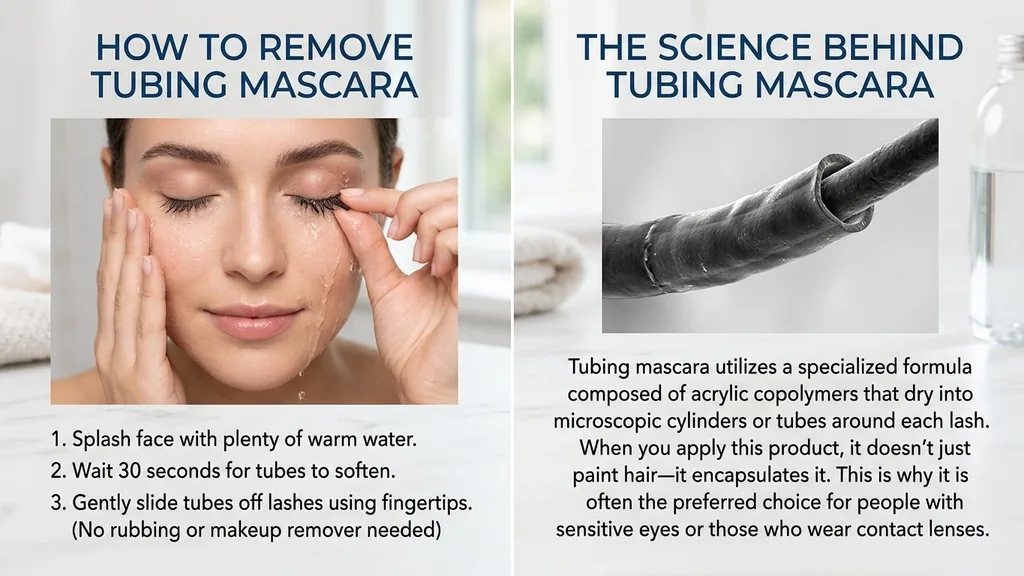
Tubing mascara utilizes a specialized formula composed of acrylic copolymers that dry into microscopic cylinders or “tubes” around each lash. When you apply this product, it doesn’t just paint the hair; it encapsulates it.
This is why it is often the preferred choice for people with sensitive eyes or those who wear contact lenses, as the tubes are less likely to flake off and cause irritation. Because these polymers are designed to be water-resistant against standard moisture like sweat or tears, they remain locked in place until you decide to initiate the removal process.
Understanding this mechanism is crucial. You aren’t trying to break down a pigment-heavy oil base; you are trying to soften a structural polymer.
The chemical bonds that hold these tubes together are specifically engineered to remain stable at cold and room temperatures, but they lose their structural integrity when introduced to a specific range of heat and gentle mechanical pressure. This is why you must avoid the common mistake of rubbing your eyes vigorously with a makeup wipe, which only serves to pull on your delicate lashes and potentially cause damage.
Using Warm Water for Removal
The most effective way to remove tubing mascara is by using warm water. You do not need expensive makeup removers or harsh chemical cleansers to get the job done. Simply splash your face with warm—not scalding—water.
The temperature should be comfortable enough to wash your face with, but warm enough to begin softening the polymers. As the water hits your lashes, it starts to hydrate the tubes, causing them to loosen their grip on the hair follicle.
Once the tubes have been exposed to the warmth for about 30 to 60 seconds, they will begin to slide off. You can gently press your wet fingertips against your lashes and apply light pressure. You will notice the mascara coming off in tiny, distinct black specks or strings.
This is a normal part of the process and is a sign that the product is coming off correctly. It is important to emphasize that you should never pull or tug at your lashes, even if you feel like a stubborn tube is remaining. If it doesn’t slide off easily, add more warm water and wait a few more seconds.
The Role of Gentle Mechanical Pressure
While water is the primary agent, the mechanical action of sliding the tubes off is the secondary component of how to remove tubing mascara safely. Many people mistakenly believe they need to use a cotton pad soaked in cleanser to wipe the area clean.
In reality, using your own fingers is often the safest and most efficient method. Your fingertips provide the perfect amount of soft, consistent pressure to guide the tubes off the lash without pulling the root.
If you find that your fingers aren’t enough, you can use a clean, soft washcloth. Soak the cloth in warm water, wring it out, and then drape it over your closed eyes for a few seconds. This acts like a mini-steam treatment for your lashes, ensuring the heat penetrates the entire length of the tube.
After the steam, gently wipe downward from the base of the lash to the tip. You should see the mascara transfer onto the cloth. This method is particularly useful if you have a lot of product on, as it keeps the mess contained and prevents the “raccoon eye” effect that can sometimes occur during the rinsing process.
Comparing Removal Methods
It is helpful to compare the removal of traditional mascara versus tubing formulas to understand why the technique differs so significantly. The following table highlights the key differences you should keep in mind when managing your beauty routine.
| Feature | Traditional Mascara | Tubing Mascara |
|---|---|---|
| Primary Solvent | Oil-based cleansers | Warm water |
| Removal Texture | Dissolves into liquid | Slides off in solid tubes |
| Required Effort | Rubbing/Wiping | Soaking/Sliding |
| Risk of Irritation | High (due to oils/chemicals) | Low (physical removal) |
As shown, the primary difference lies in the interaction with the product. While traditional formulas require a chemical reaction to turn the wax into a wipeable substance, tubing mascara relies on the physical detachment of the polymer sleeve. This is why you must be intentional about your choice of cleanser when switching between these two types of eye makeup.
Common Mistakes to Avoid
Even with the best instructions, people often fall into habits that make the removal process harder than it needs to be. One of the most frequent errors is attempting to use an oil-based makeup remover as a first step.
Because the polymers in tubing mascara are oil-resistant, applying a cleansing balm or micellar water will do almost nothing to dislodge the tubes. It will simply create a greasy film over the mascara, making it even more difficult for the warm water to penetrate the tubes later on.
Another common mistake is rushing the process. If you are in a hurry and only splash your face for a second, the polymers won’t have enough time to absorb the warmth and soften. This leads to people scrubbing harder to get the product off, which can lead to lash breakage.
Remember that your lashes are fragile. Think of the removal process as a soothing end-of-day ritual rather than a chore. If you are struggling, it is almost always because the tubes have not been exposed to enough heat or moisture to fully release their grip.
Addressing Topical Gaps: What About Waterproof Tubing Formulas?
A frequent question that arises is how to handle “waterproof” tubing mascaras. It is important to clarify that true tubing mascara is inherently water-resistant, but some brands market a “waterproof” version that blends traditional waterproof waxes with tubing polymers.
If you have purchased a product that claims to be both tubing and waterproof, the removal process may be more complex. In these specific cases, you might need a dual-phase approach.
First, use a gentle, oil-based makeup remover to break down the waterproof wax component of the formula. Once the wax is dissolved, you can then follow up with the warm water method described earlier to slide off the remaining tubing polymers.
If you rely solely on water for these hybrid formulas, you will likely be left with a stubborn residue that refuses to budge. Always check the ingredient list; if you see waxes high up in the list, you are dealing with a hybrid formula that requires a bit more care during the removal phase.
Managing Sensitive Skin Around the Eyes
If you have sensitive skin, the area around your eyes is likely prone to redness or irritation. One of the major benefits of learning how to remove tubing mascara correctly is that you can avoid the harsh scrubbing that usually triggers these issues. Because you are only using water and gentle pressure, you aren’t introducing fragrances, surfactants, or preservatives from makeup wipes into your eye area.
To further protect your skin, ensure that the water you use is lukewarm. Extremely hot water can strip the natural oils from your eyelids, leading to dryness and flakiness over time. Furthermore, if you are prone to milia or other skin concerns, avoiding heavy, oil-based removers is a significant advantage.
By keeping your routine simple and relying on the physical properties of the tubing mascara itself, you are effectively protecting the integrity of your skin barrier. If you want to dive deeper into general eye safety and hygiene, you can visit the American Academy of Ophthalmology for more information on maintaining ocular health.
Tips for a Seamless Routine
Consistency is key when it comes to maintaining healthy lashes. If you wear tubing mascara daily, make sure you are removing it every single night. Even though these formulas are gentle, leaving any product on your lashes overnight can cause them to become stiff and brittle, which may lead to breakage when you sleep or rub your eyes against your pillow.
* Always wash your hands thoroughly before touching your eyes to prevent the transfer of bacteria.
* Use a mirror with good lighting so you can see exactly where the tubes are and ensure you have removed all of them.
* If you wear glasses, check the lenses after removal, as sometimes the tiny tubes can fall onto your frames or cheeks.
* Pat your eyes dry with a clean, soft towel rather than dragging the towel across your lash line.
* Consider using a lash serum after removal to keep your follicles nourished and strong.
By incorporating these small habits, you can ensure that your lashes remain long, healthy, and full, regardless of how often you choose to wear makeup. The beauty of tubing mascara is that it is a low-maintenance, high-performance product, and as long as you respect the unique removal technique, it will continue to be a staple in your beauty arsenal.
Frequently Asked Questions
- Does tubing mascara damage your natural lashes? No, tubing mascara is generally considered safer than traditional mascara because it does not require vigorous rubbing or harsh chemical solvents to remove. As long as you use warm water and gentle pressure to slide the tubes off, your natural lashes should remain healthy and intact.
- Can I use a makeup wipe to remove tubing mascara? It is not recommended. Most makeup wipes are designed for oil-soluble makeup and will not effectively dissolve the polymers in tubing mascara. Using a wipe often encourages the user to scrub, which can pull out your natural lashes and cause unnecessary irritation to the sensitive skin around your eyes.
- Why does my tubing mascara leave black specks on my face? Those black specks are actually the tubes themselves. Because the formula is designed to slide off in one piece, it is normal to see them fall away as you rinse. This is a sign that the product is being removed correctly and is not a cause for concern.
- What if my tubing mascara won’t come off with water? If the product is stubborn, you likely need more heat or more time. Try soaking a clean washcloth in warmer water and holding it against your eyes for a full minute. This extra time allows the water to fully hydrate the polymers, making them much easier to slide off your lashes.
Ultimately, the process of removing this type of cosmetic is a test of patience rather than physical strength. Once you move away from the mindset of “wiping away” makeup and shift toward the method of “soaking and sliding,” the entire experience becomes much more pleasant. You will find that your eyes feel cleaner, your lashes remain stronger, and your nightly routine becomes significantly faster.
By mastering these techniques, you ensure that you get the best performance out of your product without sacrificing the long-term health of your eyes. Keep your water warm, your touch light, and your approach consistent, and you will find that tubing mascara is one of the most user-friendly options available in the modern beauty market. With the right technique, you can enjoy the smudge-proof benefits of these polymers while maintaining a healthy, effective, and simple removal process that fits perfectly into any lifestyle.


