

The quest to identify who invented mascara reveals a complex timeline that stretches back far beyond the modern department store shelf. While many consumers associate the product with the flashy advertisements of the mid-20th century, the practice of darkening the fringe of the eyes is an ancient ritual.
Humans have been obsessed with enhancing their appearance for millennia, and the eyes have always been a focal point of this vanity. Understanding the history of this cosmetic requires looking at how different cultures developed their own versions of lash-darkening substances, long before the term “mascara” was even part of the beauty lexicon.
Ancient Roots of Eye Darkening
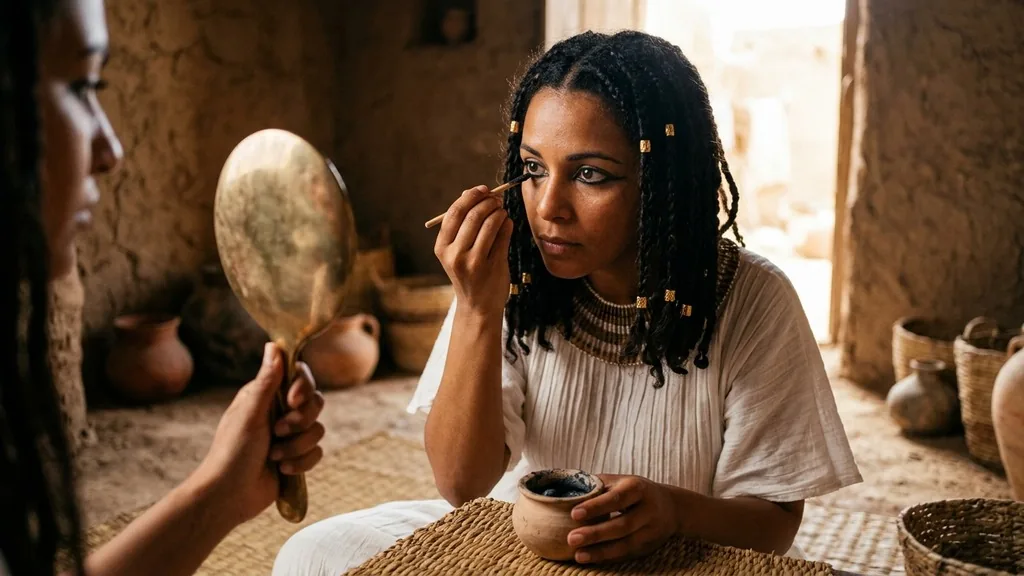
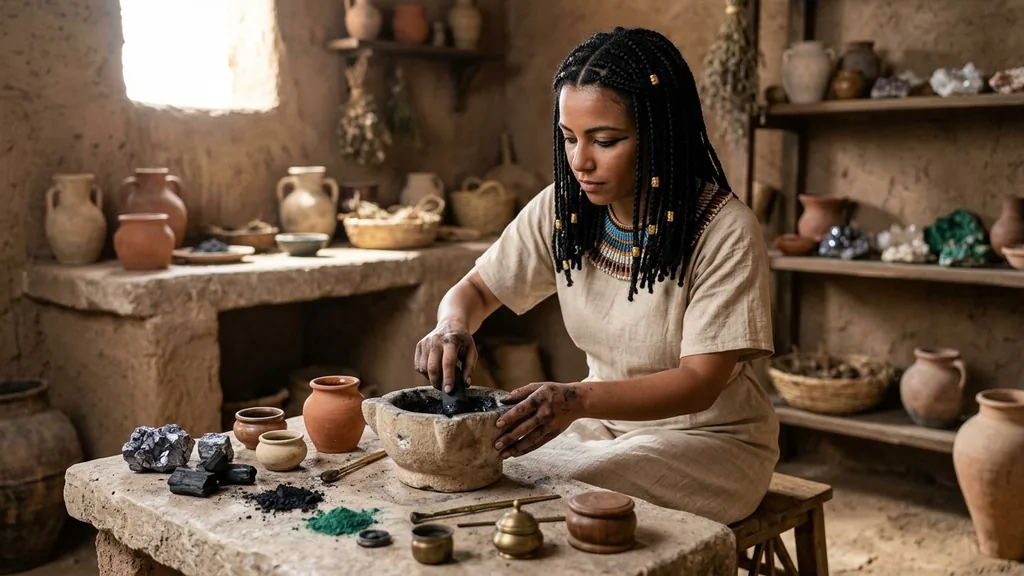
The earliest precursors to modern mascara were not commercial products but rather crude, soot-based mixtures applied to the face. The ancient Egyptians, both men and women, were perhaps the most famous early adopters of eye-enhancing cosmetics. They utilized a substance known as kohl, which was a mixture of galena, malachite, and other minerals, often combined with animal fat or oils.
This dark paste was applied to the eyelids and the lashes using a small stick or a brush. For the Egyptians, this was not merely a matter of aesthetics; they believed that darkening the eyes would protect them from the harsh glare of the sun and ward off the “evil eye.”
This early form of lash enhancement was a daily ritual for the elite. These ancient civilizations recognized that defining the eyes added a sense of depth and mystery to the face. By mixing soot with oil, they created a formula that could adhere to the hair follicles, providing a dramatic, darkened effect.
While this bears little resemblance to the chemical compositions found in today’s tubes, it represents the foundational concept of mascara: a pigment applied to hair to alter its appearance. The knowledge of these beauty rituals traveled throughout the Mediterranean and into the Middle East, influencing the cosmetic habits of subsequent generations.
The Victorian Era and the Quest for Beauty
As we move into the 19th century, the societal view of makeup shifted significantly. During the Victorian era in Europe, heavy makeup was often associated with actresses or the theater, leading to a more natural, subtle aesthetic for the average woman. However, the desire to improve one’s appearance remained.
Women began experimenting with homemade recipes to darken their eyelashes. These early home-brew formulas often included ingredients like coal dust, elderberry juice, or even burnt matchsticks.
These DIY methods were messy, time-consuming, and potentially dangerous. Burning a match and rubbing the charred residue onto the lashes was common, but it was also an imprecise science.
It was during this time that the term “mascara” began to surface in various European languages, likely derived from the Spanish word “máscara,” which means mask, or the Italian “maschera,” meaning ghost or mask. It reflected the idea that the cosmetic acted as a covering or an enhancement, effectively “masking” the natural appearance of the lashes to create a more idealized look.
Thomas Lyle Williams and the Maybelline Breakthrough
The modern commercial history of mascara is inextricably linked to Thomas Lyle Williams. In 1913, Williams noticed his sister, Mabel, attempting to enhance her lashes using a mixture of petroleum jelly and coal dust. This observation is widely credited as the spark that led to the creation of the first mass-market mascara.
Williams, a chemist by trade, refined this mixture into a more stable, usable product. He began marketing this creation through the mail-order catalog business, naming the company “Maybelline”—a combination of his sister’s name, Mabel, and the key ingredient, Vaseline.
This transition from a homemade concoction to a packaged product was a pivotal moment in the industry. Williams understood that for the product to be successful, it needed to be safe, consistent, and easy to apply. He moved away from the volatile ingredients of the Victorian era and began developing formulas that were more stable for retail distribution.
The early versions of Maybelline mascara were sold as a “cake” or block, which the user would have to moisten with water before applying with a small brush. This “cake mascara” remained the standard for decades, serving as the primary way for women to darken their lashes until the mid-20th century.
The Evolution of the Mascara Wand
While Williams created the product, the invention of the modern mascara applicator is a separate but equally important story. For years, the cake-and-brush method was the only way to apply the product. It was cumbersome and prone to clumping, often requiring a steady hand and a good deal of patience.
The innovation that would change everything was the introduction of the spiral brush and the tube. In the 1950s, Helene Rubinstein introduced the “Mascara-Matic,” which featured a wand that pulled the product from the tube in a single, fluid motion.
This technological leap eliminated the need for water and messy cakes. It allowed for a more precise application and significantly increased the popularity of the product. The wand was designed to comb through the lashes while depositing the pigment, separating them and preventing the dreaded “clump” that plagued early users.
This design remains the gold standard today. Every mascara on the market, from luxury brands to drugstore staples, utilizes some variation of this spiral wand mechanism. It transformed the makeup from a specialized theater tool into a staple item that could be carried in a purse and applied on the go.
Cultural Shifts and the Rise of Cosmetic Brands
The 20th century saw a massive surge in the popularity of cosmetics, driven by the rise of Hollywood and the influence of film stars. Actresses like Greta Garbo and Marlene Dietrich popularized the “doe-eyed” look, which relied heavily on thick, dark lashes.
As the silver screen brought these images into living rooms across the globe, the demand for high-quality lash enhancers skyrocketed. Companies like Max Factor, Helena Rubinstein, and Maybelline competed to create the most dramatic results, leading to a period of rapid innovation in chemical engineering and brush design.
During this time, the product also became more accessible. It was no longer reserved for the elite or the stage; it became a standard part of the beauty routine for millions of people. The competition between brands forced companies to improve their offerings.
They began experimenting with water-resistant formulas, lengthening fibers, and conditioning agents. This era solidified mascara as a primary cosmetic, ranking alongside lipstick and foundation in importance. The industry evolved to cater to different needs, offering options for volume, length, and curl, acknowledging that every individual has different lash types and personal preferences.
Comparing Traditional and Modern Mascara Types
To understand the progression of this product, it is helpful to look at the different forms it has taken throughout history. The following table highlights the evolution of the application methods and formulas that have defined the market.
| Era | Primary Form | Application Method | Key Ingredients |
|---|---|---|---|
| Ancient Egypt | Kohl Paste | Small stick or brush | Galena, Malachite, Soot |
| Early 1900s | Cake Mascara | Wet brush and block | Petroleum jelly, Coal dust |
| 1950s-Present | Tube Mascara | Spiral wand | Waxes, Pigments, Polymers |
This shift from raw minerals to complex polymer-based formulas represents a significant improvement in both safety and performance. Modern products are designed to be hypoallergenic and long-lasting, whereas historical versions were often irritating or prone to smudging. The development of synthetic polymers allowed for the creation of tubing mascaras, which form tiny “sleeves” around each lash, preventing the flaking and smearing that often occurred with traditional oil-based formulas.
Addressing Topical Gaps: The Truth About Gender and Ingredients
A common question that arises is whether mascara was originally intended for men. The answer is nuanced. While ancient Egyptian men frequently used kohl to line their eyes, the modern iteration of mascara—as developed by Thomas Lyle Williams—was marketed specifically toward women.
However, the use of makeup is not inherently gendered. Throughout history, various cultures have used eye darkening as a status symbol or a protective measure regardless of gender. In the modern era, the industry has seen a resurgence in gender-neutral marketing, but for much of the 20th century, the product was strictly segmented by gendered marketing campaigns.
Another common misconception is that the ingredients have remained consistent. Many people believe that “natural” is always better, but the history of cosmetic chemistry shows that early natural ingredients were often toxic. For instance, some 19th-century formulas contained lead or mercury, which had devastating health effects.
The transition to synthetic ingredients was largely a safety-driven evolution. By moving to standardized, lab-tested polymers, the industry was able to provide a product that could be used safely on a daily basis without the risk of long-term damage to the delicate skin around the eyes.
The Role of Anastasia and Modern Innovations
In the contemporary beauty market, names like Anastasia Soare have redefined how we approach lash and brow grooming. While the invention of the mascara wand was the foundational shift, the focus has now moved toward personalization and specialized results. Modern users are no longer satisfied with a one-size-fits-all approach.
They want products that cater to specific lash shapes, lengths, and densities. This has led to the development of a vast array of brush types, from silicone bristles to hourglass-shaped wands, each engineered to perform a specific task.
The industry has also seen a move toward “clean beauty,” where consumers are demanding transparency regarding the ingredients used in their products. This is a full-circle moment for the industry, as it returns to the idea of using simple, plant-based oils and waxes, but with the benefit of modern scientific oversight.
The current landscape is defined by this tension between high-tech synthetic formulas and the desire for natural, sustainable ingredients. It is a testament to how far we have come from the days of mixing coal dust in a kitchen, yet the core desire—to highlight the beauty of the eyes—remains the same.
Sustainability and the Future of Eye Cosmetics
As we look toward the future, the focus is shifting toward environmental impact. The traditional plastic tube and wand design, while effective, creates a significant amount of waste. Brands are now exploring refillable packaging and biodegradable brush materials.
The history of this product teaches us that the way we make and use cosmetics is always in flux, responding to the cultural and technological needs of the time. We are likely to see a shift away from the mass-produced, single-use model toward more circular, sustainable beauty practices.
Furthermore, the rise of digital technology is changing how we choose our products. Virtual try-on apps and AI-driven recommendations are helping users find the right formula for their specific needs, reducing the guesswork that was once the norm.
Whether you are looking for a dramatic, falsie-look or a subtle, everyday enhancement, the options available today are more precise and varied than ever before. The story of mascara is not just a history of a product; it is a history of human expression and the constant desire to refine our appearance, a trend that shows no signs of slowing down.
Frequently Asked Questions
- Who is considered the inventor of modern mascara? Thomas Lyle Williams is widely credited with creating the first mass-market mascara in 1913. He founded the Maybelline company after observing his sister using a mixture of petroleum jelly and coal dust to darken her lashes.
- Was mascara originally intended for men? While it was not marketed to men in the 20th century, ancient civilizations including the Egyptians used kohl to line their eyes regardless of gender. It served both cosmetic and protective purposes in those ancient cultures, long before modern commercial branding existed.
- Why is it called mascara? The term is believed to come from the Spanish word “máscara” or the Italian “maschera,” which translate to mask or ghost. This reflects the early cosmetic practice of covering or “masking” the natural appearance of the eyelashes to enhance them.
- What was the first mascara made of? The earliest forms, like Egyptian kohl, were made of minerals like galena and malachite. Later, early 20th-century versions used a combination of petroleum jelly and coal dust, which provided a dark, waxy texture that could be applied to the hair.
For those interested in the broader historical context of how cosmetics have shaped human culture, you can read more about the evolution of beauty standards at the Metropolitan Museum of Art, which provides extensive documentation on the history of ancient artifacts and vanity items. Understanding this past helps us appreciate the sophistication of the products we use today, recognizing them as the latest chapter in a very long story of human vanity and invention. We live in a time where the simple act of applying a coat of color to our lashes is backed by centuries of experimentation, innovation, and cultural history.


