


Many people wonder, does mascara damage your eyelashes, especially if they use it every single day. The short answer is that mascara itself is rarely the sole culprit of lash loss, but the way you apply it, remove it, and choose your products can significantly impact the structural integrity of your lashes.
Your eyelashes are delicate hairs that serve a protective function for your eyes, and like the hair on your head, they require specific care to remain healthy and strong. When you subject them to daily chemical coatings and mechanical stress, you might inadvertently cause brittleness, breakage, or premature shedding.
Understanding the Mechanics of Lash Damage
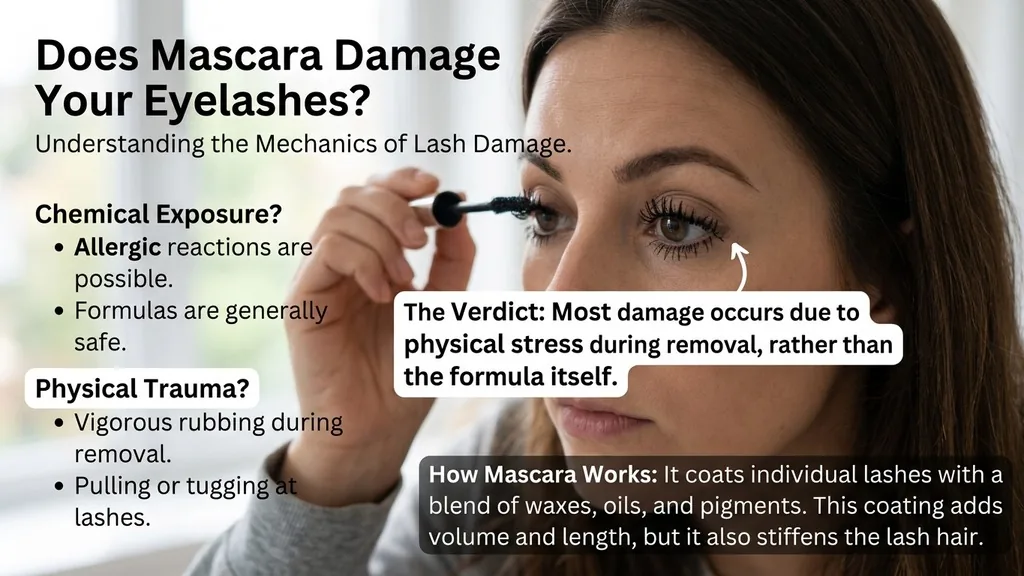
Does mascara damage your eyelashes through chemical exposure or physical trauma? Most damage occurs because of physical stress during removal rather than the formula itself. Mascara works by coating the individual lash in a blend of waxes, oils, and pigments.
This coating adds volume and length, but it also stiffens the hair. When a lash is stiffened by dried makeup, it loses its natural flexibility. If you then rub your eyes vigorously or pull at your lashes with a cotton pad, the rigid, coated hair is far more likely to snap than a clean, supple one.
Furthermore, the ingredients in some traditional formulas can dehydrate the hair shaft. Over time, this makes the lashes feel coarse and brittle.
Think of it like using high-heat styling tools on your hair every day; eventually, the hair loses its moisture content and becomes prone to splitting. While modern formulations have improved significantly, the fundamental reality remains that leaving a stiff, dried-out product on your lashes for 16 hours a day creates a stressful environment for hair that is already prone to seasonal shedding.
The Hidden Dangers of Waterproof Mascara
Waterproof mascara is often the primary suspect when users ask, does mascara damage your eyelashes, due to its stubborn nature. These formulas are designed to resist water, sweat, and tears, which means they contain powerful polymers and film-formers that grip the lash tightly.
Because these products are so difficult to break down, the removal process is almost always more aggressive. Many people find themselves scrubbing their eyelids with oil-free makeup removers or even just soap and water, which is ineffective against waterproof formulas.
This constant tug-of-war between the adhesive power of the mascara and the friction of your makeup remover leads to mechanical lash loss. You might notice lashes stuck to your cotton pad; while some natural shedding is normal, if you see several lashes every night, your removal method is likely too harsh. If you must use waterproof formulas, you should prioritize a high-quality, oil-based eye makeup remover that can dissolve the polymers without requiring you to pull or scrub at the sensitive eyelid skin.
Why Daily Removal Habits Matter Most
The most critical factor in maintaining lash health is how you clean your eyes at the end of the day. Many people are guilty of “mascara fatigue,” where they simply wipe their eyes quickly before bed, often leaving residue behind.
This leftover product can cause irritation to the eyelid margin, potentially leading to clogged oil glands or even blepharitis. When you leave mascara on, your lashes remain stiff and vulnerable to friction against your pillowcase while you sleep, which can cause them to break off during the night.
The Proper Technique for Safe Removal
- Saturate a soft cotton pad or reusable makeup cloth with a gentle, oil-based cleanser.
- Press the pad firmly against your closed eyelid for 30 seconds to let the product melt the mascara.
- Gently swipe downward, following the natural direction of your lash growth.
- Avoid back-and-forth scrubbing motions that create unnecessary tension on the lash follicles.
- Use a clean cotton swab dipped in micellar water to remove any remaining pigment from the lash line.
Identifying Signs of Lash Stress and Breakage
How do you know if your current routine is causing harm? There are several tell-tale signs that your lashes are suffering. First, look at the tips of your lashes.
If they appear frayed, split, or significantly shorter than usual, you are likely dealing with physical breakage. Second, pay attention to the base of your lashes. If you notice redness, flakiness, or itchiness along the lash line, the mascara might be causing an allergic reaction or simply irritating the delicate skin of your eyelid, which can indirectly impede healthy hair growth.
Another sign is a change in the texture of your lashes. If they feel scratchy or stiff even after you have washed your face, you may be using a formula that is too heavy or drying for your specific hair type.
While some people can wear heavy, waterproof formulas daily without issue, others have naturally finer, more fragile lashes that require a lighter, more nourishing approach. Recognizing these signs early allows you to pivot your routine before you experience significant thinning or noticeable lash loss.
Ingredients That Promote or Hinder Lash Health
Not all mascaras are created equal, and the ingredient list can tell you a lot about whether a product will support or hinder your lash health. Many modern brands now incorporate conditioning agents like panthenol, vitamin E, and keratin directly into their formulas.
These ingredients help keep the hair shaft flexible even when coated, reducing the risk of snapping. Conversely, some budget formulas rely heavily on alcohol or low-quality waxes that provide immediate volume but offer zero hydration.
| Ingredient Type | Common Examples | Impact on Lashes |
|---|---|---|
| Conditioning Agents | Panthenol, Biotin, Keratin | Hydrates and strengthens the hair shaft. |
| Binding Polymers | Acrylates, Nylon fibers | Provides length but can cause stiffness. |
| Preservatives | Parabens, Phenoxyethanol | Prevents bacterial growth; can cause irritation. |
| Waxes | Beeswax, Carnauba wax | Adds volume but requires thorough removal. |
The Role of Eyelash Growth Serums
Many people turn to growth serums to counteract the damage they fear mascara causes. While these products can be effective at lengthening the growth phase of the hair cycle, they aren’t a magic fix for poor habits.
If you continue to pull at your lashes with a waterproof mascara wand and aggressive removal techniques, a serum will struggle to keep up with the rate of breakage. It is better to view these products as a supplement to a gentle routine rather than a license to treat your lashes poorly.
It is also important to note that some lash serums contain prostaglandin analogs, which can cause darkening of the skin or changes in iris color for some users. Always read the label carefully and consider more natural alternatives like castor oil or peptide-based conditioners if you are worried about side effects. By focusing on overall lash health—keeping them clean, conditioned, and handled with care—you can often achieve the look you want without relying heavily on clinical-strength growth products.
Addressing Topical Gaps: Common Misconceptions
A common question that often goes unanswered is whether mascara actually prevents lashes from growing. The truth is that mascara does not stop the biological process of hair growth, which happens in the follicle beneath the skin.
However, by damaging the hair shaft or irritating the eyelid, you can make it appear as though your lashes have stopped growing. If the hair breaks off at the mid-shaft, it will never reach its full potential length.
Another gap in the conversation is the impact of “tubing” mascaras. These products are unique because they form small, water-resistant tubes around each lash rather than painting them with pigment.
They are generally considered much easier to remove because they slide off with warm water and gentle pressure, eliminating the need for harsh scrubbing. Switching to a tubing formula is often the single most effective change a person can make if they are worried about lash damage but are not ready to give up their daily makeup routine.
Establishing a Sustainable Lash Care Routine
To ensure your lashes stay healthy for the long term, you must adopt a holistic approach to eye care. This starts with the quality of your products and ends with your nightly hygiene.
Avoid using expired mascara, as the formula can change over time, becoming clumpy and harder to remove, or worse, harboring bacteria that can cause eye infections. As a general rule, replace your mascara every three months to ensure the formula remains fresh and safe for your eyes.
Finally, consider taking “mascara holidays.” If you spend a lot of time at home or have a weekend where you don’t need to wear makeup, let your lashes go bare. This gives the hair a chance to recover from the weight and stiffness of the product, and it allows your eyelid skin to breathe.
By combining these habits—gentle removal, high-quality products, and periodic breaks—you can enjoy the aesthetic benefits of mascara without compromising the health and vitality of your eyelashes. Consistency is the secret to long, full, and healthy lashes that can withstand the demands of your daily beauty routine.
FAQ: Common Questions About Lash Health
- Is it bad for your eyelashes to wear mascara every day? Wearing mascara daily is generally safe, provided you remove it thoroughly every night. The key is to avoid harsh scrubbing. If you notice your lashes becoming brittle or breaking, consider switching to a gentle, water-soluble formula or taking occasional breaks to give your lashes a rest.
- Are eyelashes healthier without mascara? Generally, yes. Without the daily application and removal of makeup, your lashes are less prone to mechanical breakage and dryness. However, for many, the aesthetic benefits of mascara are worth the trade-off. You can maintain healthy lashes even with daily use by prioritizing gentle cleaning methods.
- What is the best mascara that doesn’t damage my eyelashes? Tubing mascaras are often considered the safest option because they form a protective sleeve that slides off with warm water. This removes the need for abrasive makeup removers or scrubbing. Look for formulas that include nourishing ingredients like panthenol or biotin to keep your lashes flexible and strong.
- Does mascara dry on your eyelashes and cause breakage? Yes, many traditional formulas contain waxes and polymers that stiffen the hair. When your lashes are stiff, they lose their natural flexibility and are more likely to snap under pressure. This is why it is vital to remove all traces of product before you sleep to avoid nighttime friction.


