

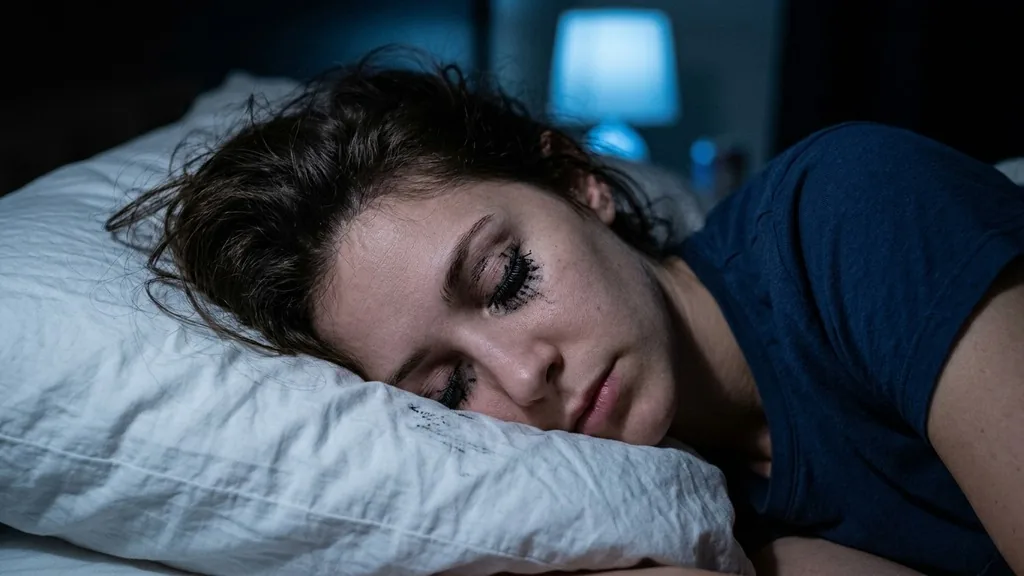
Many people find themselves exhausted at the end of a long day, staring at the bathroom mirror and wondering if skipping their evening skincare routine will really make a difference. When you ask yourself, “can I sleep with mascara on,” the short answer is always no.
While it might seem like a harmless shortcut to wake up with defined lashes, leaving eye makeup on overnight creates a breeding ground for bacteria and structural damage to your delicate hair follicles. Understanding the biology of your eyelids and the chemical composition of cosmetic products is essential for maintaining long-term ocular health and lash longevity.
The Biological Impact of Sleeping in Eye Makeup

The skin around your eyes is the thinnest on your entire body, making it incredibly susceptible to inflammation and damage. When you leave mascara on while sleeping, you are effectively sealing your lash line with a layer of synthetic polymers, waxes, and pigments.
This layer prevents the skin from “breathing” and interferes with the natural shedding of dead skin cells. Throughout the night, your body undergoes a process of cellular repair; by keeping makeup on, you obstruct this process, which can lead to clogged pores and localized irritation.
Furthermore, the mechanical friction caused by tossing and turning against your pillowcase while wearing hardened mascara can cause your eyelashes to become brittle. Eyelashes are essentially hair, and just like the hair on your head, they require hydration and a clean environment to remain flexible. When mascara dries, it loses its suppleness.
If you sleep in it, the lashes become stiff, and the pressure of your face against a pillow can cause them to snap, break, or fall out prematurely. Over time, this habit significantly thins out your natural lash line, making the “shortcut” of sleeping in makeup counterproductive to the aesthetic goals you were trying to achieve in the first place.
The Link Between Mascara and Bacterial Proliferation
One of the most significant risks associated with sleeping in mascara is the potential for bacterial infection. Mascara wands are prime real estate for microorganisms, particularly because they are repeatedly inserted into a dark, moist tube and then applied to the sensitive environment of the eye.
When you leave the product on for eight hours or more, you are creating an extended window for these bacteria to colonize the lash roots. This can lead to conditions like blepharitis—an inflammation of the eyelids—or even more severe bacterial conjunctivitis.
The chemical ingredients in many formulas—such as preservatives, colorants, and thickening agents—are not designed to remain in contact with the cornea or the conjunctiva for extended periods. When these substances migrate into the eye while you sleep, they can cause significant redness, itching, and a gritty sensation. In some cases, the buildup can obstruct the meibomian glands, which are responsible for secreting the oils that keep your eyes lubricated.
If these glands become blocked, it can result in chronic dry eye, a condition that is notoriously difficult and uncomfortable to treat. For more information on the importance of maintaining ocular hygiene, you can visit the American Academy of Ophthalmology for professional guidance on safe makeup removal practices.
Understanding the Mechanics of Lash Breakage
To fully grasp why you should never sleep in mascara, it is helpful to look at the physical state of your lashes. Mascara works by coating the lash shaft in a film-forming polymer. This film is meant to be temporary.
When you leave this film on overnight, the natural movement of your eyelids during REM sleep creates friction. Because the mascara has hardened, it acts like a splint, keeping the lash rigid rather than allowing it to move naturally.
This rigidity is the primary cause of breakage. When a lash is forced to stay straight while your eye is moving, the weakest point of the hair shaft often gives way. If you make a habit of this, you will notice that your lashes appear shorter, sparser, and more prone to thinning over time.
Additionally, the weight of the dried product can pull on the delicate hair follicle. Constant tension on the follicle can eventually lead to traction alopecia, where the hair simply stops growing because the root has been damaged by prolonged stress.
Comparing Removal Methods and Product Types
Not all mascara is created equal, and some formulas are significantly more taxing to remove than others. Waterproof mascara, while excellent for endurance, is particularly notorious for causing damage if left on overnight.
These formulas are designed to resist water, meaning they require oil-based cleansers or dedicated makeup removers to break down the bond between the wax and your lashes. If you go to bed without properly dissolving this bond, you are essentially sleeping with a waterproof seal on your eyelids.
Below is a comparison of different mascara types and the risks associated with failing to remove them properly.
| Mascara Type | Ease of Removal | Risk if Left Overnight |
|---|---|---|
| Waterproof | Low (Requires oil cleanser) | High (Clogs follicles, extreme breakage) |
| Tubing | Medium (Requires warm water) | Moderate (Flaking, mechanical irritation) |
| Volumizing | Medium (Requires micellar water) | High (Heavy buildup, bacterial growth) |
| Natural/Organic | High (Easily washed off) | Low (But still can cause pore congestion) |
Even if you use a “gentler” natural formula, the residue remains an issue. The goal of any nighttime routine should be the total restoration of the skin’s surface. Using a double-cleansing method—starting with an oil-based balm to dissolve the mascara and following up with a gentle foaming cleanser—ensures that no microscopic particles remain trapped at the base of the lashes.
The Myth of “Overnight Mascara” and Aesthetic Shortcuts
There is a persistent myth in the beauty community that wearing mascara to bed helps lashes grow or stay curled. This is scientifically unfounded. In fact, the opposite is true.
Sleeping in makeup is a primary cause of what dermatologists call “sleeping makeup” damage. Your skin, including the eyelids, follows a circadian rhythm that prioritizes repair and regeneration at night. When the skin is coated in cosmetic pigments, the oxygen exchange is restricted, which can lead to a duller complexion and, in the case of the eyes, a higher risk of styes.
A stye occurs when a hair follicle or oil gland becomes infected. By leaving mascara on, you are essentially trapping sweat, natural oils, and environmental pollutants against the eyelid margin, which is the perfect environment for a stye to develop.
If you find yourself frequently waking up with puffy or crusty eyes, your nighttime habits are likely the culprit. Prioritizing a clean face is not just about vanity; it is a fundamental aspect of dermatological health that prevents long-term skin and eye issues.
Establishing a Foolproof Nighttime Routine
If you find that exhaustion is the main reason you are tempted to sleep in your makeup, you need to simplify your routine so that it becomes an automated habit. The friction of removing makeup is often what people dread, but if you use the right products, the process should take less than sixty seconds.
Start by keeping a bottle of micellar water and a stack of reusable cotton rounds on your bedside table. If you are too tired to walk to the sink, you can at least perform a quick wipe to remove the bulk of the product.
- Use an oil-based makeup remover to break down waterproof polymers without tugging.
- Gently press the soaked pad against your closed eye for 15 seconds to allow the product to dissolve.
- Wipe downward in the direction of the lash growth to prevent breakage.
- Follow with a mild cleanser to remove any oily residue that could clog pores.
- Apply a lash conditioning serum after cleansing to help repair any structural stress.
- Never rub your eyes aggressively, as this damages the skin elasticity around the orbital bone.
By integrating these steps into your evening, you transform a chore into a restorative ritual. Investing in high-quality, gentle cleansers will make the process feel less like a burden and more like a necessary act of self-care. Your lashes will reflect this consistency by becoming stronger, more resilient, and healthier over time, ultimately requiring less makeup in the long run.
Topical Gaps: Addressing Common Concerns
Many people wonder if they can “get away” with sleeping in mascara just once or twice. While the world won’t end if you do it on a rare occasion, it is a bad habit to cultivate.
The cumulative effect of sleeping in makeup is what causes the most damage. If you do it once, you might experience mild irritation, but if you do it every night for a week, you are significantly increasing your risk of an infection or permanent lash loss.
Another common question involves the use of eyelash extensions versus traditional mascara. If you have extensions, sleeping in mascara is even more dangerous because the product can cause the adhesive to break down, leading to premature shedding of both the extensions and your natural lashes. The residue from the mascara also gets trapped between the extensions and your eyelid, making it nearly impossible to clean properly without professional tools.
Finally, consider the long-term impact on your skin’s collagen production. The skin around the eyes is prone to fine lines. The constant tugging required to remove dried, crusty mascara the next morning can physically stretch the skin, accelerating the appearance of aging.
By removing your makeup every night, you are protecting not just your eyes, but the youthful appearance of the skin surrounding them. Consistency is the most important factor in beauty and health; by making the conscious choice to remove your eye makeup every single night, you are investing in the long-term vitality of your eyes.
Frequently Asked Questions
Is it okay to sleep in mascara just one night?
While one night of sleeping in mascara is unlikely to cause permanent damage, it is strongly discouraged. It increases the risk of bacterial infection, clogs the oil glands in your eyelids, and leaves your lashes brittle, making them significantly more prone to breakage and shedding the following morning.
Can sleeping in mascara cause permanent lash loss?
Yes, chronic sleeping in mascara can lead to traction alopecia. The weight of the dried product combined with the mechanical friction against your pillow causes lashes to snap at the base or pull out prematurely. Over time, this can cause the lash line to become noticeably thinner and sparse.
What is the best way to remove stubborn mascara?
The most effective method is using an oil-based cleanser or a dedicated bi-phase makeup remover. These products dissolve the waxes and polymers in mascara, allowing you to wipe the product away gently without tugging on your lashes or the delicate skin of your eyelids.
Does mascara expire?
Yes, mascara has a very short shelf life, typically three months after opening. Using expired mascara increases the risk of eye infections because the preservatives in the formula lose their efficacy, allowing bacteria to thrive inside the tube and on the wand every time you apply it.


