

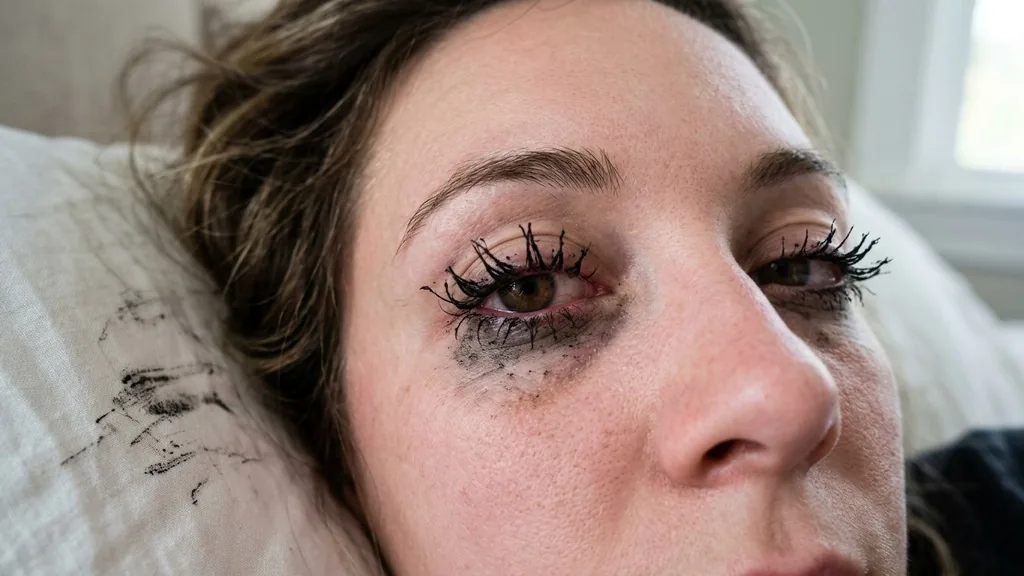
Falling into bed after a long day without washing your face is a scenario almost everyone has experienced. While it might seem like a minor oversight, what happens if u sleep with mascara is more than just a messy pillowcase issue.
The delicate skin around your eyes and the eyelashes themselves are highly sensitive to the chemicals and physical weight of cosmetic products. When you leave eye makeup on overnight, you aren’t just letting it sit; you are creating a breeding ground for bacteria and physical trauma to your hair follicles.
Understanding the biological impact of this habit is essential for maintaining long-term eye health. Mascara is designed to coat, darken, and lengthen lashes, but these formulas are not intended to remain in contact with your skin or hair for eight hours or more.
By neglecting to remove your makeup, you interfere with the natural shedding cycle of your eyelashes and the breathing process of your eyelid skin. This article explores the physiological consequences of keeping mascara on while you sleep and provides actionable steps to ensure your eye care routine remains effective.
The Physical Toll on Your Eyelashes
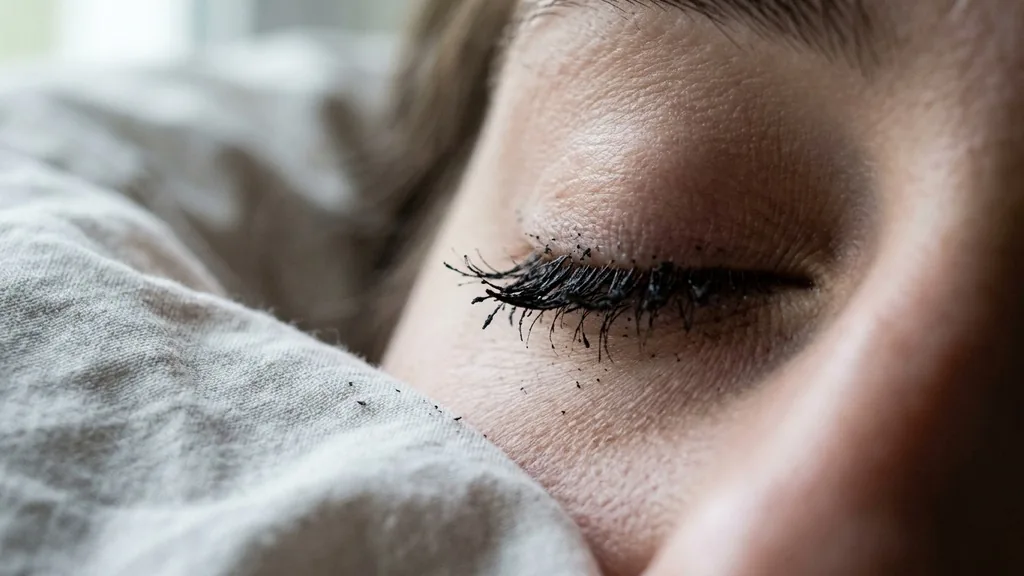
When you sleep with mascara on, the primary risk is that the product hardens as it dries. Mascara formulas typically contain waxes, pigments, and film-forming polymers that provide structure to your lashes. Once this product sets, it becomes brittle.
As you toss and turn on your pillow, the friction causes the stiffened lashes to rub against the fabric. This mechanical stress can lead to breakage, making your lashes appear thinner, shorter, and more prone to shedding prematurely.
Beyond simple breakage, the weight of the product can physically weigh down the hair follicle. Over time, this constant pressure, combined with the lack of hydration that comes from not cleansing the area, weakens the root. You might notice that your lashes look sparse after a few days of skipping your nighttime routine.
It is a common misconception that lashes are resilient enough to handle synthetic coatings indefinitely. In reality, they require a clean environment to remain flexible and strong. If you continue to sleep with makeup on, you are essentially asking your lashes to support a heavy, drying weight for hours on end, which contradicts the natural restorative processes that occur while you rest.
Bacterial Proliferation and Eye Infections
The area around your eyes is one of the most sensitive parts of the body, and it is highly susceptible to infections when hygiene standards slip. What happens if u sleep with mascara is that you provide a stable, nutrient-rich surface for bacteria to multiply.
Mascara wands are notorious for harborning microorganisms, and once the product is applied to your lashes, it can trap dust, debris, and pollutants from the air. When you leave this mixture on your eyes overnight, you create an ideal environment for these pathogens to thrive.
This can lead to conditions such as blepharitis, which is an inflammation of the eyelid, or even more severe conjunctivitis. The buildup of product can also block the Meibomian glands, which are responsible for secreting the oils that keep your eyes lubricated. If these glands become clogged, you may experience styes or chalazions, both of which are painful and can take weeks to resolve.
Your eyes rely on a delicate balance of moisture and protection; introducing foreign cosmetic substances and the bacteria they attract disrupts this balance significantly. According to the American Academy of Ophthalmology, proper removal of eye makeup is a critical step in preventing ocular irritation and infection.
Skin Irritation and Premature Aging
The skin around your eyes is significantly thinner than the skin on the rest of your face. Because it lacks the same density of oil glands, it is much more prone to dryness and sensitivity.
When you leave mascara on, it doesn’t just stay on your lashes; it often flakes off onto the skin beneath your eyes. This constant contact with chemical pigments and preservatives can trigger contact dermatitis, resulting in red, itchy, or swollen skin.
Furthermore, the act of rubbing your eyes in the morning to remove the stubborn, dried-on makeup causes physical trauma to the delicate dermal layer. This repetitive stretching can contribute to the formation of fine lines and wrinkles earlier than they might otherwise appear.
By failing to remove eye makeup before bed, you are essentially exposing your skin to oxidative stress from environmental pollutants that have stuck to the mascara throughout the day. This prevents your skin from repairing itself effectively during your sleep cycle, leading to a duller complexion and increased sensitivity over time.
The Impact on Eyelash Growth Cycles
Eyelashes, much like the hair on your head, follow a distinct growth cycle consisting of the anagen (growth), catagen (transition), and telogen (resting) phases. During the night, your body focuses on repair and growth.
When you leave mascara on, you physically hinder the lashes’ ability to move and reset. The dried product acts as a barrier, potentially clogging the hair follicles at the base of the lash line.
If the follicle is obstructed by old product, the new lash trying to emerge may become ingrown or weak. Additionally, the lack of proper cleansing means that the natural oils produced by your skin cannot reach the lashes, leaving them brittle and prone to breakage.
This cycle of neglect can lead to a noticeable decrease in lash density. Many people who struggle with thin or fragile lashes find that simply changing their habit of sleeping with makeup on leads to a visible improvement in the quality and strength of their lashes within just a few weeks.
Comparing Risks of Different Mascara Types
Not all mascaras are created equal, and the risk level can vary depending on the formula you choose. However, the overarching rule remains the same: no mascara is designed for overnight wear. The table below outlines how different types of mascara can affect your eye health when left on during sleep.
| Mascara Type | Primary Risk Factor | Impact on Lashes/Eyes |
|---|---|---|
| Waterproof | Difficult removal | Causes extreme friction and lash loss during cleaning |
| Volumizing | Heavy residue | Increases weight on follicles and risk of clogging |
| Tubing | Film-forming polymers | Can cause brittleness and snapping of the lash shaft |
| Natural/Organic | Preservative sensitivity | Higher risk of bacterial growth due to fewer stabilizers |
Even with “gentle” or “natural” formulas, the presence of any foreign substance on the lashes overnight is problematic. Waterproof mascaras are particularly dangerous because they require more aggressive scrubbing to remove, which often results in pulling out healthy lashes along with the product. Regardless of the type, the goal should always be to return to a clean, bare lash state before your head hits the pillow.
Common Mistakes When Removing Mascara
Many individuals realize they need to remove their makeup but fail to do so correctly, leading to further damage. One of the most common mistakes is using harsh face wipes or cotton rounds that require significant rubbing. The skin around the eye is incredibly fragile; tugging at it can cause long-term damage, including sagging and the appearance of tired, dark circles.
Another mistake is using the wrong type of cleanser. Using a standard foaming face wash to remove waterproof mascara is rarely effective. Instead, you need an oil-based cleanser or a dedicated bi-phase makeup remover that can break down the waxes and polymers without requiring you to scrub.
If you find yourself having to pull at your lashes to get the mascara off, you are likely using a product that is too difficult to remove or a cleanser that isn’t powerful enough. The process should be gentle, involving a soaking period where the cleanser sits on the lashes to dissolve the pigment before you wipe it away.
Steps for a Healthy Nightly Eye Routine
To avoid the negative outcomes associated with sleeping in makeup, you need a consistent and gentle nighttime routine. Consistency is the key to preventing long-term damage. Follow these steps to ensure your lashes and the surrounding skin stay healthy and vibrant:
- Start with a high-quality oil-based cleanser or micellar water specifically formulated for eye makeup.
- Soak a clean, soft cotton round or a reusable microfiber pad with the cleanser and hold it against your closed eyelid for at least 30 seconds.
- Gently press down to allow the product to dissolve the mascara, then swipe downwards following the natural direction of the lashes.
- Avoid rubbing side-to-side, as this encourages breakage and skin irritation.
- Use a clean Q-tip dipped in makeup remover to get any remaining residue stuck between the lash roots.
- Follow up with a gentle, non-irritating facial cleanser to remove any remaining oil or debris.
- Apply a hydrating eye cream to replenish the moisture lost during the day.
By integrating these steps into your daily life, you remove the risk of overnight damage and provide your skin with the opportunity to recover from the stress of the day.
Addressing Frequently Asked Questions
It is common to wonder if a single night of sleeping in makeup will cause irreparable harm. While one night is unlikely to cause a permanent infection or significant lash loss, it does set a bad precedent. The cumulative effect of these “one-time” occurrences is where the real damage lies.
Is it okay if I sleep with mascara on for one night?
While one night is unlikely to cause a major infection, it is still discouraged. Sleeping with mascara on causes the product to harden, leading to potential lash breakage, irritation, and clogged follicles. It is always better to take the two minutes required to remove it.
What should I do if I accidentally slept with mascara on?
If you wake up with mascara still on, remove it as soon as possible using a gentle, oil-based cleanser. Do not scrub hard to remove the flakes. Once clean, apply a soothing eye cream or a cold compress to calm any irritation around the eyelids.
What mascara can you sleep in?
There is no mascara currently on the market that is designed to be slept in. Even if a brand claims to be “gentle” or “nourishing,” all mascaras contain pigments and polymers that can clog pores, harbor bacteria, and cause physical damage to the lashes when left on overnight.
Does sleeping with mascara on cause dark circles?
Yes, it can. Sleeping with makeup on can irritate the skin, leading to inflammation and swelling, which often manifests as dark, puffy circles. Furthermore, the pigment from the mascara can stain the delicate skin under the eye if it flakes off and is not properly cleaned.
Can I just use water to remove mascara?
Water is generally ineffective at breaking down the waxes and polymers found in most mascaras. Using only water will often force you to rub your eyes aggressively, which is the primary cause of lash loss and skin damage. Always use a dedicated makeup remover for best results.
Is there a long-term risk to my vision?
While the risk to your actual vision is low, the risk to your eye health is significant. Chronic irritation from sleeping in makeup can lead to recurrent styes, blepharitis, and dry eye syndrome, all of which can affect your comfort and overall eye health over time.


