

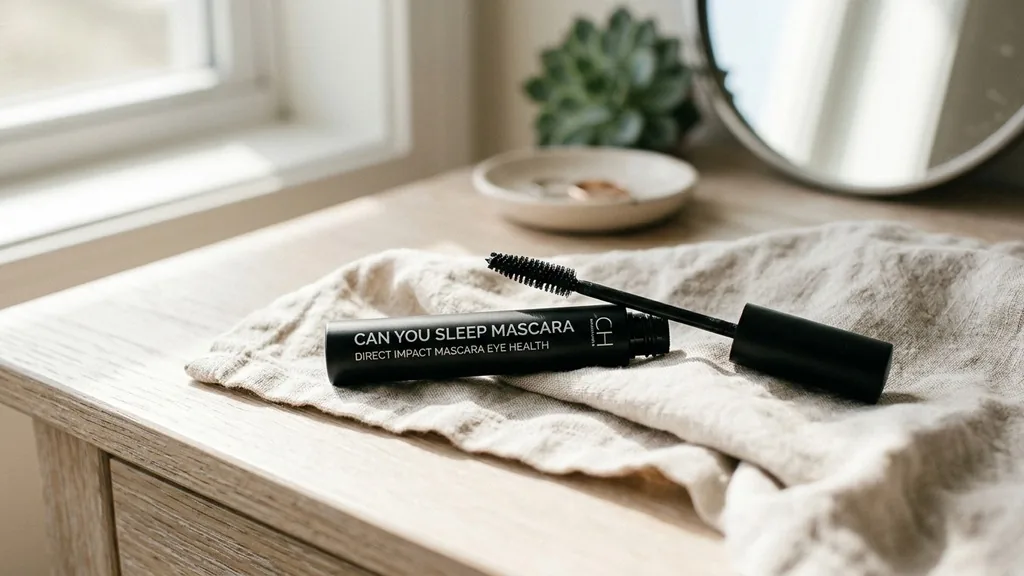
We have all been there. You have had an exhausting day, you finally collapse onto your bed, and the thought of heading to the bathroom to wash your face feels like an insurmountable chore. The temptation to just drift off with your makeup intact is powerful.
However, when it comes to the question of can you sleep with mascara on, the consensus among dermatologists and optometrists is clear: it is a habit you should avoid at all costs. While skipping a nightly cleanse once might not cause immediate, catastrophic damage, making it a regular practice invites a host of issues that range from mild discomfort to serious infections.
The Direct Impact of Mascara on Eye Health

Sleeping with mascara on poses a direct threat to the delicate structures of your eyes. Mascara is designed to coat lashes in a pigment-rich, often waxy or polymer-based formula that adheres firmly to the hair. When you leave this product on while you are sleeping, those hardened fibers act like sandpaper against your eyelids and the surface of your eye.
As you toss and turn, the dried mascara flakes off, potentially falling into the conjunctival sac—the space between your eyelid and eyeball. This can cause significant irritation, redness, and even microscopic scratches on the cornea known as corneal abrasions.
Furthermore, your eyes use the time you are asleep to flush out debris and recover from the day’s environmental stressors. By keeping a layer of chemical-laden product on your lashes, you are effectively blocking this natural recovery process.
The ingredients in many mascaras, which may include preservatives, waxes, and synthetic dyes, are not intended to sit against the sensitive skin of the eyelid for eight hours at a time. The longer the product stays in contact with your skin, the higher the likelihood of a localized allergic reaction or contact dermatitis, which can leave your eyelids swollen, itchy, and painful the following morning.
Understanding the Risk of Bacterial Proliferation
The environment around your eyes is naturally home to a small population of bacteria. When you fail to remove your makeup, you create an ideal breeding ground for these microorganisms.
Mascara tubes are notorious for harboring bacteria, especially as they age, and applying that formula to your lashes and then leaving it on overnight allows those bacteria to multiply undisturbed. This buildup is a primary overnight cause of bacterial conjunctivitis, commonly known as pink eye.
Beyond simple infections, there is the risk of blocked meibomian glands. These glands, located along the lash line, are responsible for secreting the oils that keep your tears from evaporating too quickly.
When mascara residue clogs these openings, it can lead to styes or chalazia—painful, inflamed bumps that are difficult to treat and can sometimes require medical intervention. The persistence of these blockages can eventually lead to chronic dry eye syndrome, a condition that fundamentally alters your long-term ocular comfort and health.
The Relationship Between Mascara and Lash Health
If you value the length and fullness of your natural lashes, you have a strong incentive to clean your eyes every night. Mascara works by stiffening the lashes to hold a curl and add volume. When this formula dries, it makes the lashes rigid and brittle.
During the night, when you rub your eyes against your pillow, those stiff, coated lashes are subjected to mechanical stress. Instead of bending flexibly, they are prone to snapping off at the base or breaking mid-shaft.
Frequent breakage leads to thinning lashes over time. Many people who complain that their lashes are “falling out” or becoming sparse are actually experiencing the cumulative damage of improper makeup removal.
By failing to cleanse, you are essentially creating a cycle of damage that prevents your lashes from reaching their full growth potential. Proper care, which includes gentle cleansing, allows the lashes to remain supple and healthy, ensuring that you don’t lose them prematurely to breakage or follicle strain.
What Happens to Your Skin When Makeup Remains
Your facial skin is a living organ that needs to breathe, shed dead cells, and regulate oil production throughout the night. Applying sleeping makeup of any kind, but especially heavy eye makeup, interferes with this cycle.
When you leave products on, you effectively seal your pores. This can lead to a buildup of sebum and debris, which often results in breakouts around the eye area or the development of milia—small, white, hard cysts that form when keratin becomes trapped under the skin.
Beyond the physical blockage, the skin around the eyes is the thinnest on the entire body. It is highly porous and sensitive. Leaving chemical residues on this area for extended periods can cause premature aging.
The breakdown of collagen and elastin is accelerated by the oxidative stress caused by environmental pollutants that become trapped in the sticky mascara film. If you want to maintain a youthful, vibrant appearance, consistency in your skincare routine is not just a suggestion; it is a biological necessity for healthy cellular turnover.
Comparing One-Time Lapses vs. Chronic Habits
It is important to distinguish between a single, accidental lapse in hygiene and a long-term, chronic habit. While the medical advice is always to wash your face, the human reality is that everyone occasionally forgets. The following table illustrates the potential outcomes based on the frequency of leaving eye makeup on.
| Frequency | Potential Consequence | Severity Level |
|---|---|---|
| One-time lapse | Minor irritation, dry eyes, pillow stains | Low |
| Occasional (weekly) | Increased lash breakage, clogged pores | Moderate |
| Chronic (every night) | Styes, conjunctivitis, chronic dry eye | High |
As shown in the table, the risk compounds significantly over time. While you might wake up with nothing more than “raccoon eyes” after a single night of sleeping in makeup, the cumulative impact of doing this every night is what leads to clinical conditions.
The body has a threshold for how much irritation it can compensate for before inflammation sets in. By the time you notice a painful stye or persistent redness, you have already moved past the point of minor inconvenience and into the territory of requiring medical attention.
Addressing Topical Gaps: Can You Nap in Mascara?
A common question that often goes unaddressed is whether a short nap is different from an eight-hour sleep. While a 20-minute nap is significantly less damaging than a full night’s rest, the principle remains the same.
The primary issue with sleeping mascara is the contact time and the potential for friction. If you are taking a nap, you are likely resting your head against a surface, which increases the likelihood of the product smudging or pushing into the eye.
If you find yourself frequently napping, it is worth keeping a pack of gentle, oil-free makeup remover wipes on your nightstand. Even a quick swipe to remove the bulk of the product can save your lashes and your skin from unnecessary stress. Do not assume that a shorter duration makes the practice “safe.”
It simply makes it “less harmful.” If you have sensitive eyes or are prone to styes, even a 30-minute nap with mascara can be enough to trigger an inflammatory response in your meibomian glands.
Effective Methods to Remove Mascara Properly
The best way to avoid the risks associated with sleeping in makeup is to have an efficient, non-irritating removal process. Many people find that they leave their makeup on simply because the removal process is too difficult or causes them to pull at their lashes.
To remove mascara effectively, you should use a product specifically formulated to break down waxes and polymers. Oil-based cleansers or micellar waters are generally the most effective options.
- Apply a small amount of cleanser to a soft cotton pad or a reusable bamboo cloth.
- Gently press the pad against your closed eyelid for 15 to 30 seconds to allow the product to dissolve the mascara.
- Wipe downward in a single, smooth motion—avoid scrubbing back and forth.
- Use a clean cotton swab dipped in micellar water to remove any remaining residue along the tightline.
- Follow up with a gentle foaming cleanser to ensure no oily film remains on the skin.
By using this “press and lift” technique, you minimize the mechanical friction that causes lash loss. You also ensure that you are not pushing makeup particles into the eye itself.
If you find your current mascara is nearly impossible to take off without scrubbing, consider switching to a “tubing” mascara. These formulas wrap each lash in a polymer tube that slides off easily with warm water and gentle pressure, making the nightly removal process much faster and safer for your lash health.
The Long-Term Consequences of Neglect
When you ignore the health of your eyes, you are setting yourself up for long-term complications that may not be reversible. Chronic inflammation of the eyelids, often caused by poor makeup hygiene, can lead to blepharitis. This is a condition characterized by red, swollen, and itchy eyelids.
It is notoriously difficult to manage and can persist for years if the root cause is not addressed. According to the American Academy of Ophthalmology, maintaining good eyelid hygiene is the single most important factor in preventing and managing this chronic condition.
Beyond the eyes themselves, the skin around the eyes is the first area to show signs of neglect. If you constantly leave makeup on, the skin loses its elasticity and can become darkened or hyper-pigmented.
The constant irritation triggers the body’s inflammatory response, which can lead to puffiness and dark circles that are not related to sleep deprivation but rather to the trauma of the skin. Investing five minutes in your nightly routine is an investment in your long-term appearance and ocular function.
Frequently Asked Questions
Is it okay if I sleep with mascara on for one night?
While one night is unlikely to cause permanent damage, it is still discouraged. You may experience temporary eye irritation, blurred vision upon waking, or minor lash breakage. It is best to avoid it, but if you do, clean your eyes thoroughly as soon as you wake up.
What is the best way to remove mascara without damaging my lashes?
Use an oil-based cleanser or micellar water. Soak a cotton pad, press it against your lashes for 30 seconds to dissolve the product, and gently wipe downward. Avoid scrubbing or pulling, as this is the primary cause of lash breakage and damage to the hair follicles.
Can sleeping in mascara cause styes?
Yes. Leaving mascara on overnight can clog the meibomian glands along your lash line. When these oil-producing glands become blocked, it creates an environment where bacteria can thrive, leading to the development of painful, swollen bumps known as styes or chalazia.
Does waterproof mascara cause more damage if left on?
Yes, waterproof mascara is much harder to remove and contains stronger polymers that are more likely to cause dryness and irritation. If you accidentally sleep in waterproof mascara, it is even more critical to use an oil-based remover the next morning to dissolve the stubborn, water-resistant film.


