

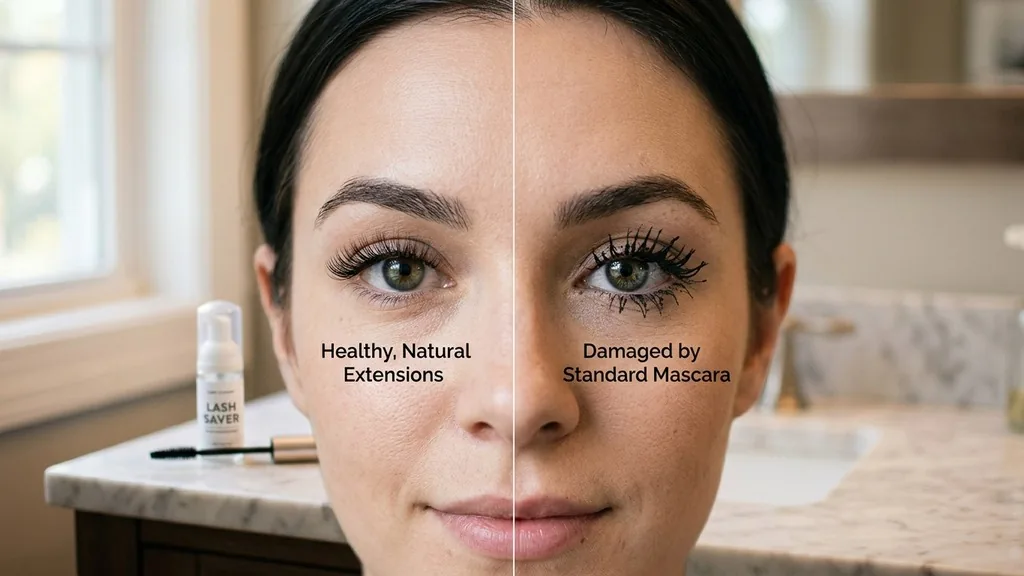
Many people invest in professional lash services to simplify their morning routines, yet the temptation to reach for a tube of makeup often remains. If you are wondering, can you put mascara on eyelash extensions, the short answer is that while it is technically possible, it is rarely recommended by professionals.
Applying traditional cosmetic products to synthetic fibers frequently leads to premature shedding, clumping, and damage to your natural growth. Understanding the chemistry behind your lash adhesive is the key to maintaining your look for as long as possible.
Why Standard Mascara Harms Your Lash Extensions
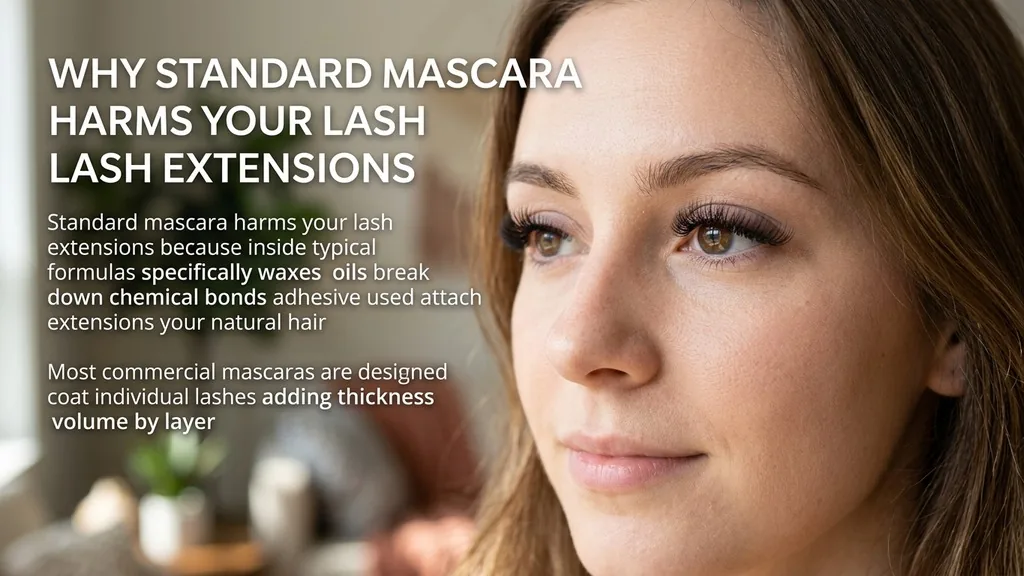
Standard mascara harms your lash extensions because the ingredients inside typical formulas—specifically waxes and oils—break down the chemical bonds of the adhesive used to attach the extensions to your natural hair. Most commercial mascaras are designed to coat individual lashes, adding thickness and volume by layering dense, waxy pigments. When these ingredients settle onto synthetic fibers, they create a heavy, sticky residue that is nearly impossible to remove without aggressive scrubbing.
Because eyelash extensions are applied using a semi-permanent cyanoacrylate-based adhesive, any oily substance acts as a solvent. Even if you believe you are applying the product only to the tips, the natural movement of your eyelids throughout the day causes the product to migrate toward the lash line.
This migration weakens the bond, causing your extensions to fall out much faster than they would otherwise. Furthermore, the act of removing waterproof or high-pigment mascara requires rubbing the eye area, which exerts physical stress on the base of the extensions, leading to breakage or pulling.
The Risk of Bacterial Buildup and Eye Health
Applying makeup over your lash set increases the risk of bacterial buildup and can lead to serious eye infections. Because extensions are dense and provide more surface area than natural lashes, they trap debris, dust, and old makeup much more effectively.
If you use a standard mascara, it becomes trapped at the base of the extension where the lash meets the eyelid. This accumulation creates a breeding ground for bacteria, which can lead to conditions like blepharitis or styes.
You should prioritize eye hygiene above all else. When you wear mascara on top of extensions, you are essentially creating a layer of grime that is difficult to rinse away. Even with a gentle cleanser, the fibers of the extensions act like a mesh, holding onto the makeup particles.
Over time, this buildup causes the lashes to look dull and clumpy. If you find your eyes feel itchy, red, or irritated, it is almost certainly a result of improper cleaning habits combined with the use of unsuitable makeup products. You can learn more about eyelash safety standards to ensure you are protecting your ocular health while maintaining your aesthetic goals.
Selecting the Right Formula If You Must Use Mascara
If you find yourself in a situation where you absolutely must use a product, you need to be extremely selective. You cannot use just any tube from the drugstore.
The only type of product that is considered acceptable for use on lash extensions is a specifically formulated water-based mascara. These products lack the heavy oils and waxes found in standard formulas, making them less likely to dissolve your adhesive.
However, even with water-based options, you should only apply the product to the very tips of the extensions. Avoid the base entirely.
Think of the mascara as a way to darken the ends rather than a tool to build massive volume. If you are looking for more volume, it is much safer to return to your lash technician for a “fill” or a volume set rather than attempting to force your current set to look thicker with makeup.
| Feature | Standard Mascara | Water-Based Mascara |
|---|---|---|
| Oil Content | High (Damages adhesive) | Zero or Minimal |
| Removal Difficulty | High (Requires scrubbing) | Low (Rinses with water) |
| Adhesive Impact | Dissolves bond | Safe for bond |
| Clumping Risk | Very High | Low |
Techniques for Safe Application and Removal
If you decide to wear mascara, your application technique is just as important as the product choice. You should never apply the wand directly to the base of the lash. Instead, use a clean spoolie brush to transfer a small amount of product from the wand onto the brush first.
Then, gently brush the product through the tips of your extensions. This method gives you better control and prevents you from accidentally clogging the lash line.
When it is time to remove the product, you must use an oil-free cleanser. Use a soft, lint-free brush or a clean finger to gently massage the cleanser into the lashes using downward strokes. Never rub your eyes side-to-side, as this causes the extensions to twist and tangle.
After cleansing, rinse thoroughly with cool water and pat dry with a lint-free towel. Following this process strictly will minimize the damage, though it will still not be as beneficial for the longevity of your set as avoiding mascara entirely.
When Your Lashes Look Sparse or Thin
Many clients reach for mascara because they feel their extensions are starting to look “gappy” or thin. This is a natural part of the growth cycle. As your natural lashes shed, the extensions attached to them fall out as well.
Instead of masking this with makeup, you should schedule your maintenance appointments consistently. Most technicians recommend coming in every two to three weeks to replace the extensions that have shed.
If you feel your set is consistently looking thin, discuss it with your stylist. They might be able to adjust the “mapping” of the set or use a different diameter of fiber to provide more density without needing extra products. Often, the desire to use mascara is a sign that the current style of lash extension is not providing the look you desire, and a consultation for a different style—such as a hybrid or mega-volume set—is a better long-term solution than applying makeup.
Common Mistakes That Shorten Lash Life
Beyond the use of mascara, several other daily habits contribute to the degradation of your extensions. One of the most common mistakes is using cotton pads or Q-tips near the eyes.
The tiny fibers in cotton can snag on the base of the extensions, pulling them out or causing them to sit at awkward angles. Always use synthetic, lint-free applicators if you need to touch up around your eyes.
Another major error is sleeping on your face. Even if you don’t wear mascara, the friction from your pillowcase can crush the extensions and cause them to lose their curl or fall out prematurely. Investing in a silk or satin pillowcase can significantly reduce this friction.
Additionally, avoid getting your lashes wet for at least 24 hours after an appointment, as this allows the adhesive to cure completely. If the glue is not fully cured, any moisture—even from sweat or steam—can cause the adhesive to turn white or brittle.
Addressing Myths About Lash Growth and Mascara
There is a persistent myth that wearing mascara on extensions helps them “blend” better or grow faster. This is entirely false. Mascara does nothing to promote the growth of your natural lashes; in fact, the weight of the product can actually cause your natural lashes to become brittle.
Your natural lashes need space to breathe and grow. By coating them in heavy, synthetic pigments, you are obstructing the natural follicle and potentially trapping oils and sweat against the skin.
Furthermore, the idea that mascara makes extensions look more natural is often a misconception. Extensions are designed to mimic the look of perfectly applied, high-quality mascara without the need for the product.
If your extensions look like they need mascara to “finish” the look, it is likely that the extensions themselves are too thin or too short. If you find yourself constantly reaching for the mascara wand, it is time to have an honest conversation with your technician about your expectations and the volume you want to achieve.
Topical Gaps: Managing Allergic Reactions and Sensitivity
One frequently overlooked aspect of this topic is how mascara can exacerbate existing sensitivities. If you have had a mild reaction to the adhesive used for your extensions, applying mascara can make the situation much worse. Mascara often contains preservatives and fragrances that can cause contact dermatitis, especially when trapped against the delicate skin of the eyelid by the extensions.
If you notice puffiness or swelling, you should immediately stop using all eye makeup and consult a professional. Sometimes, the issue is not the mascara itself, but the fact that the mascara is trapping allergens or irritants against your skin.
Keeping the eye area completely clear of makeup is the most effective way to identify if your sensitivity is caused by the mascara or the lash adhesive. Always prioritize the health of your eyelids over the aesthetic impact of adding extra pigment.
FAQ Section
- Can I use waterproof mascara on my lash extensions? No, you should never use waterproof mascara. It requires oil-based removers to break down, which will immediately dissolve the adhesive holding your extensions in place and cause them to fall out prematurely.
- What is the best way to clean my lashes if I do use mascara? Use an oil-free, foaming lash cleanser and a soft, lint-free brush. Gently massage the lashes from the base to the tips using downward strokes, then rinse with cool water. Avoid rubbing your eyes or using cotton pads.
- Does using mascara on extensions make them fall out faster? Yes, using standard mascara significantly reduces the lifespan of your extensions. The waxes and oils in the formula break down the adhesive bond, while the physical effort required to remove the makeup puts unnecessary stress on your natural lashes.
- Can I apply mascara to just the tips of my extensions? While it is safer than applying it to the base, it is still not recommended. Even when applied to the tips, the product can transfer and cause clumping, which makes it harder to maintain proper hygiene and leads to long-term damage to the extensions.


