

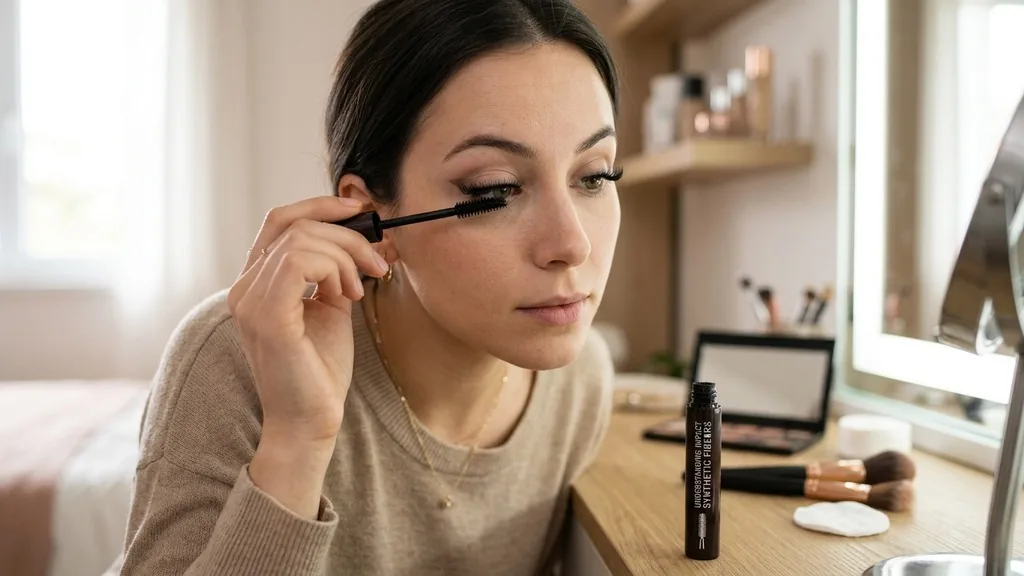
Deciding whether you should apply mascara to your false eyelashes is a common dilemma for anyone looking to perfect their eye makeup. Many people wonder if adding a coat of product will help blend their natural lashes with the falsies, while others fear damaging the delicate fibers of the strips. The short answer is that it depends entirely on the type of lashes you are using and the look you want to achieve.
While some high-quality synthetic lashes can handle a light application, others will lose their shape and texture instantly. Understanding the nuances of lash maintenance and application techniques will help you achieve a flawless finish without ruining your investment.
Understanding the Impact of Mascara on Synthetic Fibers
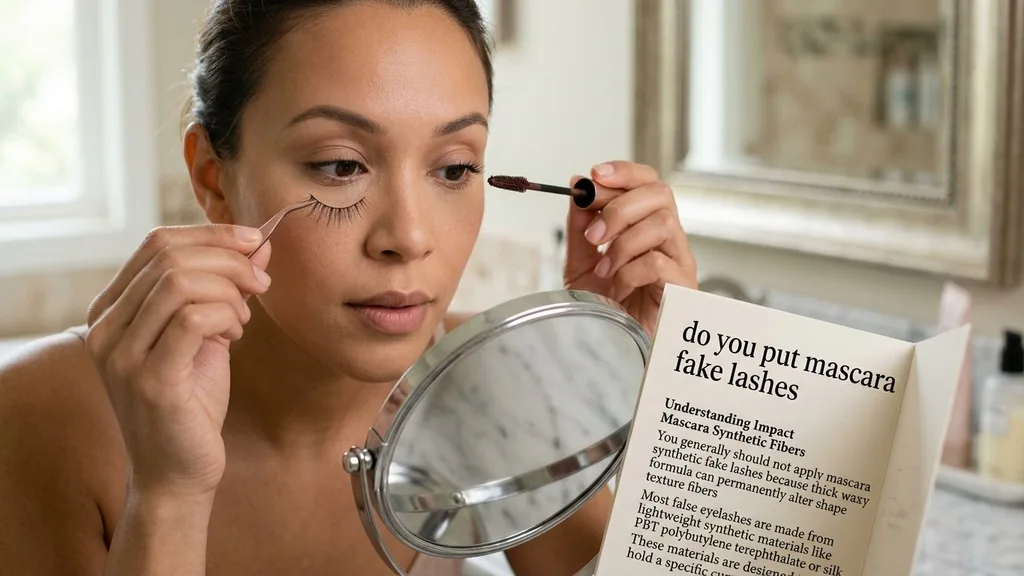
You generally should not apply mascara to synthetic fake lashes because the thick, waxy formula can permanently alter the shape and texture of the fibers. Most false eyelashes are made from lightweight synthetic materials like PBT (polybutylene terephthalate) or silk. These materials are designed to hold a specific curl and maintain a soft, fluttery appearance.
When you brush a heavy, oil-based or waterproof mascara through these delicate strands, the product accumulates, causing the lashes to clump together. Once the product dries, it creates a stiff, unnatural look that is difficult to reverse.
Unlike natural hair, which has porous cuticles that absorb pigment, synthetic fibers are smooth and non-porous. The mascara simply sits on the surface, weighing down the band and potentially pulling the lashes away from your eyelid prematurely.
If you are using high-end, reusable false lashes, keeping them clean is the primary key to longevity. Every time you add a layer of mascara, you shorten the lifespan of the pair. You would then need to clean them with an oil-free makeup remover or micellar water, which can be tedious and risky for the delicate lash band.
If you scrub too hard to remove the dried clumps, you risk tearing the band or causing the individual lash hairs to shed. Most professional makeup artists recommend avoiding mascara on the falsies themselves to ensure they look fresh for multiple wears. If you feel like your eyes need more definition, it is usually better to invest in a style of false lash that offers the volume or length you desire rather than trying to modify a thinner pair with product.
The Correct Order of Operations for Lash Application
The most effective way to integrate your natural lashes with falsies is to apply mascara to your own lashes before you attach the false ones. By coating your natural lashes with a thin layer of mascara first, you create a sturdy, dark base that helps the false lashes grip and blend more naturally.
This process ensures that your natural hair is already lifted and tinted, minimizing the visibility of the gap between your real lashes and the false ones. Once the mascara on your natural lashes is completely dry, you can proceed with applying your adhesive and setting the false lash band as close to your lash line as possible.
Waiting for the mascara to dry is a critical step that many beginners overlook. If you attempt to apply the glue while the mascara is still wet, the adhesive will struggle to bond with the skin, and the false lash may slide around or fail to stick entirely. Furthermore, applying mascara after the falsies are in place often leads to a messy application.
You might accidentally get mascara on the inner corners of the false lashes or create clumps that are impossible to fix once the glue is set. By following the “mascara first, falsies second” rule, you maintain the pristine condition of your false lashes while achieving a seamless, professional appearance. This approach is widely considered the best practice by experts who study the safety and care of eye cosmetics to prevent irritation.
Differentiating Between Strip Lashes and Lash Clusters
Not all false lashes are created equal, and your approach to using mascara should change based on the specific product you choose. Strip lashes are designed to be applied as a single unit and are usually meant to be worn for a single day or event. Because they are meant to be removed at night, some people might argue that it doesn’t matter if you ruin them with mascara.
However, if you want to reuse those strips, you must avoid applying product to them. Clusters, on the other hand, are smaller segments of lashes that are often applied beneath the natural lash line for a more “extension-like” look.
When using lash clusters, the rules shift slightly. Because these are often marketed as semi-permanent or “DIY extension” systems, they are frequently designed to be worn for several days. In this context, you might be tempted to apply mascara to blend the clusters with your natural growth.
However, this often leads to a buildup of debris that can harbor bacteria near the lash line. If you are wearing clusters for an extended period, it is much healthier for your natural lashes to skip the mascara entirely. Instead, focus on choosing a cluster style that matches the density of your natural lashes so that no blending is required.
| Lash Type | Mascara Recommended? | Maintenance Difficulty |
|---|---|---|
| Synthetic Strip Lashes | No | Low (if kept clean) |
| Silk/Mink Strip Lashes | No | Moderate |
| DIY Lash Clusters | Avoid | High (requires hygiene) |
| Magnetic Lashes | No | Low |
Managing Magnetic Lashes and Mascara
Magnetic lashes are an outlier in the world of false eyelashes because they rely on metallic liners or tiny magnets rather than traditional eyelash glue. When using magnetic lashes, you should absolutely avoid applying mascara to the magnetic strips.
The magnets are precisely calibrated to click together or stick to the magnetic eyeliner; adding a layer of mascara between the magnet and your natural lash line creates a barrier that weakens the magnetic connection. If the magnets cannot make direct contact, the lashes will shift, droop, or fall off unexpectedly throughout the day.
If you find that your magnetic lashes don’t look natural enough on their own, the solution is once again to apply mascara to your natural lashes before you apply the magnetic liner. This provides the necessary volume and darkness to help your natural lashes blend into the magnetic set.
It is essential to ensure that your mascara is completely dry before applying the magnetic eyeliner, as the liner can smudge if it comes into contact with wet or tacky mascara. By keeping the mascara strictly on your natural lashes and the magnets clean and free of product, you ensure a secure hold and a polished look that lasts from morning until night.
Addressing the Common Myth of Blending
A persistent myth in the beauty community is that you must apply mascara over your false lashes to “blend” them with your natural ones. While blending is important for a realistic look, mascara is not the only way to achieve it.
In fact, using mascara can often make the lashes look less natural by creating a chunky, spider-leg appearance that draws attention to the fact that you are wearing falsies. Instead of relying on mascara to mask the transition, focus on the placement of the lash band.
If you place the false lash band slightly above your natural lash line, there will be a visible gap. If you place it too low, it will irritate your eye. The goal is to place the band right at the base of your natural lashes.
Once the glue is tacky, use a pair of tweezers or an eyelash applicator to gently press your natural lashes and the false lashes together. This physical “pinching” technique merges the two sets of fibers without the need for any chemical product. This method is far superior to using mascara because it doesn’t damage the lash fibers, keeps your makeup looking clean, and provides a much more natural-looking finish that mimics the way real lashes grow.
The Hygiene Factor and Eye Health
Applying mascara over fake lashes introduces significant hygiene risks that go beyond the aesthetics of your makeup. When you apply mascara to false lashes, the product tends to accumulate at the base of the band. This creates a perfect environment for bacteria, dust, and dead skin cells to collect.
Because the band sits directly against your eyelid, this buildup can lead to eye infections, styes, or blepharitis. If you are reusing those lashes, you are essentially reapplying that bacteria to your eye area every time you wear them.
If you insist on wearing mascara with your false lashes, you must be extremely diligent about cleaning them. You should use a dedicated lash cleanser or a gentle, oil-free micellar water to remove every trace of product after each use. However, even with the best cleaning routine, the integrity of the lash band will eventually degrade.
Synthetic fibers are not designed to be washed repeatedly. If you notice the lashes becoming misshapen, losing their curl, or if you experience any itching or redness around your lash line, it is time to discard the pair. Prioritizing the health of your eyes is far more important than extending the life of a single pair of false lashes.
Choosing the Right Lash Style to Avoid Mascara
Many people reach for mascara because they feel their false lashes are not “enough.” If you feel the need to add mascara, it is a strong indicator that you are using the wrong style of lash for your desired look.
The beauty industry has exploded with options ranging from wispy, natural-looking sets to dramatic, full-volume Russian volume styles. Instead of buying a thin, sparse pair and attempting to bulk it up with mascara, look for a style that already has the density you want.
If you prefer a natural look, opt for lashes with a clear or thin band and graduated lengths that mimic the natural growth pattern of your own hair. For a more dramatic look, choose lashes that are layered or have a “3D” effect, which provides volume without the need for extra product.
By selecting the right lash from the start, you eliminate the temptation to apply mascara, which keeps your routine simple and your lashes in top condition. You will find that high-quality lashes look much better when they are left in their original, pristine state rather than being coated in layers of heavy, drying mascara.
Troubleshooting Common Lash Application Problems
Even with the best intentions, you might run into issues where your false lashes just don’t seem to sit right. If you feel like your natural lashes are poking through or looking too light, check your eyeliner application.
A thin line of black liquid or gel eyeliner along the base of your natural lashes can do wonders to hide the band of the falsies and create a cohesive look. This is a much cleaner alternative to mascara and provides a more defined, “finished” appearance to the entire eye area.
If you find that your natural lashes are very straight and do not hold a curl, you might want to use an eyelash curler on your natural lashes before applying mascara or the falsies. This creates a lift that helps the false lashes sit more comfortably against your eyelid. If you have light-colored natural lashes, a quick coat of black mascara on your natural lashes is all you need to bridge the gap.
Remember, the goal is to make the false lashes look like they are growing out of your skin. If you focus on the base of the lashes—using eyeliner and proper placement—you will rarely find a reason to put mascara on the false lashes themselves. Keep your tools clean, your technique precise, and your products high-quality, and you will achieve a professional-looking result every single time you apply your makeup.
Frequently Asked Questions
- Can I use waterproof mascara on fake lashes? No, you should avoid waterproof mascara on all types of false lashes. The ingredients required to make mascara waterproof are often too harsh and will cause the synthetic fibers to become brittle and lose their shape immediately.
- Does applying mascara make fake lashes last longer? Actually, it is the opposite. Applying mascara to false lashes significantly reduces their lifespan. The buildup of product requires aggressive cleaning, which damages the delicate lash band and causes the fibers to shed or lose their curl.
- How do I blend my natural lashes with falsies without mascara? The best way to blend them is to use a pair of tweezers to gently pinch your natural lashes and the false lashes together once the glue has become tacky. This physical connection is more effective and cleaner than using mascara.
- Is it okay to use mascara on mink lashes? You should never use mascara on mink lashes. Mink hair is a natural fiber, and mascara will permanently mat the fur, destroy its softness, and make it impossible to clean without ruining the delicate structure of the lash set.


