

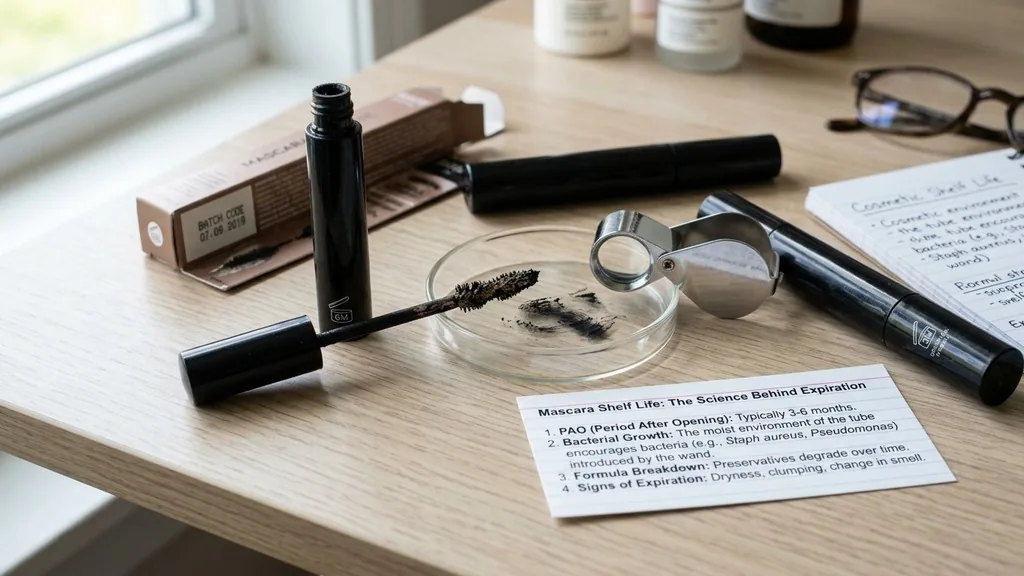
Many beauty enthusiasts wonder, does mascara expire, and is it really necessary to toss a tube that still seems to have plenty of product left? The short answer is yes. Unlike some powder-based products that can last for years if kept dry, liquid eye makeup is highly susceptible to bacterial contamination.
Because you are repeatedly introducing a wand into a dark, moist, and nutrient-rich environment, your mascara becomes a breeding ground for microorganisms much faster than your foundation or eyeshadow. Using expired products near your eyes is not just a cosmetic faux pas; it is a genuine health risk that can lead to irritation, infections, and long-term damage to your vision. Understanding the timeline and the signs of degradation is vital for maintaining healthy skin care habits.
The Science Behind Mascara Shelf Life
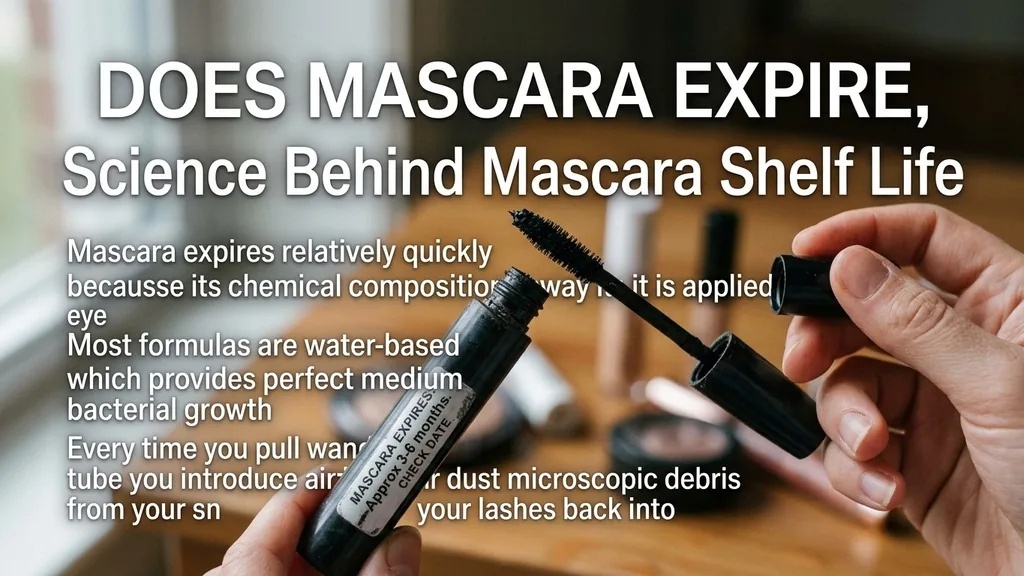
Mascara expires relatively quickly because of its chemical composition and the way it is applied to the eye. Most formulas are water-based, which provides the perfect medium for bacterial growth. Every time you pull the wand out of the tube, you introduce air, dust, and microscopic debris from your lashes back into the container.
Once the seal is broken, the preservatives in the formula begin to break down, losing their ability to fight off microbes like Staphylococcus aureus or Pseudomonas aeruginosa. These bacteria thrive in the warm, enclosed environment of the mascara tube. While manufacturers include preservatives to extend the life of the product, these ingredients are not designed to protect the formula indefinitely after the initial opening.
It is helpful to think of your mascara as a perishable food item rather than a permanent tool. Just as you wouldn’t drink milk that has been left on the counter for a week, you shouldn’t use eye makeup that has exceeded its functional lifespan.
The “Period After Opening” (PAO) symbol on the packaging, usually depicted as an open jar with a number like “6M,” is the manufacturer’s way of telling you exactly how long that specific formula remains stable. Ignoring these guidelines puts your ocular health at risk, as the delicate skin and mucous membranes around the eye are significantly more sensitive to infection than the skin on your hands or legs.
How Long Should You Actually Keep Mascara?
The general consensus among dermatologists and makeup experts is that you should replace your mascara every three months. While some high-end products might claim a longer shelf life due to advanced preservative systems, three months is the safe threshold for daily use.
If you only use mascara occasionally, you might be tempted to stretch that timeline, but the clock starts ticking the moment you first unscrew the cap. Even if the product hasn’t dried out, the chemical integrity of the formula has likely been compromised by the repeated exposure to oxygen and environmental contaminants.
If you find yourself asking, “does mascara expire if unopened,” the answer is that it lasts significantly longer, but it isn’t immortal. An unopened tube of mascara can generally stay safe for up to two to three years if stored in a cool, dark environment away from direct sunlight or extreme temperature fluctuations. However, once that air seal is broken, the oxidation process begins.
If you have an unopened tube that has been sitting in a drawer for several years, it is best to check for any separation of the formula or an unusual odor before attempting to use it. If the texture looks clumpy or the smell is off, it is safer to discard it regardless of how long it has been sitting in your collection.
Warning Signs Your Mascara Is Past Its Prime
Recognizing when your mascara has expired is easier than you might think if you know what to look for. Your senses are your best tools for determining if a product is still safe for your lashes. The most obvious sign is a change in the consistency of the formula.
If the mascara has become thick, clumpy, or “stringy,” the preservatives have likely failed, and the product is no longer safe to apply. A healthy mascara should glide onto your lashes smoothly; if you have to pump the wand multiple times to get enough product, that is a clear indication that the formula is drying out and should be replaced.
Another indicator is the scent. Fresh mascara usually has a mild, chemical, or waxy smell. If you open your tube and notice a sharp, acidic, or rancid odor, that is a sign of bacterial overgrowth or chemical breakdown.
Never attempt to “revive” dried-out mascara by adding water, eye drops, or oil to the tube. While this might temporarily improve the texture, it introduces moisture and contaminants that accelerate the growth of harmful bacteria.
You are essentially creating a petri dish right next to your eyeball. If the product isn’t performing well, it is time to move on to a fresh tube.
The Risks of Using Expired Eye Makeup
The risks associated with using expired mascara go beyond simple irritation. Because the eye is a highly sensitive organ, it is prone to infections such as conjunctivitis (pink eye), styes, and blepharitis. When you use a contaminated wand, you are transferring bacteria directly onto your lash line.
These bacteria can easily migrate into the eye itself, leading to inflammation that causes redness, itching, swelling, and in severe cases, impaired vision. For those who wear contact lenses, the risk is even higher, as bacteria can become trapped between the lens and the cornea, causing painful corneal abrasions or infections.
Beyond the biological risks, there is also the aesthetic problem. Expired mascara simply doesn’t look as good. It tends to flake off throughout the day, leaving dark smudges under your eyes, or it can cause your lashes to stick together in unsightly clumps.
You invest in makeup to enhance your appearance, not to create a breeding ground for germs. By sticking to a strict three-month replacement schedule, you ensure that your eye makeup performs as intended—providing volume, length, and definition without the unwanted side effects of degraded ingredients.
Proper Storage Habits to Extend Product Life
While you cannot stop time, you can certainly avoid accelerating the expiration process by storing your makeup correctly. Many people keep their cosmetics in the bathroom, but this is actually one of the worst places for them. The bathroom is typically humid, warm, and prone to temperature swings every time you shower.
These conditions are the enemy of chemical stability. Instead, store your mascara in a cool, dry place like a bedroom vanity or a dedicated makeup organizer away from direct sunlight.
Avoid the common mistake of “pumping” your mascara wand. Many people move the wand in and out of the tube repeatedly in an attempt to coat it with more product. This action forces air into the tube, which dries out the formula and introduces airborne bacteria.
Instead, gently swirl the wand inside the tube to pick up the product. Additionally, always make sure the cap is screwed on tightly after every use. A loose cap allows air to seep in, which speeds up the drying process and compromises the preservatives.
If you want to learn more about the standards for cosmetic safety, you can visit the U.S. Food and Drug Administration guidance on cosmetic labeling.
Data Comparison: Shelf Life of Common Eye Makeup
Understanding how different products compare in terms of their longevity can help you organize your beauty routine more effectively. While mascara is the most high-risk item due to its liquid nature and direct contact with the lash line, other eye products also have specific expiration timelines that you should be aware of to keep your entire kit sanitary.
| Makeup Product | Typical Shelf Life (After Opening) |
|---|---|
| Mascara | 3 Months |
| Liquid Eyeliner | 3 to 6 Months |
| Cream Eyeshadow | 6 Months |
| Pencil Eyeliner | 12 to 18 Months |
| Powder Eyeshadow | 18 to 24 Months |
As shown in the table, liquid products consistently require more frequent replacement than solids. This is because liquids provide a hospitable environment for moisture-loving microbes.
Pencil eyeliners last longer because you can sharpen them, effectively removing the contaminated outer layer of the product each time you use it. Powder products, provided they remain dry, are the most stable because they lack the water content that bacteria require to survive and replicate.
Common Myths About Mascara Expiry
There are many persistent myths regarding makeup expiration that can lead people to hold onto products for far too long. One of the most common is the idea that if the mascara still looks and smells fine, it must be safe. This is dangerous logic because bacterial contamination is often invisible to the naked eye.
You cannot see the microscopic colonies of bacteria thriving on the bristles of your mascara wand. Another myth is that expensive, high-end mascaras are somehow “immune” to expiration. While luxury brands may use higher-quality ingredients, the physical reality of a water-based formula in a tube remains the same.
Some people also believe that storing mascara in the fridge will keep it fresh for years. While a cool environment can help prevent the formula from separating, the fridge is also a humid place, and the condensation that occurs when you move the tube from the fridge to room temperature can actually introduce more moisture, potentially encouraging mold or bacteria. Stick to room temperature, cool, and dry conditions.
If you find yourself frequently reaching for expired products, it might be a sign that you own too many mascaras at once. Try to limit yourself to one or two tubes at a time so you can actually finish them before they expire.
Topical Gaps: Addressing Specific User Concerns
A common question that often goes unanswered is what to do if you accidentally share your mascara. The short answer is: don’t do it, but if you do, consider that tube compromised. Sharing mascara with a friend or family member is a quick way to transfer eye infections.
Your eyes have their own unique microbiome, and introducing someone else’s bacteria to your lashes can lead to unexpected reactions. If you are a makeup artist or someone who does makeup for others, you must use disposable wands for every single application. Never dip a used wand back into the tube after it has touched someone else’s eye.
Another frequent concern is whether waterproof mascara lasts longer than standard formulas. Waterproof mascaras are often formulated with different waxes and oils that are more resistant to moisture, which can make them slightly more stable than water-based alternatives. However, the application process remains the same, and the wand still enters the tube repeatedly.
Therefore, the three-month rule should still be treated as the standard for both waterproof and non-waterproof varieties. Do not let the “waterproof” label give you a false sense of security; the physical risks of bacterial contamination remain consistent across almost all liquid eye makeup products.
FAQ: Frequently Asked Questions
- Is it okay to use mascara that is 6 months old? No, you should not use six-month-old mascara. By this time, the preservative system is likely depleted, and the risk of bacterial contamination is very high. Using it can lead to eye infections and irritation. For your eye health, replace it every three months.
- How can I tell if my mascara is expired without an expiry date? Look for changes in texture, such as clumping or drying out. If the product has a strange, acidic, or rancid smell, throw it away immediately. If it causes any redness or itching upon application, discontinue use right away and discard the tube.
- Does unopened mascara expire if kept in a cool place? Yes, even unopened makeup has a shelf life, typically two to three years. Over time, the chemical ingredients can still degrade, causing the formula to separate or become ineffective. Always check the packaging for a batch code if you are unsure how old an unopened product is.
- Can I use eye drops to fix dry mascara? Never add eye drops, water, or oil to your mascara tube. This introduces moisture and bacteria, turning your makeup into a breeding ground for germs. If your mascara is dry, it has reached the end of its life and should be replaced with a new tube.
Maintaining a regular replacement schedule for your makeup is one of the simplest yet most effective ways to protect your health. By being mindful of the three-month rule, storing your products correctly, and avoiding the temptation to revive old formulas, you ensure that your beauty routine remains safe and effective.
Your eyes are irreplaceable, and they deserve the best care possible. Treat your mascara with the same caution you would any other personal care item that comes into contact with your body, and you will enjoy beautiful, healthy lashes for years to come.


