

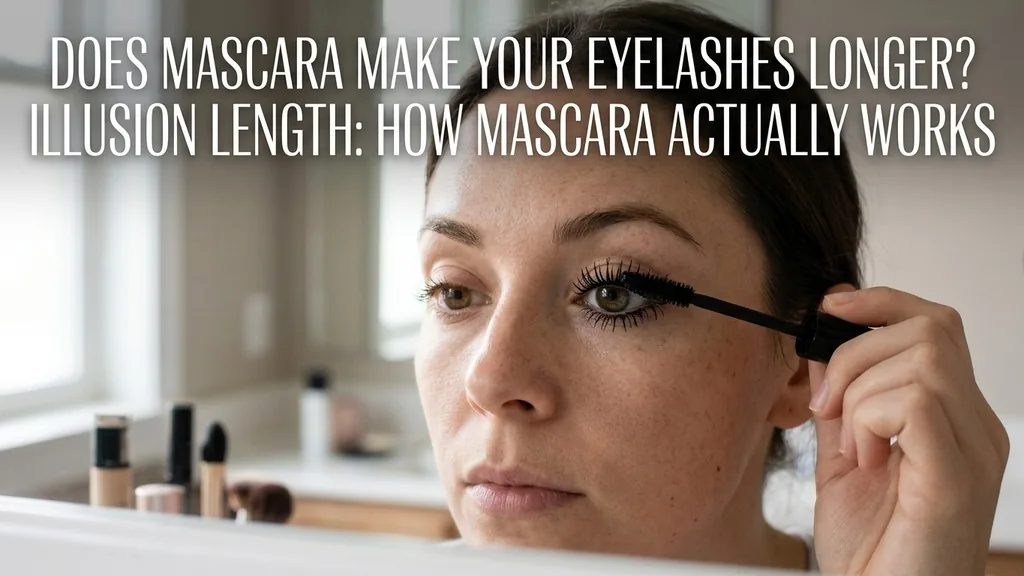
Many people wonder if their daily makeup routine is actually helping or hindering their lash health. When you look in the mirror after swiping on a coat of your favorite product, the change is immediate and dramatic. But does mascara make your eyelashes longer in a biological sense, or is this just a classic case of optical illusion?
Understanding the difference between cosmetic enhancement and actual physiological growth is key to maintaining healthy, beautiful eyes. While the immediate result is undeniable, the long-term impact on your natural follicles is a subject that requires a closer look at both chemistry and biology.
The Illusion of Length: How Mascara Actually Works
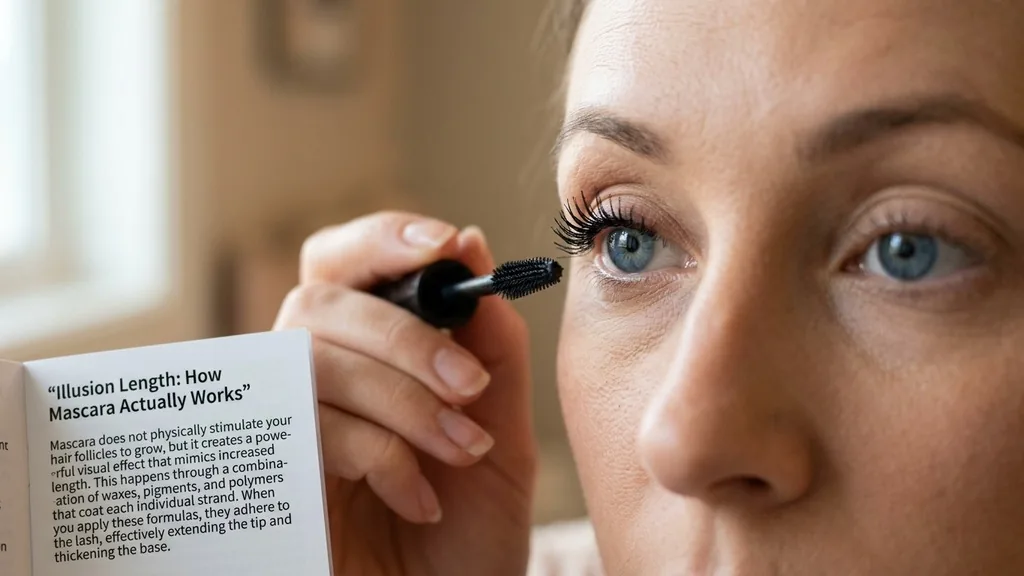
Mascara does not physically stimulate your hair follicles to grow, but it creates a powerful visual effect that mimics increased length. This happens through the combination of waxes, pigments, and polymers that coat each individual strand.
When you apply these formulas, they adhere to the lash, effectively extending the visible tip where the hair is often thinner and lighter in color. By darkening the very ends of your lashes, the product makes them appear much longer than they are in their natural state.
The structure of high-quality lengthening formulas often includes specialized fibers—frequently made of rayon, nylon, or silk—that latch onto the lash during application. These microscopic fibers build upon each other, creating a scaffold that pushes the lash outward. Because the base of the lash is usually thicker and the tip is tapered, adding volume and pigment to that tapered end creates a significant contrast.
You aren’t changing the DNA of your hair, but you are changing the perception of its reach. This is an aesthetic enhancement rather than a biological change, yet it remains the most effective way to improve your look without surgical intervention or long-term treatments.
Understanding the Difference Between Cosmetic and Biological Growth
There is a distinct gap between the temporary effect of makeup and the biological process of hair growth. Your lashes follow a specific growth cycle consisting of the anagen (growth), catagen (transition), and telogen (resting) phases.
Mascara operates entirely outside of this cycle. It sits on the surface of the hair shaft, whereas true growth occurs deep within the follicle located under the skin of your eyelid.
If you are seeking genuine growth, you must look toward products specifically formulated with active ingredients that interact with the follicle. While some modern mascaras are infused with conditioning agents like panthenol or biotin, their primary purpose remains cosmetic. Think of these added ingredients as a hair mask for your lashes; they help keep the hair hydrated and flexible, which prevents breakage.
By reducing breakage, you might retain more of your natural lashes, making them appear fuller over time. However, this is maintenance, not the promotion of new, rapid hair development. If you want to investigate the science of hair cycles further, the American Academy of Ophthalmology provides excellent guidance on maintaining ocular and lash health.
The Role of Conditioning Ingredients in Modern Formulas
Many brands now market their products as dual-purpose, claiming they act as both a cosmetic and a treatment. This has led to a rise in formulations that prioritize the health of the hair.
Ingredients like hyaluronic acid, peptides, and various botanical oils serve to coat the lash in a protective layer. This layer does more than just add volume; it shields the hair from environmental stressors such as wind, dust, and the drying effects of dry air.
When your lashes are well-conditioned, they are less likely to become brittle. Brittle lashes are prone to snapping off mid-shaft, which effectively shortens them. By using a formula that keeps the hair supple, you ensure that your lashes reach their full potential length without falling victim to premature breakage.
While this doesn’t make the hair grow faster, it creates the environment necessary for your natural lashes to stay intact longer, providing a fuller and more consistent appearance. It is a subtle but important distinction in the world of beauty.
Can Mascara Cause Your Eyelashes to Fall Out?
A common concern is whether the weight or the removal process of makeup contributes to lash loss. In truth, the biggest risk to your lashes isn’t necessarily the formula itself but rather the mechanical trauma of removing it.
If you use a waterproof product, you likely have to rub your eyes vigorously to get it off. This friction is the primary culprit behind broken or prematurely shed lashes.
To minimize this risk, consider the following habits:
- Always use a gentle, oil-based makeup remover to break down the product before cleansing your face.
- Never sleep in your makeup, as it can cause the hairs to become stiff and break against your pillowcase.
- Avoid pumping the wand inside the tube, which introduces air and bacteria that can dry out the formula and lead to clumping.
- Replace your product every three months to prevent the accumulation of bacteria that could lead to infections.
- Use a lash curler only before applying product, never after, to avoid snapping the hairs.
Comparing Methods for Achieving Longer-Looking Lashes
Different approaches yield different results. While some rely on temporary makeup, others look for more semi-permanent or permanent solutions.
It is important to weigh the pros and cons of each method to decide what fits your lifestyle and your desired outcome. Below is a comparison of common methods used to enhance the appearance of your eyes.
| Method | Mechanism | Duration |
|---|---|---|
| Lengthening Mascara | Fiber-based coating | Daily |
| Lash Serum | Follicle stimulation | Long-term |
| Lash Extensions | Synthetic hair bonding | 3-4 Weeks |
| Lash Lift | Chemical curling | 6-8 Weeks |
Addressing Topical Gaps: Why Some People See Results
You may have heard friends claim their lashes grew after using a certain brand of makeup. Why does this happen if the product doesn’t contain growth-stimulating drugs?
The answer often lies in the reduction of “micro-breakage.” When someone switches from a harsh, clumpy, or waterproof formula to a nourishing, high-quality product, they stop the cycle of daily damage.
If your previous product caused your lashes to become dry and brittle, they were likely snapping off at the tips every time you washed your face. By switching to a product that hydrates, you allow those same lashes to grow to their full, natural length without snapping.
It isn’t that the mascara made them grow longer; it is that the mascara allowed them to reach the length they were always capable of achieving. This is a crucial distinction that often leads to the misconception that the product itself possesses “growth” properties.
The Importance of Proper Application Techniques
How you apply your makeup significantly impacts the final look. Many people focus only on the tips, but the secret to maximum length lies at the root.
Start by placing the wand at the very base of your lashes and wiggling it slightly. This deposits the majority of the pigment and fibers at the root, providing a sturdy foundation for the rest of the hair.
After the base is coated, pull the wand upward in a slow, sweeping motion. If you move too quickly, you risk clumping, which makes the lashes look thick but not necessarily long. For those who want extra length, a second coat should be applied while the first is still slightly tacky.
If you wait until the first coat is completely dry, the second layer will struggle to adhere, leading to flakes that fall under your eyes. Focusing on the outer corners can also create a fanned-out effect, which naturally draws the eye outward and enhances the appearance of length.
Selecting the Best Products for Your Specific Lash Type
Not all mascaras are created equal, and the best choice depends on your specific needs. If you have naturally sparse lashes, you might prioritize thickening formulas. If you have short lashes, you should look for “tubing” formulas or those that contain specific lengthening fibers.
Tubing mascaras are particularly interesting because they form tiny, water-resistant tubes around each hair. They don’t smudge or run, and they are removed easily with warm water, which significantly reduces the physical trauma of removal.
When browsing the aisles or shopping online at a beauty com site, look for brushes that suit your eye shape. A curved wand is often better for reaching the inner corners, while a tapered wand provides more precision for the bottom lashes.
Understanding your own lash texture—whether they are straight, curly, thick, or fine—will help you select a product that enhances their natural beauty rather than weighing them down. Remember, the goal is to compliment your features, not to mask them under heavy, suffocating layers of wax and pigment.
FAQ: Frequently Asked Questions
- Does mascara actually make eyelashes grow? No, standard makeup does not contain biological stimulants to increase hair growth. It only provides a temporary aesthetic coating that makes lashes look longer and more defined. Any perceived growth is likely due to reduced breakage from better lash care.
- Are my eyelashes healthier if I stop wearing makeup? For many, taking a break can be beneficial. It allows the follicles to breathe and eliminates the risk of mechanical damage during removal. If you notice your lashes are brittle, a few makeup-free days can help them recover their natural flexibility and strength.
- What is the best way to make lashes look longer without makeup? A lash lift and tint is a professional service that curls and darkens your natural hair for several weeks. Alternatively, you can use a high-quality lash serum containing peptides to nourish the follicles and potentially support the appearance of healthier, more robust lashes over time.
- Can I use a lash serum under my mascara? Yes, many people use a clear conditioning serum as a primer before applying their color. This acts as a protective barrier, adds moisture to the hair, and can help the makeup glide on more smoothly, preventing clumps and keeping your lashes feeling soft throughout the day.


