

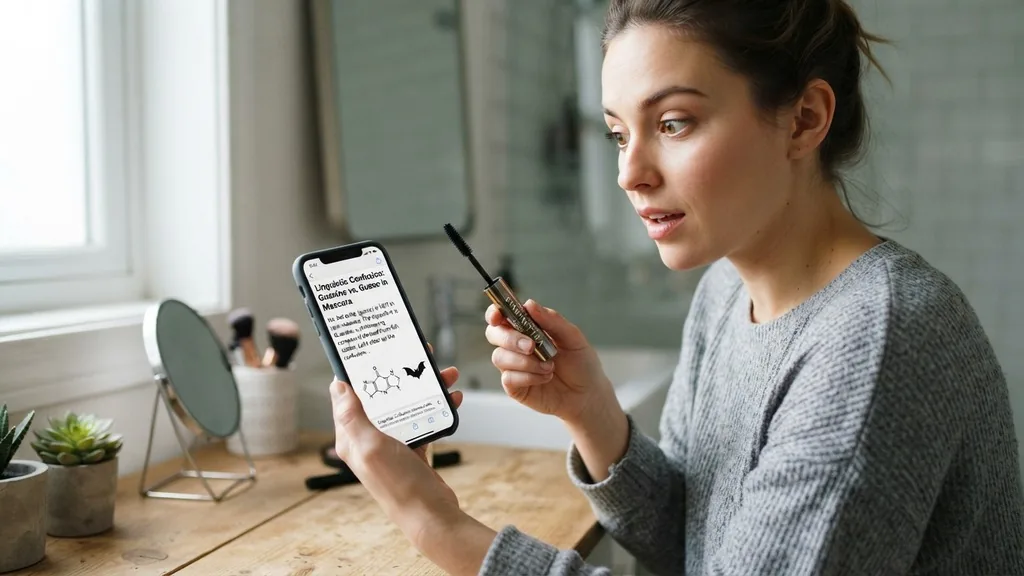
The question of whether there is bat poop in mascara is one of the most enduring urban legends in the beauty industry. It is a persistent rumor that has circulated through forums, social media, and word-of-mouth for decades, often leaving consumers wary of their favorite eye makeup. To address this concern directly: no, your mascara does not contain bat guano.
The confusion stems from a linguistic misunderstanding involving a specific chemical compound that sounds remarkably similar to the term for bat excrement. By examining the chemical reality of cosmetic formulations, we can separate fact from fiction and understand why this persistent myth continues to influence consumer perception.
The Linguistic Confusion: Guanine vs. Guano
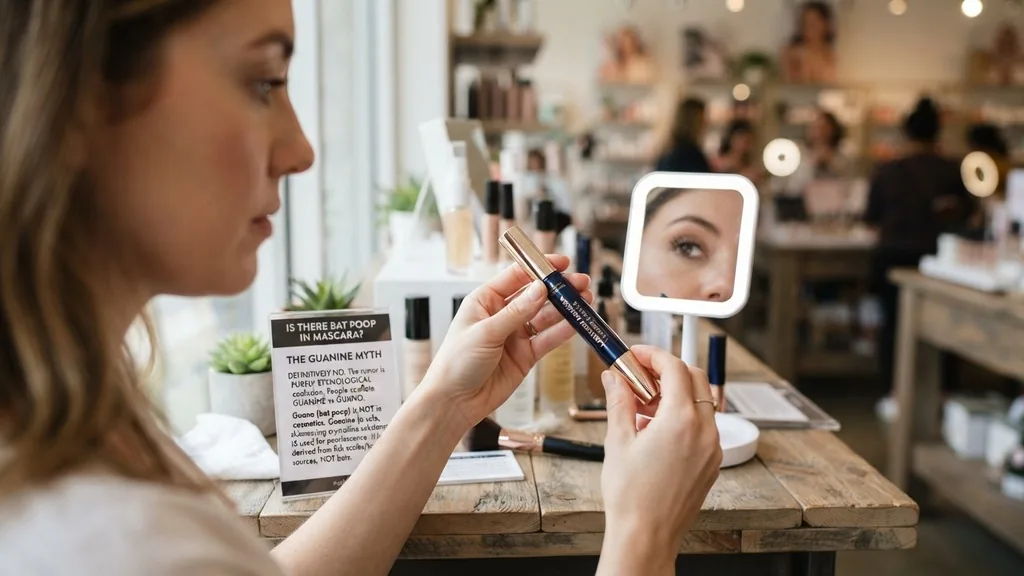
The most direct answer to the question of whether bat poop is in your mascara is a definitive no, as the confusion is purely etymological. The substance often cited in these rumors is guanine, a crystalline material that provides a pearlescent or shimmering effect in various cosmetics.
People frequently conflate “guanine” with “guano,” which is the formal term for bat excrement. While the words share a similar phonetic structure, they are entirely distinct substances with different origins and chemical properties.
Guanine is a naturally occurring nucleobase—one of the fundamental components of DNA and RNA found in all living organisms. In the context of beauty products, the guanine used is typically derived from fish scales, specifically those of herring or other silvery fish. It is processed to create a lustrous, metallic finish that catches the light, making it a popular additive for nail polishes, highlighters, and occasionally certain types of eye makeup.
It has absolutely no biological or chemical relationship to the waste products of bats. The myth likely gained traction because both “guanine” and “guano” share a root related to the Peruvian word huanu, but in the modern laboratory, they exist in entirely separate categories.
Understanding the Composition of Mascara
When you look at the ingredients list on a tube of mascara, you are seeing a sophisticated blend of waxes, oils, pigments, and film-forming polymers designed to coat and thicken your lashes. Mascara is a complex emulsion, meaning it must keep water and oil phases stable while ensuring the product remains hygienic and easy to apply. Manufacturers do not use animal waste in any capacity because it would be biologically unstable, dangerous to the user, and chemically ineffective for the intended purpose of lash enhancement.
A standard formulation typically relies on several key components:
- Waxes: Beeswax, carnauba wax, or candelilla wax provide the structure and thickness that allows the product to cling to individual hairs.
- Pigments: Iron oxides and carbon black are the primary substances used to achieve deep, dark color intensity.
- Oils: Mineral oils, castor oil, or synthetic alternatives ensure the formula remains fluid enough to coat the lashes without clumping excessively.
- Polymers: These help the mascara film dry down, providing water resistance and preventing the product from smearing throughout the day.
These components are selected for their safety profile and their ability to interact with the keratin structure of human hair. Introducing organic waste material like guano would introduce bacteria, fungi, and pathogens, which would violate every standard of cosmetic manufacturing safety.
Historical Context: Why Do People Believe This?
It is natural to wonder why this specific myth has such staying power. The history of cosmetics is filled with strange practices, some of which were genuinely hazardous. In the early 20th century, there were instances where products contained lead, mercury, or even radioactive materials.
Because early beauty trends were often unregulated, consumers developed a healthy skepticism that persists to this day. When a rumor starts that a common product contains something repulsive, it taps into a deep-seated fear of the “unknown” or “unregulated” nature of the beauty industry.
The “bat poop” rumor specifically likely originated from the misreading of ingredient labels. When a consumer sees “guanine” listed on a label, they might perform a quick search and encounter outdated or incorrect information linking the word to guano. In the pre-internet era, such misinformation could spread quickly through magazines or gossip.
Even today, the echo chamber of social media ensures that once a “gross fact” about a product gains momentum, it is rarely corrected by the original source. This myth is a classic example of how a linguistic coincidence can be weaponized into a persistent urban legend, despite having no grounding in scientific reality.
The Role of Guanine in Modern Beauty
Since guanine is a legitimate ingredient, it is worth clarifying exactly what it does in the beauty space. Guanine is a nitrogenous base that forms a crystalline structure. When these crystals are suspended in a liquid, they reflect light in a way that creates a “pearlescent” or “shimmering” effect.
This is why you will often see it listed in products that claim to provide a glow or a high-shine finish. While it is less common in everyday, matte-finish mascaras, it may appear in specialized “glitter” or “shimmer” topcoats designed for eyelashes.
It is important to note that the source of guanine is strictly regulated. The U.S. Food and Drug Administration provides comprehensive oversight for the safety of cosmetic ingredients, ensuring that any substances used—including those derived from marine sources—meet strict purity and safety standards.
There is no scenario in which an ingredient derived from waste would pass these regulatory hurdles. The guanine used in your makeup is a processed, purified, and highly specific chemical compound that has been stripped of any biological impurities.
Safety Standards and Regulatory Oversight
The manufacturing process for eye makeup is subject to some of the most rigorous safety testing in the consumer goods sector. Because the eyes are highly sensitive and prone to infection, the industry adheres to strict guidelines regarding microbiological purity.
Any product that enters the market must be free of harmful pathogens. The idea that a company would incorporate bat guano—a substance known to carry histoplasmosis and other fungal pathogens—into a product designed for the eyes is a physiological impossibility.
If such a substance were present, it would trigger immediate and severe reactions, including conjunctivitis, corneal ulcers, or systemic infections. Regulatory bodies like the FDA, as well as international counterparts like the European Chemicals Agency, monitor the supply chain for cosmetic ingredients. Manufacturers are required to maintain documentation on the origin of their raw materials.
If a brand were found to be using contaminated or hazardous additives, they would face massive recalls, lawsuits, and the permanent loss of their license to sell products. The economic incentive to maintain safety is far higher than any perceived benefit of using bizarre or dangerous additives.
Common Ingredients Often Misunderstood
Beyond guanine, many other ingredients in mascara are often misunderstood by the general public. For instance, carbon black, which is used to provide the deepest black pigments, is sometimes scrutinized for its safety.
While it is a form of amorphous carbon, the grades used in cosmetics are highly purified and regulated to ensure they do not contain impurities that could be harmful to the skin or eyes. Similarly, many people worry about the use of “animal products” in general.
| Ingredient | Common Source | Function |
|---|---|---|
| Beeswax | Honeybees | Thickening and structure |
| Guanine | Fish scales | Shimmer and luster |
| Lanolin | Sheep wool | Emollient and conditioning |
| Iron Oxides | Mineral deposits | Pigmentation |
Understanding these sources helps demystify the label. Most “animal” ingredients in beauty products are byproducts of other industries or are harvested in ways that do not involve the use of waste or excrement. When consumers see a term they do not recognize, they often assume the worst, but the reality is usually a highly processed chemical derivative that serves a specific functional role in the formula.
How to Read Your Own Cosmetics Labels
If you are ever concerned about what is in your beauty products, the best approach is to learn how to interpret an ingredient list. The International Nomenclature of Cosmetic Ingredients (INCI) is the global standard for labeling.
By looking at the INCI list on the back of your product, you can identify exactly what is included. If you see a term you don’t recognize, searching for it on an official database or a reputable ingredient dictionary will provide the scientific definition and the source of that material.
It is also helpful to recognize that the order of ingredients matters. They are listed in descending order of concentration. If an ingredient is at the very end of the list, it is present in a tiny, trace amount, often less than one percent.
Most of the volume in your mascara tube is comprised of water, waxes, and film-formers. By focusing on the top five to ten ingredients, you can get a very clear picture of what the product is actually made of. This practice empowers you to ignore viral rumors and make decisions based on the actual chemical composition of your beauty kit.
Addressing Topical Gaps: Is Anything Actually Made from Bat Guano?
While the answer is a firm “no” for mascara, it is worth addressing the topical gap regarding where guano is actually used. Bat guano is primarily valued for its high nitrogen and phosphorus content, making it an excellent organic fertilizer.
It is widely used in agriculture and gardening to nourish soil. Because it is a concentrated source of nutrients, it is highly sought after by organic farmers.
However, in the world of beauty and skincare, guano has no place. There are no legitimate, commercially available cosmetics that utilize bat excrement as an active ingredient. Any claims to the contrary are usually the result of marketing stunts, misunderstandings, or deliberate misinformation intended to gain attention on social media.
The unique chemical profile of guano makes it unsuitable for topical application, and there is no cosmetic benefit that could be derived from it that isn’t already handled more safely and effectively by modern synthetic or plant-based alternatives. If you see a product claiming to contain “bat” ingredients, it is almost certainly a hoax or a misinterpretation of a botanical extract or a synthetic compound with a similar-sounding name.
Frequently Asked Questions
- Is it true that mascara used to be made with bat poop? No, there is no historical evidence that bat guano was ever used as an ingredient in mascara. The rumor is a persistent urban legend caused by the phonetic similarity between “guanine” (a shimmering agent) and “guano” (bat excrement).
- What is the shimmering effect in mascara if it isn’t guano? The shimmering effect is created by guanine, which is a crystalline material derived from the scales of silvery fish like herring. It is a highly purified, safe cosmetic ingredient used to reflect light and add luster to various beauty products.
- Are there any animal products in mascara I should be worried about? Most mascara ingredients are synthetic or mineral-based. Some products contain beeswax or lanolin, which are animal-derived but are common, safe, and widely used. If you follow a vegan lifestyle, you can easily find mascaras that use plant-based waxes like carnauba or candelilla instead.
- How can I verify the safety of my eye makeup? You can check the ingredient list against the INCI database or look for products from reputable brands that adhere to FDA or EU cosmetic regulations. These organizations ensure that all ingredients are tested for safety and that no harmful or unhygienic substances are included in formulas.


