

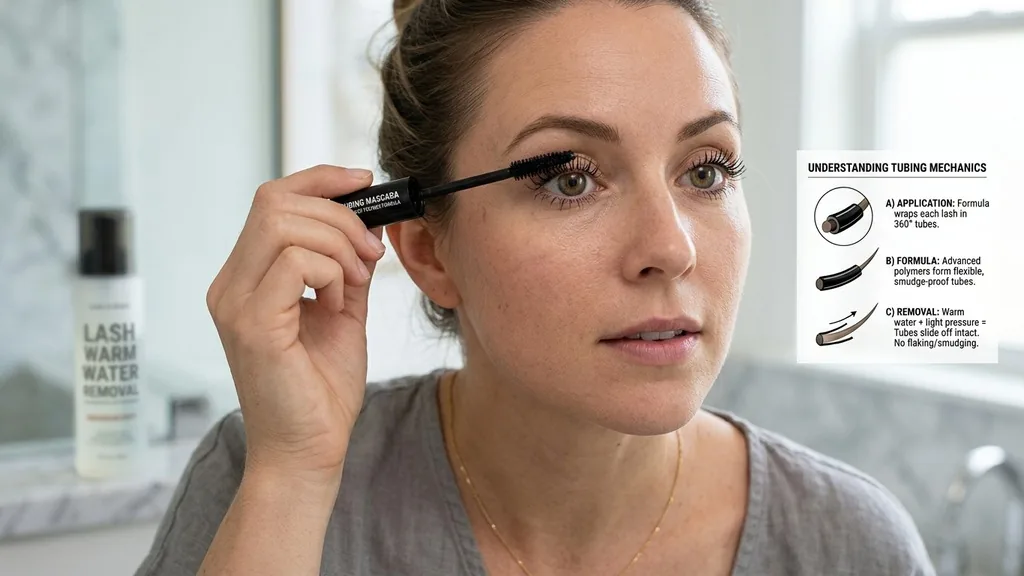
Learning how to use tubing mascara effectively transforms your daily eye makeup routine from a struggle with smudges into a clean, precise process. Unlike traditional formulas that rely on waxes and oils to coat your lashes, a tubing mascara utilizes advanced polymer technology to wrap each lash in individual, water-resistant cylinders. These tiny tubes don’t just sit on top of your hair; they grip the lash securely from root to tip.
Because the formula sets into a firm, physical structure, it resists the breakdown that usually leads to raccoon eyes by mid-afternoon. Mastering this product requires a shift in your application technique, as the drying time and texture differ significantly from standard cosmetic alternatives.
Understanding the Mechanics of Tubing Formulas
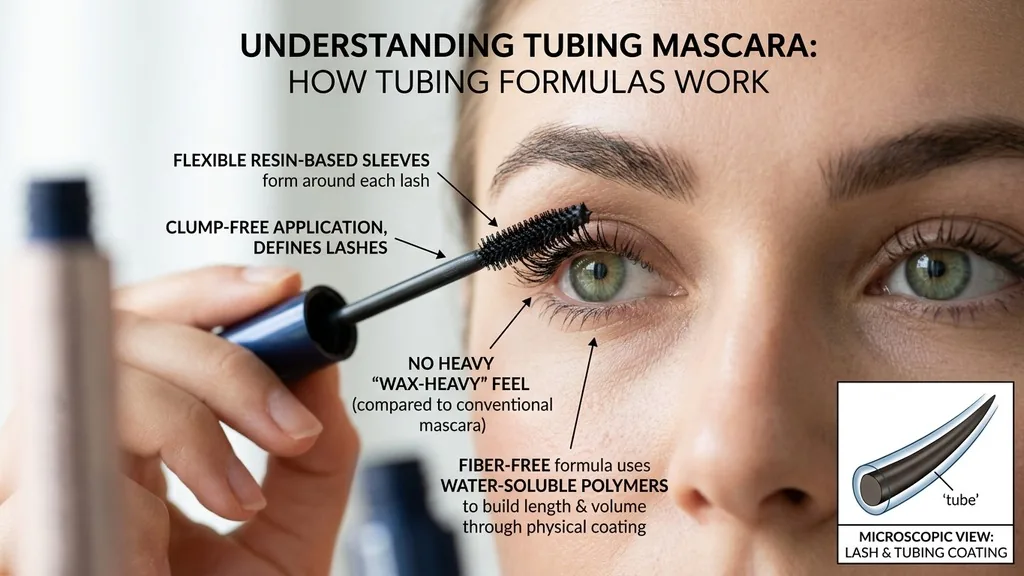
Tubing mascara works by forming flexible, resin-based sleeves around your eyelashes, providing a clump-free application that defines lashes without the heavy, weighted feel of wax-heavy products. These formulas are typically fiber-free, relying on water-soluble polymers to build length and volume through the physical extension of the tube itself.
When you apply the product, the liquid polymer glides onto the lash and rapidly sets into a stable shape. Because these polymers are not oil-soluble, they stay put when exposed to sweat, sebum, or humidity, making them the gold standard for those who struggle with smudging.
The structural integrity of these tubes is the key to their performance. Traditional mascaras often migrate because the oils in our skin break down the waxes in the formula, causing pigment to transfer onto the eyelids. A tubing formula, however, creates a barrier that is impervious to oil.
This makes it an ideal choice for individuals with oily eyelids or those who live in high-humidity climates. While they offer exceptional durability, the application requires a steady hand. Since the product dries quickly to lock in the shape, you must work efficiently to ensure the tubes form evenly along the length of each lash.
Step-by-Step Application for Maximum Lash Definition
To achieve the best results, start with clean, dry lashes. Any residual oil or moisturizer near the lash line can prevent the polymers from adhering correctly to the hair shaft. Begin by holding the wand at the base of your lashes, wiggling it slightly to deposit the product, and then pulling it through to the tips.
Unlike traditional mascara, where you might layer repeatedly, you should apply the product in one or two deliberate coats while the formula is still wet. If you wait too long between strokes, the tubes will set, and adding more product can cause the existing tubes to tear or look uneven.
Focus on lash separation by using the wand to comb through the lashes as you apply. Because the product is designed to wrap the hair, you don’t need to pump the wand inside the tube—this only introduces air and causes the formula to dry out prematurely. Instead, gently twist the wand to pick up the right amount of product.
If you notice any tiny gaps, use the tip of the applicator to tap a little extra product onto specific lashes. This technique ensures a lash definition that looks clean, intentional, and polished throughout the day.
Why Tubing Mascara is Ideal for Sensitive Eyes
If you frequently experience irritation from eye makeup, switching to a tubing formula can be a significant improvement for your comfort. Many traditional mascaras contain heavy waxes, iron oxides, and pigments that can flake off throughout the day. These microscopic particles often fall into the eyes, causing redness, itching, or discomfort, especially for contact lens wearers.
Because tubing mascara stays locked in its sleeves, it is inherently flake-resistant. You won’t find tiny black specks under your eyes by the end of the work day, which reduces the likelihood of ocular irritation.
Furthermore, these formulas are generally easier to remove without aggressive scrubbing. Since you don’t need to use a harsh oil-based makeup remover to dissolve wax or waterproof resins, you avoid the friction that can cause premature lash loss or skin sensitivity.
The gentle nature of the removal process keeps the delicate skin around your eyes intact. For those with sensitive eyes, the combination of a secure, non-flaking formula and a mild removal method provides a much-needed relief from the daily cycle of irritation often associated with traditional eye cosmetics.
The Science of Warm Water Removal
The most distinct feature of tubing mascara is its removal process, which relies on warm water removal rather than chemical solvents. When you splash warm water onto your lashes, the polymers lose their grip and soften, allowing the tubes to slide off the lashes in one piece. You do not need to rub or tug at your eyes.
Simply soak your lashes with warm water for about 30 seconds, then gently pull the tubes away with your fingertips or a damp cloth. It is a clean, satisfying experience that leaves no greasy residue behind.
It is important to note that you should not panic if you see what looks like “eyelashes” falling out during this process. What you are seeing are the empty, discarded tubes that were coating your hair. Because they are black and shaped like a cylinder, they are often mistaken for lost lashes.
This misconception is common for first-time users. Once you realize the tubes are just the product itself, you will appreciate how much healthier this process is for your natural lashes. You can learn more about proper eye hygiene and product safety to ensure you are maintaining the health of your eyes and lashes alongside your beauty routine.
Comparing Tubing Mascara to Traditional Formulas
Choosing the right mascara often comes down to your specific needs regarding wear time and finish. The following table highlights the functional differences between tubing technology and conventional wax-based mascaras.
| Feature | Tubing Mascara | Traditional Mascara |
|---|---|---|
| Removal Method | Warm water and light pressure | Oil-based cleanser required |
| Smudge Resistance | Extremely high (oil-proof) | Variable (prone to oil smudging) |
| Finish | Natural and defined | Voluminous and dramatic |
| Flaking | Rare | Common |
As shown, the primary trade-off is often between the dramatic, heavy volume of a wax-based formula and the clean, long-lasting precision of a tubing formula. If your goal is a high-impact, thick, and heavy lash look, a tubing mascara might feel a bit too subtle.
However, for those who prioritize a smudge-proof appearance that stays perfect from morning until night, tubing is the superior choice. It allows for a consistent look that doesn’t migrate under your eyes, which is particularly beneficial for those who wear glasses or have lower lashes that usually touch the skin.
Addressing Common Application Challenges
Even with the best products, users sometimes encounter minor hurdles when learning how to use tubing mascara. One common complaint is that the formula can feel “dry” compared to standard options. This is a deliberate design choice, as a thinner formula prevents the product from becoming too heavy or clumpy.
If you find the product difficult to apply, try warming the tube in your hands for a minute before opening it. This can help the polymers flow more smoothly onto the wand.
Another challenge involves layering. Many users are tempted to apply multiple coats to achieve more volume. While you can layer, you must do so before the first coat dries completely.
If you wait until the tubes have hardened, adding more product will likely cause the existing tubes to break or clump. If you need more volume, focus on building the product at the root rather than pulling it through to the ends repeatedly. This maintains the integrity of the tube structure while giving the appearance of a thicker lash line.
Can You Use Tubing Mascara for Lash Extensions?
For those who have invested in professional lash services, maintaining the longevity of the extensions is a top priority. Tubing mascara is often recommended as the safest option for lash extension safety. Because it doesn’t require oil to remove, it won’t break down the adhesive used to attach your extensions.
Traditional waterproof mascaras are notorious for ruining the bond of lash glue, leading to early shedding. A tubing formula provides a way to add a bit of extra color or definition to your extensions without compromising the glue.
However, you should always consult with your lash technician before applying any product over extensions. If you do proceed, apply the mascara only to the very tips of the extensions, rather than the base where the adhesive is applied.
This minimizes any potential tugging during the removal process. Since the tubes slide off with water, you can gently rinse them away without the need for intense scrubbing, which is essential for keeping your extensions in place for as long as possible.
Topical Gaps: Troubleshooting Your Routine
Many users ask if they can layer traditional mascara over a tubing formula. The answer is generally no. If you apply a wax-based mascara over a tubing base, you are essentially creating a layer that can be dissolved by your skin’s natural oils.
This defeats the purpose of using a tubing product, as the wax will eventually smudge and carry the tubing pigment with it. If you want to customize your look, stick to using a tubing mascara as your primary product, or use it on top of a lash primer designed for tubing formulas.
Another common gap in knowledge is whether tubing mascara is suitable for bottom lashes. Because it is smudge-proof, it is actually the perfect choice for the lower lash line. Most people avoid lower lash mascara because it inevitably smears onto their under-eye concealer.
With a tubing mascara, you can define your lower lashes with confidence, knowing that the tubes will remain intact even if your under-eye area gets slightly oily throughout the day. It provides a crisp, defined look that stays clean until you decide to wash it off.
Frequently Asked Questions
- Is tubing mascara waterproof? While it is highly water-resistant and won’t run when you cry or sweat, it is not technically “waterproof” in the traditional sense because it dissolves in warm water. It is better described as “tubing” or “water-soluble” in its removal phase.
- Can I use an eyelash curler with tubing mascara? Yes, but always curl your lashes before applying the mascara. If you curl them after the tubes have set, the hard, physical nature of the tubes can cause the mascara to crack or flake off the lashes.
- Why is my tubing mascara clumping? Clumping usually happens if you apply too many layers after the first coat has started to dry. Work quickly in one or two fluid motions to keep the application smooth, and avoid pumping the wand inside the tube to prevent air from drying the formula.
- Does tubing mascara work for short lashes? Absolutely. The polymers are excellent at extending the appearance of short lashes because they build length by extending the tube beyond the tip of your natural hair. It provides a clean, lengthened look without the heavy weight of traditional waxes.


