

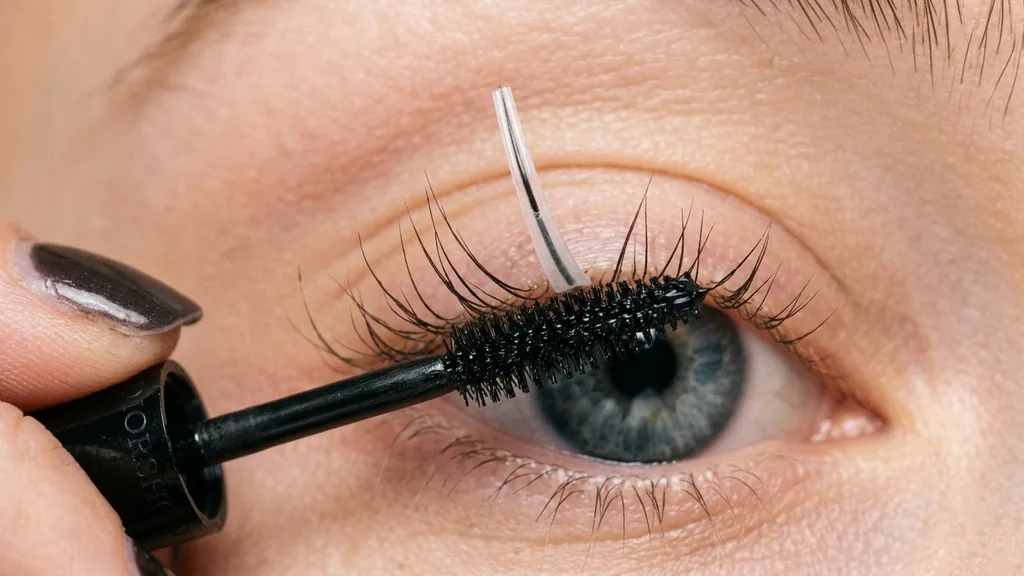
If you have ever spent your afternoon checking a mirror only to find dark, raccoon-like circles under your eyes, you have likely encountered the primary frustration of traditional makeup. Many people find themselves trapped in a cycle of constant touch-ups, wondering why their long-wear products fail to survive a standard workday. This is where tubing mascara enters the conversation.
Unlike conventional formulas that rely on oils and waxes to coat your lashes, these innovative products use polymers that wrap themselves around each individual hair. When you ask yourself, “what’s a tubing mascara,” you are really asking about a fundamental shift in cosmetic chemistry—one that prioritizes structural integrity over simple pigment deposition. These tubing mascaras do not merely paint your hair black; they form tiny, water-resistant cylinders that stay put until you are ready to take them off.
The Science Behind Polymer Technology
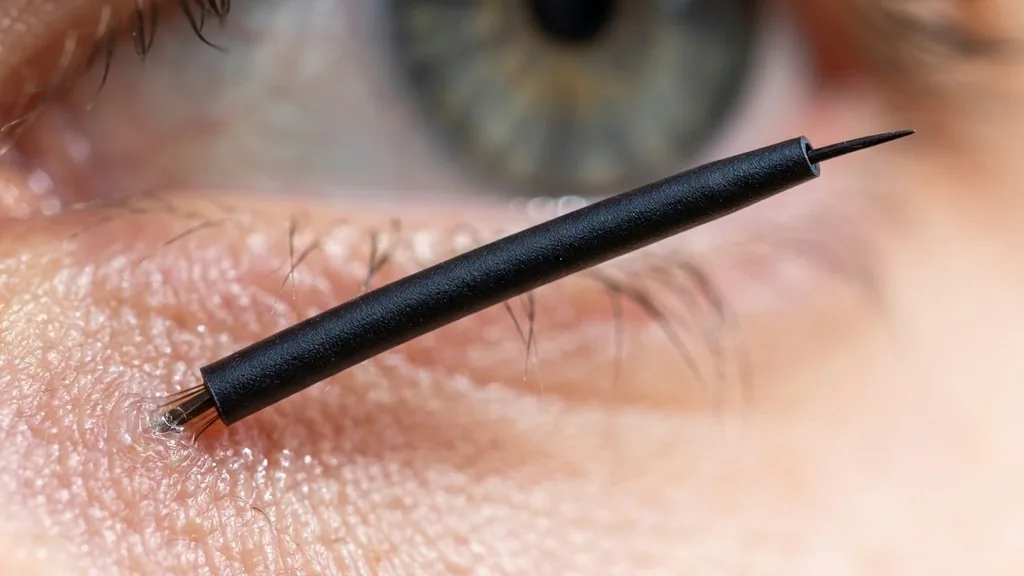
At the core of these products lies a sophisticated formula based on specialized polymers. While traditional products are essentially pigmented waxes or oils, tubing versions utilize acrylic copolymers that dry down into a flexible, rubber-like structure. When you apply the product, these polymers settle around the lash, creating a cohesive sleeve or “tube” that encircles the hair from root to tip.
This unique construction is what gives the product its legendary reputation for durability. Because these polymers are not oil-based, they do not dissolve or smear when exposed to the natural oils produced by your skin or the moisture in the air.
This structural difference is vital for anyone who has struggled with “panda eyes.” Traditional mascaras often break down when they come into contact with skin sebum, which is why they migrate downward throughout the day. Because the polymers in tubing formulas are chemically distinct from natural oils, they remain inert and intact, effectively locking the pigment in place.
Furthermore, because these tubes are physically wrapped around the lash, they provide a slight extension effect. As the product dries, it stretches slightly beyond the natural tip of the hair, contributing to the appearance of increased length and definition without the clumping often associated with heavy, wax-heavy mascaras.
Distinguishing Tubing Mascara from Traditional Formulas
Understanding the technical differences between various types of eye makeup is essential for building an effective routine. While both traditional and tubing versions aim to darken and volumize, their interaction with the environment differs significantly. A traditional product is designed to be absorbed slightly or simply sit on top of the hair as a paste.
This makes it susceptible to friction, humidity, and heat, all of which contribute to the smudging process. In contrast, the tubing variant acts as a physical barrier. It is essentially a flexible, microscopic shield.
One of the most common questions regarding this category is how to determine if a product is actually a tubing formula. Often, brands do not explicitly label their products as such, but there are clear indicators. If a product claims to be “smudge-proof” or “long-wear” but can be removed with only warm water, it is almost certainly a tubing mascara.
Traditional waterproof products, by comparison, require heavy-duty oil-based cleansers to dissolve the wax-based pigments. If you attempt to remove a tubing mascara with a standard micellar water or a gentle cleanser, you will find it remarkably stubborn. The polymers are specifically engineered to resist these solvents, which is exactly why they stay in place during the day.
| Feature | Traditional Mascara | Tubing Mascara |
|---|---|---|
| Primary Ingredient | Waxes, Oils, Pigments | Acrylic Copolymers |
| Smudge Resistance | Low to Moderate | High |
| Removal Method | Oil-based Cleanser | Warm Water & Pressure |
| Effect on Lashes | Coating | Encapsulation |
The Unique Removal Process
The most striking feature of these products is undoubtedly the removal process. Because these formulas do not dissolve into a liquid state when they encounter standard makeup removers, you must change your technique.
Instead of rubbing your eyes with cotton pads soaked in remover—which can cause significant damage to the delicate skin around the eyes and lead to lash breakage—you simply use water. By saturating your lashes with warm water and applying gentle, consistent pressure, the polymers lose their grip on the hair.
When you remove these products correctly, you will notice something peculiar: the “tubes” slide off in small, string-like pieces. Many first-time users find this alarming, often mistaking the removed tubes for their own eyelashes falling out. Rest assured, this is a normal part of the process.
The physical removal of the tubes is actually healthier for your eyes than the friction-heavy scrubbing required to remove traditional waterproof products. By letting the warm water do the work, you ensure that your natural lashes remain intact and undamaged. According to the American Academy of Ophthalmology, maintaining proper hygiene and minimizing mechanical stress during makeup removal is critical for long-term eye health.
Addressing Common Misconceptions and Topical Gaps
A frequent point of confusion involves the difference between “waterproof” and “tubing.” Many consumers assume that because a product is long-lasting, it must be waterproof. However, these two terms describe different chemical behaviors.
A traditional waterproof mascara is hydrophobic; it repels water using heavy oils and waxes. A tubing mascara is water-resistant against sweat and humidity but is specifically formulated to release its hold when exposed to a specific temperature and mechanical action.
Another common concern is whether tubing formulas provide enough volume. Because they are not wax-based, they do not build up in the same way that traditional mascaras do. If you are looking for a thick, dramatic, “falsie” effect, you might find that a single coat of a tubing mascara looks a bit thin.
However, the beauty of this formula lies in its ability to be layered without the dreaded “spidery” appearance. You can apply multiple layers while the product is still wet to build up definition.
Furthermore, because the tubes prevent the hairs from sticking to one another, the separation is often superior to traditional formulas. This makes them an excellent choice for those who prefer a clean, natural, yet defined look.
Pros and Cons of Switching to Tubing Formulas
Every beauty product has its limitations, and it is important to weigh the benefits against the drawbacks before making the switch. The most significant advantage is the elimination of smudging. If you have deep-set eyes, oily eyelids, or live in a humid climate, this technology is a game-changer.
You no longer have to worry about looking in the mirror at 3:00 PM to find dark shadows under your eyes. Additionally, the ease of removal is a major benefit for those with sensitive skin. You avoid the harsh chemicals often found in heavy-duty eye makeup removers, and you avoid the mechanical damage caused by aggressive rubbing.
On the other hand, there are limitations. If you are a fan of extreme, clump-heavy volume, you might find the finish of a tubing mascara to be too subtle. Additionally, because the formula relies on warm water to release, it is not the ideal choice if you are planning to go swimming or expect to be crying heavily.
While it holds up well against sweat and moisture, a direct, prolonged soak in water combined with rubbing will cause the tubes to slide off. It is a product designed for high-performance daily wear rather than extreme aquatic environments.
- No smudging: The polymer tubes remain intact even on oily eyelids.
- Gentle removal: No harsh pulling or tugging is required at the end of the day.
- Lash health: Reduces the risk of breakage caused by abrasive makeup removal.
- Natural finish: Provides excellent separation and definition for a clean aesthetic.
- Limited volume: May not provide the same “thick” look as wax-based mascaras.
Choosing the Right Product for Your Needs
When looking for the best tubing mascara, you will find that the market has expanded significantly. Brands like Thrive Causemetics have popularized this technology, proving that you do not need to sacrifice performance for clean beauty standards.
When selecting a product, look for keywords like “tubing,” “polymer technology,” or “water-soluble removal.” If a product explicitly states that it can be removed with warm water, it is a safe bet that it utilizes this technology.
Beyond the formula itself, consider the wand. Because tubing mascaras are designed to coat each individual hair, the brush shape is crucial. A thinner, plastic-bristled wand is often better for reaching the roots and ensuring that every lash is encapsulated.
If you prefer more volume, look for a wand with a slight curve or a denser bristle pattern, which can help deposit more of the polymer formula in a single pass. Remember that since these products dry quickly due to their polymer nature, you should avoid “pumping” the wand in and out of the tube, as this introduces air and causes the product to dry out faster.
The Evolution of Lash Aesthetics
The rise of tubing mascara represents a broader trend in the beauty industry: the move toward functional, high-efficiency cosmetics. We are seeing a shift away from products that require constant maintenance and toward those that integrate seamlessly into a busy lifestyle.
The ability to look polished from morning until night without the need for touch-ups is a significant value proposition. As consumers become more educated about the ingredients they put on their bodies, the non-toxic, easy-to-remove nature of these polymer-based products becomes even more appealing.
Furthermore, these mascaras are an excellent bridge between natural beauty and high-impact makeup. They offer the definition that many people crave without the heavy, often uncomfortable feeling of traditional wax-based formulas.
They are lightweight, flexible, and reliable. As we look toward the future of eye makeup, it is likely that we will see even more innovation in this space, perhaps with the introduction of conditioning ingredients that nourish the lashes while they are being coated by the protective polymer tubes.
Frequently Asked Questions
Is tubing mascara actually waterproof?
No, it is technically water-resistant. While it holds up perfectly against sweat, humidity, and tears, it is designed to release when exposed to warm water and gentle pressure. It is not recommended for swimming or activities where your face will be submerged for long periods.
How do I know if my mascara is a tubing formula?
The easiest way to tell is by the removal process. If your mascara is removed easily with just warm water and slides off in little clumps or “tubes” without leaving a dark, oily residue on your skin or cotton pad, it is a tubing mascara.
Is tubing mascara better for my lashes than regular mascara?
Many experts consider it better because it eliminates the need for harsh, oil-based makeup removers and the aggressive rubbing associated with them. By using warm water to gently slide the tubes off, you significantly reduce the risk of lash breakage and eye irritation.
Can I layer tubing mascara with other mascaras?
It is generally not recommended. Tubing mascara works by forming a specific structure around the lash. If you apply a traditional wax-based mascara underneath or on top, you interfere with the polymer’s ability to create that protective sleeve, which can lead to smudging and flaking.


