

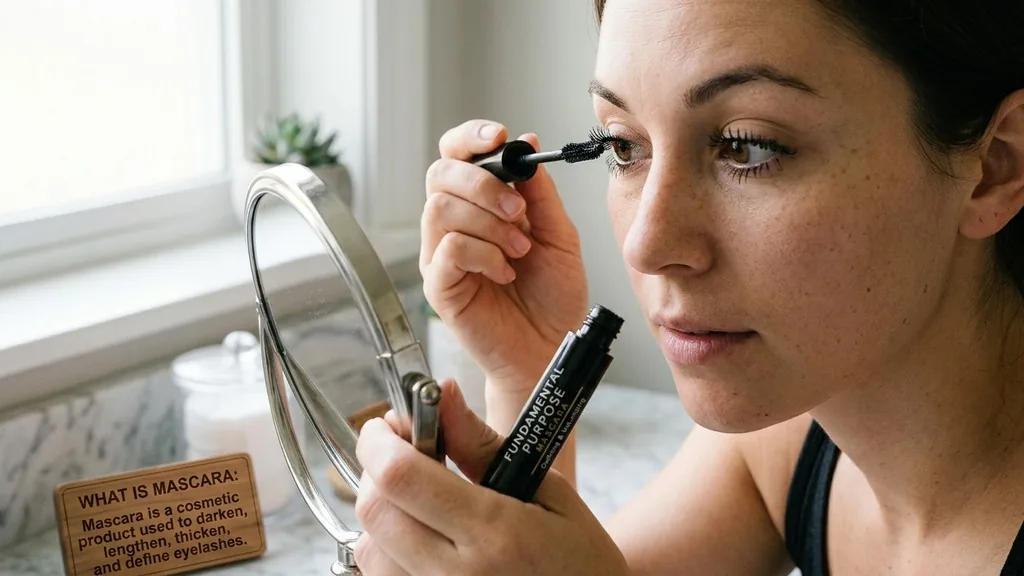
Mascara is a cosmetic product designed to enhance the appearance of eyelashes by darkening, thickening, lengthening, and defining them. When you ask what is mascara for, the primary answer is aesthetic transformation.
By coating the fine hairs of the lash line with pigments and waxes, this makeup tool creates the illusion of fuller, more prominent eyes. It acts as a frame for the face, drawing attention to the iris and providing a polished finish to any beauty routine.
Most people rely on this staple to bridge the gap between a natural appearance and a more dramatic, wide-eyed look. Whether you are aiming for subtle daily definition or high-impact volume, understanding how this substance interacts with your natural lashes is essential for effective application and long-term eye health.
The Fundamental Purpose of Mascara

Mascara is for defining the eyes by coating individual lashes to make them appear darker and more substantial. While many view it as a simple aesthetic addition, its role is structural.
The pigment provides color, which is particularly helpful for those with naturally blonde, red, or light brown lashes that might otherwise disappear against the skin. By providing contrast, the product makes the lash line look denser and more vibrant.
Beyond color, the formulation of the product is engineered to manipulate the physical shape of the lashes. Through a combination of polymers and waxes, it can hold a curl, provide lift, or create length, effectively changing the geometry of the eye area.
This visual shift can make eyes appear larger, more alert, and more youthful. It is the most common way to add dimension to the face without undergoing invasive procedures or applying artificial extensions.
Chemical Composition and Ingredients
Understanding what is mascara for requires a look at the chemistry behind the bottle. A typical formula consists of a complex mix of pigments, waxes, oils, and film-forming polymers.
The pigments, usually iron oxides or carbon black, provide the deep color intensity. Waxes like beeswax, carnauba wax, or paraffin provide the body and texture that allows the product to cling to each hair without clumping excessively.
Oils are often included to keep the formula smooth, allowing for consistent distribution across the lashes. Film-forming polymers are perhaps the most critical component, as they help the formula adhere to the hair and dry into a flexible, smudge-resistant coating.
Some formulations also contain thickening agents or fibers—microscopic synthetic or natural strands—that attach to the ends of your lashes to physically extend their perceived length. You can find more information about the safety standards for these chemical components by visiting the FDA guidance on eye cosmetic safety.
How the Brush Affects the Result
The applicator, commonly referred to as the wand or brush, is just as important as the liquid itself. You cannot talk about what is mascara for without discussing how the delivery system works. The shape and material of the bristles dictate how much product is deposited and how well the lashes are separated.
- Plastic/Rubber Bristles: These are ideal for separation and definition, as they act like a comb to prevent clumps.
- Natural Fiber/Bristle Brushes: These tend to hold more product, making them superior for building volume and density.
- Curved Wands: These are specifically designed to mimic the natural arc of the eye, making it easier to reach the inner and outer corners.
- Tapered or Conical Brushes: These allow for precision, helping to coat tiny lower lashes or hard-to-reach corner hairs.
If you use a brush that is too large for your eye shape, you will likely end up with smudges on your eyelid. Conversely, a brush that is too sparse may fail to provide the thickness you desire. Choosing the right tool is a matter of matching your lash type—whether they are thin, short, or sparse—with the appropriate applicator design.
Common Types of Formulas
There isn’t just one type of product available; there are several distinct categories, each serving a different need. The choice between them often comes down to your lifestyle, climate, and desired aesthetic.
| Formula Type | Primary Benefit | Best Used For |
|---|---|---|
| Volumizing | Adds thickness and density | Thin or sparse lashes |
| Lengthening | Adds visible reach to the tips | Short, stubby lashes |
| Waterproof | Resists moisture and humidity | Swimming, gym, or oily skin |
| Tubing | Forms polymer tubes around lashes | Preventing raccoon eyes/smudging |
Waterproof formulas are notoriously difficult to remove, requiring oil-based cleansers, but they are essential in humid environments where standard formulas would run. Tubing formulas are a modern favorite because they don’t dissolve with water but slide off in “tubes” when soaked with warm water, making them a gentle option for sensitive eyes.
Applying for Maximum Impact
The application technique determines whether you end up with a clean, fanned-out look or a clumpy, uneven mess. To achieve the best results, start at the very base of your lashes.
Wiggle the brush back and forth as you pull it toward the tips. This “wiggle” technique deposits the most pigment at the roots, which mimics the look of eyeliner and provides a solid foundation for the curl.
Avoid the common mistake of “pumping” the wand into the tube. This forces air into the container, which dries out the formula prematurely and increases the risk of bacterial growth.
Instead, swirl the wand gently against the sides of the tube to pick up an even amount of product. If you want a more dramatic effect, apply a second coat while the first is still slightly tacky, but avoid letting it dry completely, or you will likely encounter flaking and clumping.
Addressing Topical Gaps: Safety and Maintenance
Many users wonder if mascara can be used on eyebrows or hair. While some people use leftover product to tame brow hairs, it is generally not recommended as a long-term solution.
The formulas are specifically balanced for the delicate skin and hair of the eyelid area. Using them on thicker, coarser hair like that on your head can cause breakage or buildup that is difficult to wash out.
Another important aspect of maintenance is expiration. Because the brush enters the eye area and returns to the tube, it introduces bacteria into the container. Most experts recommend replacing your tube every three months.
If you notice a change in smell, texture, or if you develop an eye infection, discard the product immediately. Never share your makeup with others, as this is the fastest way to transmit conjunctivitis and other ocular irritations.
Why Some People Choose Not to Use It
The rise of “clean beauty” and the preference for a more natural aesthetic have led some to move away from traditional mascara. For some, the time-consuming process of application and the necessity of diligent removal is simply not worth the effort. Others find that the chemicals in certain formulas irritate their sensitive eyes, leading to redness or dry patches along the lash line.
Furthermore, the popularity of lash extensions and lash lifts has provided alternatives that offer a more permanent result. These treatments change the structure or appearance of the lashes for weeks at a time, rendering daily makeup application unnecessary.
Despite these trends, the product remains a staple because it is an affordable, non-committal way to change your appearance instantly. You can choose to wear it one day and wash it off the next, offering a level of flexibility that permanent enhancements cannot match.
The Aesthetic Psychology of Lashes
Why do we care so much about our lashes? From an evolutionary perspective, long, dark, and thick lashes are often associated with youth and vitality.
They frame the eyes, which are the primary focal point of human communication. By enhancing the lashes, you are essentially drawing more attention to your gaze, which can make you appear more engaged, alert, and healthy to others.
This psychological effect is why the “no-makeup” makeup look still almost always includes a touch of mascara. Even a single coat can make a significant difference in how the face is perceived.
It bridges the gap between looking “tired” and looking “awake.” While it is certainly not a requirement for beauty, it remains one of the most effective tools for subtle, high-impact self-expression.
FAQ Section
- Is it necessary to use mascara? No, it is entirely optional. While it helps define the eyes and make them appear more prominent, many people prefer a natural look or use other methods like lash tinting or extensions to achieve their desired aesthetic without daily application.
- Does mascara really make a difference? Yes, it makes a significant visual difference by darkening the lashes and creating the illusion of length and thickness. This contrast frames the eyes, making them appear larger and more alert, which is why it is one of the most popular cosmetic items globally.
- What are the disadvantages of wearing it daily? The primary risks include eye irritation, potential for infection if the product is old or shared, and lash brittleness if the formula is not removed gently. Constant rubbing during removal can also cause mechanical stress to the delicate skin around the eyes, leading to premature aging.
- When should a girl start wearing mascara? There is no specific age requirement, as it is a personal choice. Many people start experimenting with makeup during their teenage years. It is most important to prioritize eye safety, hygiene, and using high-quality products that do not cause allergic reactions or discomfort.


