

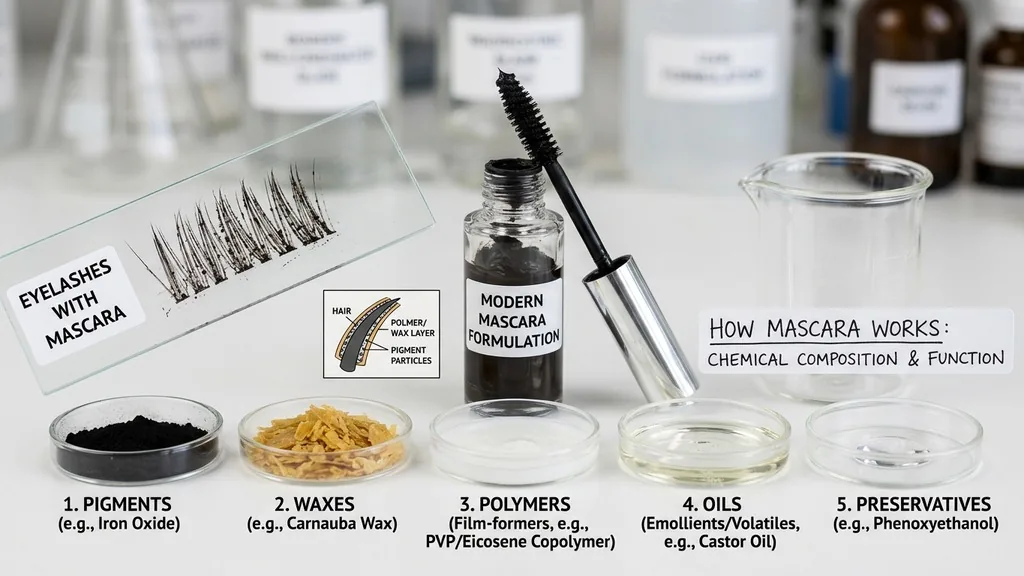
Mascara is a fundamental staple in the world of beauty, yet few people stop to consider the intricate chemistry and physical mechanics behind how it actually transforms the appearance of the eye. At its core, the product is a sophisticated blend of pigments, oils, waxes, and polymers engineered to adhere to delicate hair fibers.
When you swipe a wand through your eyelashes, you are performing a feat of structural engineering that temporarily alters the shape, color, and volume of your natural lash line. Understanding how does mascara work requires looking past the brand marketing and into the molecular interactions that turn a liquid suspension into a semi-solid film.
The Chemical Composition of Modern Mascara
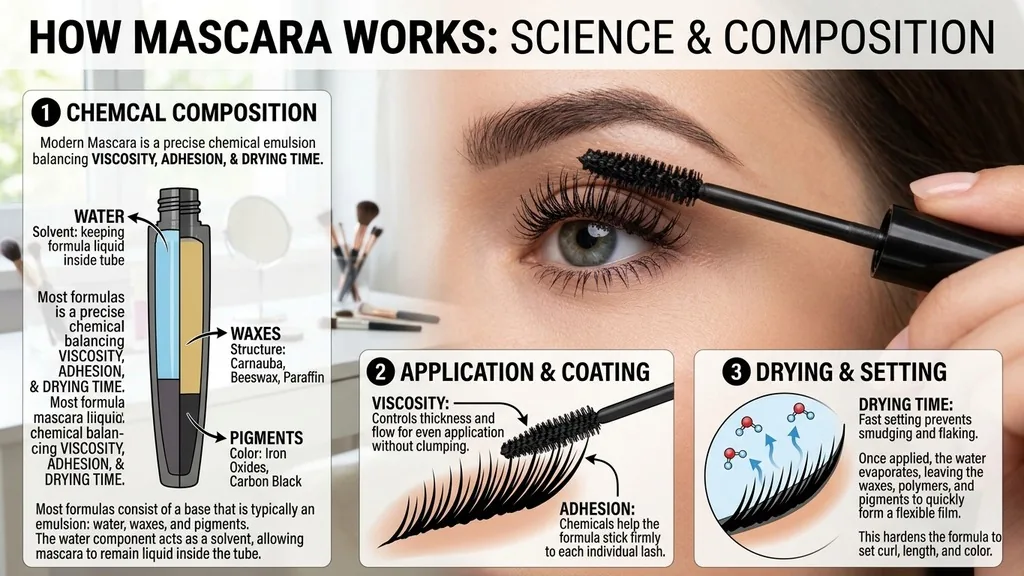
Mascara works by utilizing a precise chemical emulsion that balances viscosity, adhesion, and drying time. Most formulas consist of a base that is typically an emulsion of water, waxes, and pigments. The water component acts as a solvent, allowing the ingredients to remain liquid inside the tube.
Once applied to the lashes, the water evaporates, leaving behind a flexible, colored coating. The waxes, such as carnauba, beeswax, or paraffin, provide the structural backbone of the product. These waxes are responsible for the thickness of the application; they build up around the hair shaft, effectively increasing the diameter of each lash.
The pigment component, usually iron oxides, provides the deep black or brown color that defines the lash line. These pigments are suspended in the wax-water matrix, ensuring an even distribution across the wand. Polymers are perhaps the most critical addition in modern formulations.
These are long-chain molecules that provide film-forming properties. When the mascara dries, these polymers create a cohesive, water-resistant sheath around the lash.
This sheath prevents the product from flaking off throughout the day and helps maintain the curl or lift achieved during the application process. Without these synthetic additives, your makeup would likely smudge within minutes of contact with the natural oils of the skin.
Mechanics of the Wand and Application
The wand is not just an applicator; it is a precision tool designed to deposit product evenly while separating individual hairs. The geometry of the brush bristles dictates how the formula is distributed. Plastic or silicone bristles are typically rigid and excellent for combing through lashes, which helps prevent clumping by shearing away excess product.
Fiber-bristled brushes, on the other hand, are designed to hold more liquid, making them ideal for building volume and density. The shape of the brush—whether curved, tapered, or hourglass—is engineered to match the natural arc of the eyelid, ensuring that even the tiny, hard-to-reach hairs at the inner and outer corners are coated.
When you pull the wand through your lashes, you are applying physical force to the hair. The friction between the bristles and the hair shaft helps to lift the lash from the root. As the formula begins to dry, it “sets” the hair in this lifted position.
This is why wiggling the brush at the base of the lashes is so essential; it deposits the highest concentration of the thickening wax at the root, providing the necessary structural support to hold the weight of the longer, coated tips. If you only apply to the ends, the weight of the product will cause the lashes to droop, effectively undoing any lifting effect you might have aimed for during the process.
How Polymers Create Length and Volume
While we often think of mascara as simply painting the hair, it actually functions as a structural extension. When we talk about how does mascara work to make lashes appear longer, we are witnessing the effect of fiber-based technology or film-forming polymers. Some mascaras contain microscopic nylon or rayon fibers.
These fibers attach themselves to the tips of your natural lashes, acting as tiny scaffolding that extends the length of the hair beyond its natural growth. Because these fibers are sticky and lightweight, they bond securely to the existing lash, creating a seamless transition from biological hair to synthetic extension.
Beyond fibers, the sheer buildup of the wax-polymer matrix adds volume. Imagine coating a thin wire with several layers of paint; the wire becomes thicker and more visible. By applying multiple layers while the formula is still slightly tacky, you create a tiered structure that builds outward.
This process is essentially a form of 3D construction on a microscopic scale. The key to successful layering is timing.
If you wait until the first coat is fully brittle, the next layer will not adhere properly and will likely cause clumping. If you layer while the product is still wet, you maximize the volume-building potential without sacrificing the separation of the individual hairs.
Comparing Different Types of Mascara Formulas
Not all cosmetic formulas function the same way. The choice between water-based and oil-based or solvent-based formulas changes the longevity and removal process of the product. The following table highlights the primary functional differences between the most common types of lash products found in modern cosmetics.
| Mascara Type | Primary Mechanism | Best For |
|---|---|---|
| Water-Based (Washable) | Water evaporates, leaving a flexible wax film. | Daily wear and sensitive eyes. |
| Waterproof | Uses volatile solvents and hydrophobic polymers. | High humidity and long-lasting hold. |
| Tubing | Forms polymer tubes around each lash. | Smudge-free removal with warm water. |
| Volumizing | High wax content for thickness. | Sparse or thin eyelashes. |
The Role of Waterproof Technology
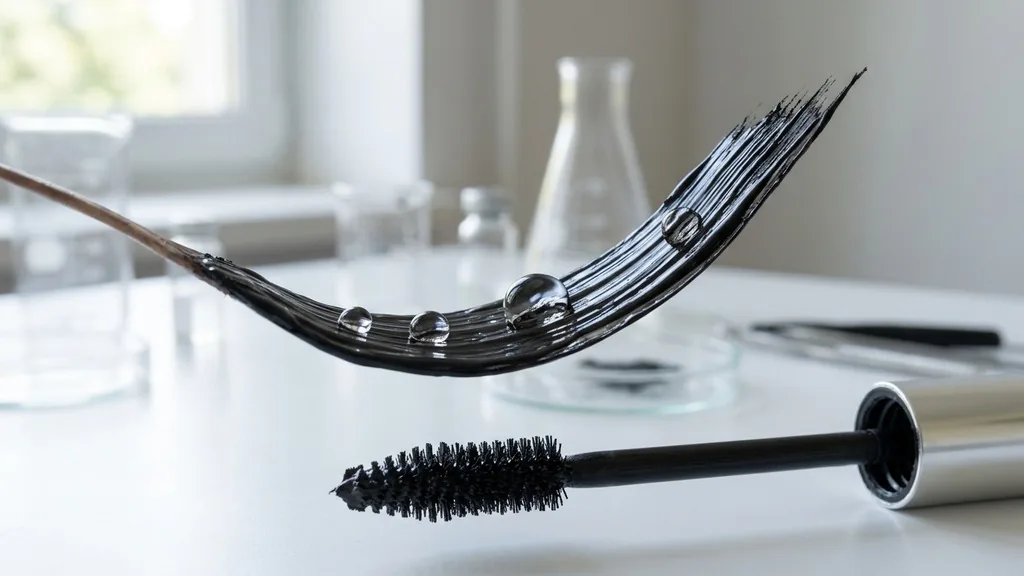
Waterproof mascara operates on a completely different chemical principle than traditional water-based options. Instead of water, these formulas rely on volatile solvents—like isododecane—that evaporate quickly once applied to the lashes. Because the base is not water-soluble, the resulting film is hydrophobic, meaning it repels water rather than dissolving in it.
This is why you cannot wash off a waterproof mascara with simple soap and water; you need an oil-based cleanser to break down the hydrophobic bond. The ingredients in these products are designed to withstand moisture, sweat, and tears, making them the preferred choice for events or humid climates.
However, this durability comes with trade-offs. The ingredients required to make a formula truly waterproof can be more drying to the natural hair. Because the film is so rigid, it can sometimes lead to brittleness if the lashes are not properly conditioned.
Furthermore, the removal process for these products involves more mechanical friction, which can lead to lash breakage if you are not careful. It is essential to use a gentle, oil-based makeup remover to dissolve the polymers before attempting to wipe the lashes clean. This allows the product to slide off the hair without pulling, preserving the health of your natural growth cycle.
Answering Topical Gaps: Safety and Eye Health
A common concern regarding how does mascara work relates to the safety of the delicate ocular environment. The eyes are highly sensitive, and introducing foreign substances near the tear ducts requires rigorous quality control. Most commercial products undergo extensive testing to ensure they are ophthalmologically safe.
However, there are inherent risks associated with improper application or expired products. Bacteria can easily grow inside a mascara tube because the dark, moist environment is a perfect breeding ground for microorganisms. Once the seal of a new tube is broken, you have a limited window—typically three months—before the preservative system is overwhelmed.
Another often overlooked aspect is the “clumping” phenomenon. Clumping occurs when the viscosity of the mascara is too high or the wand is overloaded with product. When the hairs become matted together, they lose their individual definition and become brittle.
This can lead to mechanical stress on the lash follicles. To maintain eye health, it is vital to avoid sharing products, as this is the most common way to transmit infections like conjunctivitis. Always remove your makeup before bed, as leaving the dried, hardened film on your lashes overnight can cause them to rub against the pillow, leading to unnecessary breakage and potential irritation of the eyelid margin.
Techniques for Optimal Application
Achieving the best look requires more than just high-quality cosmetics; it requires understanding the physical interaction between the tool and the hair. To start, always curl your lashes before applying any product. The curl provides the lift, and the mascara provides the “fixative” that holds that lift in place.
Once the lashes are curled, look down into a mirror to expose the roots. This position prevents the brush from hitting your eyelid and allows you to get as close to the base as possible.
- Wiggle the wand horizontally at the base to deposit the bulk of the pigment where it matters most for volume.
- Pull the wand upward through the length of the lash using a slow, steady motion to ensure even coating.
- Use the tip of the wand to target the tiny, sparse lashes in the inner corner of the eye.
- Apply a second coat while the first is still slightly tacky to avoid the “spider-leg” effect.
- Use a clean spoolie brush to comb through the lashes immediately after application to remove any excess clumps.
By following these steps, you ensure that the wax-polymer matrix is distributed along the entire length of the hair rather than just accumulating in heavy, uneven blobs. This technique maximizes the aesthetic impact while minimizing the weight, keeping your lashes looking fluttery and defined rather than heavy and weighed down.
The Evolution of Lash Cosmetics
The history of lash enhancement is a fascinating look at how human ingenuity has adapted to aesthetic desires. From the early days of kohl and soot, which were used primarily for protection against the sun and sand, we have moved into an era of advanced chemical engineering.
Today’s products are designed to do more than just color; they are formulated to condition, lengthen, and volumize simultaneously. The FDA provides guidelines on eye cosmetic safety that emphasize the importance of using approved color additives, ensuring that the ingredients we put near our eyes are strictly regulated.
As we look toward the future of this category, we are seeing a shift toward “lash care” hybrids. These products combine the structural benefits of traditional makeup with the nourishing properties of serums, such as peptides and panthenol.
This evolution marks a transition from viewing cosmetics as a purely decorative layer to viewing them as part of a comprehensive beauty routine that prioritizes the long-term health of the hair. Whether you prefer a natural, wispy finish or a dramatic, bold look, the underlying science remains the same: a delicate balance of fluid dynamics, polymer chemistry, and precise mechanical application.
Frequently Asked Questions
- Does mascara actually make your lashes longer? Mascara does not increase the biological growth of your lashes. Instead, it creates a visual illusion of length by coating the existing hair with waxes and fibers, which extend to the tips and make the lashes appear longer and more defined than they are naturally.
- What is the correct way to apply mascara? The most effective method is to wiggle the wand at the very base of the lashes to deposit volume, then sweep it upward through the length of the hair. This technique provides the structural support needed to hold the lashes in a lifted, curled position all day.
- Why do people avoid putting mascara on bottom lashes? Many people skip the bottom lashes because the product can easily smudge onto the skin under the eyes due to natural oils and blinking. Additionally, applying heavy product on the bottom can sometimes make the eyes look smaller or draw attention to dark circles.
- What are the main downsides of using mascara? The primary risks include potential eye infections from bacterial growth in old tubes, mechanical breakage from improper removal, and irritation caused by certain chemical preservatives. Always replace your product every three months and use a gentle, oil-based cleanser to remove the film without damaging your lashes.


